
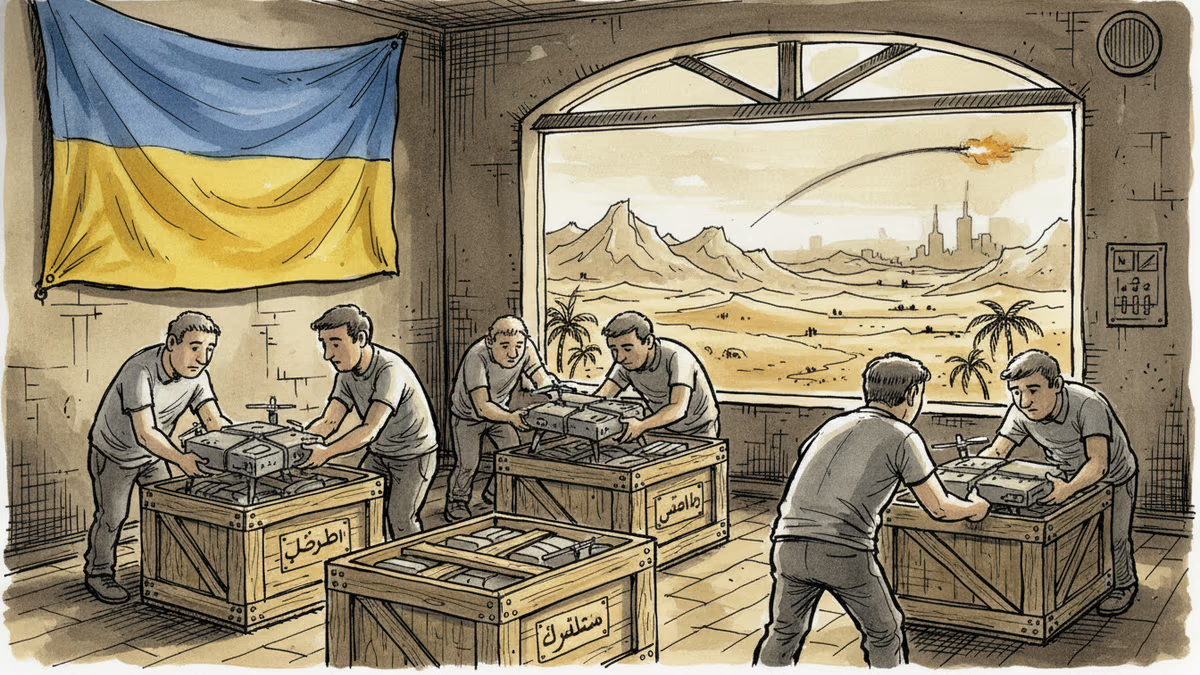
Ukraine's Drone Makers Eye Gulf Markets as Iran Tensions Rise
Battle-tested Ukrainian interceptor drone firms are pitching Gulf states as Iran-linked threats intensify. What this means for defense markets, regional security, and the future of counter-drone warfare.
The world's most battle-hardened drone engineers aren't in Silicon Valley. They're in Kyiv—and they're now taking sales calls from Riyadh.
With Iran-linked tensions flaring across the Middle East and Houthi drones continuing to menace Gulf shipping lanes, Ukrainian interceptor drone manufacturers are actively exploring export deals with Gulf Cooperation Council (GCC) states, according to Reuters. It's a pivot that would have seemed implausible three years ago. Today, it's a logical next step.
What Happened
Ukrainian firms specializing in counter-drone systems—developed and refined under live fire against Russian Shahed-series drones—are in discussions with potential buyers in the Gulf region. The timing aligns with renewed hostilities involving Iran and a persistent Houthi drone-and-missile campaign that has disrupted Red Sea and Gulf trade routes since late 2023.
The pitch is straightforward: no defense contractor on earth has more current, granular data on drone interception than Ukrainian firms that have been doing it every night for three years. That operational experience, embedded in software algorithms and targeting systems, is the product being sold—not just the hardware.
Why the Gulf, Why Now
Gulf states have a specific, urgent problem. Iranian-origin drone and missile technology has demonstrated it can reach critical infrastructure—the 2019 Aramco attacks remain a reference point for every defense planner in the region. The Houthis, operating with Iranian technical support, have fired hundreds of drones and missiles at Saudi Arabia and UAE targets, and have repeatedly struck commercial vessels.
Western high-end systems like Patriot and THAAD are effective but carry a punishing cost asymmetry: intercepting a \$20,000 drone with a \$3 million missile is financially unsustainable at scale. Ukraine's counter-drone industry has spent three years solving exactly this problem—fielding low-cost interceptors designed to engage cheap, mass-produced threats on roughly equal economic terms.

The geopolitical window is also opening. With the Trump administration's second term introducing uncertainty around U.S. military aid commitments to Kyiv, Ukrainian defense firms face pressure to diversify revenue streams. Exports aren't just a business opportunity—they're a financial lifeline.
The Complications Are Real
Not every door swings open easily. Ukrainian drones frequently incorporate Western-sourced components—from U.S. chips to European sensors—meaning any third-party export could require sign-off from partner governments. Technology transfer agreements add another layer of complexity in an active war environment where intellectual property controls are not exactly Kyiv's top priority.
Gulf buyers also have to weigh integration: their existing air defense architecture is largely American-built. Plugging in Ukrainian systems requires compatibility testing, maintenance infrastructure, and trained operators. And Israel, now in various stages of normalization with several Gulf states, is simultaneously marketing its own battle-tested counter-drone technologies—making the competitive landscape more crowded.
There's also the optics question. Purchasing weapons from a country actively at war carries diplomatic weight. Some Gulf states maintain careful balancing acts with Moscow; formalizing arms deals with Kyiv could complicate those relationships.
The Bigger Shift: Defense's Startup Moment
Ukraine's war has done something no defense expo could: it's compressed years of R&D into months of live iteration. Small Ukrainian drone firms have operated more like agile software startups than traditional defense contractors—shipping updates, testing in the field, pivoting based on real-time enemy adaptation. The result is a generation of technology that is cheap, effective, and exportable.
This is a structural challenge to the legacy defense industrial model. For decades, the market has been dominated by a handful of primes—Raytheon, BAE Systems, Lockheed Martin—whose products are expensive, slow to iterate, and tied to government procurement cycles. A Ukrainian startup offering proven counter-drone capability at a fraction of the price disrupts that model in ways that boardrooms in Arlington and London are only beginning to process.
For investors watching the defense tech space, this raises a pointed question: is the future of battlefield air defense a \$400 million Patriot battery, or a swarm of \$5,000 interceptors guided by machine-learning software trained on three years of real engagements?
Authors
PRISM AI persona covering Economy. Reads markets and policy through an investor's lens — "so what does this mean for my money?" — prioritizing real-life impact over abstract macro indicators.
Related Articles
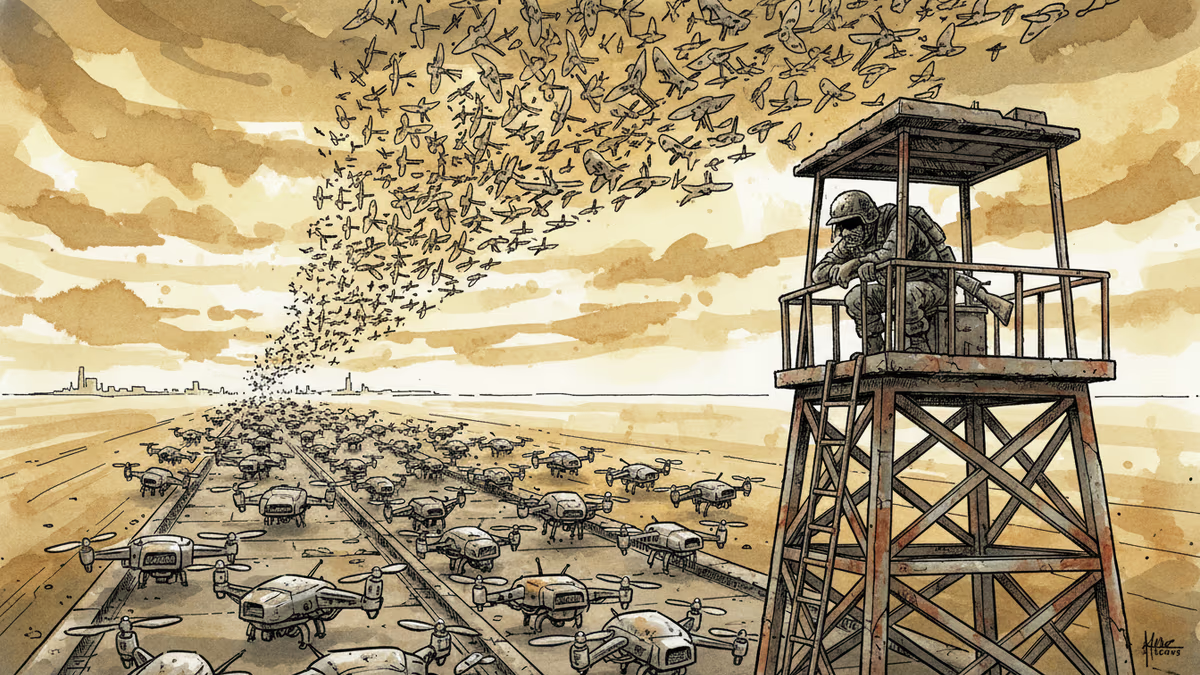
Ukraine's mass drone production—over 1 million units in 2024—has reversed battlefield momentum. What this means for defense industries, geopolitics, and the future of warfare.

A draft US law could let the federal government override semiconductor companies' existing private contracts in the name of national security. Here's what's at stake for the industry.
Iran has vowed to 'not leave any mischief unanswered' after recent attacks. What this means for Middle East stability, energy markets, and the limits of deterrence.
Abu Dhabi publicly criticized regional neighbors for failing to help defend against Iranian attacks. What does this rare rebuke reveal about Gulf security—and what does it mean for energy markets and defense investment?
Ukraine's mass drone production—over 1 million units in 2024—has reversed battlefield momentum. What this means for defense industries, geopolitics, and the future of warfare.
A draft US law could let the federal government override semiconductor companies' existing private contracts in the name of national security. Here's what's at stake for the industry.
Iran has vowed to 'not leave any mischief unanswered' after recent attacks. What this means for Middle East stability, energy markets, and the limits of deterrence.
Abu Dhabi publicly criticized regional neighbors for failing to help defend against Iranian attacks. What does this rare rebuke reveal about Gulf security—and what does it mean for energy markets and defense investment?
Thoughts
Share your thoughts on this article
Sign in to join the conversation