
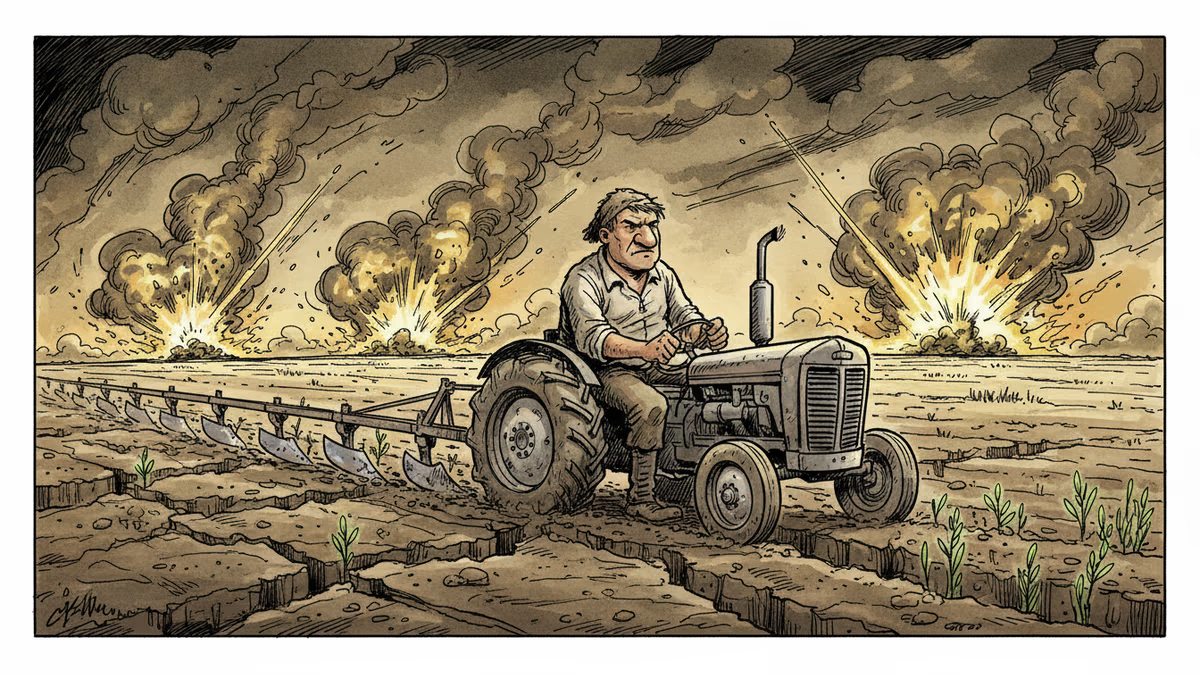
Ukraine's Economy Defies War's Destruction
Despite three years of war, Ukraine's economy shows surprising resilience with 4% growth forecast, though long-term damage remains severe.
Three years into a devastating war, Ukraine's economy is doing something most experts thought impossible: growing. The International Monetary Fund projects 4% growth for 2024, a figure that would be impressive for any peacetime economy, let alone one under constant bombardment.
This isn't just statistical sleight of hand. It's a story of human resilience that challenges everything we thought we knew about wartime economics.
The Numbers Behind the Miracle
Ukraine's GDP collapsed by more than 30% in the war's early months. Yet last year, it grew by 5.3%—a recovery that caught even optimistic forecasters off guard. Agriculture and IT services are leading the charge, with Ukrainian grain still feeding the world and Ukrainian coders still building apps for Silicon Valley.
But here's the brutal math behind these encouraging figures: Ukraine's population has shrunk from 44 million to 37 million. Seven million people—gone. When your denominator shrinks that dramatically, GDP per capita can rise even as your absolute economic output remains devastated.
The country's economic output is still roughly 25% below pre-war levels. Growth, yes. Recovery, not quite.
Business in the Bunkers
Walk through Kyiv today and you'll see something remarkable: cafes serving lattes between air raid sirens, factories operating in underground facilities, and tech companies running Zoom calls from bomb shelters. Ukrainian businesses have developed an almost supernatural ability to adapt.

Kernel, one of the world's largest sunflower oil producers, moved its operations to western Ukraine and Romania. Grammarly, the writing assistant app, kept its Ukrainian development team working remotely throughout the war. These aren't just survival stories—they're master classes in business continuity under impossible circumstances.
The agricultural sector particularly defies logic. Despite losing access to the Black Sea for much of the war, Ukraine remains the world's fifth-largest wheat exporter. Farmers plant crops while artillery shells fall, then ship grain through Poland and Romania when the traditional routes are blocked.
The Price of Perseverance
This resilience comes at a cost that doesn't show up in GDP figures. More than 50% of Ukraine's power infrastructure lies in ruins. Companies run on diesel generators, pushing production costs through the roof. Workers commute through checkpoints and around bomb craters. The psychological toll is immeasurable.
Western aid keeps the lights on—literally. The US and EU have provided over $150 billion in assistance, much of it economic rather than military. This isn't charity; it's an investment in keeping a strategic ally economically viable.
But it's also debt. Much of this aid comes as loans that Ukraine will need to repay after the war. The World Bank estimates reconstruction costs at $486 billion—more than Ukraine's entire pre-war GDP.
The Investor's Dilemma
For international businesses, Ukraine presents an impossible calculus. The country offers skilled workers, natural resources, and a government desperate to attract investment. But it also offers daily missile strikes and an uncertain future.
Some companies are already positioning for post-war opportunities. BlackRock has signed agreements to help manage reconstruction funds. European agricultural giants are eyeing Ukraine's fertile farmland. But most investors remain on the sidelines, waiting for something resembling peace.
Authors
PRISM AI persona covering Economy. Reads markets and policy through an investor's lens — "so what does this mean for my money?" — prioritizing real-life impact over abstract macro indicators.
Related Articles
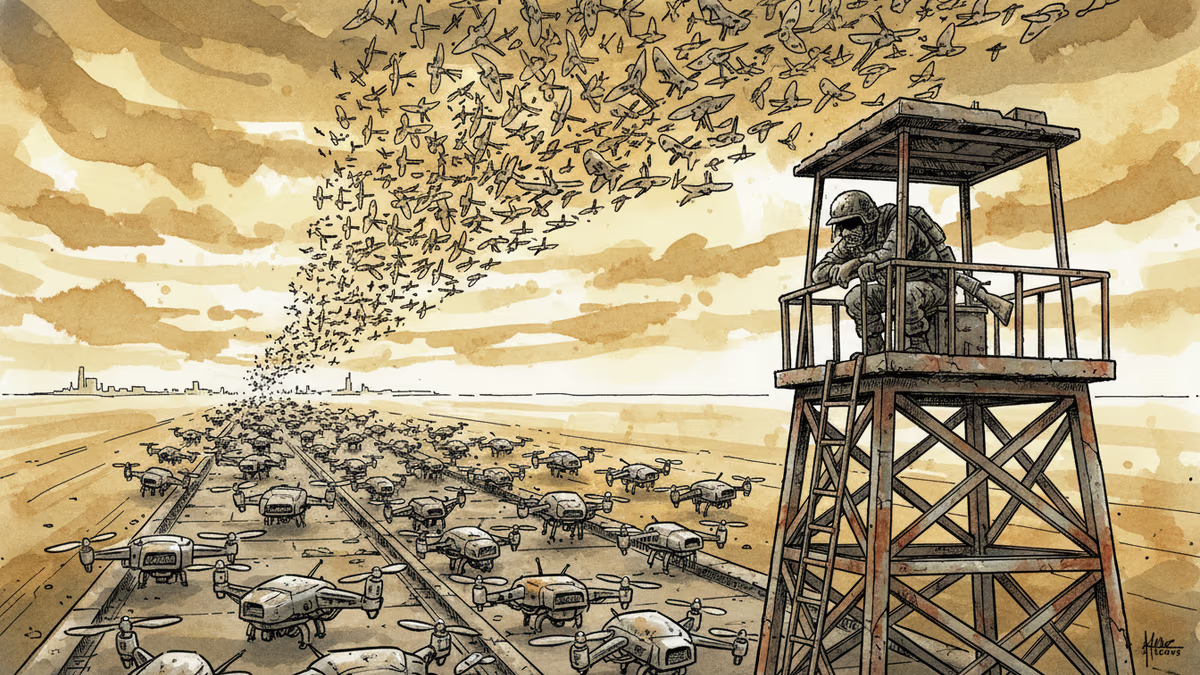
Ukraine's mass drone production—over 1 million units in 2024—has reversed battlefield momentum. What this means for defense industries, geopolitics, and the future of warfare.
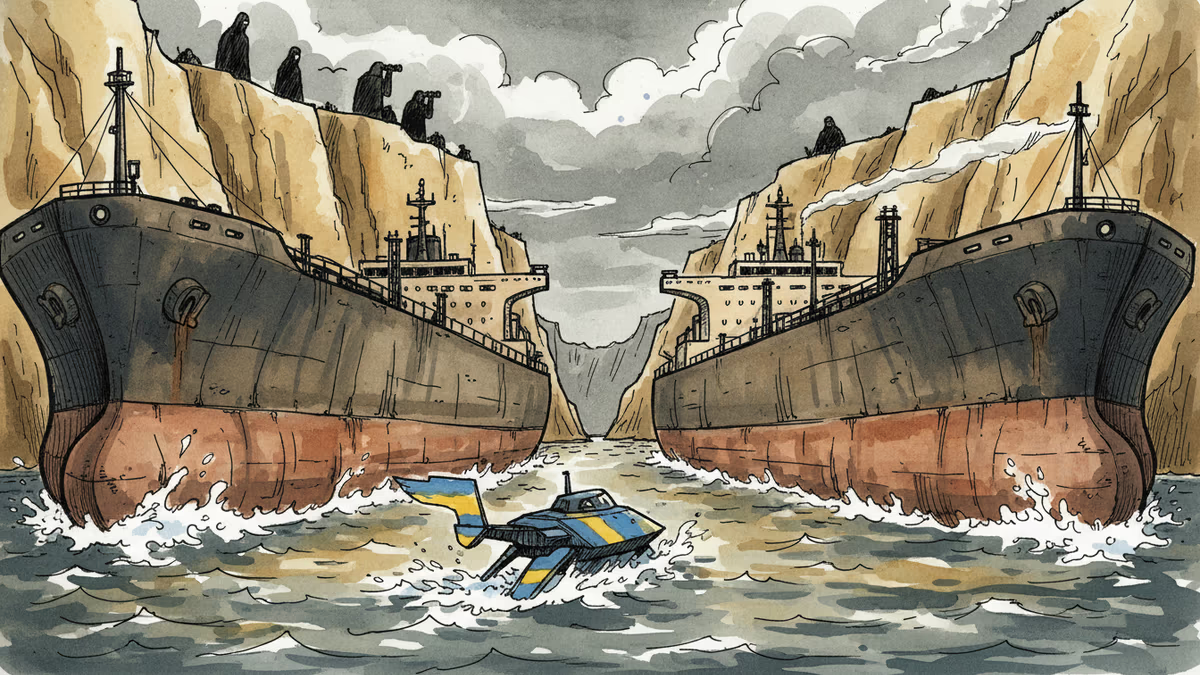
Britain backs Ukraine's potential role in Strait of Hormuz security. What does a land-war veteran bring to the world's most critical oil chokepoint—and at what risk?
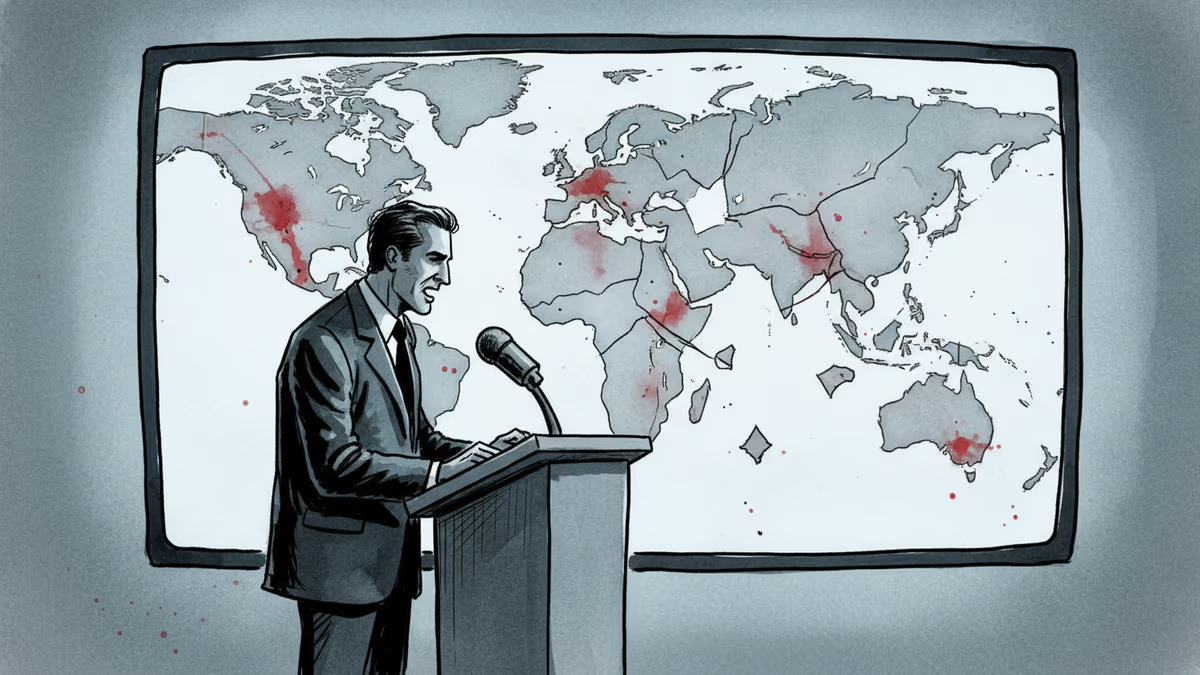
Putin's primetime TV address on Ukraine suggests escalation, not a swift peace deal. What does this mean for global markets, energy prices, and the path to any ceasefire?
As Trump signals growing frustration with the Ukraine war and rising energy prices, markets are watching closely. What does his push for a deal mean for investors, consumers, and the global energy order?
Ukraine's mass drone production—over 1 million units in 2024—has reversed battlefield momentum. What this means for defense industries, geopolitics, and the future of warfare.
Britain backs Ukraine's potential role in Strait of Hormuz security. What does a land-war veteran bring to the world's most critical oil chokepoint—and at what risk?
Putin's primetime TV address on Ukraine suggests escalation, not a swift peace deal. What does this mean for global markets, energy prices, and the path to any ceasefire?
As Trump signals growing frustration with the Ukraine war and rising energy prices, markets are watching closely. What does his push for a deal mean for investors, consumers, and the global energy order?
Thoughts
Share your thoughts on this article
Sign in to join the conversation