

Ugreen iDX6011 Pro AI NAS Price: Is Your Privacy Worth $2,599?
Ugreen unveils the iDX6011 Pro local AI NAS starting at $1,699. Learn about the specs, privacy benefits, and why local AI search is commanding PC-level prices.
Is your privacy worth a $2,500 investment? A decade ago, Google Photos revolutionized storage by making photos searchable, but it required handing your memories over to the cloud. Now, Ugreen is launching a new line of NAS boxes that promise to bring that same AI intelligence to your home—if you can stomach the desktop PC prices.
Breaking Down the Ugreen iDX6011 Pro Local AI NAS Cost
The price of entry for local AI is steep. The entry-level iDX6011 with 32GB of RAM starts at $1,699. If you need more power, the 64GB version hits $1,999, while the flagship iDX6011 Pro with 64GB of memory commands a staggering $2,599 tag.

The Hidden Costs of Sovereignty
According to The Verge, these prices only cover the computing enclosure. Users will still need to purchase high-capacity hard drives separately to actually store their data. While the high price reflects the significant processing power needed for local machine learning tasks, it represents a massive shift from the 'free' cloud model many have grown accustomed to over the last decade.
Authors
Related Articles

Microsoft Copilot bug exposed customers' confidential emails to AI processing for weeks, bypassing data protection policies. Privacy implications explored.

Sarvam AI deploys edge models on Nokia feature phones and smart glasses, challenging the cloud-first AI paradigm with offline-capable intelligence for emerging markets.
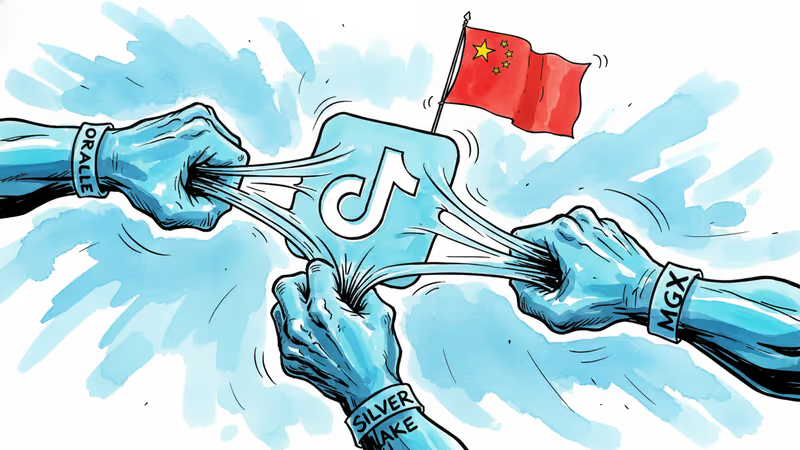
ByteDance sells 80% of TikTok US to Oracle, Silver Lake, and MGX in a complex deal that raises questions about true independence from Chinese influence. Here's what the new ownership structure really means.

TikTok's updated 2026 privacy policy has triggered widespread alarm over the collection of sensitive data like immigration status. Explore the legal reasons behind it.
Microsoft Copilot bug exposed customers' confidential emails to AI processing for weeks, bypassing data protection policies. Privacy implications explored.
Sarvam AI deploys edge models on Nokia feature phones and smart glasses, challenging the cloud-first AI paradigm with offline-capable intelligence for emerging markets.
ByteDance sells 80% of TikTok US to Oracle, Silver Lake, and MGX in a complex deal that raises questions about true independence from Chinese influence. Here's what the new ownership structure really means.
TikTok's updated 2026 privacy policy has triggered widespread alarm over the collection of sensitive data like immigration status. Explore the legal reasons behind it.
Thoughts
Share your thoughts on this article
Sign in to join the conversation