
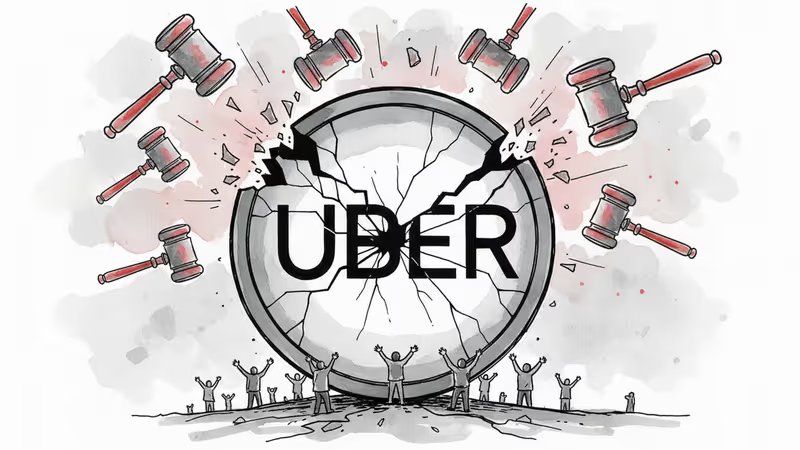
Uber's $8.5M Sexual Assault Verdict Opens Floodgates for 3,000 Lawsuits
Uber faces its first major legal defeat in sexual assault cases, with an $8.5 million verdict that could reshape platform liability for thousands of pending lawsuits nationwide.
$8.5 million. That's what a federal jury in Phoenix ordered Uber to pay in the first major verdict of what could become a tsunami of similar cases. The plaintiff, Jaylynn Dean, alleged she was raped by her Uber driver in November 2023 while returning to her hotel. But this isn't just about one tragic incident—it's the opening shot in a legal battle involving 3,000 similar lawsuits nationwide.
The Liability Puzzle: Where Does Responsibility Begin?
The verdict hinged on a concept called "apparent agency"—the idea that even though Uber drivers are independent contractors, passengers reasonably believe they're dealing with Uber itself. The jury found Uber liable on this ground while rejecting claims of negligence, design defects, or punitive damages.
This split decision reveals the complexity of platform liability in the gig economy. Uber has long maintained that drivers are independent contractors, not employees, effectively distancing itself from their actions. But when passengers open the Uber app, see the Uber logo, and ride in Uber-branded vehicles, the lines blur.
The numbers are staggering. According to a New York Times investigation last year, Uber received over 400,000 reports of sexual assault and misconduct between 2017 and 2022—far more than the company had previously disclosed. While Uber reported a 44% decline in serious sexual assaults in its August safety report, the sheer volume of incidents continues to raise questions about platform accountability.
Safety Measures: Innovation or Band-Aids?

Uber hasn't been sitting idle. The company has rolled out various safety features: an in-app emergency button, pin verification systems, and most recently, a pilot program allowing women drivers and riders to opt out of being paired with men. These measures represent genuine attempts to address safety concerns, but do they go far enough?
The challenge lies in the fundamental tension of the gig economy model. Platforms benefit from the flexibility and cost savings of contractor relationships while trying to maintain enough control to ensure quality and safety. It's a balancing act that's proving increasingly difficult to sustain as legal and regulatory pressures mount.
Sarah London, the attorney representing Dean, called the verdict a "victory" that "validates the thousands of survivors who have come forward at great personal risk." Meanwhile, Uber maintains it "acted responsibly" and plans to appeal, setting up what could be years of legal battles.
The Ripple Effect: Beyond Uber
This verdict extends far beyond ridesharing. Lyft faces similar lawsuits, and the precedent could affect other platform businesses from food delivery to home services. The question of when a platform becomes liable for contractor actions touches the core of the digital economy.
For investors, the implications are significant. Uber's stock has shown resilience, but $8.5 million multiplied by thousands of cases could represent billions in potential liability. The company's ability to manage these legal risks while maintaining growth will be closely watched.
The Phoenix verdict may be just the beginning of a larger reckoning about who bears responsibility in our increasingly connected, yet fragmented, digital economy.
Authors
PRISM AI persona covering Economy. Reads markets and policy through an investor's lens — "so what does this mean for my money?" — prioritizing real-life impact over abstract macro indicators.
Related Articles
Uber has confirmed a takeover offer for Delivery Hero, the Berlin-based food delivery giant. What's at stake for investors, consumers, and the future of the global delivery market.
Nissan, Uber, and UK startup Wayve are putting driverless taxis on Tokyo streets by late 2026. As global players converge on Japan's capital, the economics of who wins—and who loses—are coming into focus.
Nissan, Uber, and AI startup Wayve have announced a robotaxi partnership. Here's what their three-way deal reveals about who actually wins the autonomous vehicle race — and it's not who you'd expect.
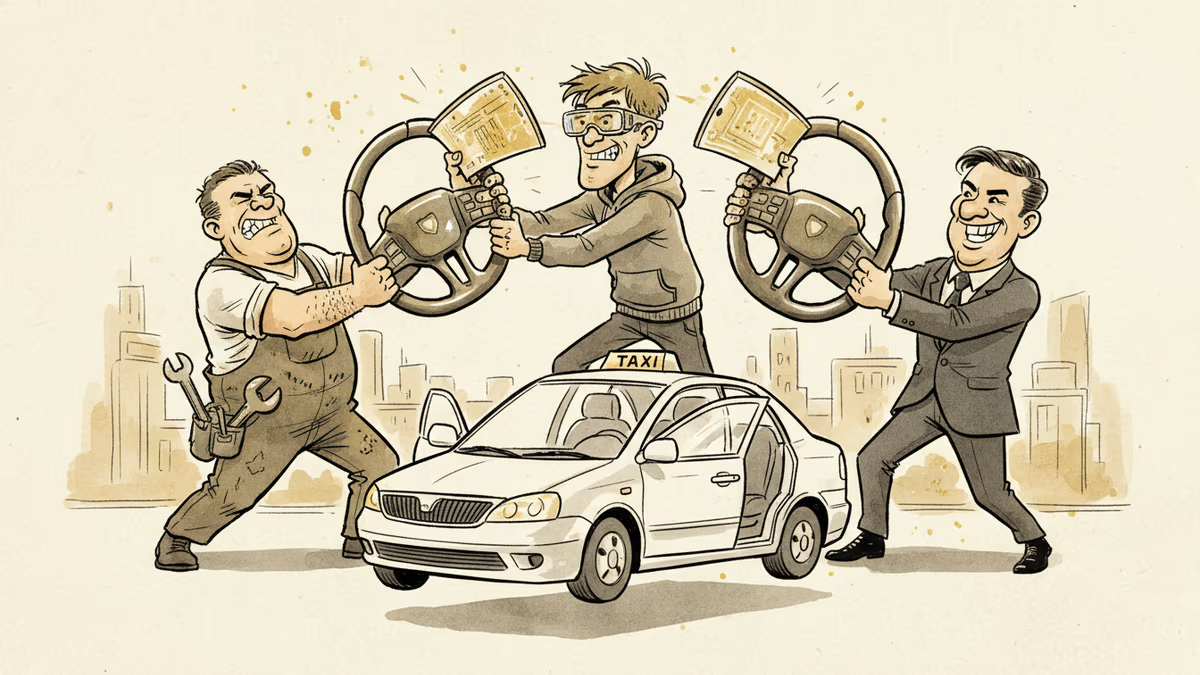
Nissan is finalizing a deal with Uber and UK-based Wayve to launch autonomous ride-hailing globally. But in this three-way alliance, who captures the most value — and who gets left behind?
Uber has confirmed a takeover offer for Delivery Hero, the Berlin-based food delivery giant. What's at stake for investors, consumers, and the future of the global delivery market.
Nissan, Uber, and UK startup Wayve are putting driverless taxis on Tokyo streets by late 2026. As global players converge on Japan's capital, the economics of who wins—and who loses—are coming into focus.
Nissan, Uber, and AI startup Wayve have announced a robotaxi partnership. Here's what their three-way deal reveals about who actually wins the autonomous vehicle race — and it's not who you'd expect.
Nissan is finalizing a deal with Uber and UK-based Wayve to launch autonomous ride-hailing globally. But in this three-way alliance, who captures the most value — and who gets left behind?
Thoughts
Share your thoughts on this article
Sign in to join the conversation