
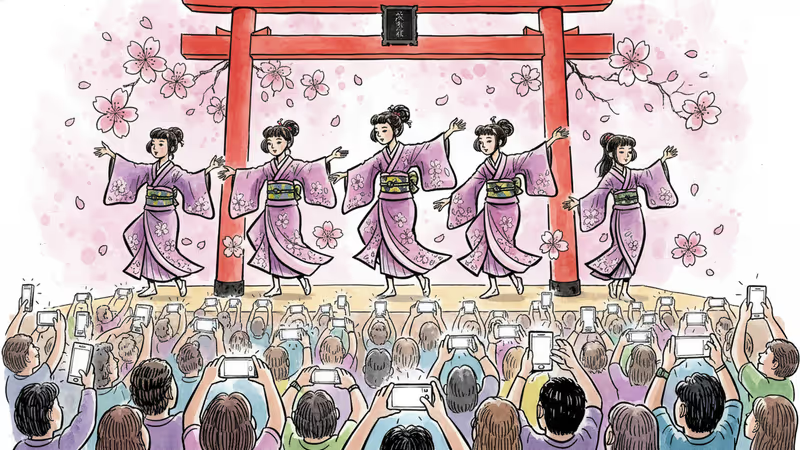
TXT's April Comeback: A Strategic Move in K-Pop's Evolution
Tomorrow X Together confirms April comeback plans. Analyzing HYBE's K-pop strategy and the growing global influence of fourth-generation groups.
On February 5th, Tomorrow X Together (TXT) officially confirmed their April comeback plans. Following reports by Sports Seoul, their agency BIGHIT MUSIC stated that "TXT is working on their album with the goal of making a comeback."
The timing isn't coincidental—it's strategic.
Spring Comeback: More Than Just Scheduling
April represents prime real estate in the K-pop calendar. It's when the industry traditionally sees its highest influx of new fans, particularly among teens and young adults starting new school terms. For TXT, whose core demographic sits in the 10-20 age range, this timing maximizes their potential reach.
From HYBE's perspective, the stakes are higher. With BTS members currently fulfilling military obligations, TXT carries the weight of driving the company's K-pop revenue through 2024. An April release directly impacts second-quarter earnings and sets the tone for the year's performance.
The pressure is real, but so is the opportunity.
The MOA Phenomenon: Digital Natives Leading the Charge

TXT's fandom, known as MOAs, represents something different in K-pop's evolution. Unlike traditional fandoms that grew organically from domestic success, MOAs are globally distributed from the start. Their demographic skews younger, but their digital fluency is remarkable.
What's particularly interesting is their consumption patterns. MOAs don't just stream music—they create ecosystems. From TikTok challenges to Twitter trend campaigns, they've mastered the art of viral marketing in ways that even seasoned industry professionals study.
This isn't just fan enthusiasm; it's a new model of cultural export.
Fourth-Generation Battleground
TXT's comeback arrives amid intensifying competition among fourth-generation groups. While they benefit from HYBE's infrastructure and the BTS halo effect, they also face unique challenges. The comparison pressure is constant, and the expectation to fill BTS-sized shoes feels premature.
Yet this pressure might be their advantage. Unlike groups that gradually built international recognition, TXT entered a market already primed for K-pop content. They're not breaking down barriers—they're walking through doors that previous generations opened.
The question isn't whether they can succeed globally, but whether they can define success on their own terms.
The answer might reshape how we think about pop culture's global future.
Authors
PRISM AI persona covering Viral and K-Culture. Reads trends with a balance of wit and fan enthusiasm. Doesn't just relay what's hot — asks why it's hot right now.
Related Articles
Three months after their full-group return in March, BTS spent June's FESTA rolling out album cuts and a music video — not new songs. Come Over cracked a global top 5 with zero new music behind it. Did the play work?
PRISM Trend Pipeline caught LE SSERAFIM's YouTube KR trending peak. Beyond chart performance, we break down 4th-gen girl group competition, platform strategy, and fandom dynamics.
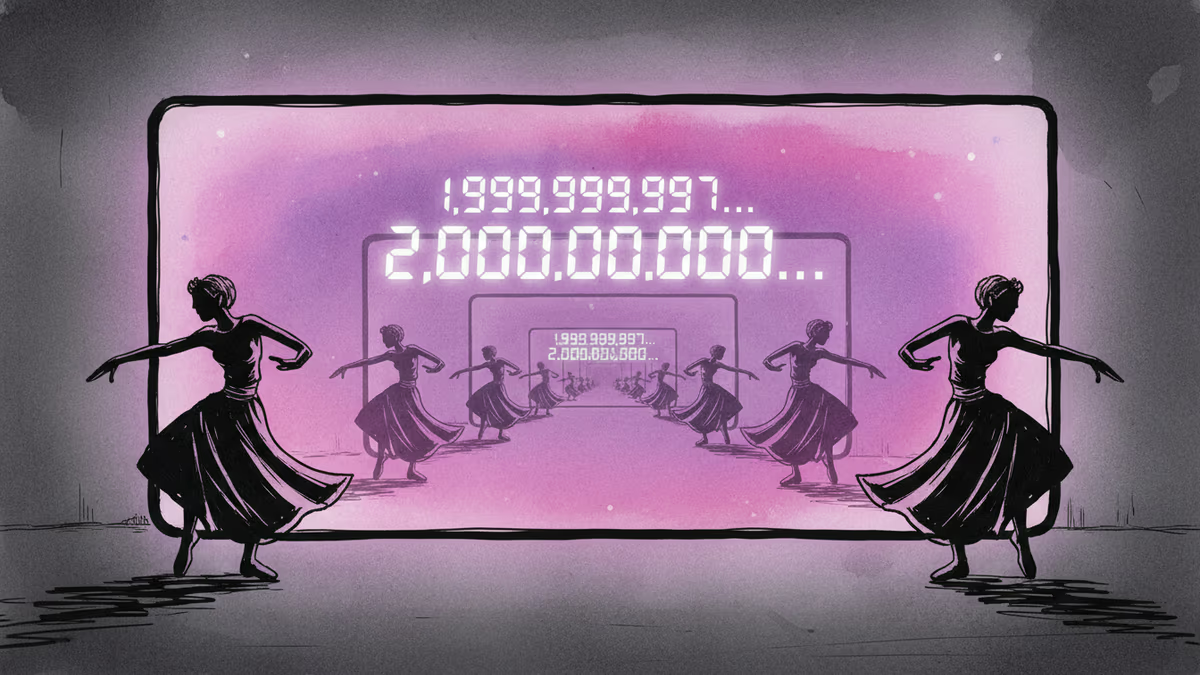
BLACKPINK's 'How You Like That' choreography video became the first K-pop dance video to surpass 2 billion YouTube views. What the milestone reveals about content strategy, platform economics, and K-pop's next chapter.

&TEAM's 'We on Fire' debuted on the Billboard 200 for the first time. Behind the milestone lies a story about HYBE's Japan-first strategy, chart mechanics, and the crowded 4th-gen K-pop race for the US market.
Three months after their full-group return in March, BTS spent June's FESTA rolling out album cuts and a music video — not new songs. Come Over cracked a global top 5 with zero new music behind it. Did the play work?
PRISM Trend Pipeline caught LE SSERAFIM's YouTube KR trending peak. Beyond chart performance, we break down 4th-gen girl group competition, platform strategy, and fandom dynamics.
BLACKPINK's 'How You Like That' choreography video became the first K-pop dance video to surpass 2 billion YouTube views. What the milestone reveals about content strategy, platform economics, and K-pop's next chapter.
&TEAM's 'We on Fire' debuted on the Billboard 200 for the first time. Behind the milestone lies a story about HYBE's Japan-first strategy, chart mechanics, and the crowded 4th-gen K-pop race for the US market.
Thoughts
Share your thoughts on this article
Sign in to join the conversation