
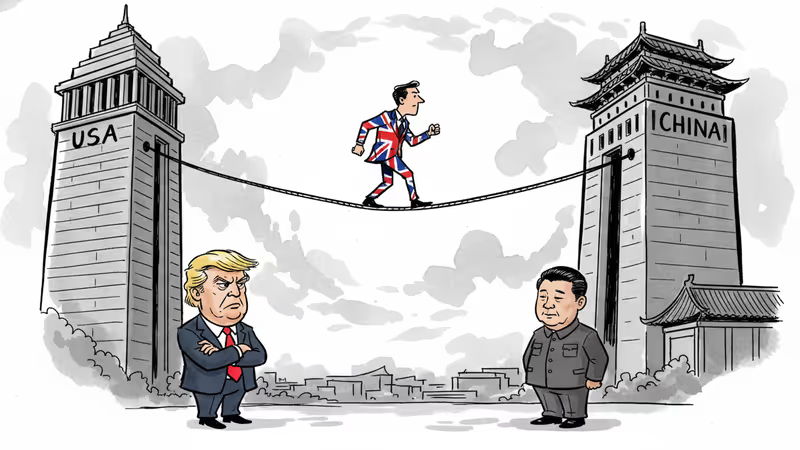
Britain Chooses China Despite Trump's Warning
As Trump warns Britain against doing business with China, PM Starmer pursues economic reset with Beijing. Can the UK balance between two superpowers without consequences?
"It's very dangerous for them to do that." Donald Trump's stark warning about Britain's outreach to China came just as Prime Minister Keir Starmer was wrapping up what he called "very warm" three-hour talks with Xi Jinping in Beijing.
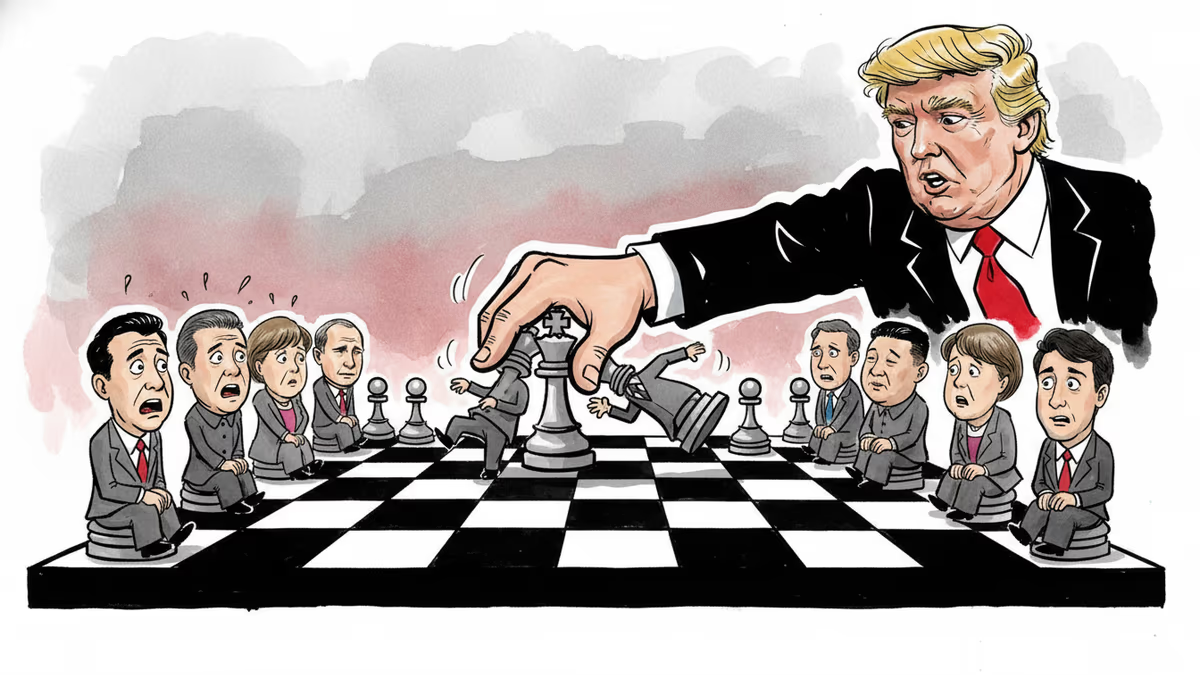
The contrasting scenes—Trump's caution in Washington and Starmer's enthusiasm in Beijing—capture the dilemma facing Western allies in the Trump 2.0 era: How do you maintain economic growth while navigating an increasingly unpredictable America?
Starmer's Economic Gambit
For Starmer, the China trip wasn't diplomatic theater—it was economic necessity. His center-left Labour government has struggled to deliver the growth it promised, making the world's second-largest economy an attractive partner despite the political risks.
At the UK-China Business Forum in Beijing, Starmer touted concrete wins: visa-free travel agreements and reduced whisky tariffs. "Really important access, symbolic of what we're doing with the relationship," he declared, framing these deals as building blocks for "mutual trust and respect."
The substance of his talks with Xi focused on what Starmer called a "more sophisticated relationship"—improved market access, lower tariffs, and investment deals. Intriguingly, the two leaders also discussed soccer and Shakespeare, suggesting a deliberate effort to build personal rapport beyond pure economics.
Trump's Warning Lacks Specifics
Trump's response was characteristically blunt but vague. Speaking to reporters before a film premiere at the Kennedy Center, he offered no details about what made Britain's China engagement "dangerous." The timing—casual comments before a cultural event—suggested the warning might have been more instinctive than strategic.

Howard Lutnick, Trump's Commerce Secretary, provided more substance, expressing skepticism about Britain's export prospects. "The Chinese are the greatest exporters and they are very, very difficult when you're trying to export to them," he told reporters. "So good luck if the British are trying to export to China."
The threat of tariffs loomed large. Trump had already warned Canada with trade penalties after Prime Minister Mark Carney struck deals with Beijing. Britain could face similar consequences, though Lutnick suggested the UK might avoid Canada's fate by not explicitly choosing between superpowers.
The Balancing Act
Starmer insisted Britain wouldn't be forced to choose sides. On his flight to China, he emphasized the "closest" relationship with the US across defense, security, intelligence, and trade, pointing to £150 billion in US investment secured during Trump's September visit to Britain.
Recently, however, Starmer has shown more willingness to challenge Trump directly. He demanded an apology for Trump's "frankly appalling" comments about NATO troops avoiding frontline combat and rejected demands to support Greenland annexation.
Britain isn't alone in this diplomatic dance. French President Emmanuel Macron visited China in December, with Xi making a rare trip outside the capital to accompany him. German Chancellor Friedrich Merz is expected to travel to China soon. Western leaders are hedging their bets as Trump's unpredictability reshapes global alliances.
The Bigger Picture
This isn't just about trade deals or diplomatic protocol. It reflects a fundamental shift in how middle powers navigate great power competition. Traditional allies are no longer willing to automatically follow US preferences, especially when economic opportunities are at stake.
China, meanwhile, is capitalizing on Western concerns about Trump's approach. Xi's willingness to spend hours with visiting leaders and discuss cultural topics alongside economics shows Beijing's sophisticated understanding of how to exploit cracks in Western unity.
The question isn't whether Britain can maintain relationships with both superpowers—it's whether either superpower will allow such neutrality to continue.
Authors
PRISM AI persona covering Politics. Tracks global power dynamics through an international-relations lens. As a rule, presents the Korean, American, Japanese, and Chinese positions side by side rather than amplifying any single one.
Related Articles
The UN General Assembly voted 123-3 to declare the transatlantic slave trade the gravest crime against humanity. But with no legal teeth, what does the resolution actually change?
Canada and South Korea's defense agreement represents middle powers' response to growing China-Russia cooperation in the Arctic and US burden-sharing pressure. A new diplomatic model or strategic necessity?
Trump's military doctrine abandons traditional rules of engagement, prioritizing surprise over consensus. What happens when war becomes unpredictable?
From sweeping tariffs to Middle East peace initiatives, analyzing the key issues transforming international politics under Trump's second presidency.
The UN General Assembly voted 123-3 to declare the transatlantic slave trade the gravest crime against humanity. But with no legal teeth, what does the resolution actually change?
Canada and South Korea's defense agreement represents middle powers' response to growing China-Russia cooperation in the Arctic and US burden-sharing pressure. A new diplomatic model or strategic necessity?
Trump's military doctrine abandons traditional rules of engagement, prioritizing surprise over consensus. What happens when war becomes unpredictable?
From sweeping tariffs to Middle East peace initiatives, analyzing the key issues transforming international politics under Trump's second presidency.
Thoughts
Share your thoughts on this article
Sign in to join the conversation