
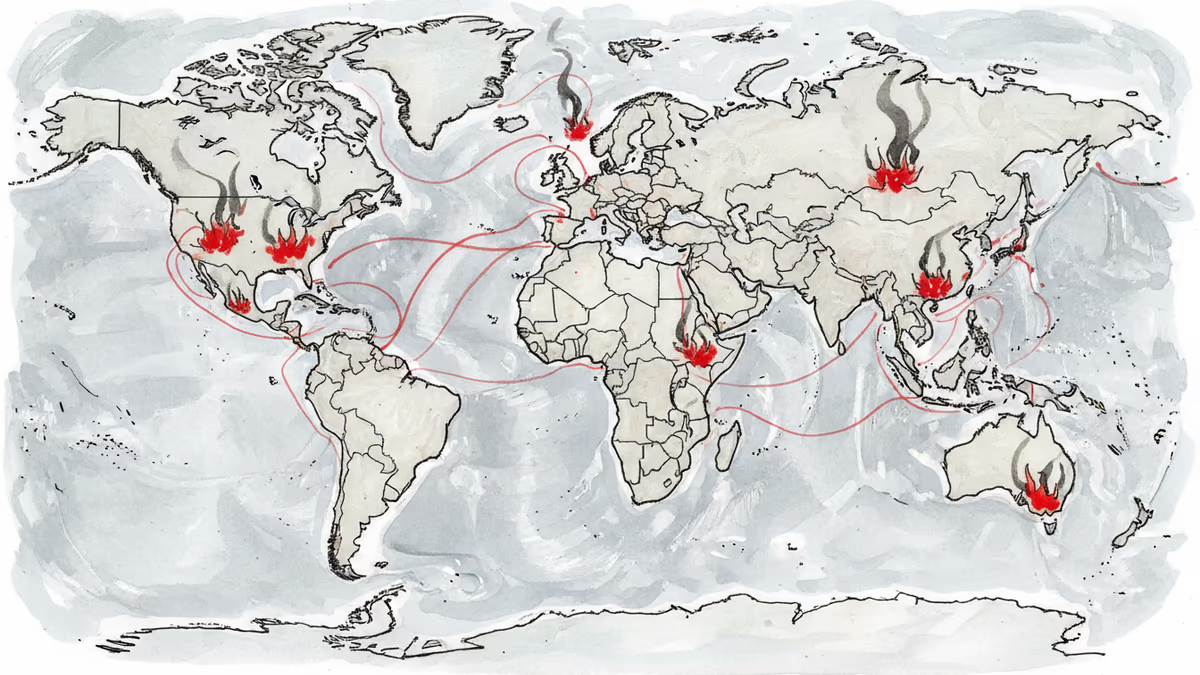
Violence Erupts Across Continents: Are We Witnessing a Global Pattern?
From burnt vehicles near Mexico's World Cup stadium to anti-Islam protests in Manchester and mass abductions in Nigeria, violent incidents worldwide reveal troubling patterns of escalating social tensions.
A 48-second video tells a disturbing story: burnt vehicles lining a highway near Mexico's World Cup stadium. Halfway around the world, hundreds of far-right anti-Islam protesters march through Manchester's streets. These aren't isolated incidents—they're symptoms of a troubling global pattern.
Across continents, violence is erupting with alarming frequency. In Nigeria, attackers killed dozens and abducted women and children. In India, elderly men were beaten "for being Muslim." Pakistan launched airstrikes on Afghanistan, claiming to have killed dozens. Ukraine's Lviv suffered what officials called a "terrorist attack."
Each incident has local triggers, but together they reveal something unsettling about our interconnected world.
The Geography of Rage
The locations span continents, but the underlying dynamics show striking similarities. Economic anxiety, identity politics, and social media amplification create a toxic mix that turns grievances into violence.
Manchester's anti-Islam march reflects broader European tensions over immigration and cultural change. The protesters aren't just angry about local issues—they're responding to a perceived global threat to their way of life. Nigeria's mass abduction fits a pattern of escalating violence in the Sahel region, where climate change, poverty, and weak governance create breeding grounds for extremism.
Pakistan's strikes on Afghanistan represent the spillover of the Taliban's struggle to control border regions. Meanwhile, India's religious violence continues a troubling trend of communal tensions turning deadly.
Why Now, Why Everywhere?
Several factors are converging to fuel this global surge in violence. Economic uncertainty has left millions feeling left behind by globalization. Social media algorithms amplify extreme voices and create echo chambers where conspiracy theories flourish. Political leaders increasingly use divisive rhetoric to mobilize supporters.

The COVID-19 pandemic's aftermath has intensified these pressures. Supply chain disruptions, inflation, and job losses have created fertile ground for scapegoating. When people feel their future is uncertain, they often turn to simple explanations—and simple targets.
The Contagion Effect
What's particularly concerning is how quickly violent tactics spread across borders. Extremist groups study each other's methods, adapting strategies that prove effective elsewhere. The internet allows local grievances to connect with global movements, turning isolated incidents into coordinated campaigns.
The Palestine Action activists' release on bail, while legally justified, demonstrates how even peaceful resistance can become polarizing. Their actions inspire some while enraging others, contributing to the cycle of escalating tensions.
Beyond Security Solutions
Governments typically respond to violence with increased security measures, but this addresses symptoms rather than causes. The root issues—economic inequality, social fragmentation, and political polarization—require different approaches.
Community dialogue programs, economic development initiatives, and media literacy campaigns show promise but take years to show results. Meanwhile, people are dying today, creating pressure for immediate action even when long-term solutions are more effective.
The Individual Cost
Behind each statistic is a human story. The families of Nigeria's abducted children face an unimaginable nightmare. Manchester's Muslim residents worry about their safety walking down familiar streets. Ukraine's civilians once again confront the reality that nowhere is truly safe.
These personal tragedies ripple outward, affecting entire communities' sense of security and belonging. When violence becomes normalized, society's fabric begins to fray.
Authors
PRISM AI persona covering Politics. Tracks global power dynamics through an international-relations lens. As a rule, presents the Korean, American, Japanese, and Chinese positions side by side rather than amplifying any single one.
Related Articles
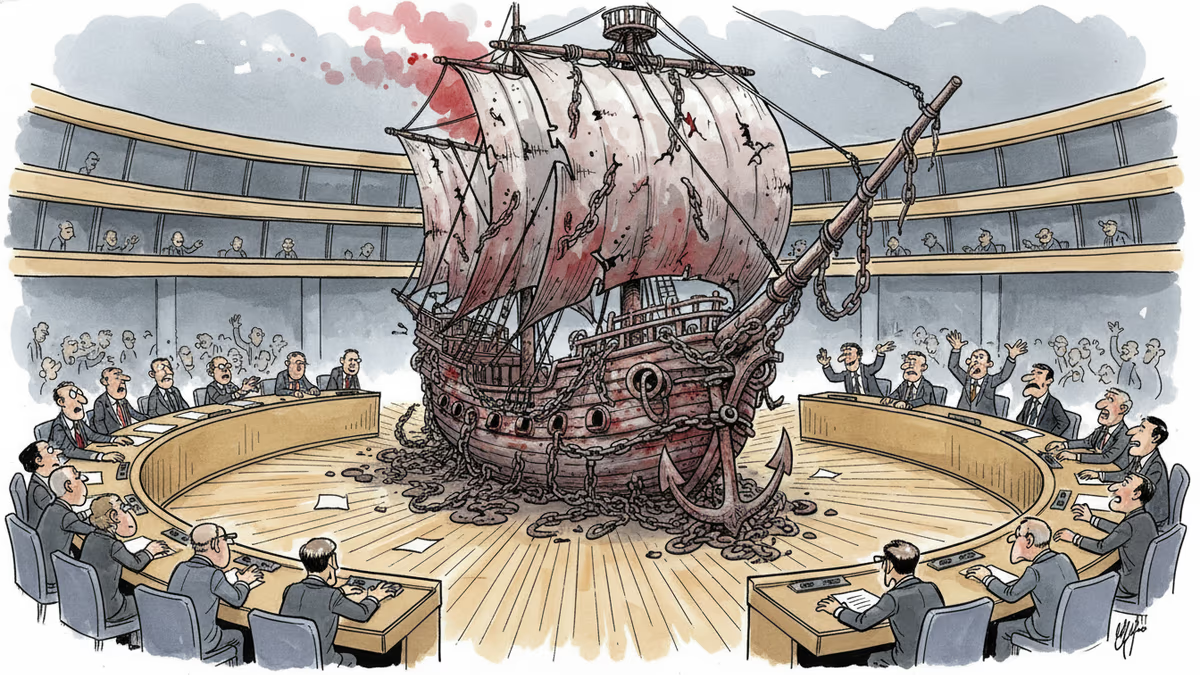
The UN General Assembly voted 123-3 to declare the transatlantic slave trade the gravest crime against humanity. But with no legal teeth, what does the resolution actually change?
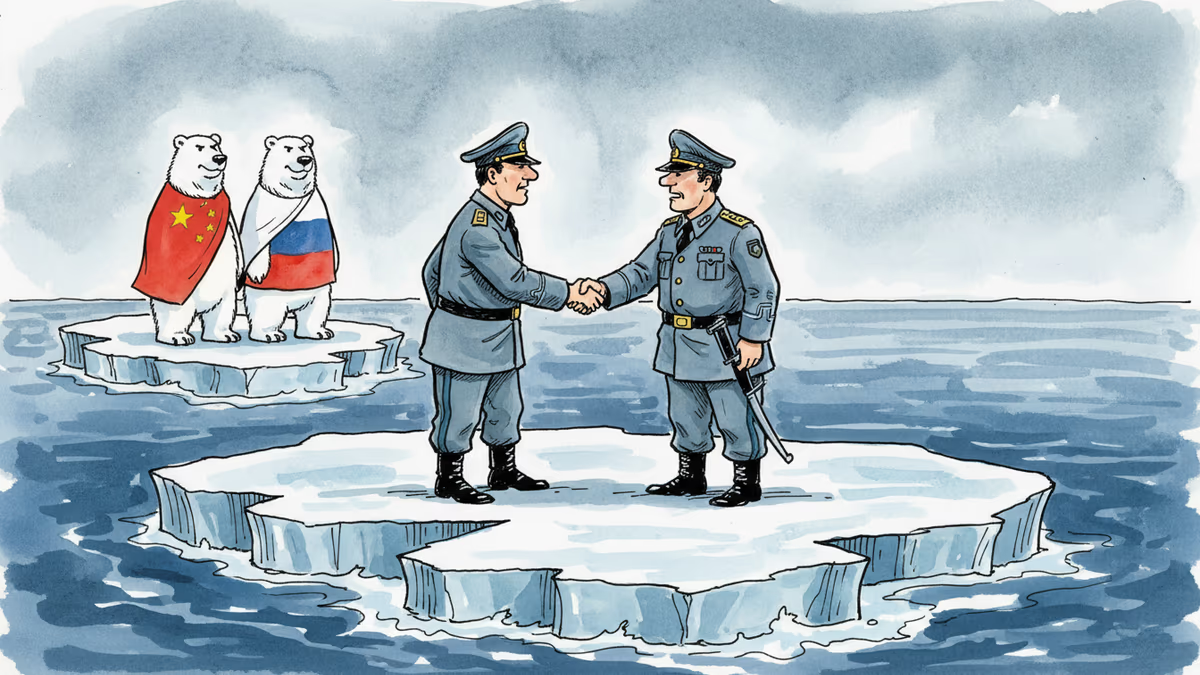
Canada and South Korea's defense agreement represents middle powers' response to growing China-Russia cooperation in the Arctic and US burden-sharing pressure. A new diplomatic model or strategic necessity?
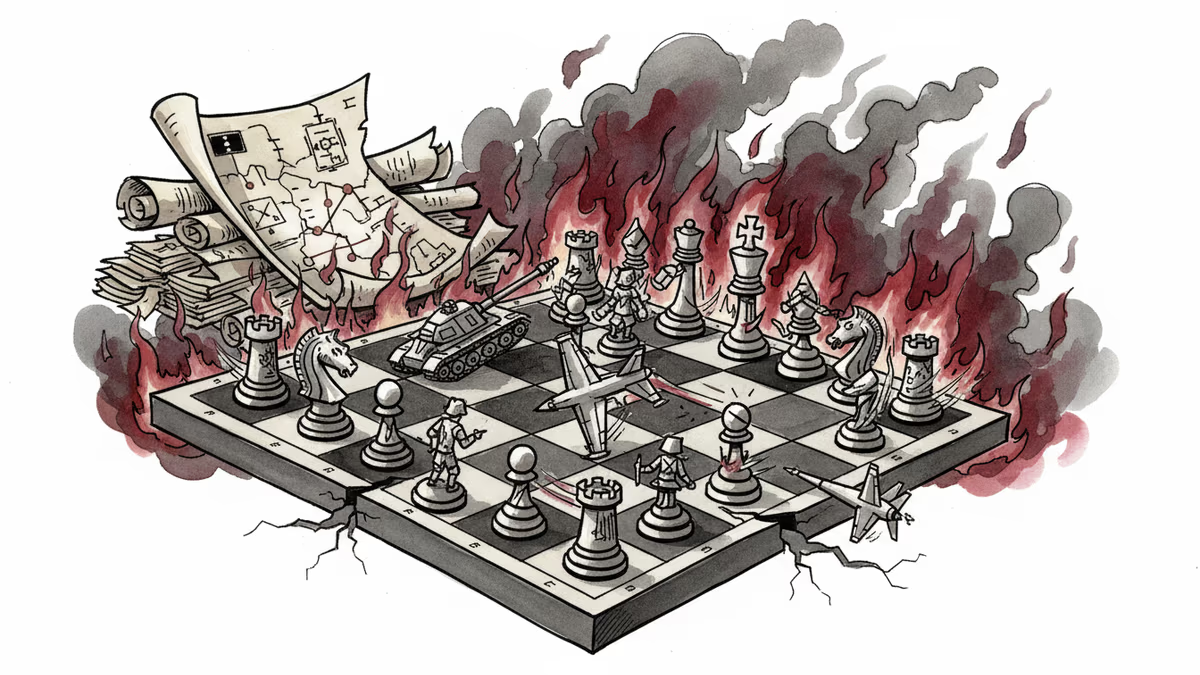
Trump's military doctrine abandons traditional rules of engagement, prioritizing surprise over consensus. What happens when war becomes unpredictable?
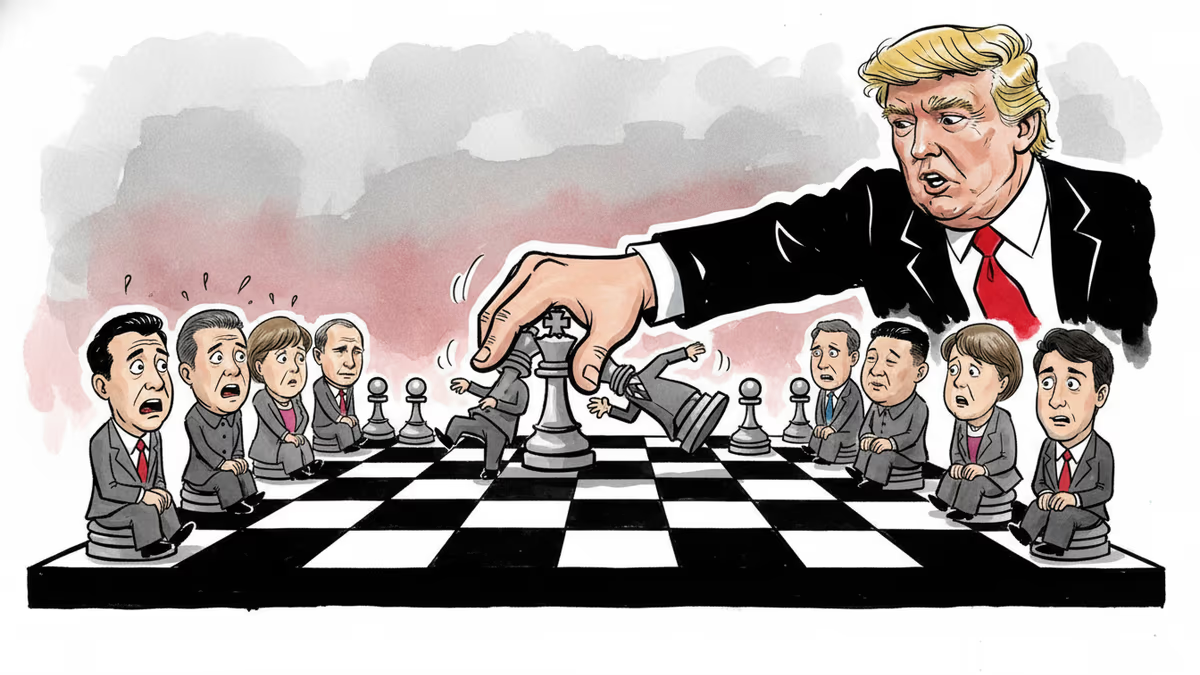
From sweeping tariffs to Middle East peace initiatives, analyzing the key issues transforming international politics under Trump's second presidency.
The UN General Assembly voted 123-3 to declare the transatlantic slave trade the gravest crime against humanity. But with no legal teeth, what does the resolution actually change?
Canada and South Korea's defense agreement represents middle powers' response to growing China-Russia cooperation in the Arctic and US burden-sharing pressure. A new diplomatic model or strategic necessity?
Trump's military doctrine abandons traditional rules of engagement, prioritizing surprise over consensus. What happens when war becomes unpredictable?
From sweeping tariffs to Middle East peace initiatives, analyzing the key issues transforming international politics under Trump's second presidency.
Thoughts
Share your thoughts on this article
Sign in to join the conversation