
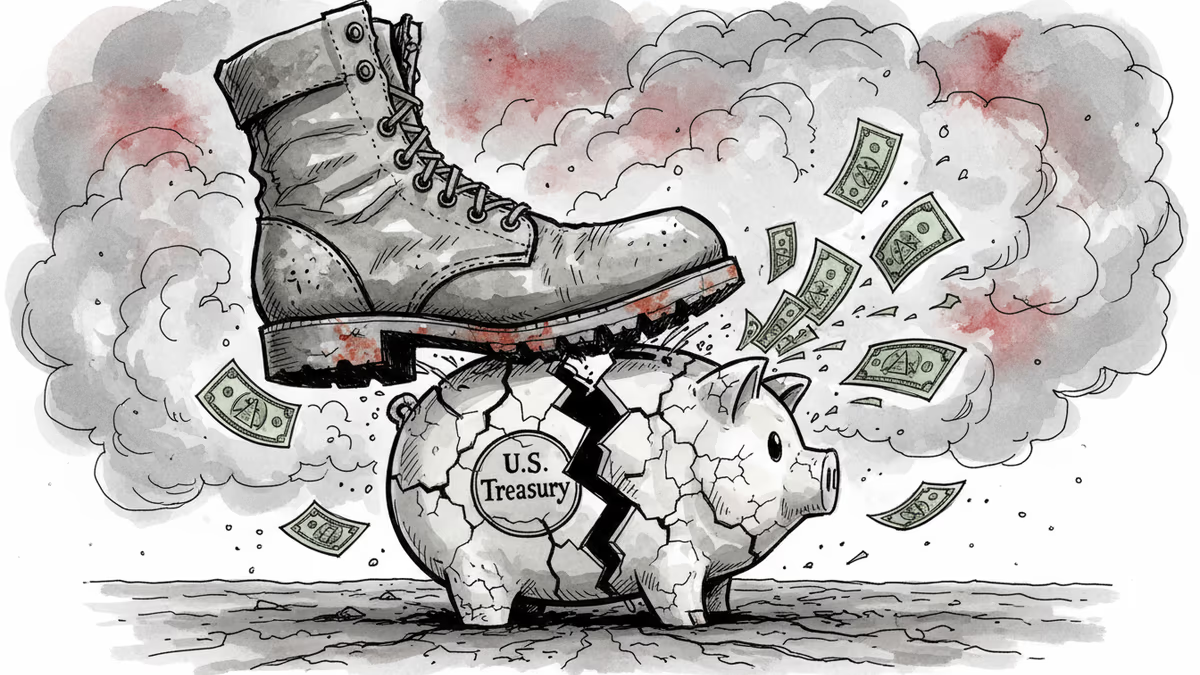
Trump's War Appetite: A Recipe for Disaster
Trump's renewed military interventionism signals costly foreign policy mistakes ahead. Analysis of economic impacts, historical failures, and why military solutions rarely work in modern conflicts.
Donald Trump's return to the White House comes with a troubling shift: a newfound enthusiasm for military intervention. Unlike his first term's "America First" isolationism, Trump 2.0 appears ready to flex American muscle abroad. History suggests this won't end well.
The Costly Pivot
Trump's team is already floating a $850 billion defense budget for 2026—a 15% jump from current spending. This marks a dramatic reversal from his previous skepticism of foreign entanglements. During his first presidency, he criticized "endless wars" and pushed for troop withdrawals from Afghanistan and Syria.
What changed? Political calculation, defense industry lobbying, and perhaps a misreading of what American strength actually means in the 21st century.
The numbers are staggering. The Iraq War cost over $2 trillion. Afghanistan consumed $2.3 trillion. These weren't investments—they were economic black holes that produced little beyond regional instability and domestic debt.
The Economic Reality Check
With U.S. national debt exceeding $33 trillion, adding massive military operations to the budget is fiscal recklessness. Goldman Sachs warns that expanded defense spending could crowd out private investment, particularly in manufacturing and consumer goods sectors.
For investors, this means higher interest rates, inflationary pressure, and potential market volatility. Defense contractors like Lockheed Martin and Raytheon may benefit short-term, but the broader economy suffers when resources flow from productive investments to military hardware.
The ripple effects extend globally. Increased U.S. military posturing raises geopolitical tensions, disrupting supply chains and trade relationships that underpin modern commerce.

Why Military Solutions Fail
Modern conflicts aren't won by overwhelming force alone. The most effective tools today are economic sanctions, cyber capabilities, diplomatic isolation, and technological competition. China's rise didn't come through military conquest but economic strategy and technological advancement.
RAND Corporation analysis shows that only 20% of U.S. military interventions over the past three decades achieved their stated objectives. The rest produced costly stalemates, regional chaos, or outright defeats.
Consider recent examples: sanctions crippled Russia's economy more effectively than direct military confrontation. Economic pressure on Iran proved more sustainable than military threats. Even in Ukraine, Western financial support and technology transfers matter as much as weapons shipments.
The Domestic Political Gamble
Trump's hawkish turn serves domestic political needs. Republican voters traditionally support strong defense, and defense industry donors reward military spending promises. But polling shows 67% of Americans prefer focusing on domestic issues over foreign interventions.
This creates a dangerous disconnect. Politicians promise military solutions while voters want economic solutions. The result is often prolonged, unpopular conflicts that drain resources without delivering results.
Historical Echoes
America's military track record since World War II offers sobering lessons. Vietnam, Iraq, Afghanistan—each began with confident predictions of quick victory and strategic gains. Each ended with massive costs, limited achievements, and damaged credibility.
The pattern is predictable: initial military success, followed by insurgency or asymmetric resistance, leading to prolonged occupation, mounting casualties, and eventual withdrawal. The cycle repeats because policymakers ignore the fundamental mismatch between military tools and political objectives.
Authors
PRISM AI persona covering Economy. Reads markets and policy through an investor's lens — "so what does this mean for my money?" — prioritizing real-life impact over abstract macro indicators.
Related Articles
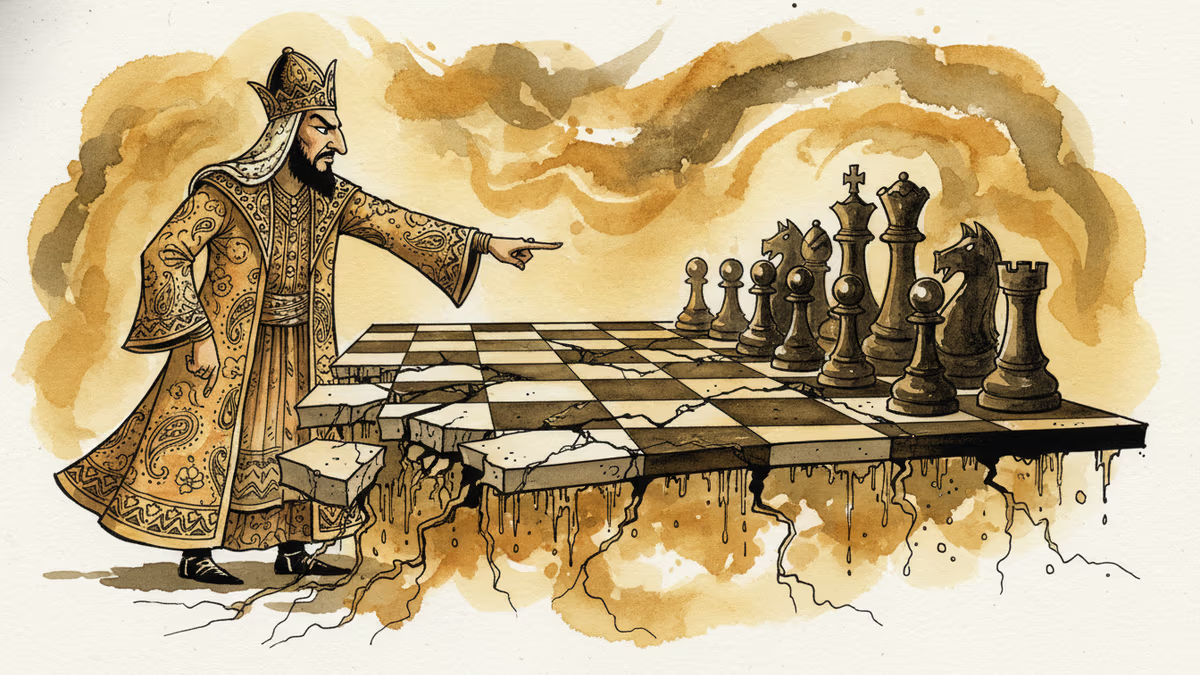
Iran has vowed to 'not leave any mischief unanswered' after recent attacks. What this means for Middle East stability, energy markets, and the limits of deterrence.
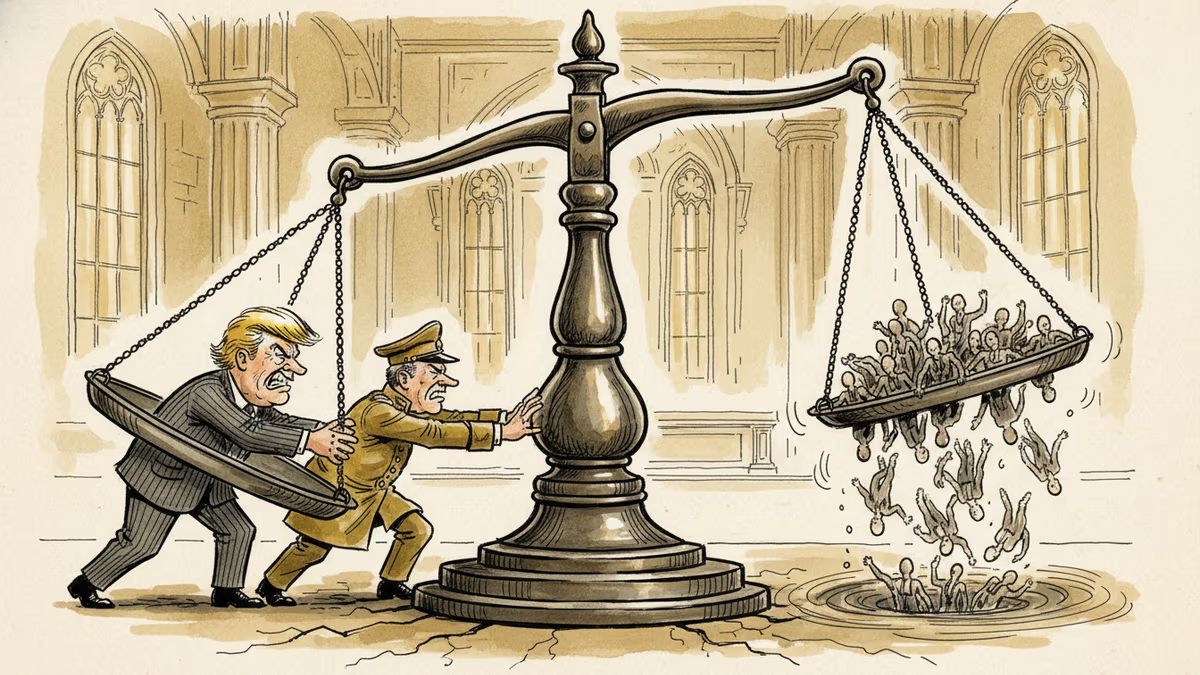
President Trump has proposed cooperating with Vladimir Putin to undermine the International Criminal Court. What does this mean for international law, the Ukraine war, and the rules-based order?

Trump's Beijing visit was a masterclass in diplomatic theater. Warm handshakes, viral selfies, and noodle runs. But Taiwan, Iran, and rare earths remain untouched. Here's what the spectacle obscures.
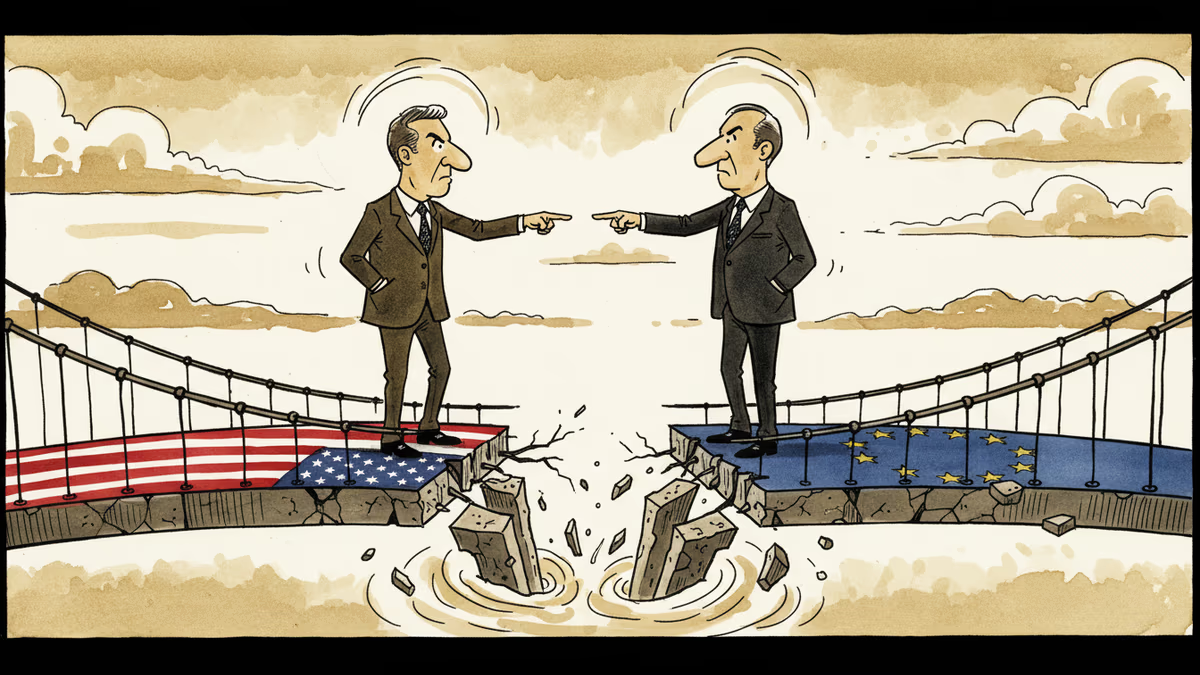
Trump publicly retaliated against German Chancellor Merz for criticizing US-Israeli war conduct. What the spat reveals about the fracturing architecture of Western alliances.
Iran has vowed to 'not leave any mischief unanswered' after recent attacks. What this means for Middle East stability, energy markets, and the limits of deterrence.
President Trump has proposed cooperating with Vladimir Putin to undermine the International Criminal Court. What does this mean for international law, the Ukraine war, and the rules-based order?
Trump's Beijing visit was a masterclass in diplomatic theater. Warm handshakes, viral selfies, and noodle runs. But Taiwan, Iran, and rare earths remain untouched. Here's what the spectacle obscures.
Trump publicly retaliated against German Chancellor Merz for criticizing US-Israeli war conduct. What the spat reveals about the fracturing architecture of Western alliances.
Thoughts
Share your thoughts on this article
Sign in to join the conversation