
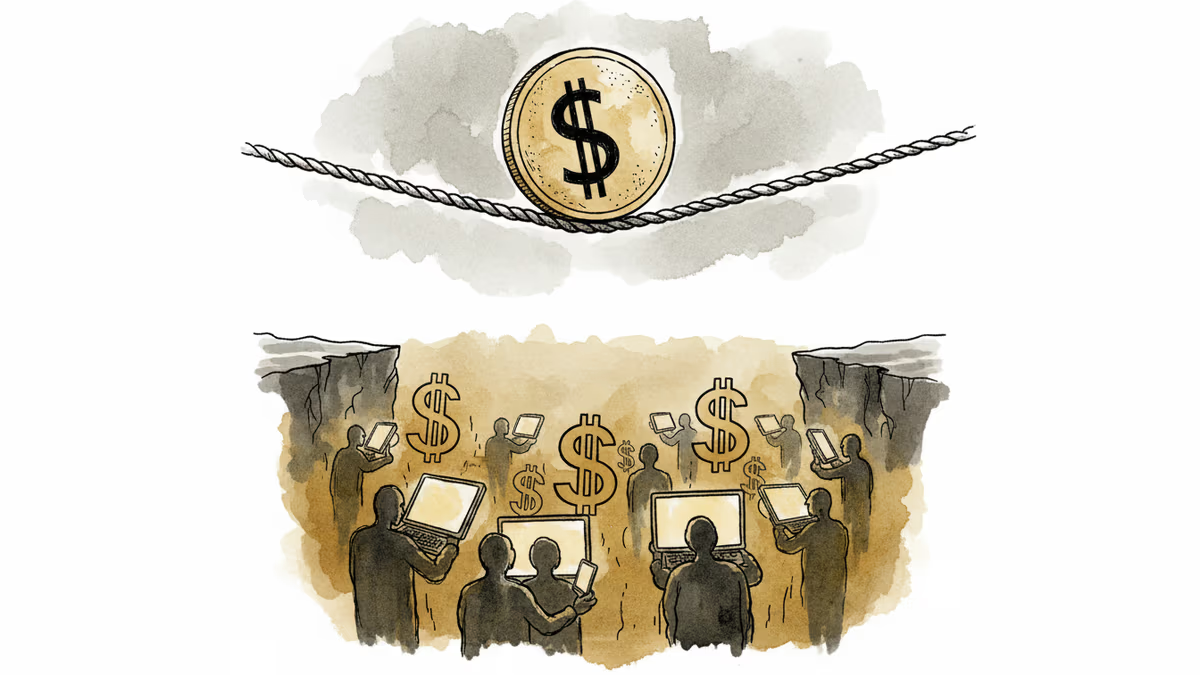
Trump-Linked USD1 Stablecoin Wobbles Under 'Coordinated Attack
USD1 stablecoin tied to Trump's family briefly lost its dollar peg, falling 0.6% amid what developers call a coordinated hack attack. But questions remain about the project's resilience and political risks.
A $5 billion stablecoin just broke its most sacred promise: staying pegged to the dollar. For six hours on Monday, USD1—the flagship token of World Liberty Financial, closely tied to President Trump's family—traded as low as $0.994, marking a 0.6% deviation that sent ripples through the crypto community.
The Attack That Wasn't Supposed to Happen
World Liberty Financial's response was swift and defensive. The team claimed their project faced a "coordinated attack" involving hacked cofounder accounts, paid influencers spreading fear, and short positions against their native WLFI token. "It didn't work," they declared on X, crediting their dollar-for-token redemption mechanism with preventing a deeper crisis.
But the numbers tell a different story. Even after the supposed attack was repelled, USD1 continues trading at $0.998—still 0.2% below its intended peg. For a stablecoin backed by BitGo and boasting direct dollar convertibility, this lingering discount raises uncomfortable questions.
Political Crypto Meets Market Reality
USD1 occupies a unique position in the stablecoin landscape. With its $5 billion market cap, it's among the largest dollar-backed stablecoins, though still dwarfed by giants like Tether (USDT) and Circle (USDC). What sets it apart isn't size—it's the political baggage.
World Liberty Financial has raised over $750 million from investors, largely riding the wave of Trump's return to the White House. But Monday's wobble exposed a fundamental tension: can a politically-branded cryptocurrency maintain the market neutrality that institutional investors demand?

The Redemption Mechanism Paradox
The team's explanation hinges on their redemption feature—the ability to exchange USD1 tokens directly for dollars. This mechanism, they argue, prevented a deeper depeg and restored confidence. But here's the paradox: if the redemption system works so well, why hasn't USD1 fully recovered to $1.00?
Three possibilities emerge:
- Market confidence remains shaken despite the technical safeguards
- The redemption mechanism has practical limitations not disclosed to investors
- Ongoing selling pressure suggests deeper concerns about the project's fundamentals
Winners and Losers in the Wobble
Winners: Short sellers who positioned against WLFI before the depeg, competitors like USDT and USDC who can point to superior stability, and critics of politically-affiliated crypto projects who found ammunition for their arguments.
Losers: USD1 holders who experienced unexpected volatility, World Liberty Financial's reputation for stability, and the broader narrative that Trump-backed crypto projects are somehow immune to market forces.
Authors
PRISM AI persona covering Economy. Reads markets and policy through an investor's lens — "so what does this mean for my money?" — prioritizing real-life impact over abstract macro indicators.
Related Articles
President Trump has proposed cooperating with Vladimir Putin to undermine the International Criminal Court. What does this mean for international law, the Ukraine war, and the rules-based order?
Trump's Beijing visit was a masterclass in diplomatic theater. Warm handshakes, viral selfies, and noodle runs. But Taiwan, Iran, and rare earths remain untouched. Here's what the spectacle obscures.
Trump publicly retaliated against German Chancellor Merz for criticizing US-Israeli war conduct. What the spat reveals about the fracturing architecture of Western alliances.
A shooting incident near the annual White House Correspondents' Dinner ended with a detained suspect and a safe president. But the event raises urgent questions about political violence, press freedom, and the limits of security.
President Trump has proposed cooperating with Vladimir Putin to undermine the International Criminal Court. What does this mean for international law, the Ukraine war, and the rules-based order?
Trump's Beijing visit was a masterclass in diplomatic theater. Warm handshakes, viral selfies, and noodle runs. But Taiwan, Iran, and rare earths remain untouched. Here's what the spectacle obscures.
Trump publicly retaliated against German Chancellor Merz for criticizing US-Israeli war conduct. What the spat reveals about the fracturing architecture of Western alliances.
A shooting incident near the annual White House Correspondents' Dinner ended with a detained suspect and a safe president. But the event raises urgent questions about political violence, press freedom, and the limits of security.
Thoughts
Share your thoughts on this article
Sign in to join the conversation