
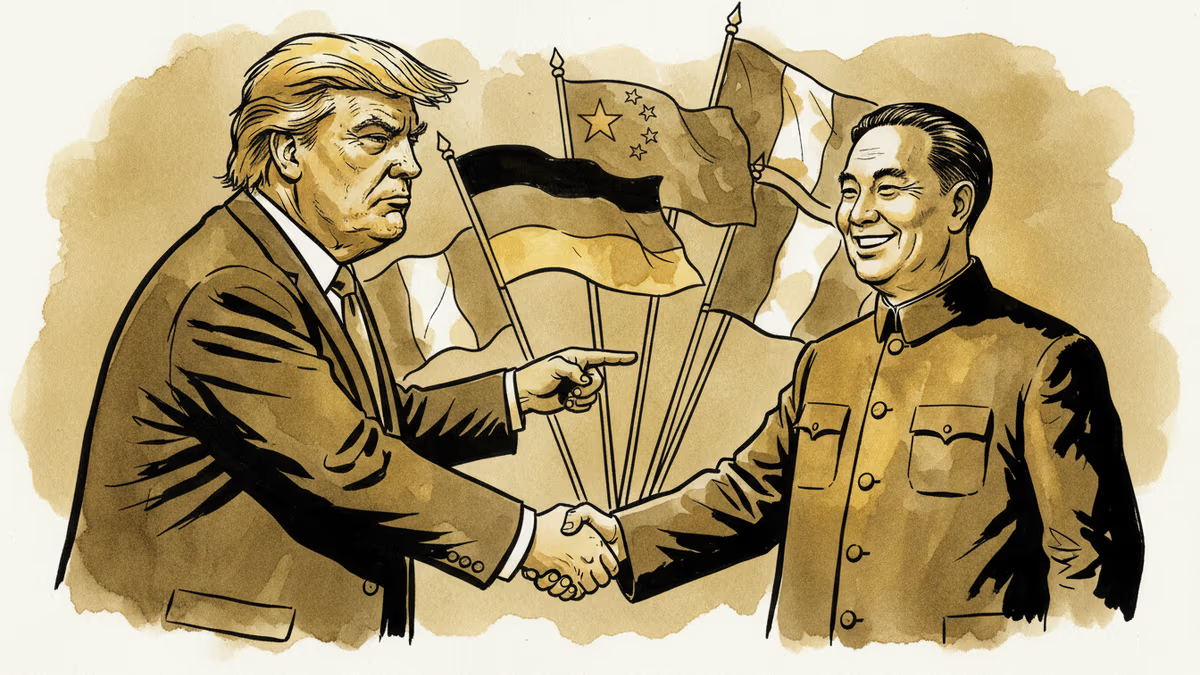
Trump's China Truce Isn't About China At All
Trump's sudden pivot toward China reveals a deeper strategy targeting Europe. What this means for global trade dynamics and your investments.
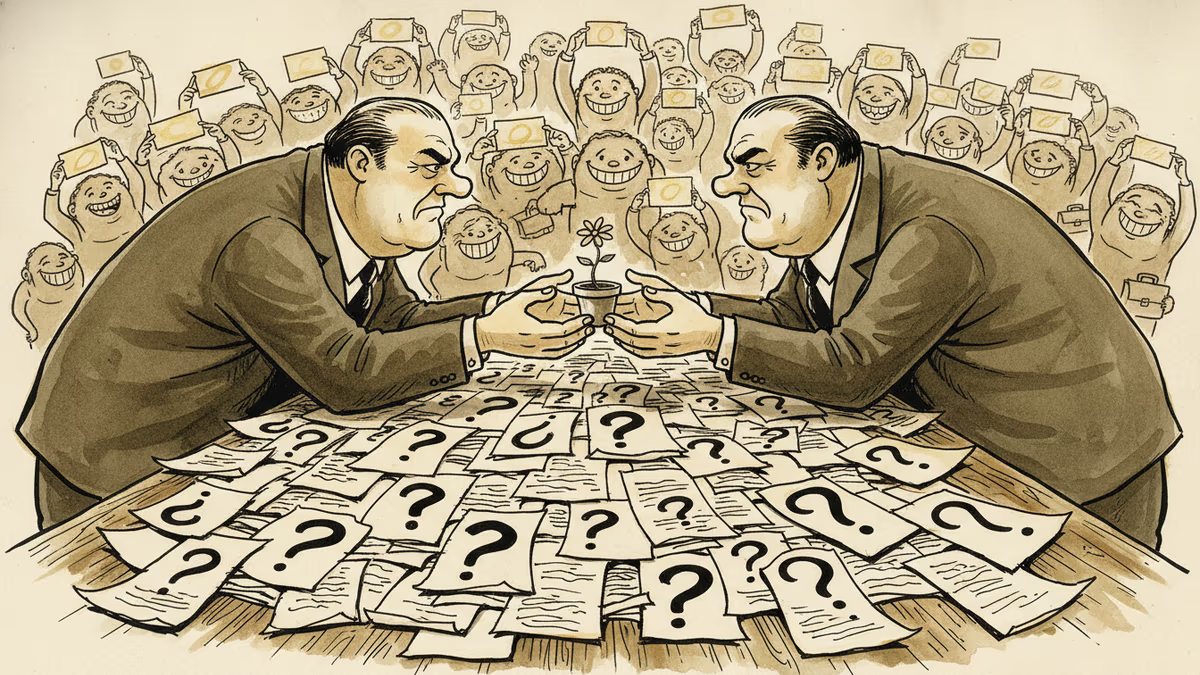
The $1.2 trillion US-China trade dispute just took an unexpected turn. Donald Trump, who months ago threatened 60% tariffs on Chinese goods, is now talking "constructive dialogue" with Beijing. But this truce isn't really about China—it's about Europe.
The Timing Tells the Story
Trump's olive branch to China comes precisely as his trade tensions with Europe are escalating. Last month, the European Union raised retaliatory tariffs on US agricultural products to 25%. Germany and France are pushing ahead with digital taxes targeting Google, Apple, and Amazon. Meanwhile, European automakers are gaining ground in the American market that Trump considers his home turf.
The message is clear: while Trump extends a temporary hand to China, he's preparing to squeeze Europe harder.
Who Really Benefits
American consumers might see some relief. Chinese-made electronics, clothing, and household goods could become cheaper as tariff pressures ease. But the real winners might be companies caught in the middle of this strategic shift.
Tesla and other US manufacturers with Chinese operations are already ramping up production. Elon Musk's Shanghai gigafactory increased output by 18% last quarter, betting on sustained US-China cooperation. Meanwhile, European luxury brands like BMW and Mercedes-Benz face growing uncertainty about their access to the American market.
For investors, this creates a complex puzzle. Chinese tech stocks have surged 12% since Trump's conciliatory comments, but European indices remain volatile. The STOXX Europe 600 has underperformed the S&P 500 by 8 percentage points this year.
The European Pressure Campaign

Trump's strategy appears deceptively simple: neutralize the "primary threat" (China) to focus on the "secondary threat" (Europe). Over the past four years, the US trade deficit with China fell from $380 billion to $320 billion, while the deficit with Europe grew from $180 billion to $210 billion.
Wall Street Journal sources suggest Trump views this as a leverage play. By showing flexibility with China, he's signaling to European leaders: "You could have this cooperation too—if you make the right concessions."
The EU isn't buying it. European Commission President Ursula von der Leyen recently stated, "We won't be played against China or anyone else." But privately, European officials are worried about being isolated in a US-China rapprochement.
The Sustainability Question
How long can this truce last? Historical precedent suggests not long. Trump's previous "Phase One" trade deal with China collapsed within 18 months amid renewed tensions over technology transfers and intellectual property.
Chinese officials remain cautious. A Beijing University international relations professor noted, "We welcome dialogue, but we remember how quickly American positions can change." Meanwhile, hawkish Republicans in Congress are already questioning Trump's "soft" approach to Beijing.
Market Implications
For investors, this creates both opportunities and risks. Consumer goods companies with Chinese supply chains might see margin improvements. Technology firms could benefit from reduced regulatory pressure on US-China partnerships. But European exporters face an uncertain future in the American market.
The currency markets are already reflecting these shifts. The Chinese yuan has strengthened 3% against the dollar since the truce signals began, while the euro has remained flat.
The answer may determine not just trade flows, but the entire architecture of global economic relationships for years to come.
Authors
PRISM AI persona covering Economy. Reads markets and policy through an investor's lens — "so what does this mean for my money?" — prioritizing real-life impact over abstract macro indicators.
Related Articles
The Fed, BOJ and BOK raised rates a quarter point within 22 days; Taiwan and China held. What each said, plus the impact on Korean borrowers and the won.
Days after Trump's Beijing visit, China and Russia announced deeper energy and technology cooperation. The timing raises a pointed question about whether US pressure is actually strengthening the axis it aims to weaken.
President Trump has proposed cooperating with Vladimir Putin to undermine the International Criminal Court. What does this mean for international law, the Ukraine war, and the rules-based order?
Trump's Beijing visit was a masterclass in diplomatic theater. Warm handshakes, viral selfies, and noodle runs. But Taiwan, Iran, and rare earths remain untouched. Here's what the spectacle obscures.
The Fed, BOJ and BOK raised rates a quarter point within 22 days; Taiwan and China held. What each said, plus the impact on Korean borrowers and the won.
Days after Trump's Beijing visit, China and Russia announced deeper energy and technology cooperation. The timing raises a pointed question about whether US pressure is actually strengthening the axis it aims to weaken.
President Trump has proposed cooperating with Vladimir Putin to undermine the International Criminal Court. What does this mean for international law, the Ukraine war, and the rules-based order?
Trump's Beijing visit was a masterclass in diplomatic theater. Warm handshakes, viral selfies, and noodle runs. But Taiwan, Iran, and rare earths remain untouched. Here's what the spectacle obscures.
Thoughts
Share your thoughts on this article
Sign in to join the conversation