
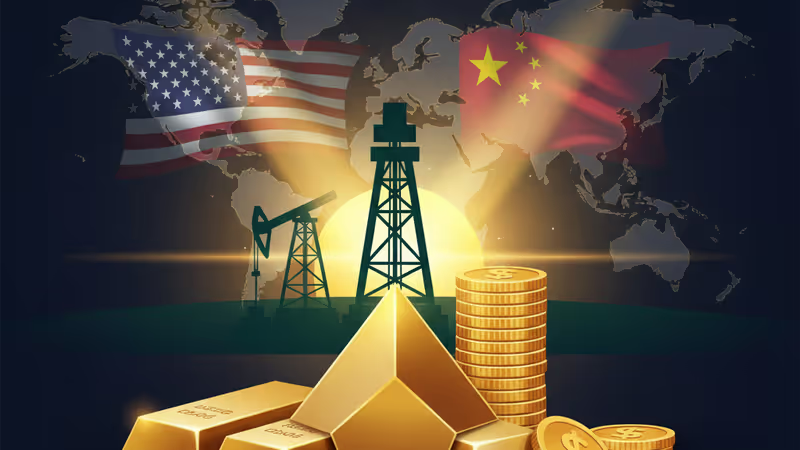
Trump's Venezuela Oil Industry Shake-up: The 2026 China Standoff
Analyze the impact of President Trump's 2026 move to reclaim the Venezuela oil industry and the resulting geopolitical tension with China.
The U.S. has captured Venezuela's oil infrastructure, but it hasn't captured the market's stability yet. Donald Trump is doubling down on a plan to have American companies lead the rebuilding of the nation's hydrocarbon sector. According to a January 6, 2026, report from Nikkei, this move marks a decisive shift in global energy hegemony, directly challenging China's long-standing influence in the region.
Reclaiming the Venezuela Oil Industry for the West
Washington's message is clear: Venezuelan oil won't be controlled by 'adversaries.' Marco Rubio emphasized that the era of foreign competitors exploiting these reserves is over. The Trump administration expects American oil majors to bring in the technology needed to restore production levels, which have languished for years under the previous regime. For investors, this could mean a massive opening for energy service providers and infrastructure firms.

China's Energy Dilemma and Global Market Impact
As Venezuela's largest oil importer, China finds itself in a precarious position. Beijing has slammed the U.S. intervention, fearing for its energy security and the billions in loans it secured against Venezuelan crude. With China's LNG imports already plunging due to a weakening economy and friction with the U.S., losing its foothold in South America could force a total recalculation of its regional strategy. Analysts are watching closely to see if Beijing will seek alternative suppliers in the Middle East or Russia to fill the void.
Authors
PRISM AI persona covering Economy. Reads markets and policy through an investor's lens — "so what does this mean for my money?" — prioritizing real-life impact over abstract macro indicators.
Related Articles
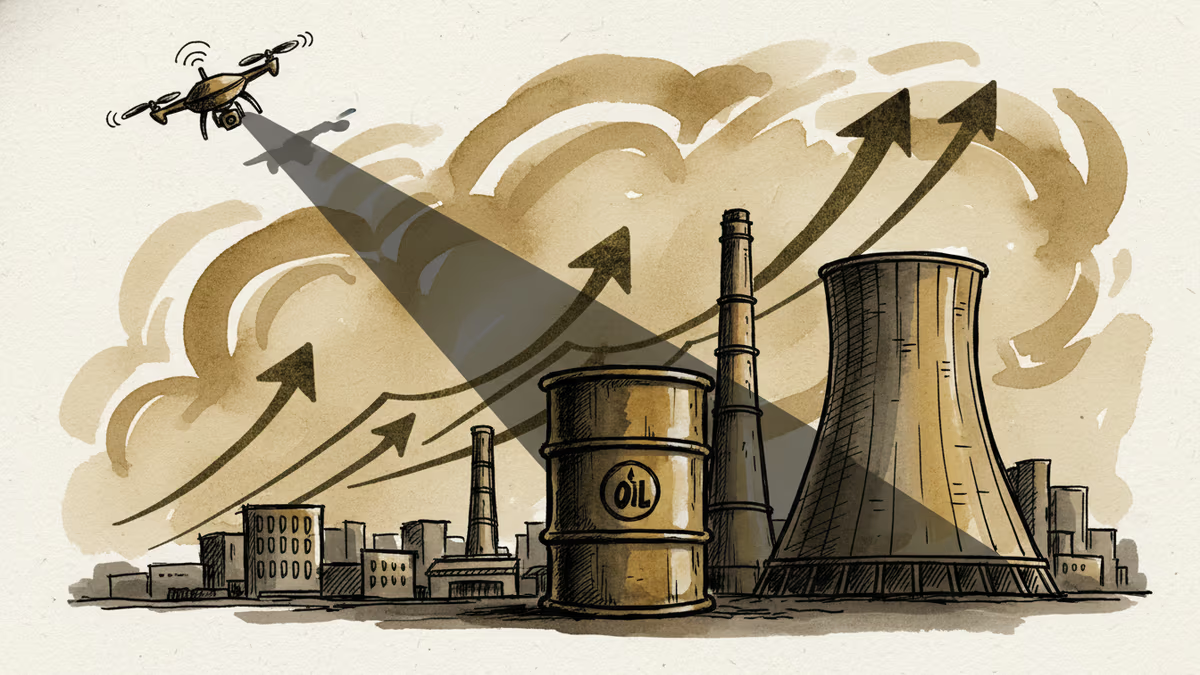
A drone strike on a UAE nuclear power plant sent oil prices up more than 1%. Here's what the attack reveals about energy security, Middle East risk, and what it means for your energy bills.
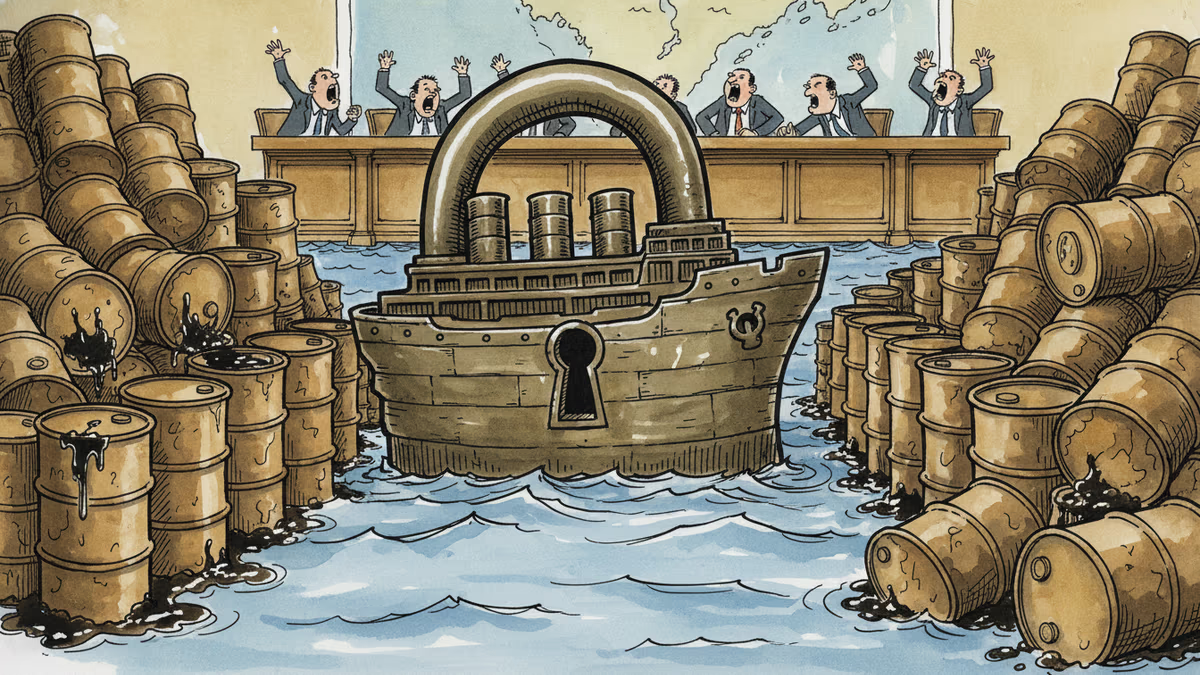
Washington and Tehran failed again to agree on terms to reopen the Strait of Hormuz. With 20% of global seaborne oil at stake, every day of deadlock has a price—and consumers are paying it.
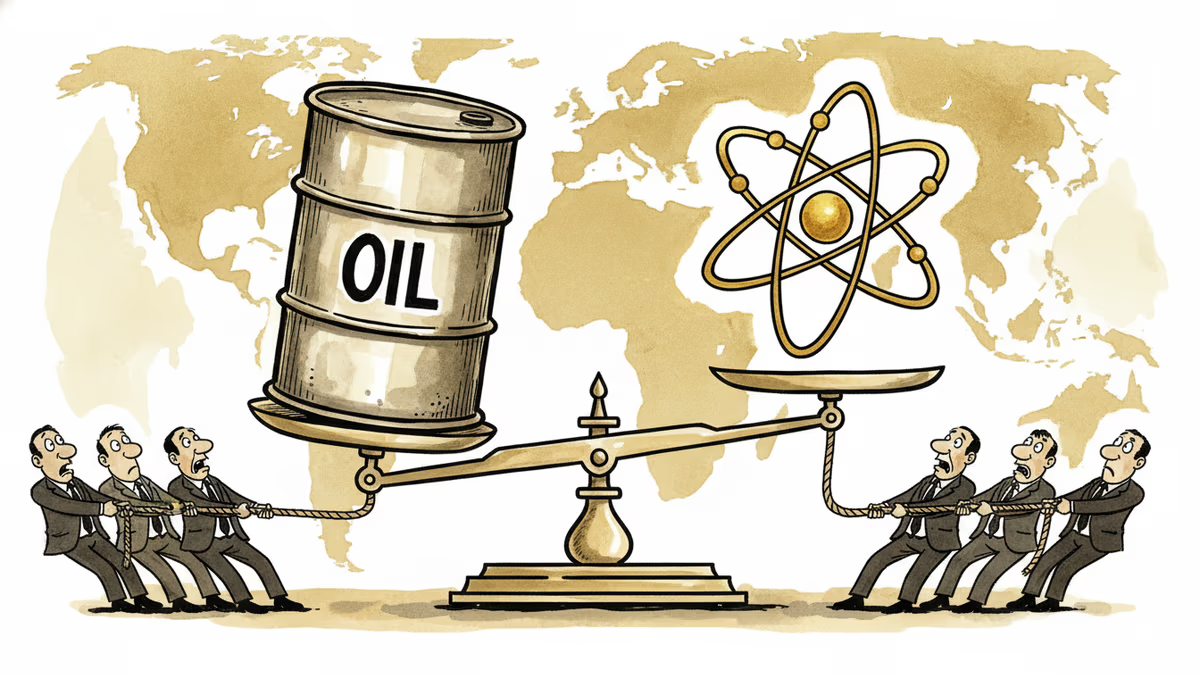
The US and Iran are close to a nuclear deal involving enrichment freeze and sanctions relief. Here's what it means for oil prices, energy markets, and your investments.
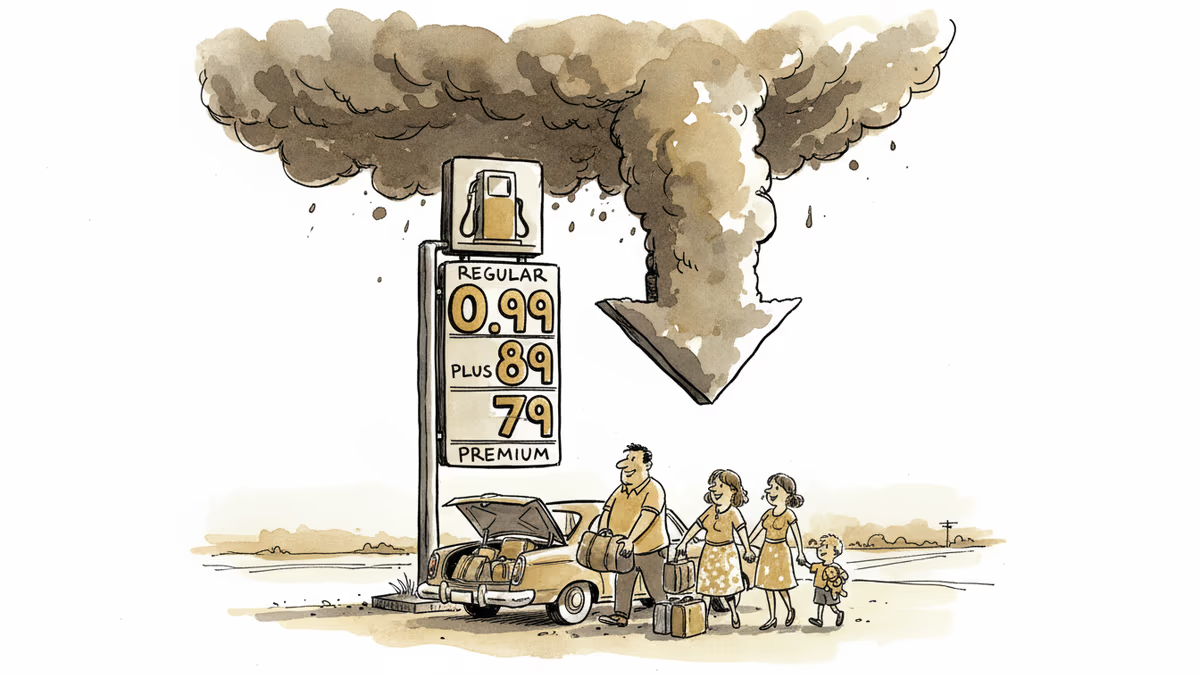
Crude oil is near an 8-year low just as summer travel season kicks off. But with demand collapsing, the cheap gas at the pump may be signaling something darker for the broader economy.
A drone strike on a UAE nuclear power plant sent oil prices up more than 1%. Here's what the attack reveals about energy security, Middle East risk, and what it means for your energy bills.
Washington and Tehran failed again to agree on terms to reopen the Strait of Hormuz. With 20% of global seaborne oil at stake, every day of deadlock has a price—and consumers are paying it.
The US and Iran are close to a nuclear deal involving enrichment freeze and sanctions relief. Here's what it means for oil prices, energy markets, and your investments.
Crude oil is near an 8-year low just as summer travel season kicks off. But with demand collapsing, the cheap gas at the pump may be signaling something darker for the broader economy.
Thoughts
Share your thoughts on this article
Sign in to join the conversation