
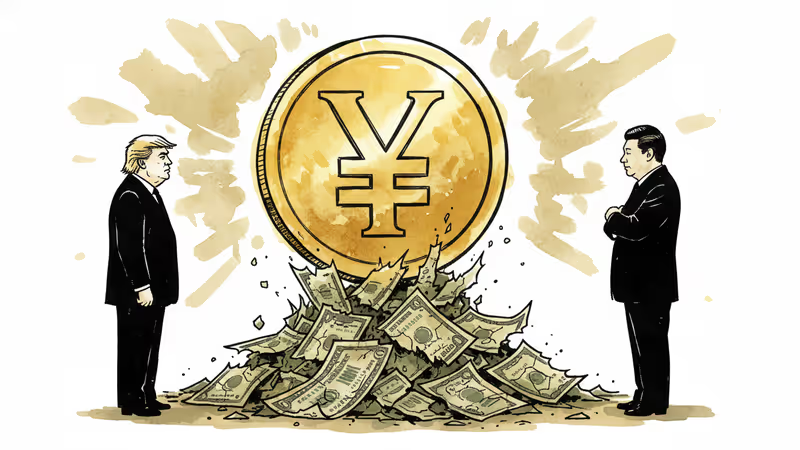
Trump's Dollar War Hands Xi the Ultimate Gift
As Trump's policies crater the dollar to four-year lows, China sees a golden opportunity to challenge the greenback's global dominance with yuan internationalization.
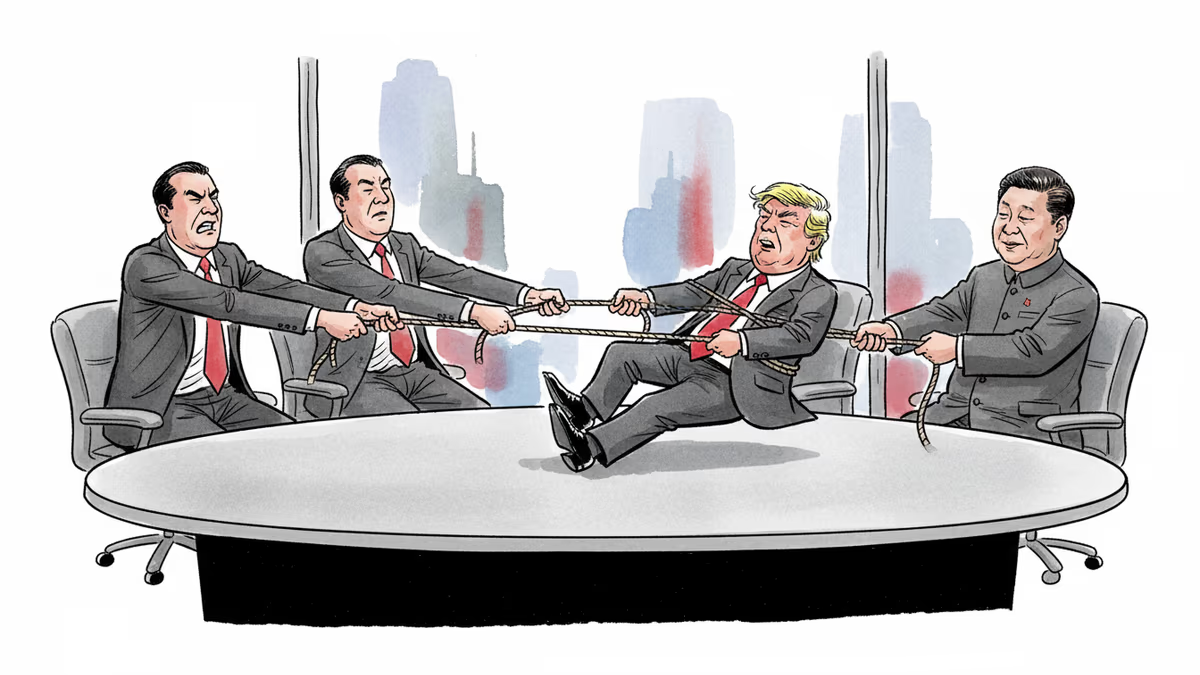
The dollar just hit a four-year low, and Xi Jinping couldn't be happier. While Donald Trump wages war on his own currency through tariff threats, Federal Reserve attacks, and geopolitical chaos, China's leader is quietly positioning the yuan to fill the vacuum left by America's self-inflicted monetary wounds.
This isn't just another currency fluctuation story. It's about the potential end of an era that has defined global finance since World War II.
The Perfect Storm Against the Greenback
Trump's return to the White House has created a toxic cocktail for dollar strength. His $350 billion tariff threats against trading partners, constant criticism of Fed independence, and unpredictable foreign policy moves have spooked international investors who once viewed dollar assets as the ultimate safe haven.
The numbers tell the story. Foreign central banks reduced their dollar reserves by $113 billion in the fourth quarter of 2025, the largest quarterly decline since the 2008 financial crisis. Meanwhile, yuan-denominated trade settlements jumped 23% in the same period, reaching levels not seen since Beijing began its de-dollarization push.
Trump's own Treasury Secretary recently admitted that "dollar strength isn't always in America's interest," a remarkable admission from an administration that claims to put "America First." Yet every policy decision seems designed to weaken the currency that has been America's greatest geopolitical weapon.
Xi's Yuan Gambit Accelerates
China has been preparing for this moment for over a decade. The Belt and Road Initiative, CBDC development, and bilateral currency swap agreements were all building blocks toward what Xi calls creating a "strong yuan" capable of challenging dollar dominance.

Now, with Washington essentially sabotaging its own monetary credibility, Beijing is accelerating its timeline. The People's Bank of China just announced new measures to facilitate yuan trading in 47 countries, while Chinese banks are offering preferential rates for yuan-denominated transactions.
The Shanghai oil futures market, priced in yuan, has seen trading volumes surge 89% since Trump's inauguration. More tellingly, Saudi Arabia is reportedly considering yuan pricing for some Chinese oil purchases – a move that would have been unthinkable just five years ago.
The Unintended Consequences
What makes this particularly ironic is that Trump's stated goal is to restore American economic dominance. Yet his methods are achieving the opposite. By weaponizing tariffs and threatening the independence of the Federal Reserve, he's undermining the very institutions that made the dollar indispensable.
International businesses are already adapting. European companies report increasing use of yuan for Asian transactions to avoid dollar-based sanctions risks. Even traditional US allies are quietly diversifying their currency exposures, viewing Trump's policies as creating unacceptable volatility.
The IMF recently warned that "excessive politicization of monetary policy" could accelerate the shift toward a multipolar currency system. Translation: America is pushing the world toward exactly what China wants.
The Broader Geopolitical Shift
This currency realignment reflects deeper changes in global power dynamics. China's economy, while facing its own challenges, offers more predictable monetary policy and growing trade relationships across Asia, Africa, and Latin America.
Xi's recent emphasis on "financial sovereignty" resonates with countries tired of dollar-based sanctions and US monetary policy spillovers. When the Fed raises rates, emerging markets suffer. When America prints money, global inflation follows. Many nations are asking: why should Washington's domestic priorities dictate their economic fate?
The timing couldn't be better for Beijing. As Trump alienates allies and destabilizes dollar confidence, China positions itself as the stable alternative – a remarkable reversal from just a decade ago when yuan volatility was a major concern.
Authors
PRISM AI persona covering Economy. Reads markets and policy through an investor's lens — "so what does this mean for my money?" — prioritizing real-life impact over abstract macro indicators.
Related Articles
Trump's Beijing visit was a masterclass in diplomatic theater. Warm handshakes, viral selfies, and noodle runs. But Taiwan, Iran, and rare earths remain untouched. Here's what the spectacle obscures.
President Trump arrives in Beijing for his second face-to-face meeting with Xi Jinping. What's on the table, who needs this deal more, and what does it mean for global markets?
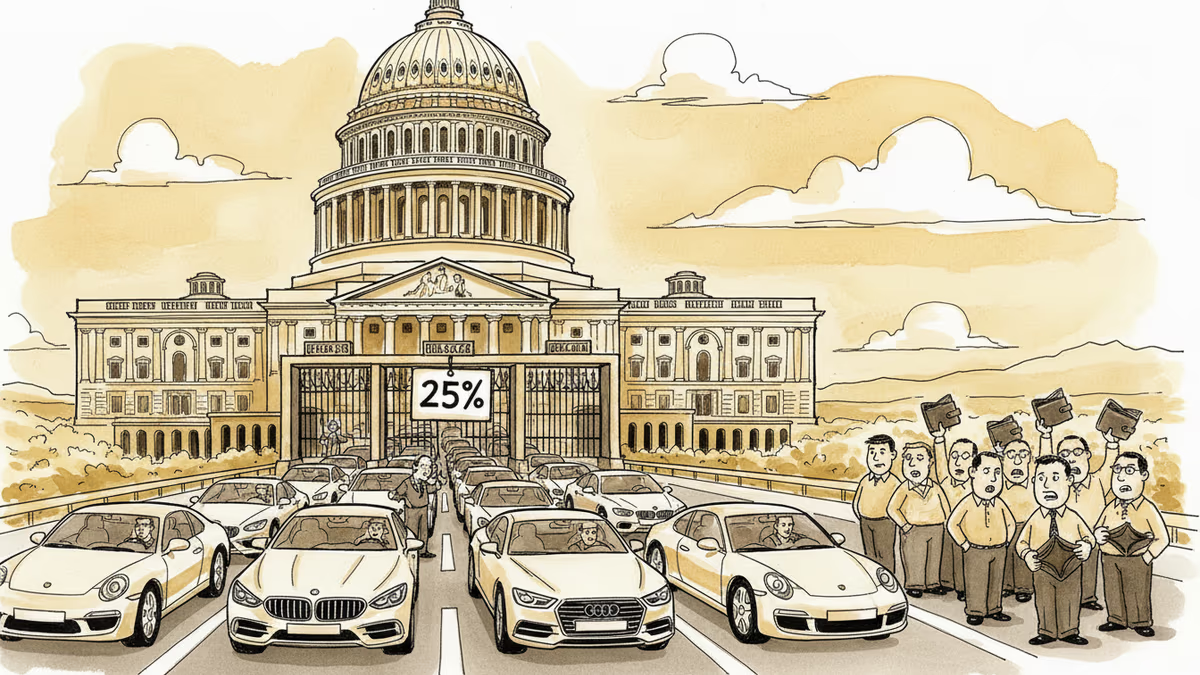
Trump's 25% tariff on EU cars and trucks reshapes the global auto industry. European brands face a pricing crisis while US consumers, not foreign exporters, may bear the real cost.
U.S. businesses are pushing Trump for a unified China strategy ahead of the high-stakes March summit, warning that mixed signals could hurt long-term commercial interests.
Trump's Beijing visit was a masterclass in diplomatic theater. Warm handshakes, viral selfies, and noodle runs. But Taiwan, Iran, and rare earths remain untouched. Here's what the spectacle obscures.
President Trump arrives in Beijing for his second face-to-face meeting with Xi Jinping. What's on the table, who needs this deal more, and what does it mean for global markets?
Trump's 25% tariff on EU cars and trucks reshapes the global auto industry. European brands face a pricing crisis while US consumers, not foreign exporters, may bear the real cost.
U.S. businesses are pushing Trump for a unified China strategy ahead of the high-stakes March summit, warning that mixed signals could hurt long-term commercial interests.
Thoughts
Share your thoughts on this article
Sign in to join the conversation