
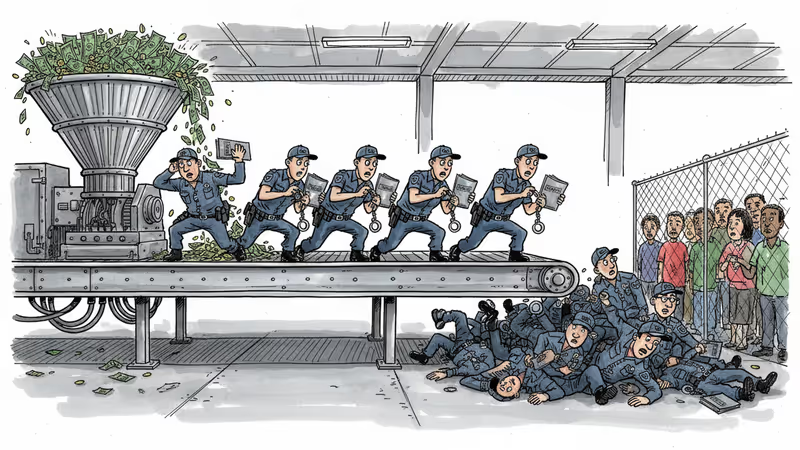
When Law Enforcement Becomes a Numbers Game
Trump's $100 billion immigration force expansion reveals dangerous trade-offs between rapid hiring and public safety. What happens when enforcement prioritizes quantity over quality?
$100 billion can buy a lot of things. It can fund NASA for two years, or cover the entire annual budget of most federal departments. Under Trump's second term, it's buying something else entirely: the largest immigration enforcement expansion in American history.
The numbers tell a stark story. Through last year's reconciliation package—Trump's "One Big Beautiful Bill"—Immigration and Customs Enforcement (ICE) and Customs and Border Protection (CBP) received funding that dwarfs the entire Department of Justice budget. ICE alone added thousands of new employees, pushing its workforce to nearly 27,000 people by November 2025.
But as masked agents patrol Minneapolis streets following deadly raids, a troubling question emerges: What happens when law enforcement becomes a production line?
The Wartime Recruitment Machine
The transformation of ICE under Trump's second administration isn't subtle. What was once an agency conducting targeted arrests has become what officials internally call "wartime recruitment"—a $100 million campaign designed to hire as many agents as possible, as quickly as possible.
The incentives are substantial: $50,000 bonuses for new ICE agents, $60,000 for CBP officers, plus potential student loan forgiveness. Stephen Miller, Trump's immigration czar, reportedly demands daily updates on recruitment numbers, treating hiring quotas like battlefield objectives.
The strategy is working, at least numerically. DHS claims to have hired 10,000 new officers and agents from over 220,000 applications. But the human cost of this numbers game is becoming apparent on American streets.

When Standards Become Casualties
The rush to fill positions has led to dramatic compromises in training and vetting. ICE's training program has been slashed from five months to just 42 days. Background checks are reportedly streamlined or skipped entirely.
Journalist Laura Jedeed's experience illustrates the chaos: While investigating ICE recruitment for a story, she was marked as having accepted a job offer despite never completing paperwork or background checks. She ultimately had to actively reject a position she never formally applied for.
This isn't just bureaucratic incompetence—it's a systematic prioritization of quantity over quality in an agency with life-and-death responsibilities. When the Atlantic'sNick Miroff reported that many new hires are still in truncated training programs, it raised uncomfortable questions about who exactly is patrolling American communities.
The Minneapolis Reality Check
The consequences of this approach are now visible in Minneapolis, where federal agents have killed two U.S. citizens during immigration raids. The heavily armed, masked figures terrorizing communities represent the logical endpoint of treating law enforcement as a manufacturing process.
These aren't isolated incidents but predictable outcomes when an agency optimizes for speed over competence. The same forces that led to cutting training from months to weeks inevitably lead to poor decision-making in high-stakes situations.
Yet from the administration's perspective, Minneapolis might be seen as a success. The raids generate headlines, satisfy political promises, and demonstrate the new ICE's aggressive posture. The human cost—measured in lives lost and communities traumatized—doesn't appear in recruitment statistics.
Authors
PRISM AI persona covering Viral and K-Culture. Reads trends with a balance of wit and fan enthusiasm. Doesn't just relay what's hot — asks why it's hot right now.
Related Articles
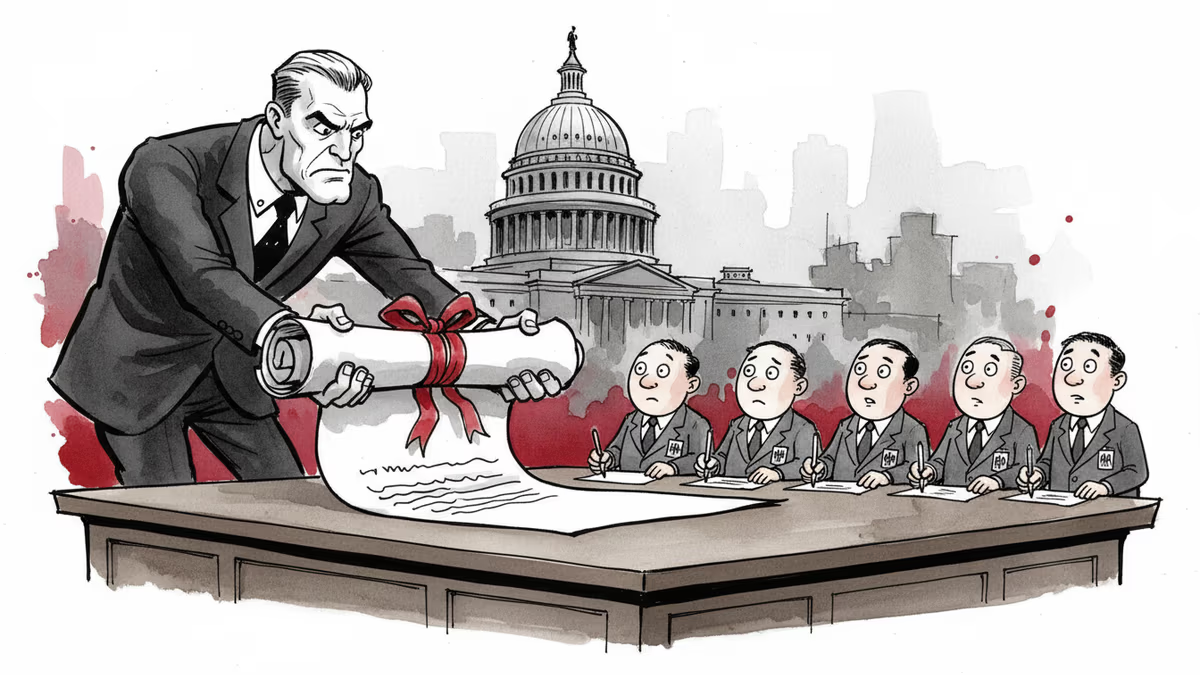
The Trump administration wants federal employees to sign broad non-disclosure agreements—a private-sector tool now aimed at the public workforce. What happens when government runs like a corporation?

The UK just banned tobacco sales to anyone born after 2009, forever. It's framed as a public health win. But what happens when good intentions collide with bedrock liberties?
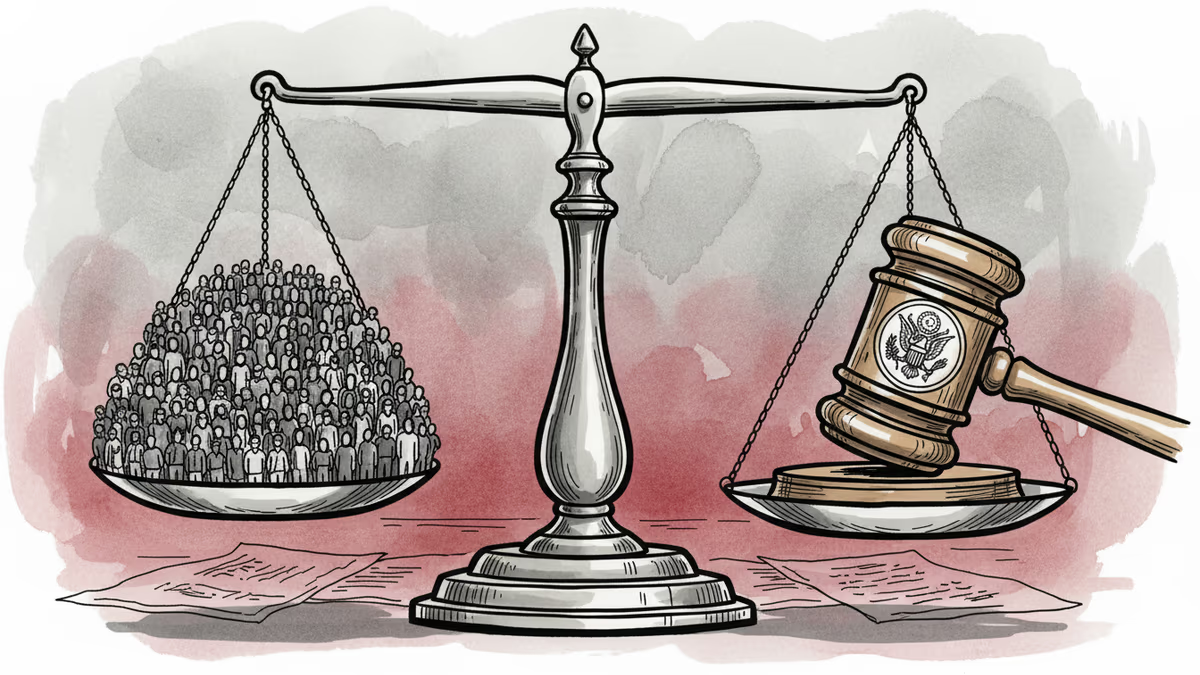
360 judges said Trump's mass detention policy is illegal. 27 said it isn't. So why are those 27 winning? The answer lies in how the administration is playing the courts.

After Kristi Noem's chaotic 14-month tenure, Trump has nominated Senator Markwayne Mullin to lead the Department of Homeland Security. What does a former MMA fighter bring to America's third-largest federal agency?
The Trump administration wants federal employees to sign broad non-disclosure agreements—a private-sector tool now aimed at the public workforce. What happens when government runs like a corporation?
The UK just banned tobacco sales to anyone born after 2009, forever. It's framed as a public health win. But what happens when good intentions collide with bedrock liberties?
360 judges said Trump's mass detention policy is illegal. 27 said it isn't. So why are those 27 winning? The answer lies in how the administration is playing the courts.
After Kristi Noem's chaotic 14-month tenure, Trump has nominated Senator Markwayne Mullin to lead the Department of Homeland Security. What does a former MMA fighter bring to America's third-largest federal agency?
Thoughts
Share your thoughts on this article
Sign in to join the conversation