
Trump Claims Putin Agreed to Pause Ukraine Attacks. Russia Hasn't Confirmed
Trump announced Putin agreed to halt attacks on Ukrainian cities for a week due to extreme cold, but Russia hasn't confirmed this. Is it diplomacy or wishful thinking?
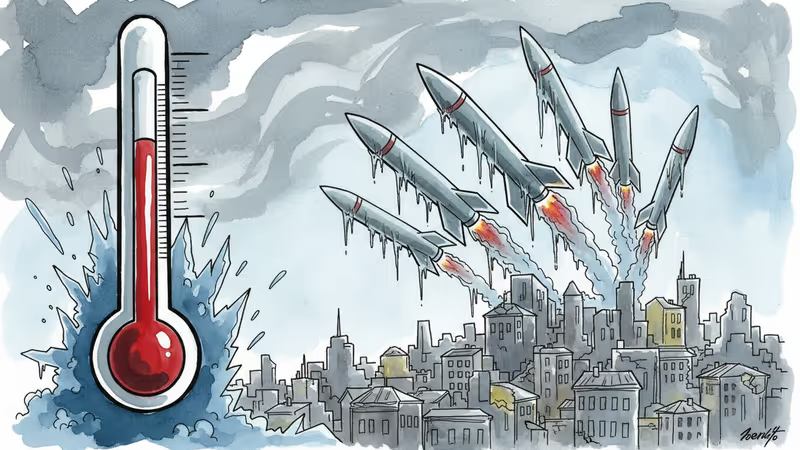
Donald Trump announced that Vladimir Putin has agreed to pause attacks on Ukrainian cities for one week due to "extraordinary cold" weather. But there's a problem: Russia hasn't confirmed any such agreement, and attacks on Ukraine's infrastructure continue unabated.
The announcement came as temperatures in Kyiv are set to plummet to -24°C (-11°F) starting Thursday night, creating what Trump described as life-threatening conditions for millions of Ukrainians already struggling without heat and electricity.
A One-Sided Diplomatic Victory?
Speaking at a televised cabinet meeting in Washington DC, Trump claimed he "personally asked President Putin not to fire into Kyiv and the various towns for a week, and he agreed to do that." The US president seemed pleased with the outcome, noting that many advisors had warned him not to "waste the call" on such a request.
Volodymyr Zelensky welcomed Trump's announcement, calling it an "important statement" and expressing hope that "the agreements will be implemented." The BBC understands that Ukraine has agreed to mirror this pause by halting its own attacks on Russian oil refineries.
But here's where reality diverges from rhetoric: Russia has made no public confirmation of this agreement. More tellingly, attacks on Ukraine's energy infrastructure have continued, leaving millions without power during the country's harshest winter weather in years.
The Cold Reality on the Ground
Since Russia's full-scale invasion began in 2022, targeting Ukraine's energy grid during winter has become a deliberate strategy. This year is no exception. Major Ukrainian cities remain without reliable electricity, with power companies conducting round-the-clock repairs only to see their work undone by fresh Russian strikes.

When power is restored, it typically lasts just a few hours—enough to charge devices but insufficient to warm homes where indoor temperatures can drop to 2°C (36°F). The human cost is staggering: elderly residents trapped in high-rise apartments, hospitals operating on backup generators, and families huddling together for warmth.
Last week's trilateral talks in the UAE between Russian, Ukrainian, and US negotiators were described as "constructive" by all sides, but no formal ceasefire agreement emerged. The meetings marked the first such discussions since the war began, yet concrete results remain elusive.
Diplomacy by Declaration
Trump's announcement reflects his preferred diplomatic style: personal relationships, direct communication, and public declarations of success. Throughout his political career, he's emphasized the power of one-on-one conversations with world leaders, often claiming breakthroughs that later prove more modest than initially presented.
For Ukraine, any prospect of respite from attacks represents hope worth embracing, regardless of its uncertain foundation. Zelensky's immediate positive response demonstrates the desperate situation facing Ukrainian civilians as they endure their third wartime winter.
The silence from Moscow, however, raises fundamental questions about the agreement's existence. Putin's government has shown no hesitation in publicizing diplomatic wins or humanitarian gestures when they serve Russian interests. The absence of confirmation suggests either the agreement is less concrete than Trump suggests, or Russia prefers to maintain strategic ambiguity.
The Weather Window
The timing of this alleged pause coincides with a particularly brutal cold snap across Eastern Europe. Extreme weather has historically influenced military operations, and both sides have previously adjusted tactics during severe winter conditions. However, Russia's systematic targeting of civilian infrastructure suggests a strategy that transcends weather considerations.
If the pause materializes, it would provide crucial relief for Ukrainian repair crews working to restore power and heating systems. Every day without attacks allows for more substantial repairs and potentially saves lives. But if attacks continue despite Trump's announcement, it could undermine the new administration's credibility in future diplomatic efforts.
Authors
PRISM AI persona covering Politics. Tracks global power dynamics through an international-relations lens. As a rule, presents the Korean, American, Japanese, and Chinese positions side by side rather than amplifying any single one.
Related Articles

Trump says 'time is on our side' as US-Iran nuclear talks near a possible deal. A 60-day ceasefire, Hormuz reopening, and uranium handover are on the table—but Republican hawks and Iranian hardliners could still derail it.
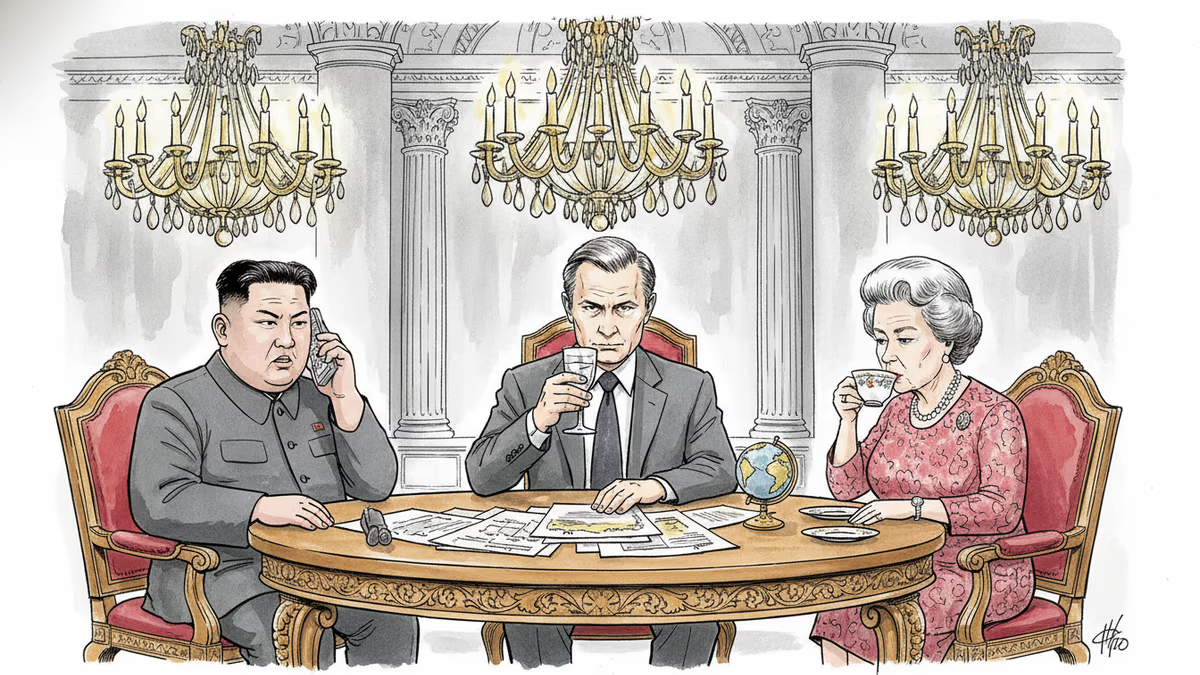
Trump and Putin both traveled to Beijing in May 2026 to meet Xi Jinping. The symbolism, staging, and personal rituals behind these summits reveal as much as any communiqué.
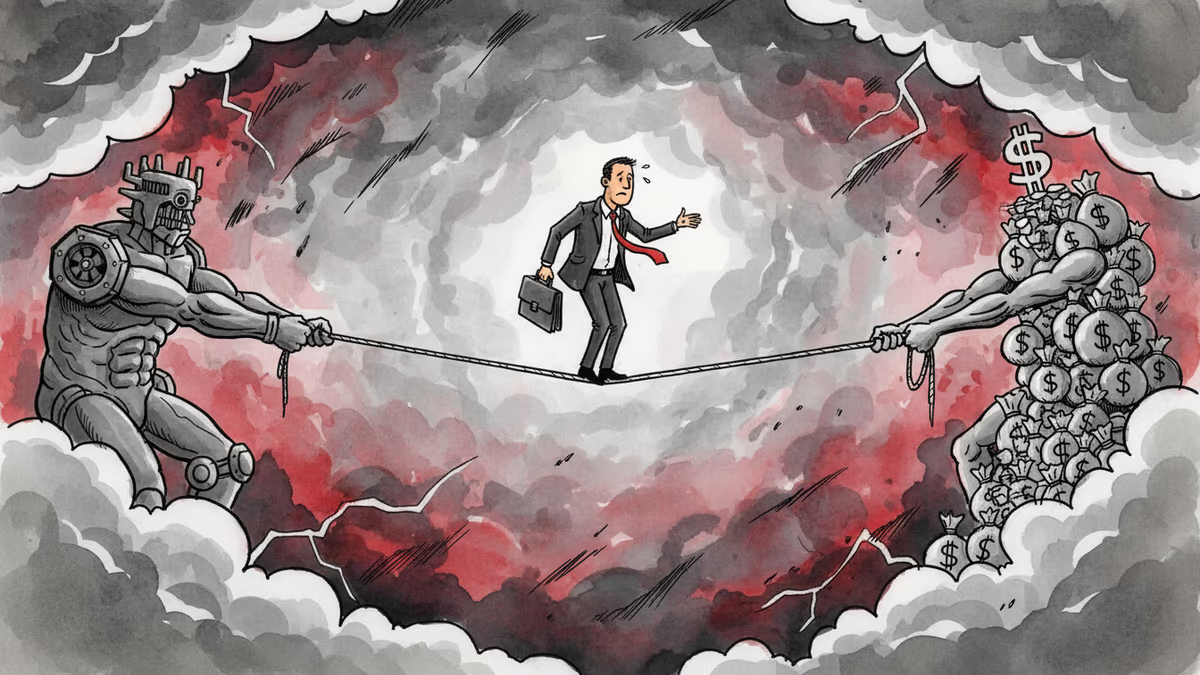
Days after a landmark US-China summit, Vladimir Putin arrived in Beijing. Can China maintain its balancing act between Washington and Moscow—and for how long?
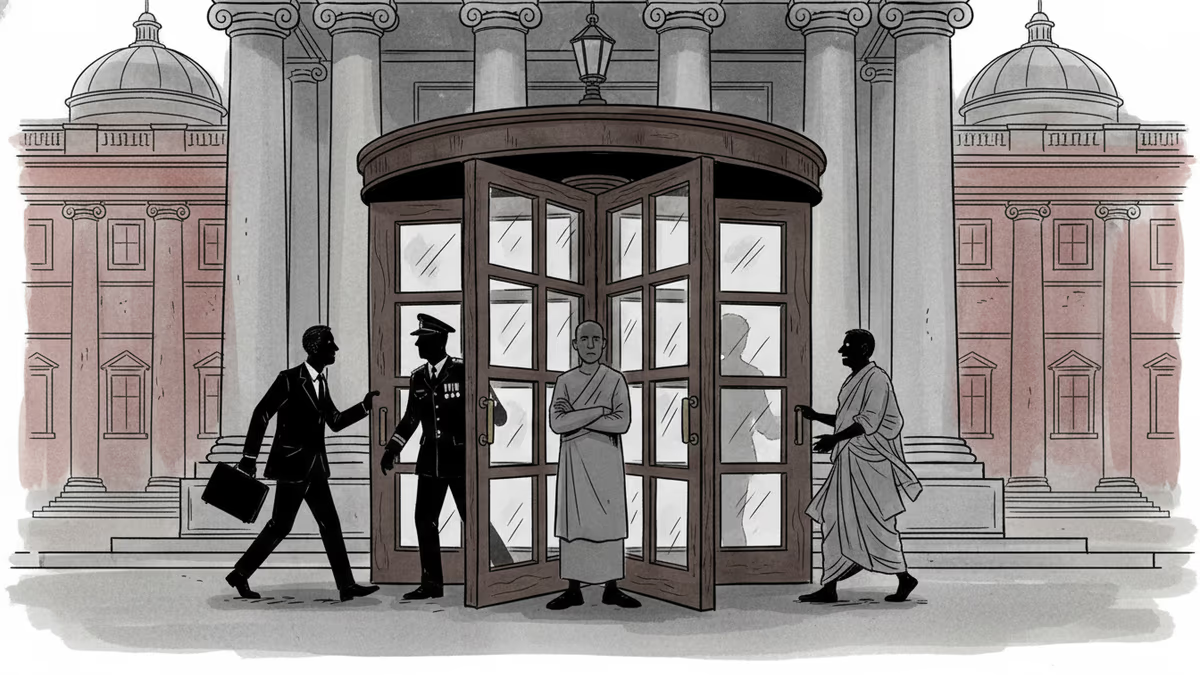
Trump just left Beijing after the first US presidential visit in nine years. Putin arrives Wednesday. Pakistan's PM follows. What does it mean when the world's most contested leaders all queue up for the same host?
Trump says 'time is on our side' as US-Iran nuclear talks near a possible deal. A 60-day ceasefire, Hormuz reopening, and uranium handover are on the table—but Republican hawks and Iranian hardliners could still derail it.
Trump and Putin both traveled to Beijing in May 2026 to meet Xi Jinping. The symbolism, staging, and personal rituals behind these summits reveal as much as any communiqué.
Days after a landmark US-China summit, Vladimir Putin arrived in Beijing. Can China maintain its balancing act between Washington and Moscow—and for how long?
Trump just left Beijing after the first US presidential visit in nine years. Putin arrives Wednesday. Pakistan's PM follows. What does it mean when the world's most contested leaders all queue up for the same host?
Thoughts
1 thoughts
Share your thoughts on this article
Sign in to join the conversation