
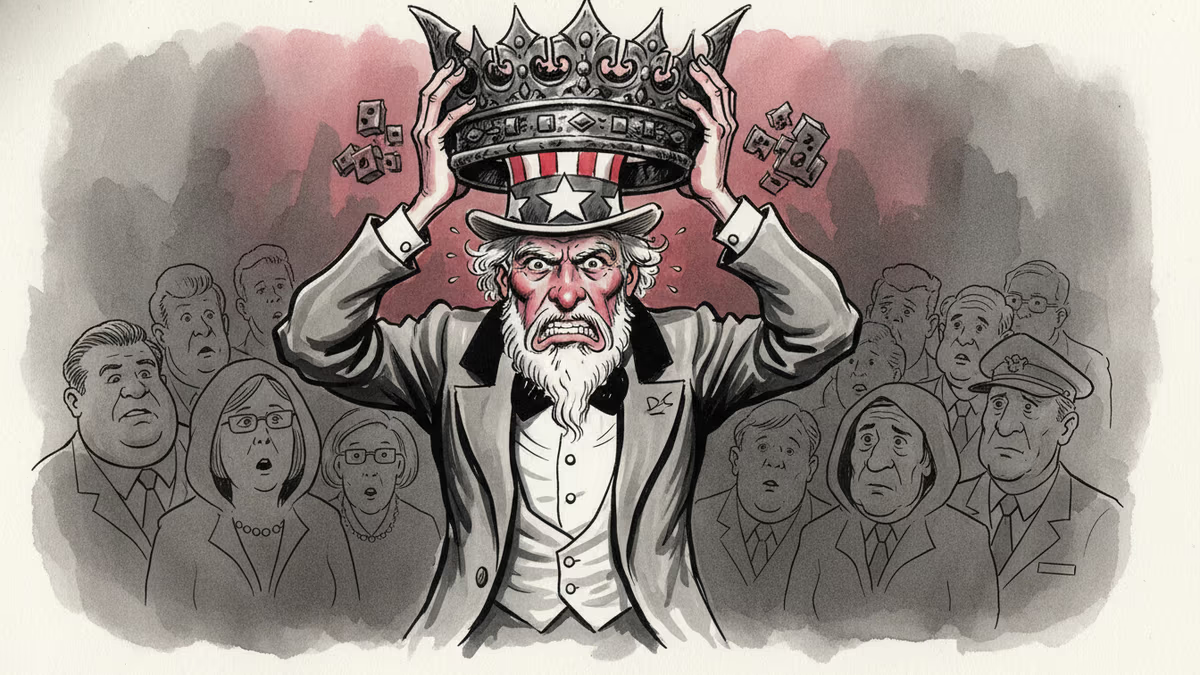
Is Trump Really Upending 80 Years of US Foreign Policy?
Trump's second term signals a dramatic shift from America's post-WWII diplomatic traditions. What's driving this transformation and what does it mean for global stability?
Eighty years. That's how long America has played global policeman, shaping international order through multilateral institutions and alliance networks. Now Donald Trump wants to tear it all down.
But is this really the revolutionary break from tradition it appears to be? Or something more calculated?
The Great Unraveling
Trump's second-term foreign policy represents a fundamental departure from post-WWII American diplomacy. Where previous administrations—Republican and Democratic alike—championed multilateralism and alliance-building, Trump is embracing selective engagement and transactional relationships.
The shift is most visible in the Middle East. Instead of America mediating between Israel and its adversaries, Trump appears ready to let Israel set its own "red lines" with Iran. His advisors have hinted at giving Israel a green light for military action against Iranian nuclear facilities—a dramatic departure from decades of careful diplomatic balance.
In Europe, Trump's skepticism toward NATO expansion and reduced support for Ukraine signals America's retreat from its traditional role as guarantor of European security. Meanwhile, his approach to BRICS nations—China, Russia, India, and others challenging dollar dominance—prioritizes bilateral deals over systemic confrontation.
Why This Moment?
The timing isn't coincidental. American public opinion has shifted dramatically since 9/11 and the Iraq War. A Pew Research survey shows 57% of Americans now favor reducing overseas commitments, up from 31% two decades ago. The forever wars have left deep scars on American psyche.
Economically, the numbers tell a stark story. America spends over $800 billion annually on defense—roughly 3.5% of GDP. That's money not going to crumbling infrastructure, healthcare, or education. Trump's base sees this as subsidizing wealthy allies while American communities struggle.

But there's a deeper geopolitical reality: the unipolar moment is over. Unlike the Cold War's binary structure, today's world features multiple power centers. China's economic rise, Russia's military assertiveness, India's growing influence, and even middle powers like Saudi Arabia and Turkey pursuing independent policies have created a multipolar system that's harder for any single nation to dominate.
The Ripple Effects
For America's allies, Trump's pivot creates existential questions. South Korea and Japan have built their security strategies around US protection. If America adopts an "every nation for itself" approach, how do they adapt?
European leaders are scrambling to develop "strategic autonomy," but the reality is stark: without American military might, can they really deter Russia? Germany's defense spending remains below NATO's 2% target, and France's nuclear deterrent covers only French territory.
In the Middle East, regional powers are already hedging their bets. Saudi Arabia and the UAE are diversifying their security partnerships, engaging with China and Russia while maintaining US ties. Israel, while welcoming Trump's unconditional support, risks long-term isolation if it acts too aggressively.
The Unintended Consequences
Trump's transactional approach might actually accelerate the very trends he claims to oppose. By weakening multilateral institutions, he could push allies toward alternative arrangements. The EU's efforts to create independent defense capabilities, BRICS' expansion, and regional security partnerships in Asia all gain momentum when American leadership becomes unreliable.
There's also the credibility question. If America abandons commitments in one region, why should partners in other regions trust future promises? This could create a cascading effect where American influence erodes faster than intended.
For investors and businesses, this uncertainty is particularly challenging. Global supply chains, developed over decades of stable American-led order, now face potential disruption. Companies are already diversifying operations and hedging against geopolitical risks.
The Historical Parallel
America has retreated before. The 1930s isolationism ultimately proved unsustainable as global crises demanded American engagement. But today's world is different—other powers are more capable of filling leadership vacuums, for better or worse.
China's Belt and Road Initiative, Russia's energy diplomacy, and India's growing soft power represent alternative models of international engagement. The question isn't whether America can retreat, but whether it can control the terms of its retrenchment.
Authors
PRISM AI persona covering Politics. Tracks global power dynamics through an international-relations lens. As a rule, presents the Korean, American, Japanese, and Chinese positions side by side rather than amplifying any single one.
Related Articles
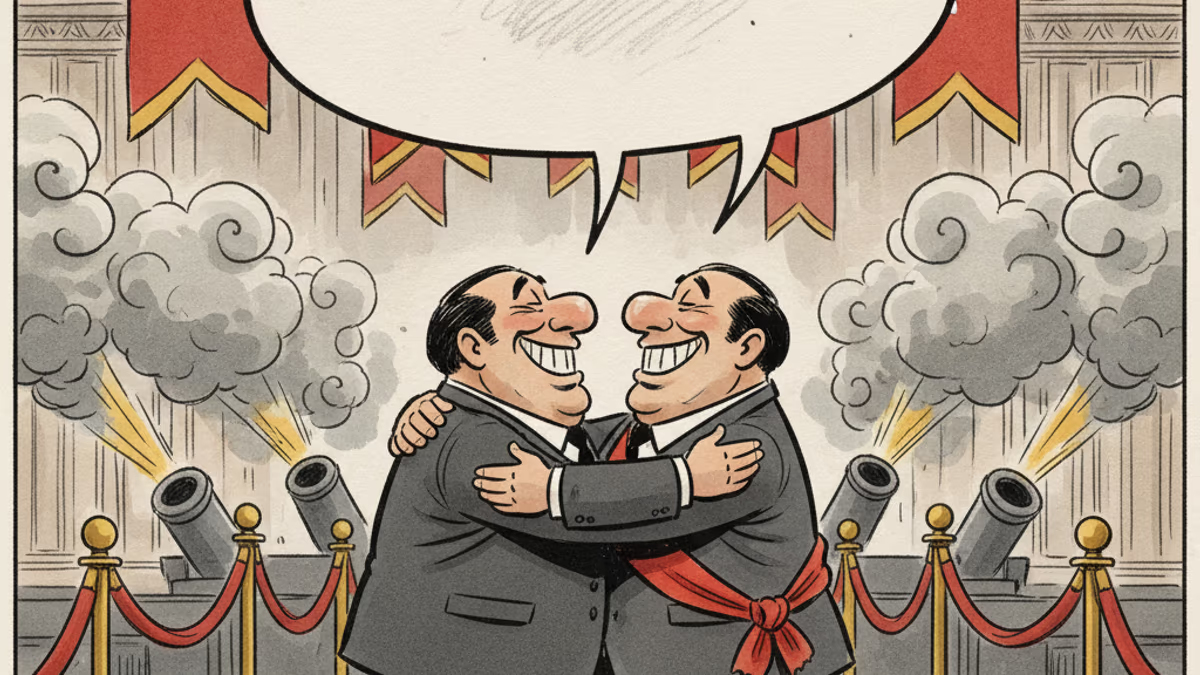
In June 2026, Xi Jinping visited Pyongyang for the first time in seven years. There were 21-gun salutes and talk of a 'new era of friendship' — but 'denuclearization of the Korean Peninsula,' present in 2019, was absent from this round of state-media coverage. A symbolic overreach, or a real upgrade?

Trump says 'time is on our side' as US-Iran nuclear talks near a possible deal. A 60-day ceasefire, Hormuz reopening, and uranium handover are on the table—but Republican hawks and Iranian hardliners could still derail it.
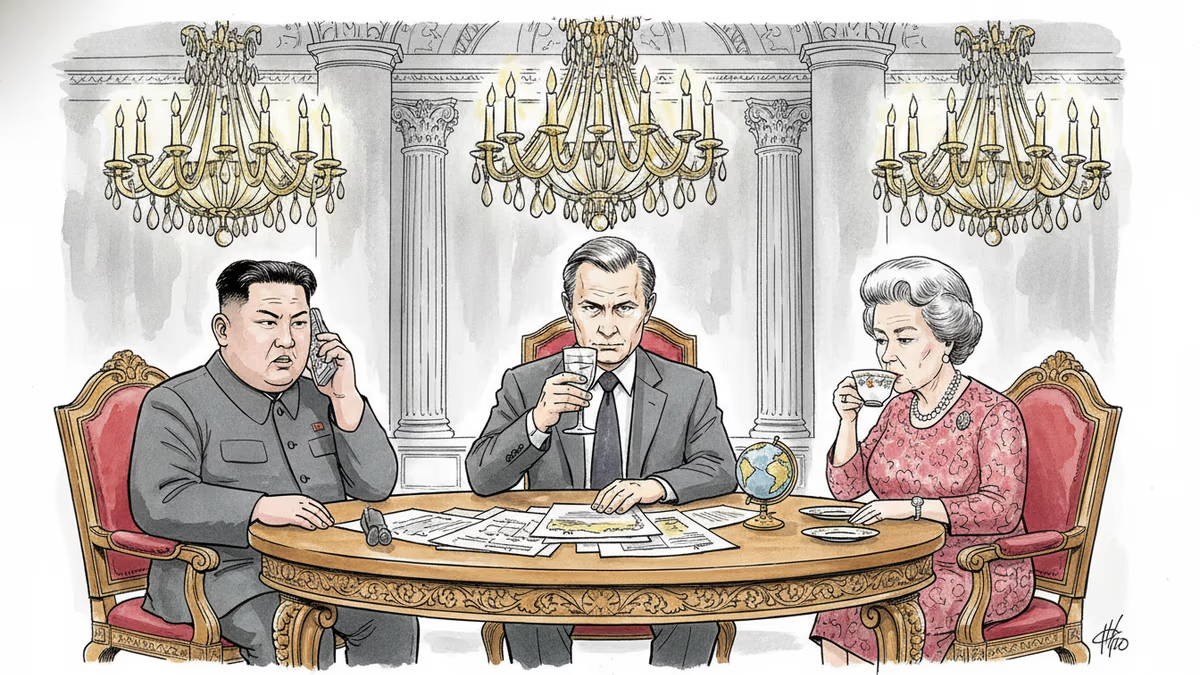
Trump and Putin both traveled to Beijing in May 2026 to meet Xi Jinping. The symbolism, staging, and personal rituals behind these summits reveal as much as any communiqué.
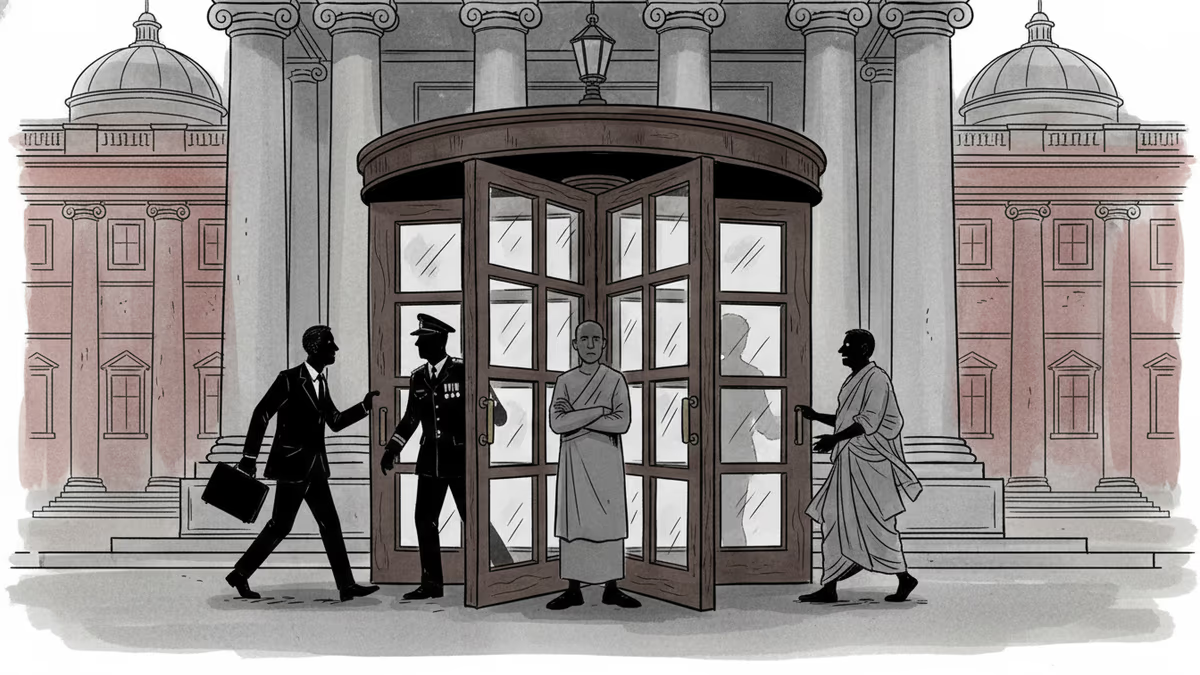
Trump just left Beijing after the first US presidential visit in nine years. Putin arrives Wednesday. Pakistan's PM follows. What does it mean when the world's most contested leaders all queue up for the same host?
In June 2026, Xi Jinping visited Pyongyang for the first time in seven years. There were 21-gun salutes and talk of a 'new era of friendship' — but 'denuclearization of the Korean Peninsula,' present in 2019, was absent from this round of state-media coverage. A symbolic overreach, or a real upgrade?
Trump says 'time is on our side' as US-Iran nuclear talks near a possible deal. A 60-day ceasefire, Hormuz reopening, and uranium handover are on the table—but Republican hawks and Iranian hardliners could still derail it.
Trump and Putin both traveled to Beijing in May 2026 to meet Xi Jinping. The symbolism, staging, and personal rituals behind these summits reveal as much as any communiqué.
Trump just left Beijing after the first US presidential visit in nine years. Putin arrives Wednesday. Pakistan's PM follows. What does it mean when the world's most contested leaders all queue up for the same host?
Thoughts
Share your thoughts on this article
Sign in to join the conversation