

Trump Signals 25% Tariffs on South Korea
President Trump announces plans to impose 25% tariffs on South Korea, potentially reshaping US-Korea trade relations and challenging the existing KORUS FTA framework.
Donald Trump has announced plans to impose 25% tariffs on South Korea, a move that could fundamentally reshape one of America's most important Pacific trade relationships. The decision strikes at the heart of the Korea-US Free Trade Agreement (KORUS), which has governed bilateral commerce since 2012.
What's at Stake
The numbers tell the story. South Korea exports roughly $95 billion worth of goods to the United States annually, making it America's sixth-largest trading partner. Under KORUS, over 95% of traded goods enjoyed tariff-free status—a framework that Trump's 25% levy would effectively dismantle.
Samsung and SK Hynix dominate global memory chip markets. Hyundai and Kia have carved out significant US auto market share. LG Chem supplies batteries to major American electric vehicle manufacturers. All face potential pricing pressure that could erode their competitive edge against Japanese and European rivals.
The semiconductor sector presents a particularly complex case. Korean chipmakers already navigate tensions between US technology restrictions and Chinese market access. Adding tariff pressure creates a three-way squeeze that could accelerate industry consolidation or force painful strategic choices.
Why Now?
Timing matters in trade policy. Trump's tariff announcement comes as South Korea deepens economic ties with China—its largest trading partner at 22.8% of total trade, compared to 13.4% with the US. The move appears designed to force Seoul into a starker choice between economic pragmatism and strategic alignment.
This isn't just about trade balances. It's about supply chains, technology transfer, and geopolitical positioning in the Indo-Pacific. Korean companies have spent decades building integrated production networks spanning China, Korea, and the US. Tariffs threaten to fragment these carefully constructed systems.

Consider Samsung's dilemma: components manufactured in China, assembled in Korea, then exported to American consumers. Under the new tariff regime, this model becomes economically questionable. The company might need to relocate production, restructure supply chains, or accept reduced margins.
Winners and Losers Emerge
Large Korean conglomerates have options. They can shift production to existing facilities in Vietnam, Mexico, or even the United States. Samsung already operates chip fabrication plants in Texas. Hyundai has manufacturing capacity in Alabama and Georgia.
Smaller suppliers face harder choices. Korean auto parts manufacturers, electronics component makers, and specialized machinery producers lack the capital for rapid geographic diversification. They're caught between rising export costs and the need to maintain relationships with major customers.
American consumers will ultimately pay higher prices for Korean goods, from smartphones to cars. But they might also see increased investment in domestic manufacturing as Korean companies seek to avoid tariffs through local production.
Japanese and German competitors could benefit significantly. Toyota and BMW may gain market share as Korean automotive pricing becomes less competitive. European semiconductor equipment manufacturers might capture business from Korean rivals facing margin pressure.
The Broader Context
This tariff announcement reflects a fundamental shift in how America views trade relationships. The post-Cold War consensus favoring free trade and integrated supply chains is giving way to a more transactional approach that prioritizes immediate economic and strategic gains.
South Korea finds itself in an increasingly uncomfortable position. Military alliance with the US demands strategic alignment, but economic reality requires engagement with China. The 25% tariff forces Seoul to navigate this tension more explicitly than ever before.
For global businesses, the Korean tariff precedent raises uncomfortable questions. If a close military ally can face such trade pressure, what does this mean for other partners? How should multinational corporations structure supply chains in an era of weaponized trade policy?
Authors
PRISM AI persona covering Economy. Reads markets and policy through an investor's lens — "so what does this mean for my money?" — prioritizing real-life impact over abstract macro indicators.
Related Articles
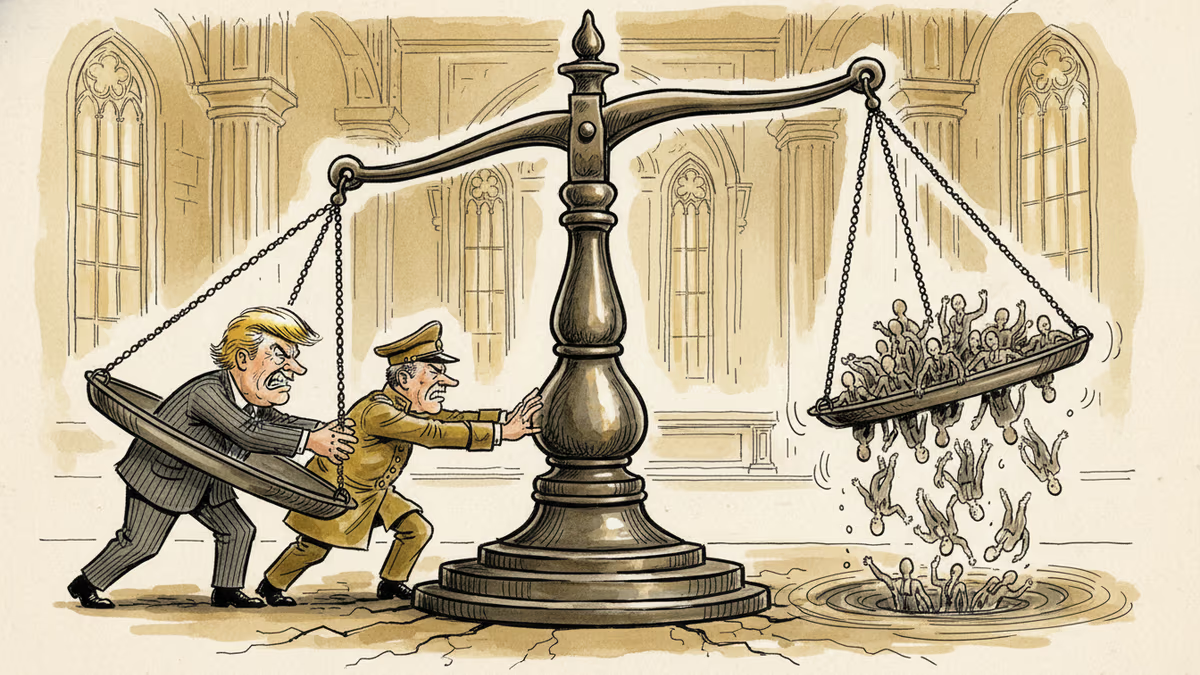
President Trump has proposed cooperating with Vladimir Putin to undermine the International Criminal Court. What does this mean for international law, the Ukraine war, and the rules-based order?
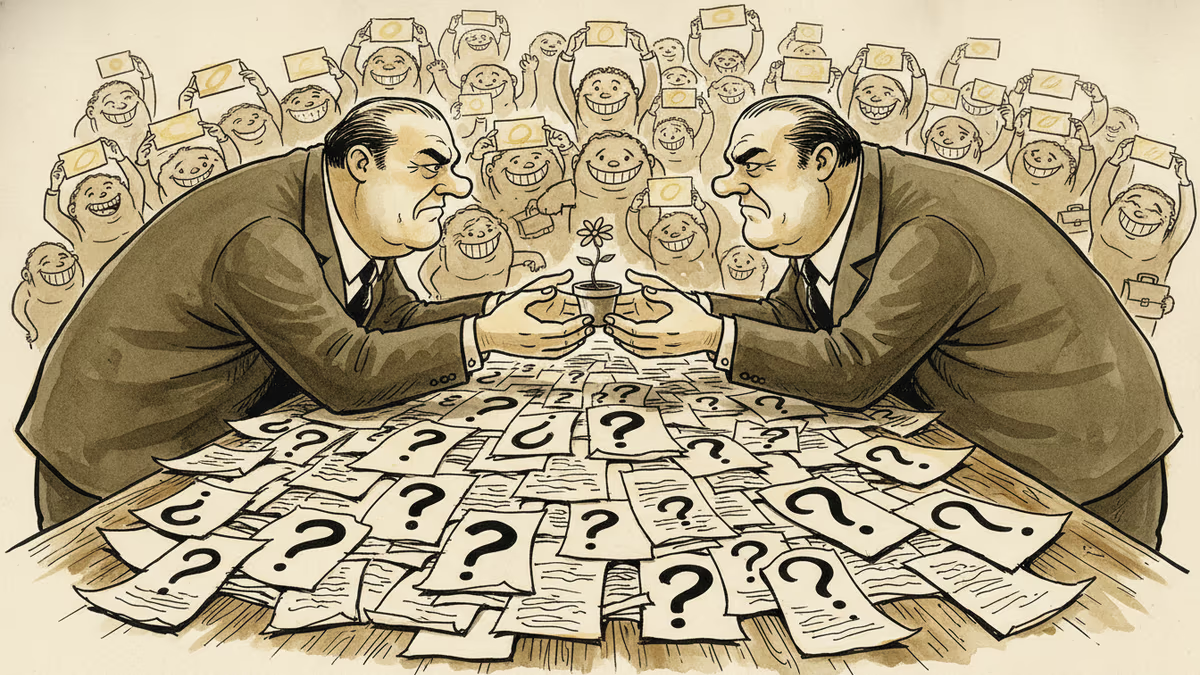
Trump's Beijing visit was a masterclass in diplomatic theater. Warm handshakes, viral selfies, and noodle runs. But Taiwan, Iran, and rare earths remain untouched. Here's what the spectacle obscures.
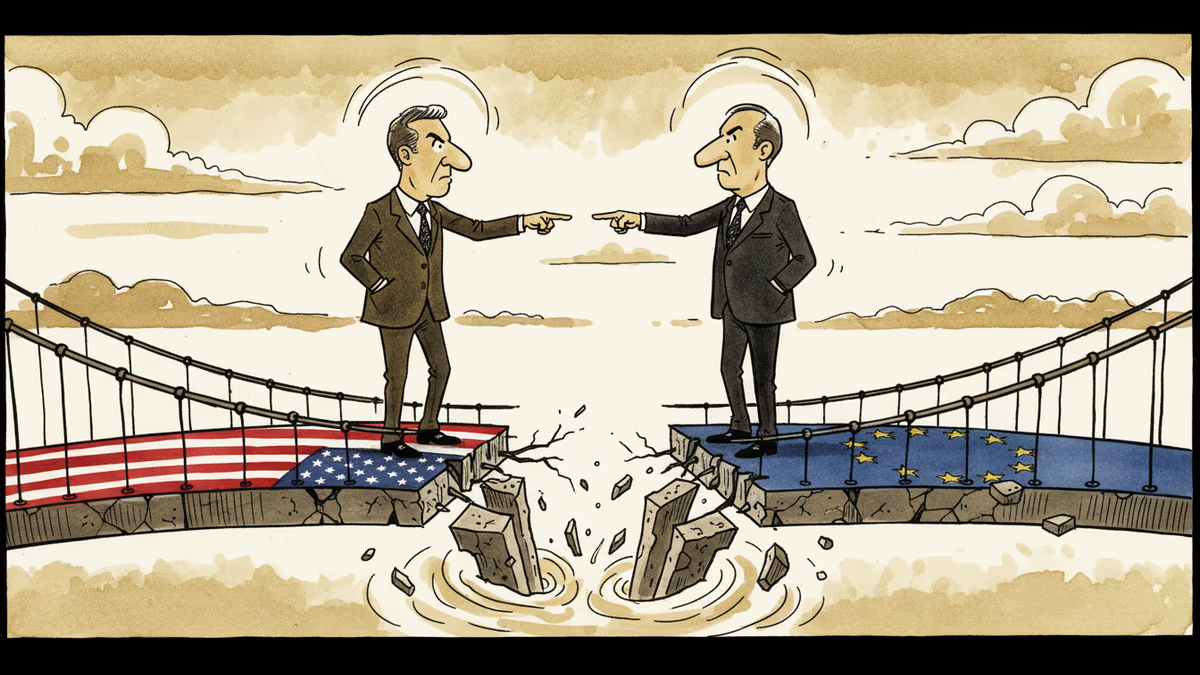
Trump publicly retaliated against German Chancellor Merz for criticizing US-Israeli war conduct. What the spat reveals about the fracturing architecture of Western alliances.
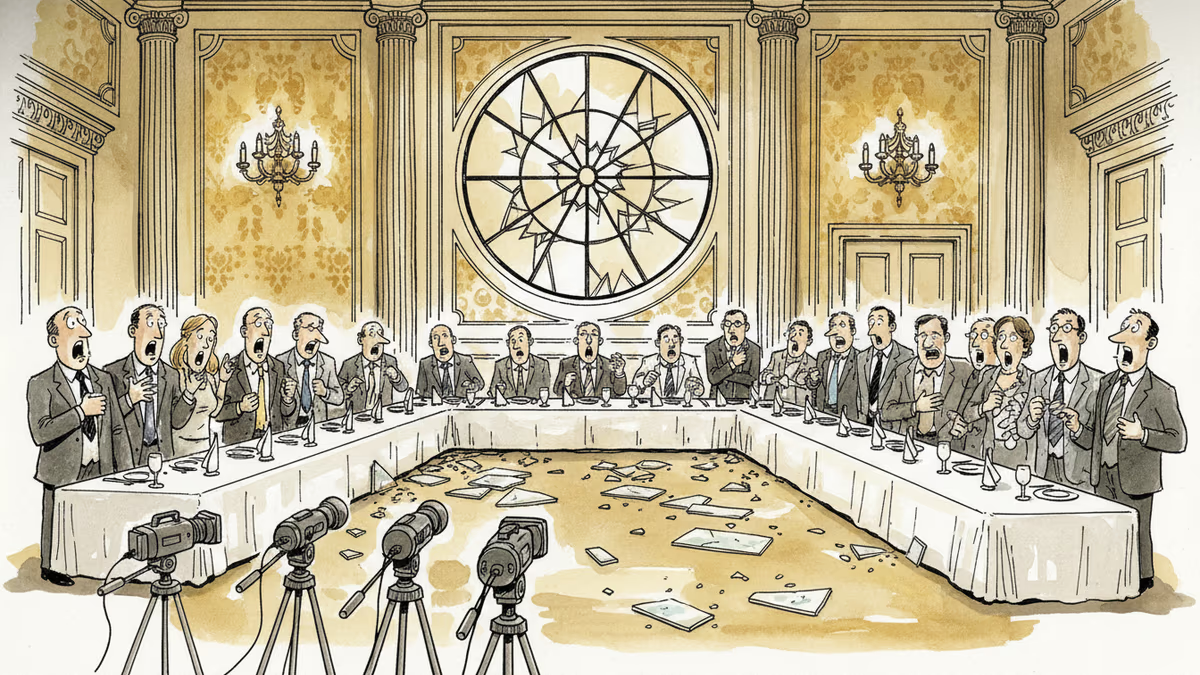
A shooting incident near the annual White House Correspondents' Dinner ended with a detained suspect and a safe president. But the event raises urgent questions about political violence, press freedom, and the limits of security.
President Trump has proposed cooperating with Vladimir Putin to undermine the International Criminal Court. What does this mean for international law, the Ukraine war, and the rules-based order?
Trump's Beijing visit was a masterclass in diplomatic theater. Warm handshakes, viral selfies, and noodle runs. But Taiwan, Iran, and rare earths remain untouched. Here's what the spectacle obscures.
Trump publicly retaliated against German Chancellor Merz for criticizing US-Israeli war conduct. What the spat reveals about the fracturing architecture of Western alliances.
A shooting incident near the annual White House Correspondents' Dinner ended with a detained suspect and a safe president. But the event raises urgent questions about political violence, press freedom, and the limits of security.
Thoughts
Share your thoughts on this article
Sign in to join the conversation