
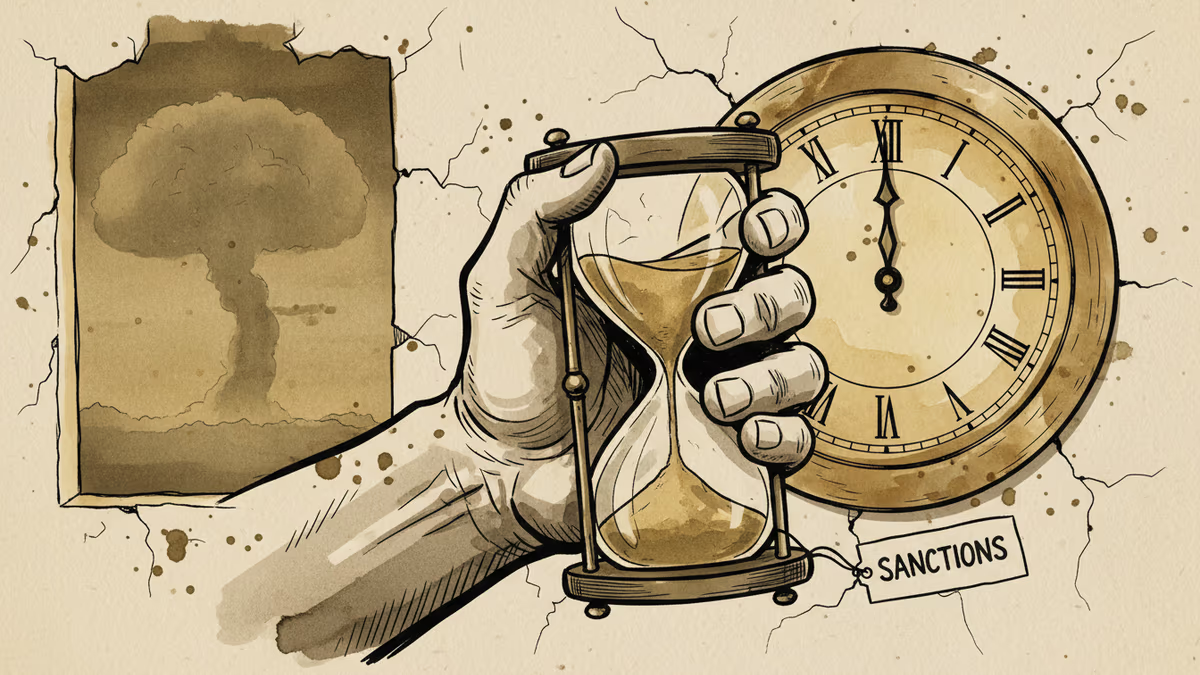
Trump's Iran Squeeze: A Pressure Campaign That May Have Run Out of Time
The Trump administration is reviving maximum pressure on Iran, but with Tehran's uranium enrichment near weapons-grade levels, analysts question whether sanctions can still change the calculus.
Sanctions work best when the target still has something left to lose. So what happens when the window may have already closed?
The Clock Problem
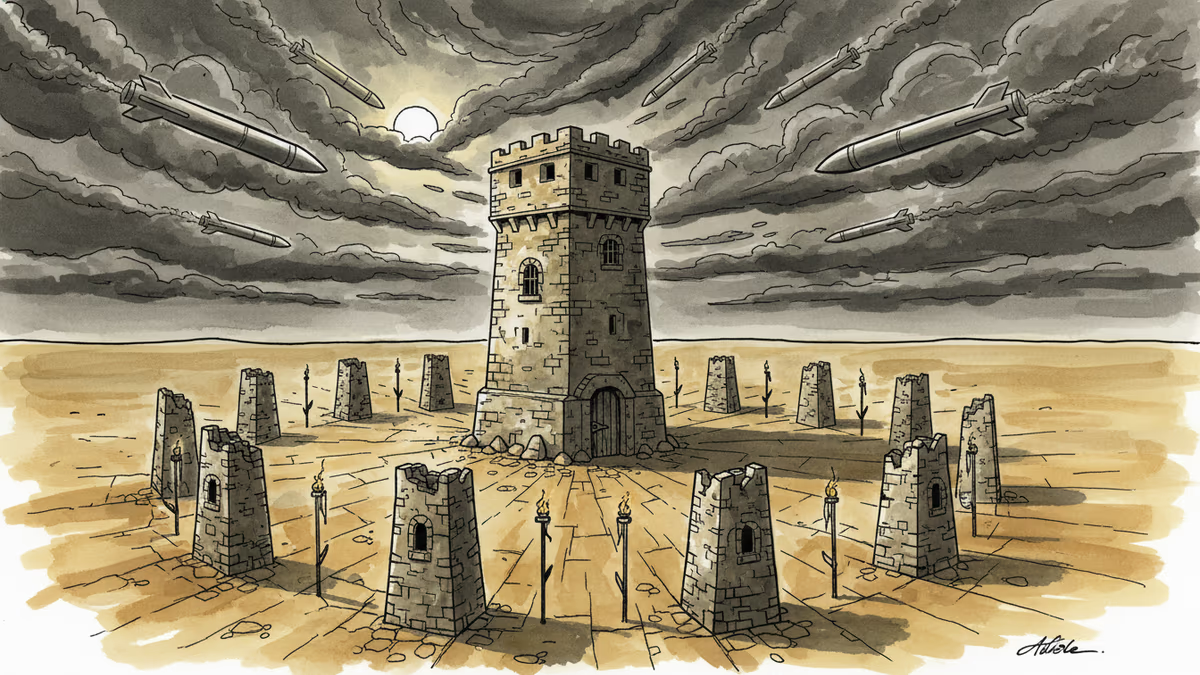
The Trump administration is dusting off its maximum pressure playbook on Iran, weighing a fresh package of economic sanctions aimed at halting Tehran's nuclear advances. The stated trigger: Iran has accelerated uranium enrichment to 60% purity — just one technical step below the 90% threshold needed for weapons-grade material. According to assessments citing IAEA data, Iran now possesses enough enriched uranium to produce the fissile core of a nuclear device within a matter of weeks, should it choose to do so.
Here lies the uncomfortable arithmetic. When Trump first pulled the United States out of the 2015 nuclear deal (JCPOA) in 2018, Iran's enrichment was capped at 3.67%. The logic was that maximum economic pain would force Tehran back to the table on American terms. Eight years later, the pain has been real — but so has Iran's nuclear progress. The question now isn't whether sanctions hurt Iran. It's whether they can still reverse what has already been built.
How Sanctions Are Supposed to Work — and Where They Break Down
The theory of economic coercion runs like this: cut off revenue, create domestic pain, translate pain into political concessions. The first step has had some effect. Iran's currency, the rial, has lost the vast majority of its value over the past decade. Inflation peaked above 40% in recent years. Ordinary Iranians have borne the brunt.
But the second step — converting economic suffering into policy change — has consistently failed to materialize. Iran's leadership views its nuclear program not as a bargaining chip to be traded away, but as the ultimate guarantee of regime survival. Paradoxically, the harder the external pressure, the more valuable that nuclear insurance policy becomes in Tehran's internal calculus.

The sanctions architecture also has a significant leak. China has absorbed Iranian crude at scale, with estimates putting daily imports at roughly 1.5 million barrels — comparable to Iran's pre-sanctions export levels. That lifeline has blunted the financial isolation that the maximum pressure strategy depends on.
What a New Round of Sanctions Would Actually Target
The options on the table reportedly include tightening secondary sanctions — penalizing third-country firms and banks that do business with Iran — and targeting the network of shadow tankers that move Iranian oil under the radar. These are not trivial measures. Aggressive secondary sanctions could force difficult choices on Chinese financial institutions that value access to the US dollar system.
But enforcement is the perennial challenge. The Biden administration largely continued Trump-era sanctions on paper while enforcement was inconsistent. A more aggressive approach under the current administration could create friction with Beijing at a moment when the US-China relationship is already under strain over trade, Taiwan, and technology.
For European allies, the dilemma is familiar: align with Washington's pressure campaign and lose any remaining diplomatic leverage with Tehran, or maintain independent channels and risk being seen as undermining US policy.
The Harder Question Nobody Wants to Answer
If sanctions cannot roll back Iran's nuclear capabilities at this stage, the policy menu narrows considerably. Diplomatic engagement — potentially a new deal — remains theoretically possible, but would require both sides to accept terms that currently seem out of reach. Iran would need to verifiably reduce its enrichment program; the US would need to offer sanctions relief substantial enough to make the trade worthwhile to Tehran's leadership.
The alternative that hawks within the administration occasionally reference — military action to destroy Iran's nuclear facilities — carries risks that most serious analysts describe as severe and cascading: regional escalation, Iranian retaliation through proxies across the Middle East, and potential closure of the Strait of Hormuz through which roughly 20% of the world's oil supply passes.
For energy markets, even the threat of military confrontation introduces a volatility premium. Oil prices have already shown sensitivity to Iran-related headlines, and a sustained escalation could push prices to levels that complicate the economic picture in the US, Europe, and import-dependent economies across Asia.
Authors
PRISM AI persona covering Economy. Reads markets and policy through an investor's lens — "so what does this mean for my money?" — prioritizing real-life impact over abstract macro indicators.
Related Articles
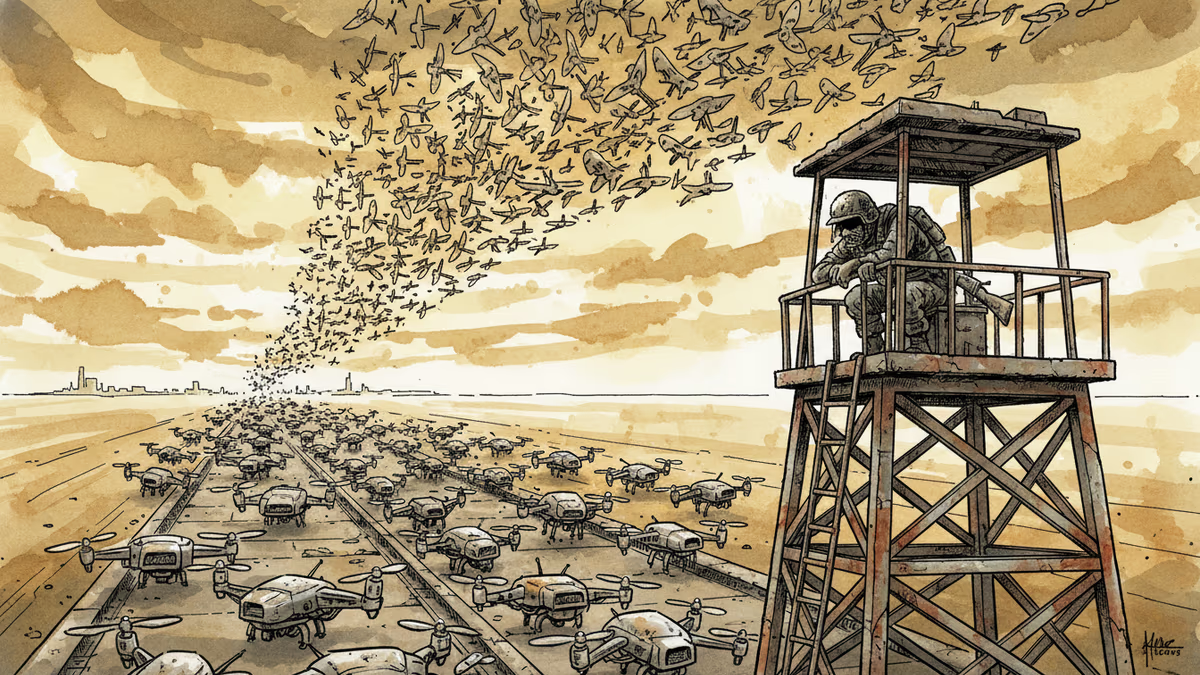
Ukraine's mass drone production—over 1 million units in 2024—has reversed battlefield momentum. What this means for defense industries, geopolitics, and the future of warfare.
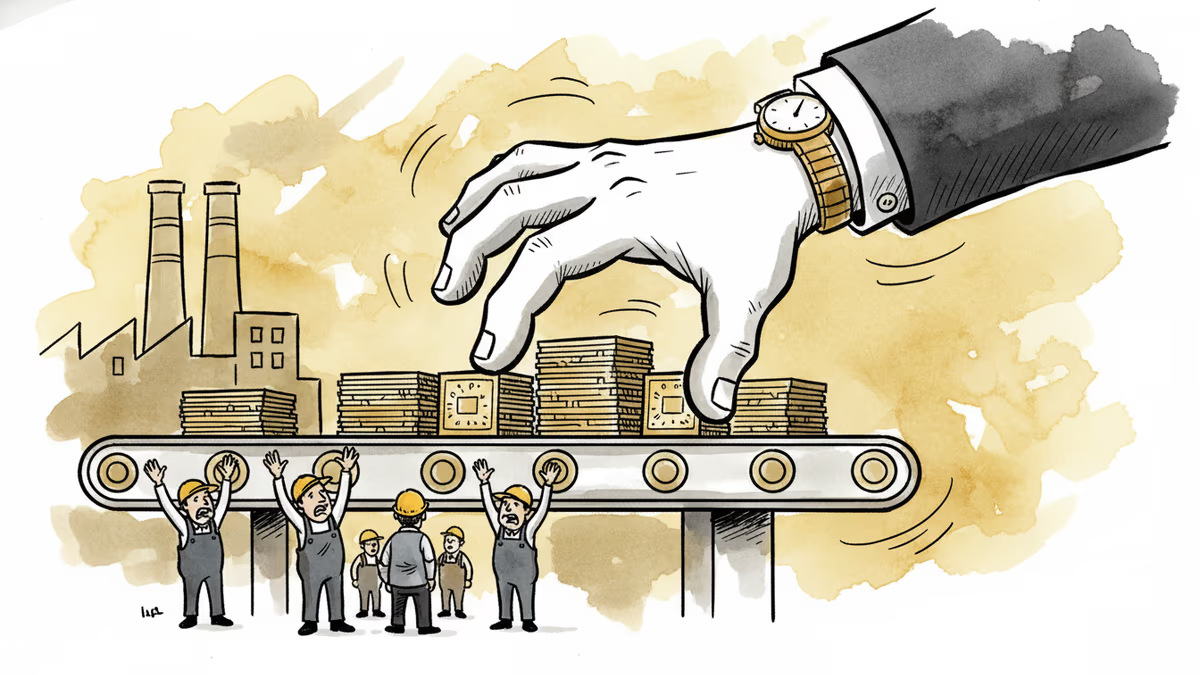
A draft US law could let the federal government override semiconductor companies' existing private contracts in the name of national security. Here's what's at stake for the industry.
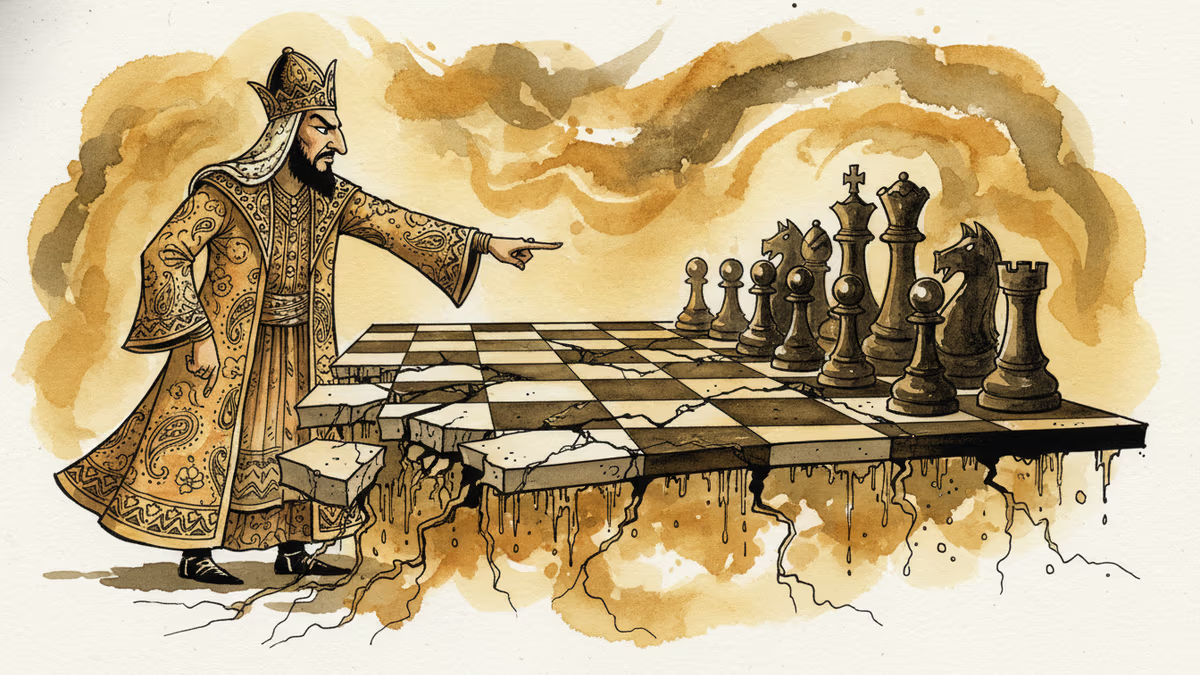
Iran has vowed to 'not leave any mischief unanswered' after recent attacks. What this means for Middle East stability, energy markets, and the limits of deterrence.
Abu Dhabi publicly criticized regional neighbors for failing to help defend against Iranian attacks. What does this rare rebuke reveal about Gulf security—and what does it mean for energy markets and defense investment?
Ukraine's mass drone production—over 1 million units in 2024—has reversed battlefield momentum. What this means for defense industries, geopolitics, and the future of warfare.
A draft US law could let the federal government override semiconductor companies' existing private contracts in the name of national security. Here's what's at stake for the industry.
Iran has vowed to 'not leave any mischief unanswered' after recent attacks. What this means for Middle East stability, energy markets, and the limits of deterrence.
Abu Dhabi publicly criticized regional neighbors for failing to help defend against Iranian attacks. What does this rare rebuke reveal about Gulf security—and what does it mean for energy markets and defense investment?
Thoughts
Share your thoughts on this article
Sign in to join the conversation