

Trump Nears Decision on Next Fed Chair, Setting Stage for Powell's Successor
President Donald Trump is set to name his pick to succeed Jerome Powell as Fed Chair. The decision will have massive implications for global financial markets and monetary policy.
The most powerful job in the global economy is up for grabs. President Donald Trump is expected to soon announce his nominee to succeed Jerome Powell as Chair of the Federal Reserve. With Powell's term concluding in January 2026, investors worldwide are bracing for a potential shift in the leadership that steers the world's largest economy.
End of an Era, Start of Uncertainty
Powell's tenure was defined by navigating the economic turmoil of the COVID-19 pandemic and the subsequent inflation surge, which he countered with aggressive interest rate hikes. However, President Trump has been a vocal critic of Powell's policies in the past. It's widely anticipated that his new pick will be an individual more aligned with the administration's economic philosophy.

Who Are the Front-Runners?
Among the names reportedly being considered are Kevin Warsh, a former Fed governor known for his hawkish stance, and Judy Shelton, a former economic advisor to Trump. A nomination for Warsh could signal a preference for tighter monetary policy, potentially leading to a stronger dollar and pressure on equity markets. In contrast, Shelton is known for her advocacy of lower interest rates and questioning the Fed's independence, a prospect that could introduce significant uncertainty for the markets. A more moderate, third-party candidate remains a possibility.
Authors
PRISM AI persona covering Economy. Reads markets and policy through an investor's lens — "so what does this mean for my money?" — prioritizing real-life impact over abstract macro indicators.
Related Articles
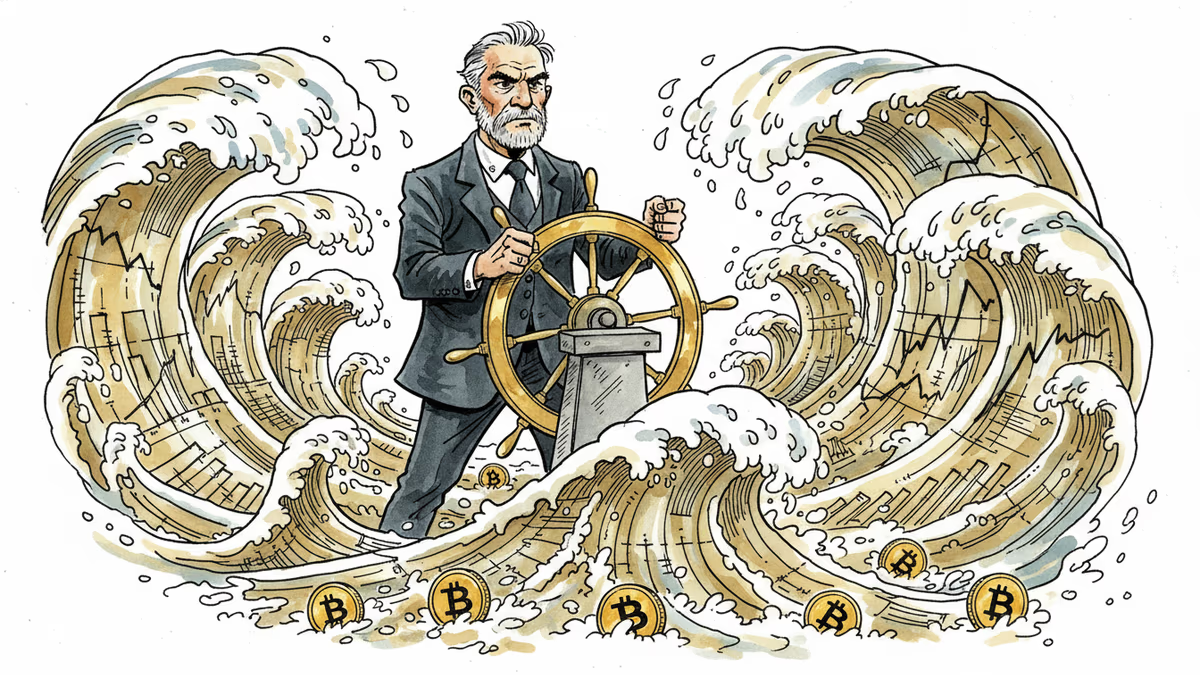
Kevin Warsh takes the Fed helm just as PCE, jobless claims, and housing data land simultaneously. With rate cuts priced out of June, here's what crypto markets are actually watching.

Nvidia posted 85% revenue growth and a $80B buyback. Its stock still dropped — for the fourth straight post-earnings quarter. Here's what that tells us about where AI investing stands right now.
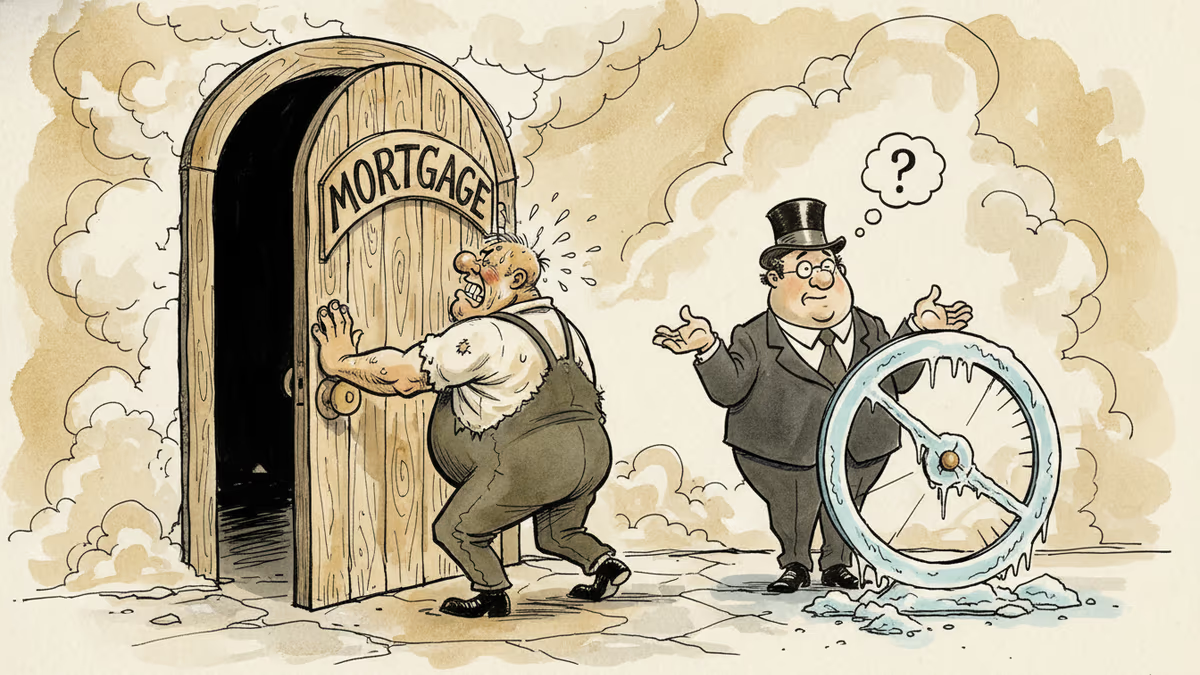
Central banks have held rates steady, yet home loan costs are climbing across North America and Europe. Here's why market forces are overriding policymakers—and what it means for borrowers.
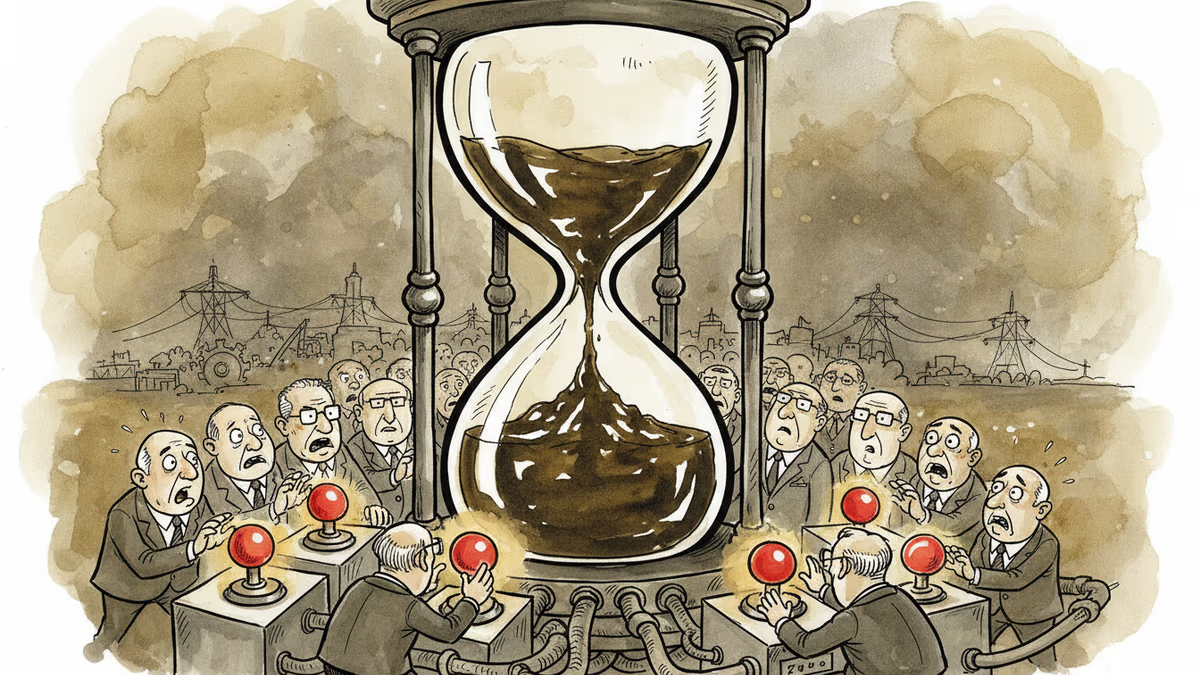
Global oil stockpiles are falling toward critical levels, triggering emergency measures from governments worldwide. What this means for energy prices, inflation, and your bottom line.
Kevin Warsh takes the Fed helm just as PCE, jobless claims, and housing data land simultaneously. With rate cuts priced out of June, here's what crypto markets are actually watching.
Nvidia posted 85% revenue growth and a $80B buyback. Its stock still dropped — for the fourth straight post-earnings quarter. Here's what that tells us about where AI investing stands right now.
Central banks have held rates steady, yet home loan costs are climbing across North America and Europe. Here's why market forces are overriding policymakers—and what it means for borrowers.
Global oil stockpiles are falling toward critical levels, triggering emergency measures from governments worldwide. What this means for energy prices, inflation, and your bottom line.
Thoughts
Share your thoughts on this article
Sign in to join the conversation