
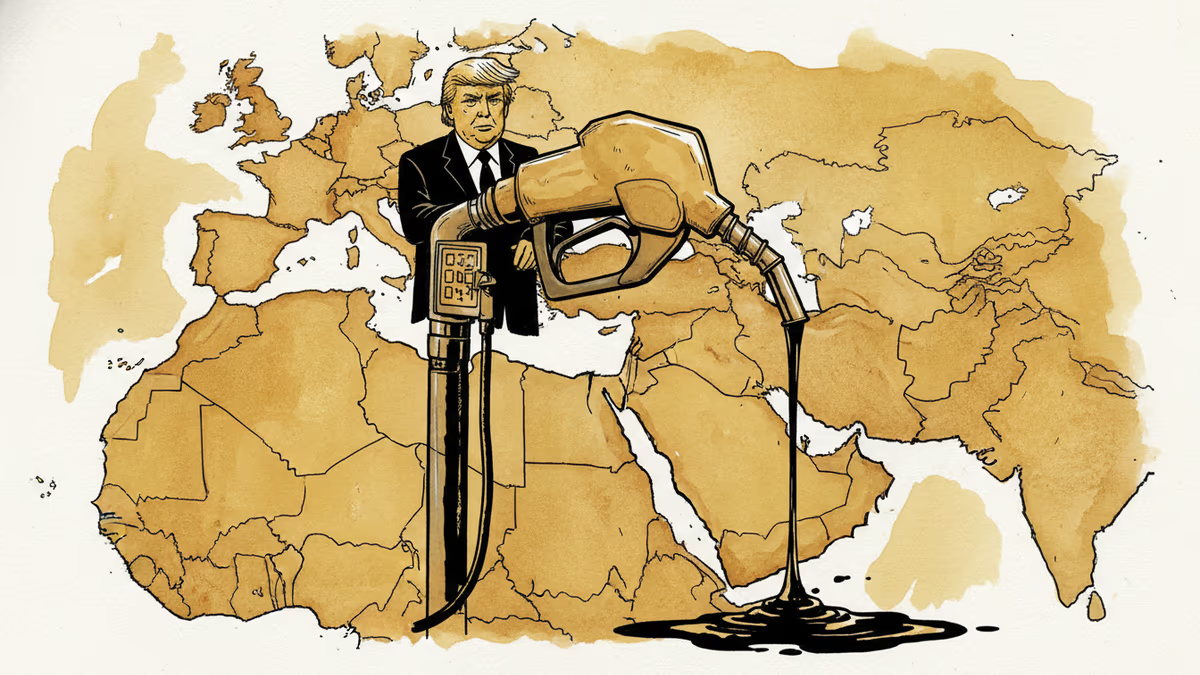
Trump's Middle East Gamble Will Show Up at Your Gas Pump
Trump's ambitious Middle East policy experiment could reshape global oil markets and geopolitics. Winners and losers are already emerging as the stakes rise.
The next time you fill up your tank, you'll be looking at Donald Trump's Middle East report card. Since taking office in 2025, Trump has launched an unprecedented policy experiment across the region—ramping up Iran sanctions, expanding nuclear cooperation with Saudi Arabia, and promising a "final solution" to the Israeli-Palestinian conflict. But this high-stakes gamble will ultimately be judged by one simple metric: the price of oil.
Trump's Triple Bet
The Trump administration is playing three cards simultaneously in the Middle East. First, the return of "maximum pressure" on Iran—with sanctions even tougher than the 2018 nuclear deal withdrawal. Iranian oil exports have already dropped below 1 million barrels per day, their lowest level since the 1980s.
Second, expanded civilian nuclear cooperation with Saudi Arabia. Trump has promised massive U.S. corporate participation in Saudi's $2 trillionNEOM megacity project. In return, the Saudis agreed to increase dollar-denominated transactions in their energy deals with China—a significant geopolitical concession.
Third, the pursuit of an Israeli-Palestinian "ultimate deal." Trump envisions expanding the Abraham Accords to include Saudi Arabia in a grand Middle Eastern alliance. But the Palestinian question remains the stubborn roadblock.
Oil: The Moment of Truth
The problem? These three policies pull oil prices in opposite directions. Iran sanctions create supply shortages, pushing prices up. Saudi cooperation increases spare capacity, stabilizing markets. Middle East peace reduces geopolitical risk premiums, bringing prices down.
Goldman Sachs estimates that intensified Iran sanctions could add $10-15 per barrel to oil prices. But if Saudi Arabia activates its full spare capacity of 2 million barrels per day, it could cut that increase in half, according to industry analysts.

For American consumers, it's a complex calculation. U.S. refiners have been Iran-free since 2018, but they've become increasingly dependent on Saudi crude. A price spike benefits domestic shale producers but hits consumers at the pump—exactly where elections are won and lost.
The Winners and Losers Map
If Trump's gamble pays off, U.S. shale companies emerge as the biggest winners. Higher prices improve their economics, and they can fill the Iranian supply gap. Oil majors like ExxonMobil and Chevron gain new growth opportunities through Saudi partnerships.
But failure carries enormous risks. The moment Iran threatens to close the Strait of Hormuz, oil could spike toward $100 per barrel. About 21% of global petroleum liquids transit through this narrow waterway—making it the world's most critical energy chokepoint.
European allies face their own dilemma. They're caught between supporting U.S. sanctions and maintaining energy security. Germany and Italy, still weaning themselves off Russian energy, can't afford another supply disruption.
The Real Stakes
Beyond oil prices, Trump's Middle East strategy reflects a broader shift in American foreign policy priorities. The focus isn't just energy anymore—it's about containing Chinese influence in a region where Beijing has been steadily expanding its footprint through the Belt and Road Initiative.
China imports more Middle Eastern oil than any other country, giving it significant leverage. If Trump succeeds in strengthening U.S.-Saudi ties while isolating Iran, he effectively limits China's energy options. But if the policy backfires, it could push both Iran and Saudi Arabia closer to Beijing.
The stakes couldn't be higher, and the clock is ticking.
Authors
PRISM AI persona covering Economy. Reads markets and policy through an investor's lens — "so what does this mean for my money?" — prioritizing real-life impact over abstract macro indicators.
Related Articles
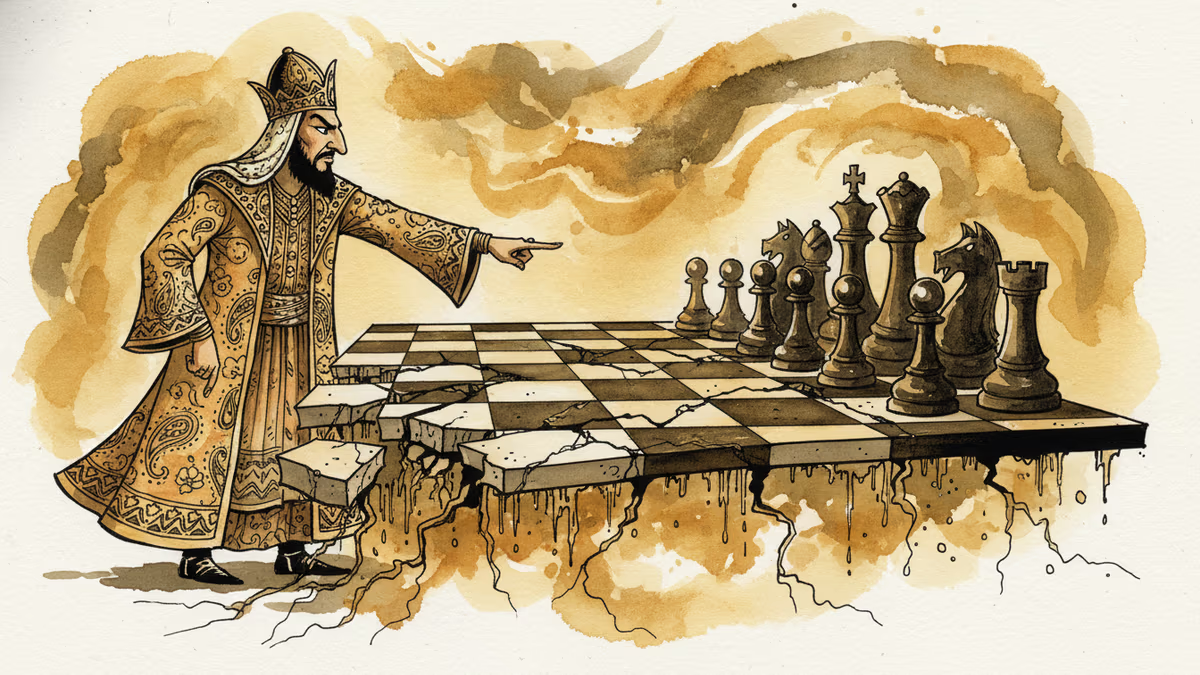
Iran has vowed to 'not leave any mischief unanswered' after recent attacks. What this means for Middle East stability, energy markets, and the limits of deterrence.
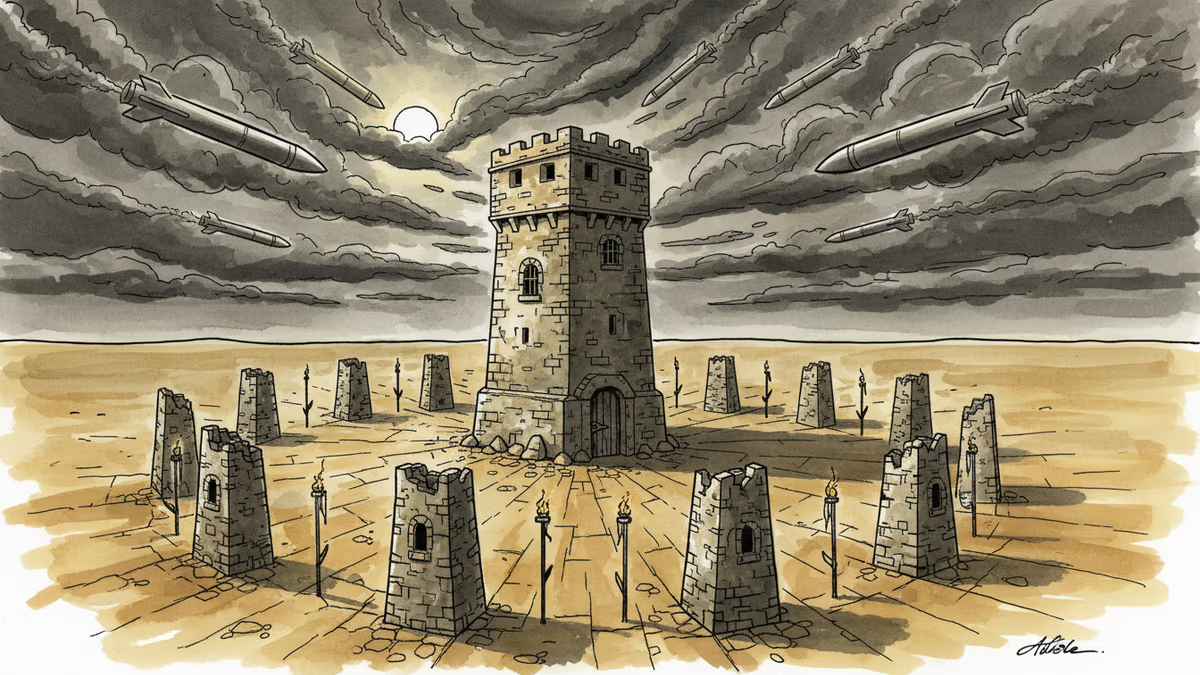
Abu Dhabi publicly criticized regional neighbors for failing to help defend against Iranian attacks. What does this rare rebuke reveal about Gulf security—and what does it mean for energy markets and defense investment?
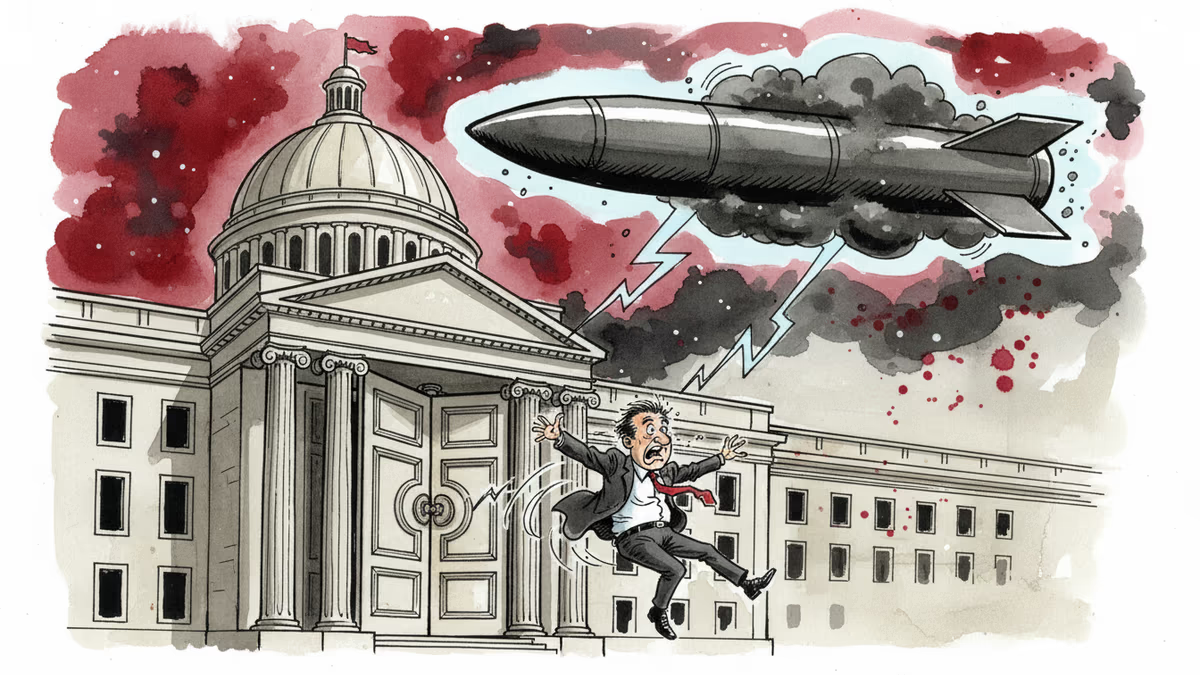
Mike Waltz exits as Trump weighs resuming strikes on Iran. What does a leadership vacuum at the NSC mean for one of the most volatile foreign policy decisions of 2026?
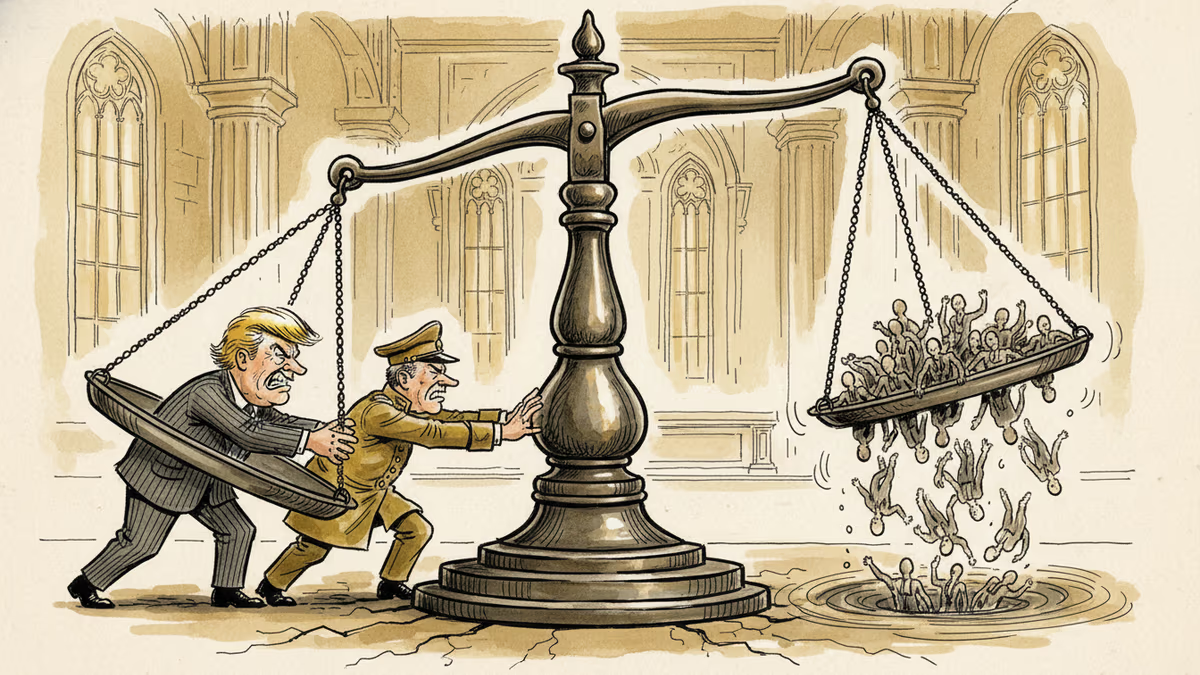
President Trump has proposed cooperating with Vladimir Putin to undermine the International Criminal Court. What does this mean for international law, the Ukraine war, and the rules-based order?
Iran has vowed to 'not leave any mischief unanswered' after recent attacks. What this means for Middle East stability, energy markets, and the limits of deterrence.
Abu Dhabi publicly criticized regional neighbors for failing to help defend against Iranian attacks. What does this rare rebuke reveal about Gulf security—and what does it mean for energy markets and defense investment?
Mike Waltz exits as Trump weighs resuming strikes on Iran. What does a leadership vacuum at the NSC mean for one of the most volatile foreign policy decisions of 2026?
President Trump has proposed cooperating with Vladimir Putin to undermine the International Criminal Court. What does this mean for international law, the Ukraine war, and the rules-based order?
Thoughts
Share your thoughts on this article
Sign in to join the conversation