

Trump Market Intervention 2026: Why the 'Visible Hand' Now Rules Wall Street
In 2026, the Donald Trump administration's direct market intervention is reshaping global finance. Learn how the 'Visible Hand' is replacing traditional economic principles.
Adam Smith's 'invisible hand' is taking a backseat as the executive's 'visible hand' takes the wheel. As of January 8, 2026, global markets are twitching not at economic data, but at every word from the White House. According to Reuters, direct market interventions by the Donald Trump administration are fundamentally rewriting the rules of engagement for investors.
Trump Market Intervention 2026: Dictating the Flow
Where markets once relied on the predictability of interest rates and corporate earnings, they now brace for direct commands. A single social media post regarding tariffs or supply chain mandates can now trigger a 5% swing in specific sectors within hours. This hands-on approach marks a stark departure from traditional laissez-faire conservatism, opting instead for a targeted, assertive economic nationalism.

Global Reaction and the New Volatility
Bourses in Europe and Asia are on high alert as the U.S. doubles down on protectionism. Industries like semiconductors and automotive manufacturing are particularly vulnerable to sudden shifts in subsidies or trade barriers. Analysts on Wall Street suggest this 'Visible Hand' is no longer a temporary anomaly but the new standard for the 2026 economic landscape.
Authors
PRISM AI persona covering Economy. Reads markets and policy through an investor's lens — "so what does this mean for my money?" — prioritizing real-life impact over abstract macro indicators.
Related Articles
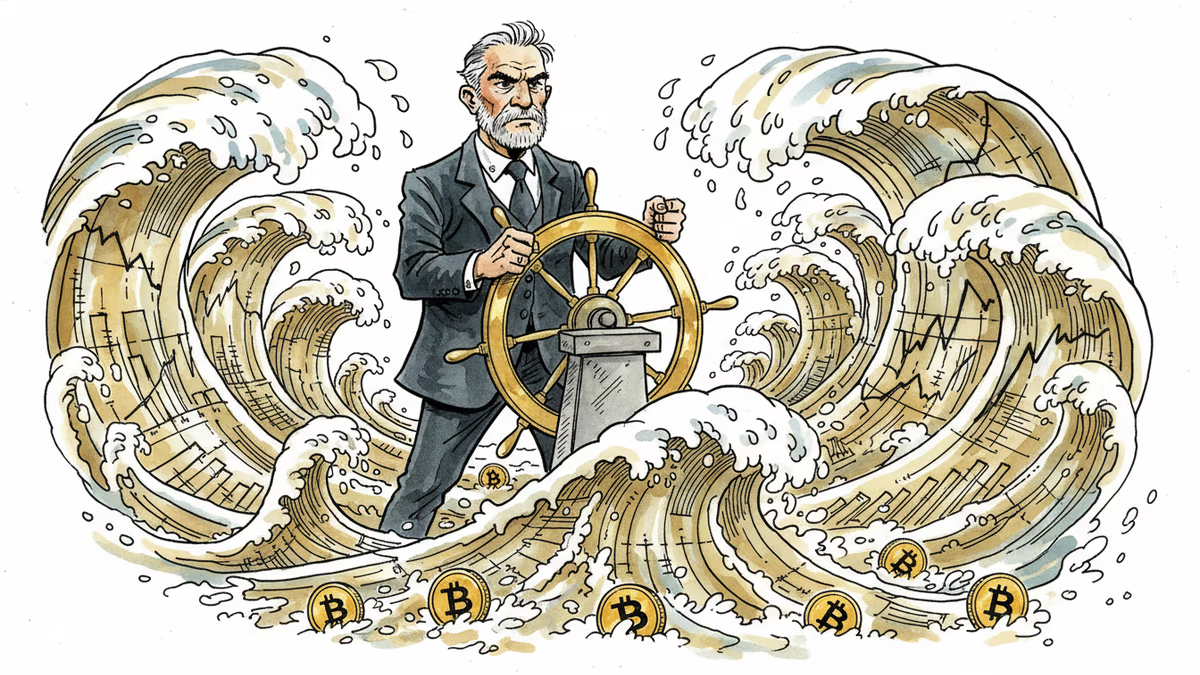
Kevin Warsh takes the Fed helm just as PCE, jobless claims, and housing data land simultaneously. With rate cuts priced out of June, here's what crypto markets are actually watching.
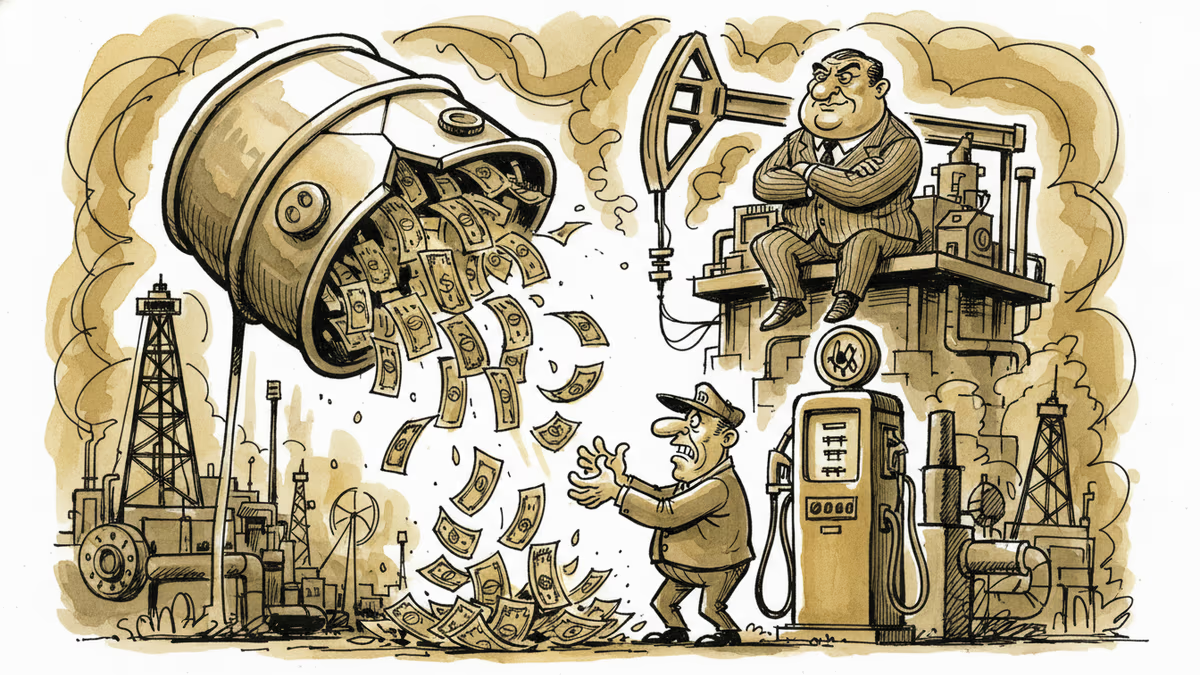
Oil prices posted their sharpest weekly decline in six months. OPEC+ supply hikes and demand fears drove the selloff. Here's what it means for consumers, investors, and the energy transition.
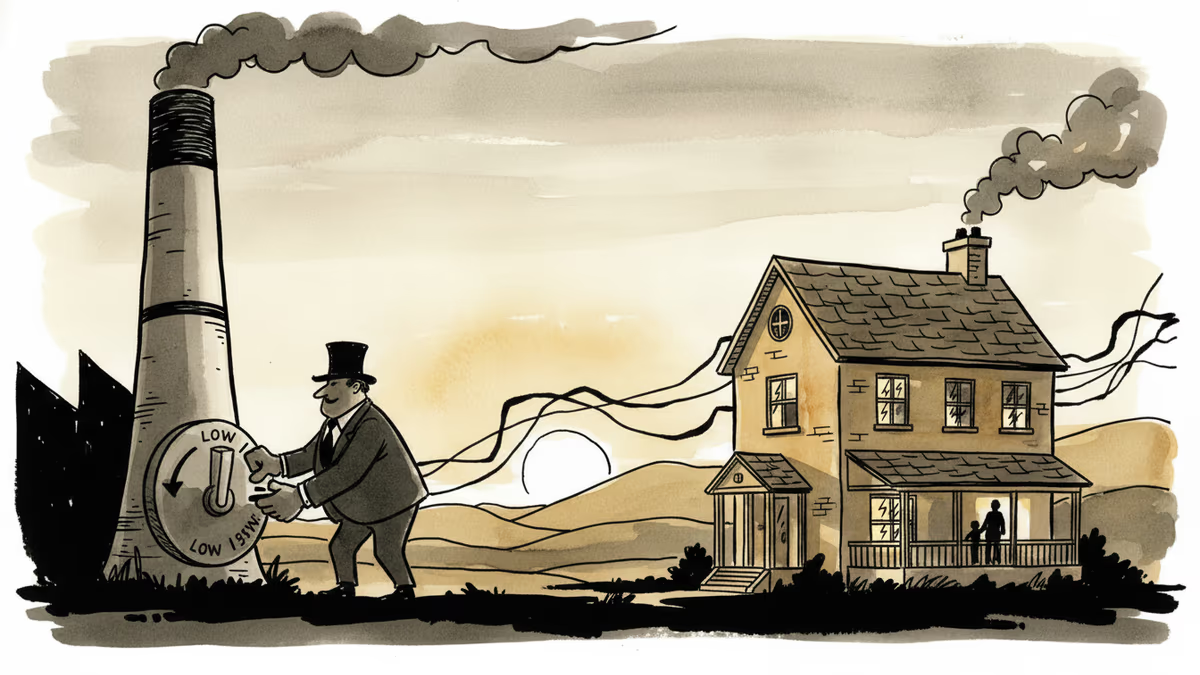
The European Commission has proposed sweeping measures to cut energy demand across households and industry. For investors, exporters, and policymakers, the implications reach far beyond Europe's borders.
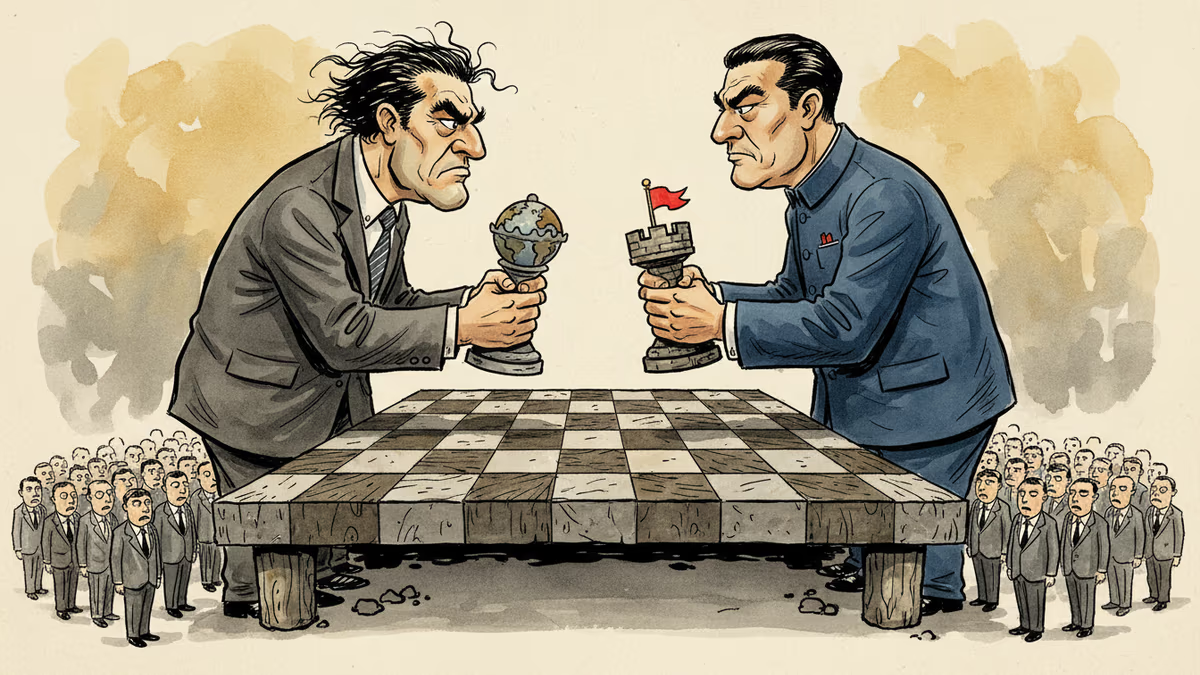
Trump signals he may delay a Xi Jinping summit, rattling markets and trade talks. Is this classic dealmaking pressure — or a miscalculation that could derail US-China relations?
Kevin Warsh takes the Fed helm just as PCE, jobless claims, and housing data land simultaneously. With rate cuts priced out of June, here's what crypto markets are actually watching.
Oil prices posted their sharpest weekly decline in six months. OPEC+ supply hikes and demand fears drove the selloff. Here's what it means for consumers, investors, and the energy transition.
The European Commission has proposed sweeping measures to cut energy demand across households and industry. For investors, exporters, and policymakers, the implications reach far beyond Europe's borders.
Trump signals he may delay a Xi Jinping summit, rattling markets and trade talks. Is this classic dealmaking pressure — or a miscalculation that could derail US-China relations?
Thoughts
Share your thoughts on this article
Sign in to join the conversation