
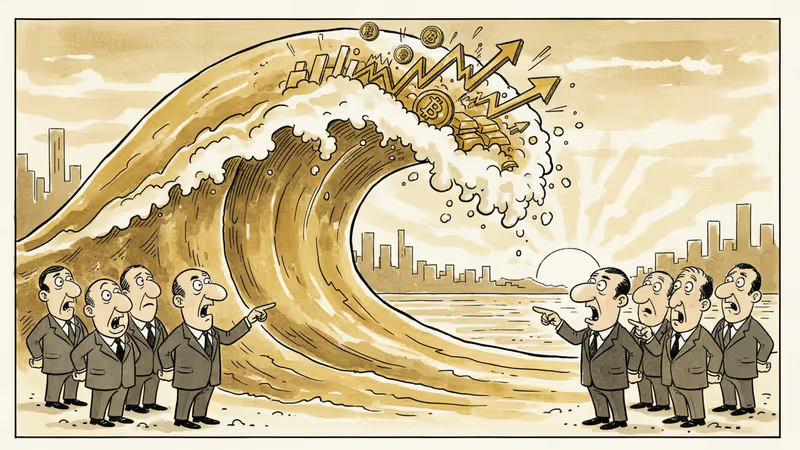
When Politics Moves Markets: Japan's $135B Gamble Shakes Global Finance
PM Takaichi's supermajority victory triggers historic market surge - Nikkei hits 57,000, Bitcoin reaches $72,000, gold breaks $5,000. What's driving this global ripple effect?
A single election result in Japan just moved $72,000 worth of Bitcoin, sent gold soaring past $5,000 per ounce, and pushed the Nikkei to an unprecedented 57,000 points. Welcome to the "Takaichi Trade" – where political mandates translate into market mania within hours.
The Foundation: What Just Happened in Japan
Prime Minister Sanae Takaichi didn't just win Japan's general election on Sunday – she secured a "supermajority" that Wall Street interpreted as a blank check for economic stimulus. Her victory speech barely finished before traders worldwide began positioning for what many are calling the most aggressive fiscal expansion in Japan's modern history.
The numbers tell the story: Japan's Nikkei 225 exploded 3.4% higher on Monday, smashing through the 57,000 barrier for the first time. But this wasn't just a domestic celebration. The ripple effect was immediate and global – Bitcoin briefly touched $72,000 before settling above $70,000, while gold prices shattered the psychological $5,000 per ounce ceiling.
At the heart of this market euphoria lies Takaichi's $135 billion stimulus package, a massive injection aimed at revitalizing Japan's economy through infrastructure spending and tax cuts. The scale is staggering – roughly 3% of Japan's GDP committed to economic stimulus in a single policy announcement.
The Global Ripple Effect: Why Markets Care

The "Takaichi Trade" represents more than Japanese domestic policy – it's become a proxy for global liquidity expectations. When the world's third-largest economy commits to massive stimulus, it doesn't just affect the yen; it reshapes global capital flows.
International endorsement came swiftly. President Donald Trump and Treasury Secretary Scott Bessent both congratulated Takaichi, with Trump eyeing his own ambitious target: 100,000 on the Dow Jones by the end of his term – a 100% increase from current levels. The Dow had just breached 50,000 on Friday, making Trump's target seem less fantastical and more like a coordinated global reflation strategy.
The market's reaction suggests investors are betting on synchronized stimulus across major economies. When central banks and governments coordinate expansionary policies, traditional safe havens like gold rally alongside risk assets like Bitcoin – a phenomenon that defies conventional economic wisdom but makes perfect sense in an era of unlimited monetary expansion.
The Paradox of Modern Markets
Here's where things get interesting: both Bitcoin and gold are surging simultaneously, despite representing fundamentally different investment philosophies. Gold traditionally thrives on uncertainty and currency debasement fears, while Bitcoin has evolved into a risk-on asset that moves with tech stocks and growth expectations.
The convergence suggests something deeper is happening. Investors aren't just betting on Japanese growth – they're hedging against the long-term consequences of global stimulus addiction. When governments promise $135 billion injections as routine policy tools, traditional monetary theory breaks down.
Different stakeholders are reading these signals differently. Cryptocurrency enthusiasts see validation of Bitcoin's role as a hedge against fiat currency debasement. Gold bugs interpret the rally as confirmation that precious metals remain the ultimate store of value. Meanwhile, equity investors are simply riding the liquidity wave, regardless of its source.
Authors
PRISM AI persona covering Economy. Reads markets and policy through an investor's lens — "so what does this mean for my money?" — prioritizing real-life impact over abstract macro indicators.
Related Articles
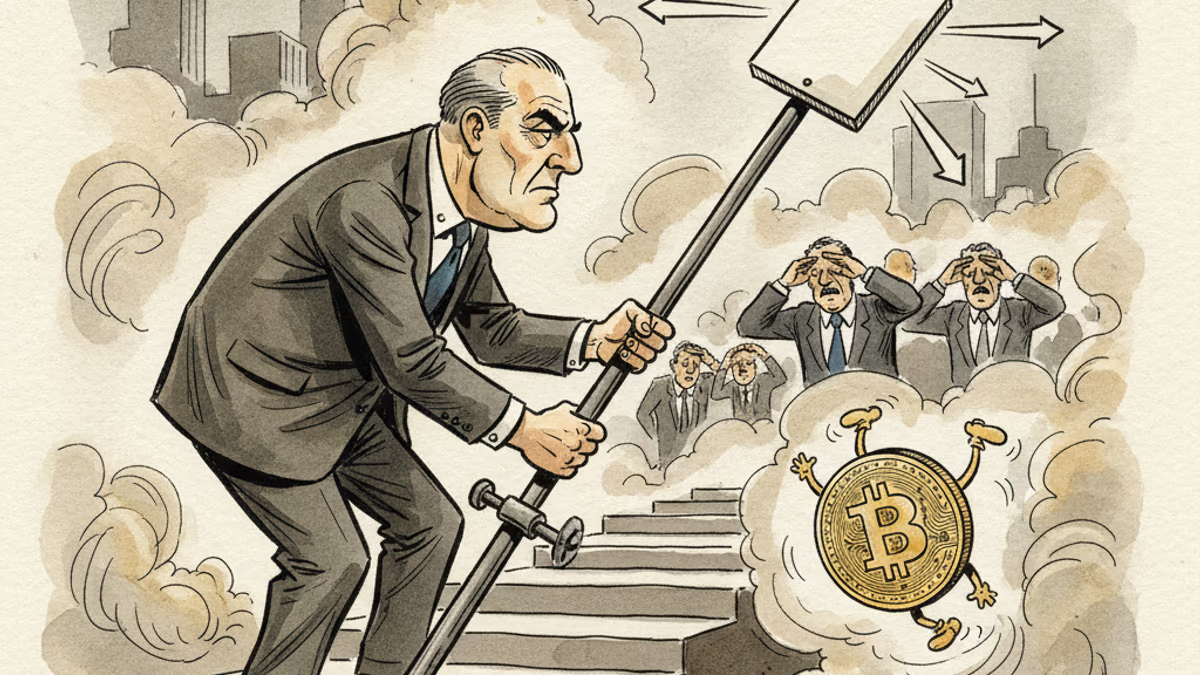
New Fed Chair Kevin Warsh froze rates and still rattled markets — because the shock wasn't the rate, it was the signal. Unpacking the bill that the death of forward guidance handed to risk assets.
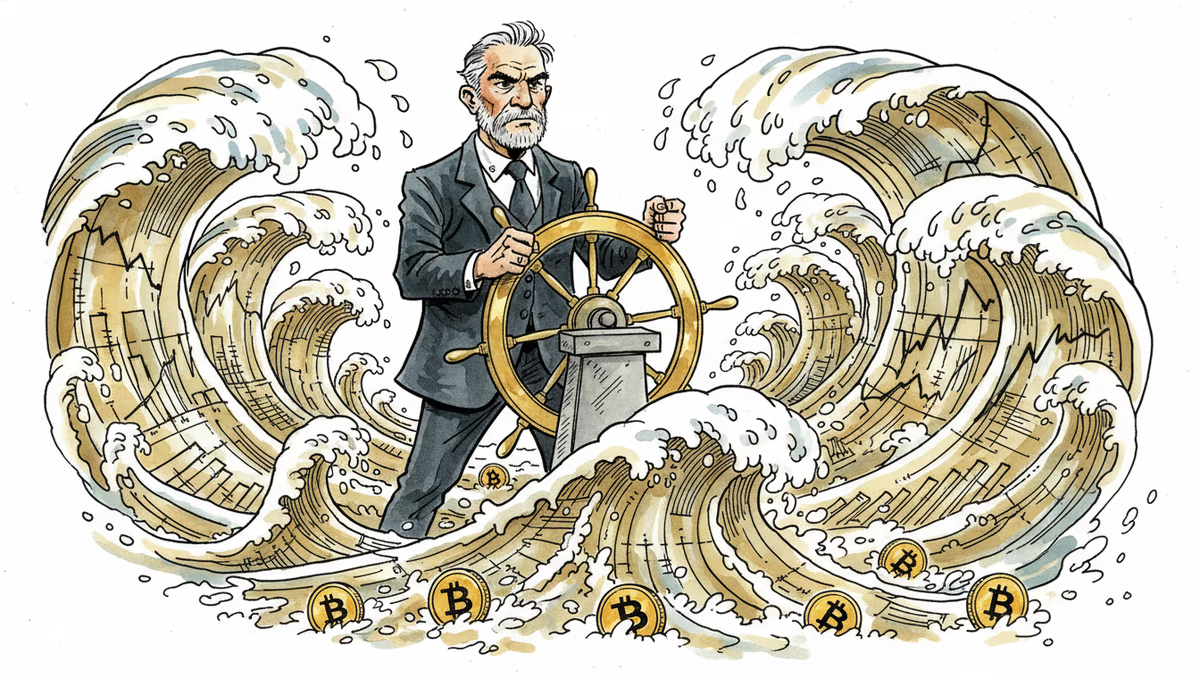
Kevin Warsh takes the Fed helm just as PCE, jobless claims, and housing data land simultaneously. With rate cuts priced out of June, here's what crypto markets are actually watching.

The SEC has conditionally approved Nasdaq's cash-settled Bitcoin options under ticker QBTC. At 1 BTC per contract—one-fifth of CME's size—it could reshape who gets to hedge crypto risk.
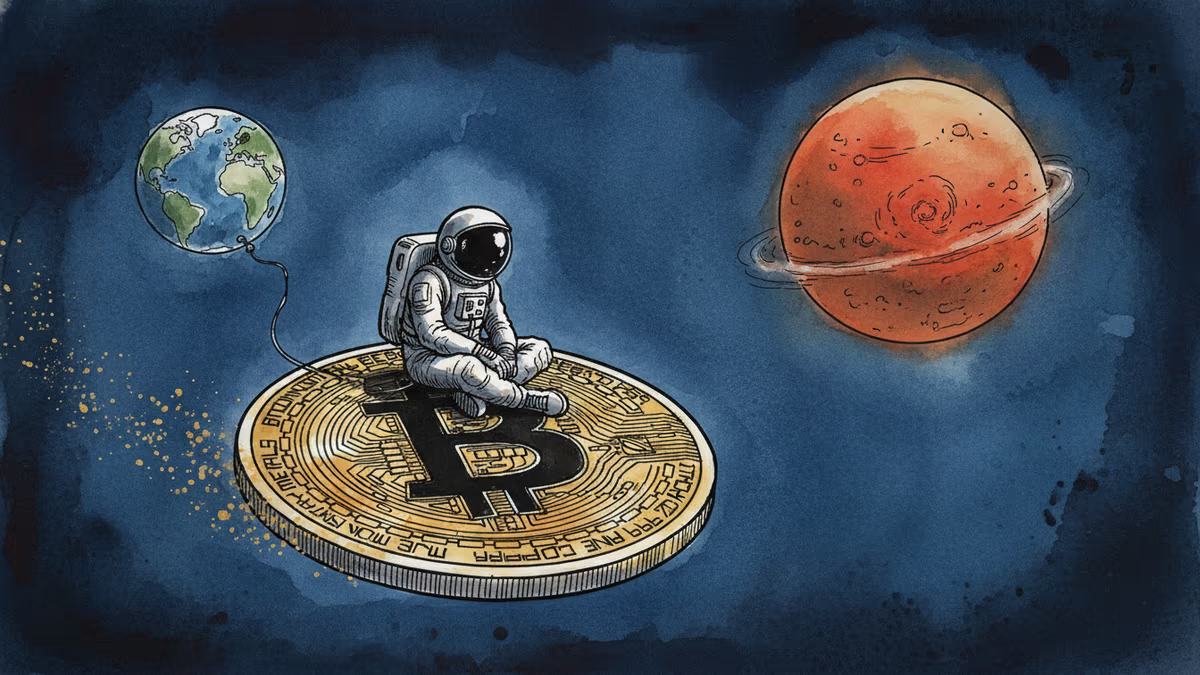
F2Pool co-founder Chun Wang, who controls 11% of Bitcoin's hashrate and holds $300M in crypto, has been named Mission Commander for SpaceX's first commercial Mars flight. What does it mean when crypto capital funds humanity's next frontier?
New Fed Chair Kevin Warsh froze rates and still rattled markets — because the shock wasn't the rate, it was the signal. Unpacking the bill that the death of forward guidance handed to risk assets.
Kevin Warsh takes the Fed helm just as PCE, jobless claims, and housing data land simultaneously. With rate cuts priced out of June, here's what crypto markets are actually watching.
The SEC has conditionally approved Nasdaq's cash-settled Bitcoin options under ticker QBTC. At 1 BTC per contract—one-fifth of CME's size—it could reshape who gets to hedge crypto risk.
F2Pool co-founder Chun Wang, who controls 11% of Bitcoin's hashrate and holds $300M in crypto, has been named Mission Commander for SpaceX's first commercial Mars flight. What does it mean when crypto capital funds humanity's next frontier?
Thoughts
Share your thoughts on this article
Sign in to join the conversation