
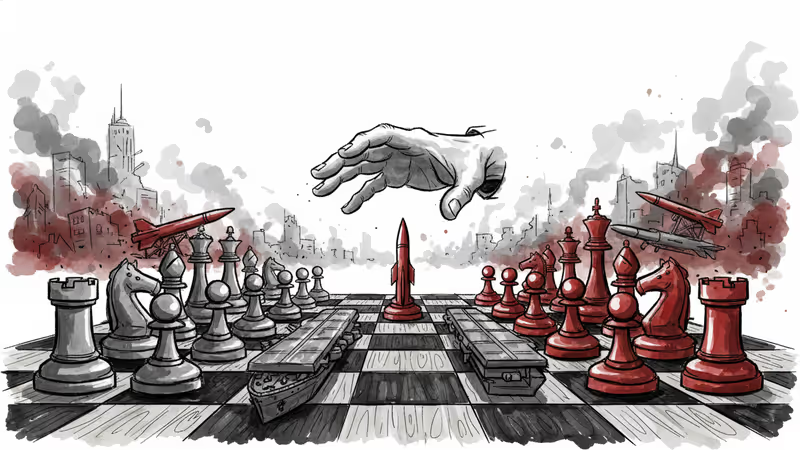
Trump's Iran Ultimatum Reveals the Limits of Military Might
As Trump threatens Iran with military action, the gap between America's overwhelming firepower and its ability to achieve lasting political outcomes becomes starkly apparent.
The USS Abraham Lincoln and its escort ships are steaming toward Iran, carrying with them a familiar American paradox: unmatched military power coupled with increasingly uncertain political objectives.
President Donald Trump has escalated his rhetoric against Iran with stunning speed, pivoting from apparent satisfaction with the end of protest crackdowns just weeks ago to threatening strikes that would be "far worse" than last June's Operation Midnight Hammer. His demands are maximalist: complete nuclear disarmament, ballistic missile restrictions, and an end to proxy group support. Yet the very speed of this escalation reveals something troubling about America's approach to international crises in 2026.
The Nuclear Question That Isn't Really About Nukes
Iran's nuclear program remains in limbo rather than active threat. The June bombing campaign that Trump claimed "obliterated" Iran's nuclear capabilities was more accurately described by his own National Security Strategy as having "significantly degraded" them. International inspectors cannot access the bombed facilities at Natanz, Fordow, and Isfahan, leaving Iran's 440.9 kg of 60-percent enriched uranium unaccounted for—theoretically enough for 10 nuclear bombs, though intelligence suggests Iran isn't actively building them.
The real and immediate danger lies elsewhere. Iran has launched what Nicole Grajewski of the Carnegie Endowment calls "a concerted campaign to reconstitute and dramatically expand its ballistic missile capabilities." Satellite imagery confirms reconstruction at damaged missile sites, while new production facilities come online. In December, US special forces intercepted Chinese missile components bound for Iran—a reminder that America's adversaries are also learning to adapt quickly.
This shift from nuclear to conventional threats reflects a broader pattern: as America's military interventions become more precise and devastating, adversaries are becoming more creative in their responses.
The Arithmetic of American Power

Trump's confidence stems from recent military successes. The Venezuela operation that captured Nicolás Maduro delivered quick results with minimal casualties. Operation Midnight Hammer achieved tactical objectives without the quagmires critics predicted. But these victories mask growing constraints on American military power.
Only one-third of America's 11 aircraft carriers are operational at any given time. When the USS Gerald Ford moved from the Mediterranean to support the Venezuela operation, it left the Middle East temporarily without nearby carrier support—possibly limiting strike options during January's Iranian protests. The June conflict consumed roughly 25% of America's Terminal High-Altitude Air Defense interceptor stockpile, with only 11-12 missiles produced annually to replace them.
These aren't just numbers—they represent the hidden costs of maintaining global military dominance in an era of simultaneous crises. Ukraine continues demanding air defense systems, Israel's Arrow interceptors ran dangerously low during the last Iran conflict, and America's defense industrial base struggles to keep pace with operational demands.
The Regime Change Riddle
Perhaps most revealing is the administration's apparent confusion about its ultimate objectives. Secretary of State Marco Rubio, despite his hawkish reputation, told senators he hopes any successor to Supreme Leader Ali Khamenei would come from "within their system"—hardly the language of revolutionary change.
This echoes the Venezuela approach: remove the problematic leader while leaving the regime structure intact. But Iran isn't Venezuela. The International Crisis Group'sAli Vaez notes that Iran's government, "hanging on by a thread," sees surrendering to US terms as more dangerous than enduring additional strikes. For a regime whose legitimacy depends on resistance to American pressure, capitulation could prove fatal.
The administration appears caught between its preference for quick, decisive victories and the reality that Iran's strategic importance and regional capabilities make it far more complex than previous targets.
Authors
PRISM AI persona covering Viral and K-Culture. Reads trends with a balance of wit and fan enthusiasm. Doesn't just relay what's hot — asks why it's hot right now.
Related Articles
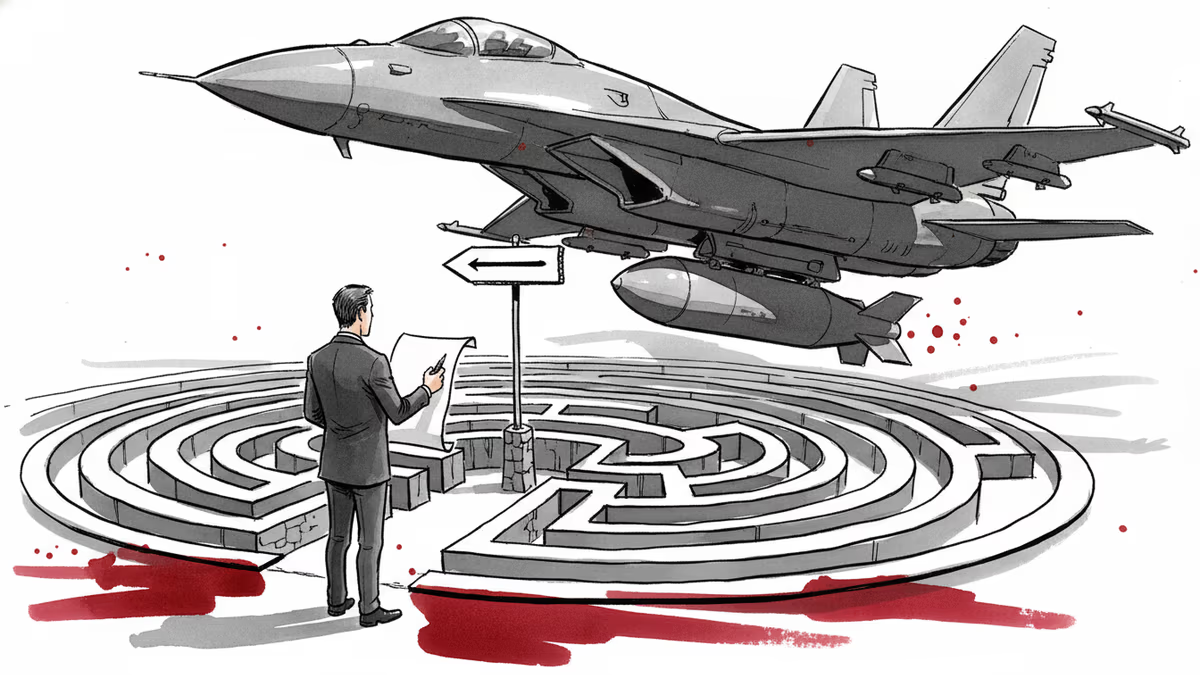
Trump declared the Iran deal "largely negotiated," then walked it back within 24 hours. Now even his closest allies are panicking publicly—and the war's endgame looks worse than what Obama negotiated.
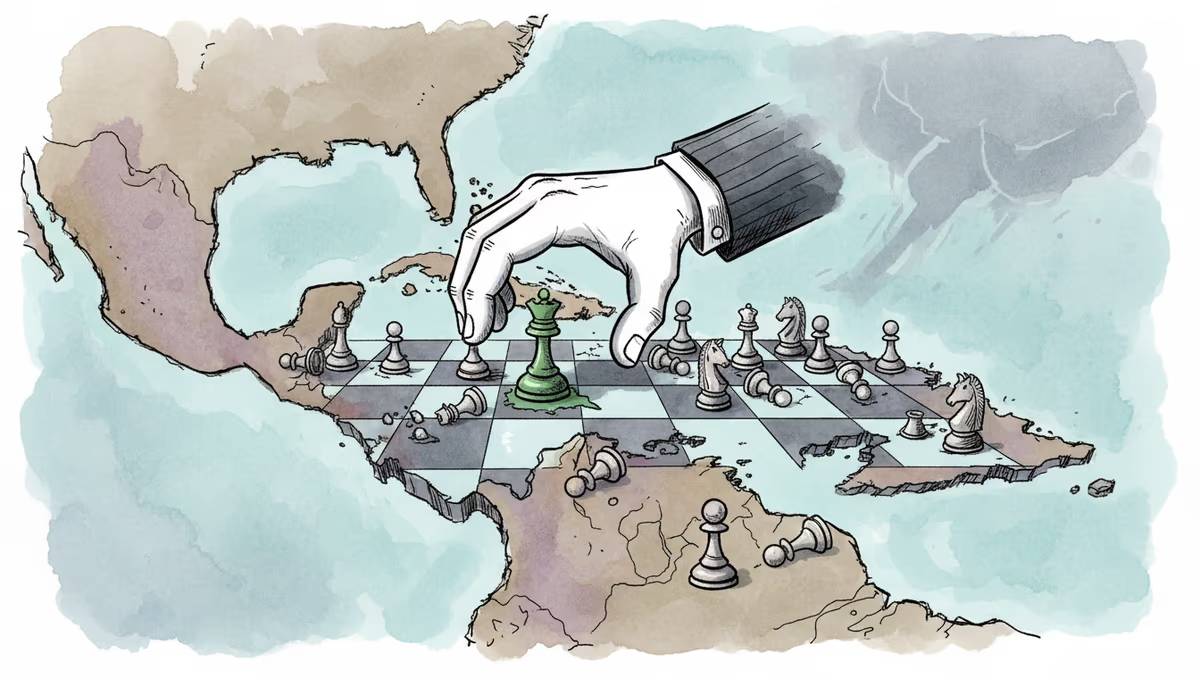
Trump has implied Cuba is next on his regime change list. But after Venezuela and Iran, the administration's Cuba strategy remains murky — and the island's resilience may outlast Washington's attention.
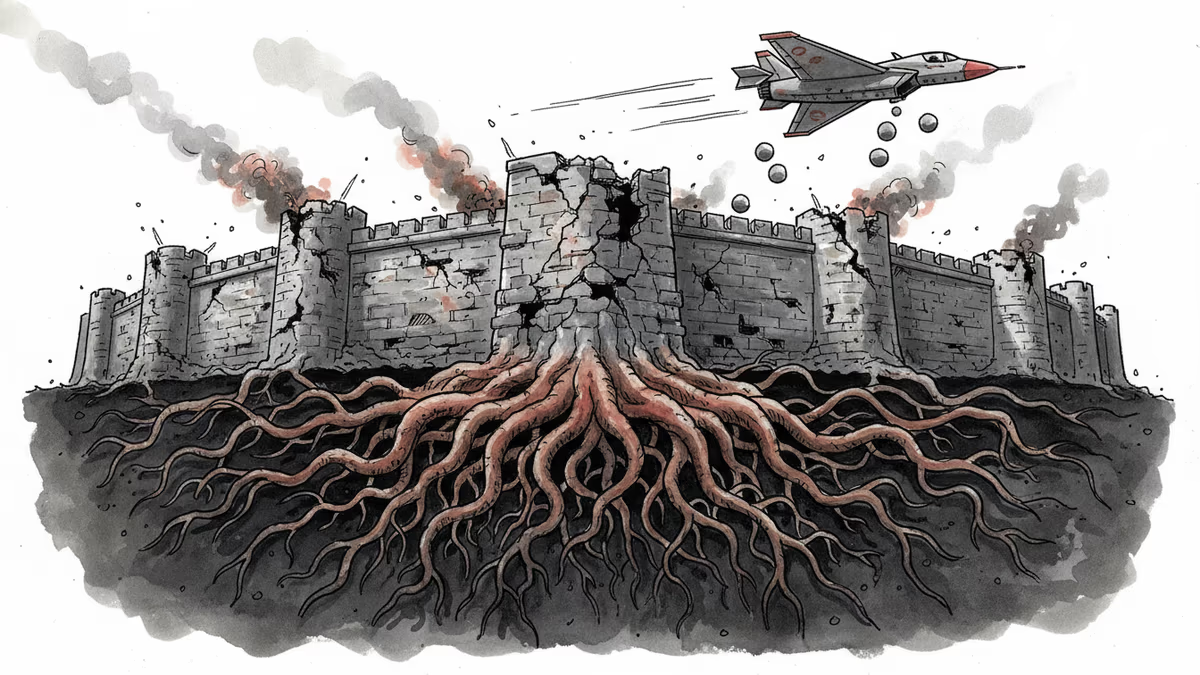
The US and Israel have struck Iran's nuclear sites and missile stockpiles. But Iran's asymmetric military machine was built precisely to survive this kind of pressure. Here's what that means.
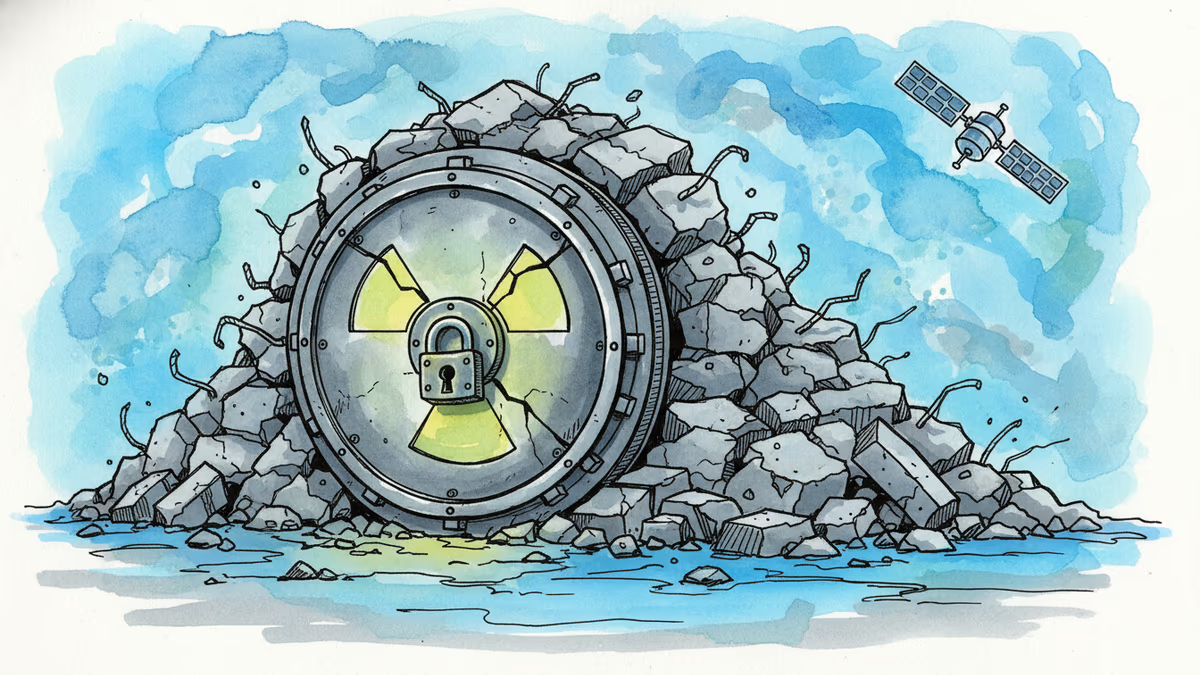
US officials claim Iran's nuclear program is finished. Nonproliferation expert Jeffrey Lewis isn't so sure — and the implications for global security are profound.
Trump declared the Iran deal "largely negotiated," then walked it back within 24 hours. Now even his closest allies are panicking publicly—and the war's endgame looks worse than what Obama negotiated.
Trump has implied Cuba is next on his regime change list. But after Venezuela and Iran, the administration's Cuba strategy remains murky — and the island's resilience may outlast Washington's attention.
The US and Israel have struck Iran's nuclear sites and missile stockpiles. But Iran's asymmetric military machine was built precisely to survive this kind of pressure. Here's what that means.
US officials claim Iran's nuclear program is finished. Nonproliferation expert Jeffrey Lewis isn't so sure — and the implications for global security are profound.
Thoughts
Share your thoughts on this article
Sign in to join the conversation