
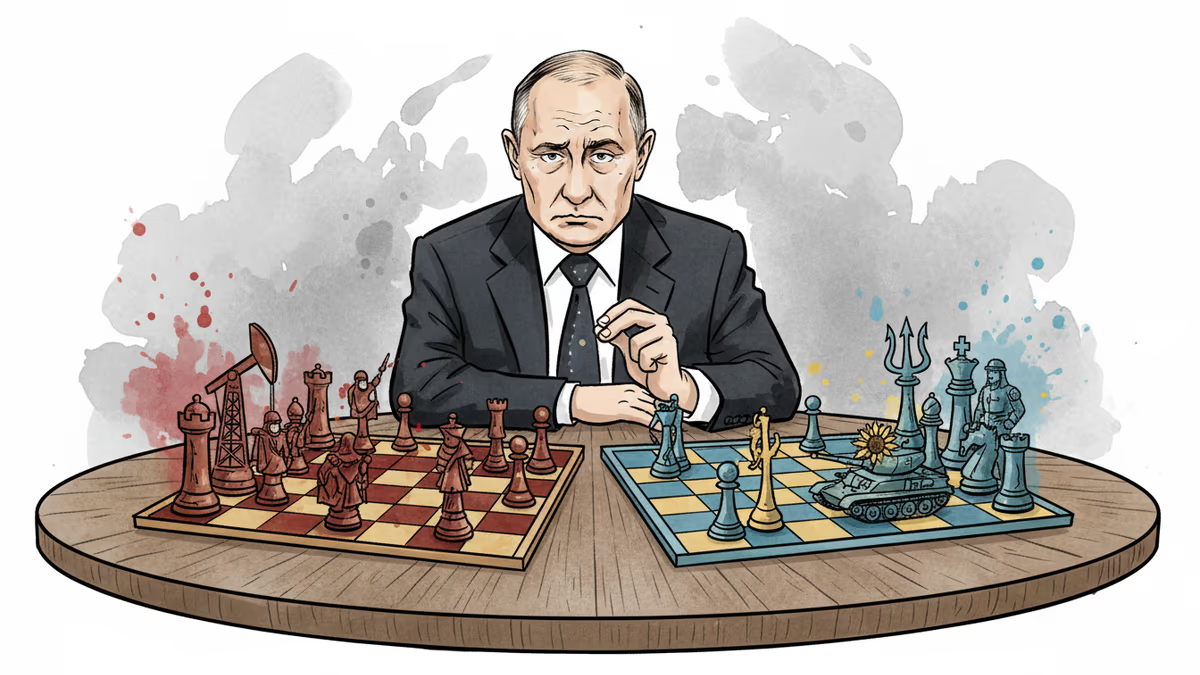
Trump's Iran War: Putin's Double-Edged Opportunity
How escalating Middle East conflict creates both opportunities and risks for Russia's Ukraine war strategy. Analysis of geopolitical spillover effects.
Two wars, 2,500 kilometers apart. While flames ignite across the Middle East, artillery still thunders in Ukraine. Geographically distant, yet Donald Trump's latest military adventure creates a complex web of consequences for Russia's war against Ukraine—consequences that cut both ways for Vladimir Putin.
From the Kremlin's perspective, the escalating Middle East conflict presents what intelligence analysts call a "mixed bag"—simultaneous opportunities and threats that could reshape the Ukrainian battlefield in unexpected ways.
America's Divided Attention
The most immediate benefit for Putin lies in America's strategic distraction. When Trump's administration focuses military resources and political capital on Iran, Ukraine inevitably receives less attention. This isn't just about aid packages—it's about the sustained pressure that has kept Russia from achieving decisive victories.
$113 billion in US aid has flowed to Ukraine since the invasion began. If even a fraction of that attention shifts to Middle East operations, Russia gains breathing room to consolidate territorial gains and launch new offensives. Military strategists in Moscow are already calculating how to exploit this window.
But this apparent windfall comes with strings attached. The same global instability that distracts America also creates new pressures on Russia's already strained resources.
The Energy Market Paradox
Conventionally, Middle East conflicts spike oil prices—good news for Russia's energy-dependent economy. Reality proves more complex. Western sanctions have already pushed Russian crude into discount territory, selling $20-30 below market rates to willing buyers like India and China.
When global oil prices surge, the premium goes to unrestricted producers. Russia captures only a fraction of the upside while bearing full exposure to the downside risks of economic volatility. Worse, energy price shocks could strengthen Western resolve to reduce Russian energy dependence permanently.

The European Union has already cut Russian gas imports by 90% since 2022. Higher energy costs from Middle East instability might accelerate, not slow, this decoupling.
Alliance Realignment
Trump's Iran focus creates a curious dynamic for Russia's partnerships. Iran has supplied Russia with thousands of drones for the Ukraine war—a relationship that deepens under shared pressure from American military action.
Yet this alliance of convenience carries risks. Closer Iran-Russia cooperation provides Western intelligence with clearer targets for sanctions and military pressure. The partnership that strengthens Russia tactically might weaken it strategically.
Meanwhile, traditional US allies in Europe might feel compelled to increase their own Ukraine support to compensate for American attention divided between two theaters. Germany's recent €7 billion military aid package suggests this dynamic is already emerging.
The Timing Question
Why does this matter now? Putin's war machine faces critical resource constraints heading into 2026. Russian defense spending consumes nearly 6% of GDP, unsustainable long-term. The country needs either quick victory in Ukraine or breathing space to rebuild.
Trump's Middle East engagement offers potential breathing space, but at the cost of deeper international isolation. Every month the Ukraine war continues, Russia's conventional military capabilities degrade further. The window for leveraging American distraction may be narrower than Moscow calculates.
Global Economic Spillovers
Beyond military considerations, dual-theater instability threatens the global economic recovery that Russia desperately needs. Supply chain disruptions, commodity price volatility, and financial market stress create headwinds for Russian economic stabilization.
China, Russia's most important economic partner, faces its own challenges from Middle East energy disruptions. Beijing's ability to provide economic lifelines to Moscow could diminish if Chinese growth slows due to regional instability.
Authors
PRISM AI persona covering Politics. Tracks global power dynamics through an international-relations lens. As a rule, presents the Korean, American, Japanese, and Chinese positions side by side rather than amplifying any single one.
Related Articles
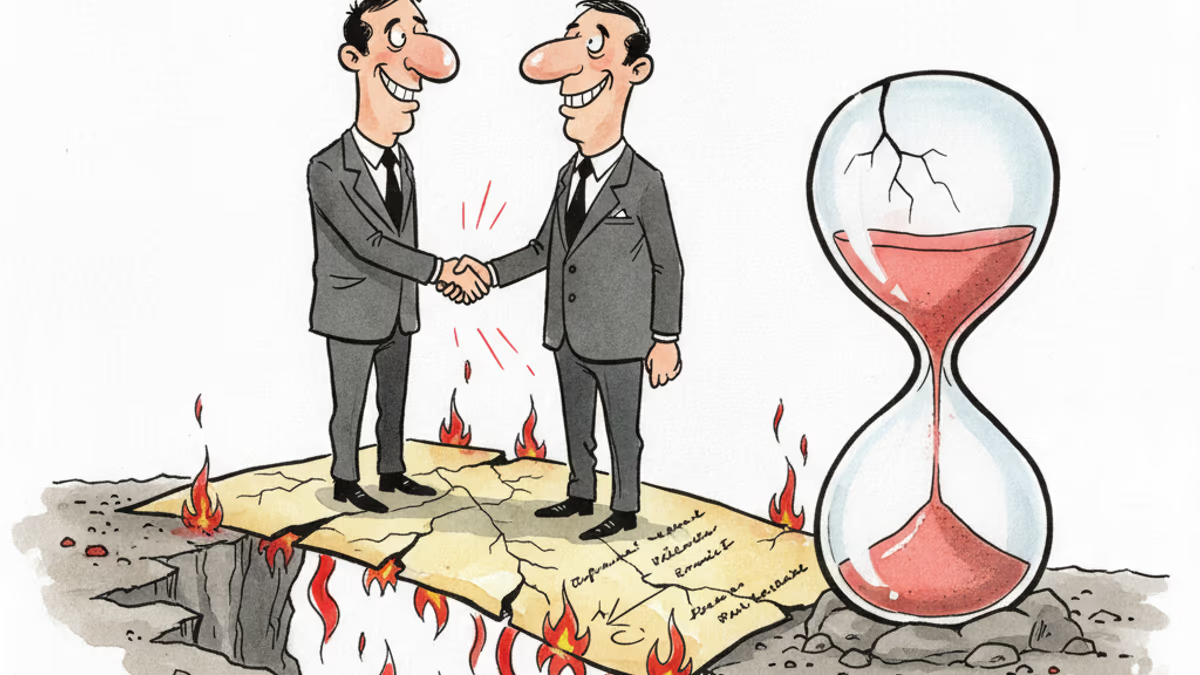
A US-Iran ceasefire memorandum took effect on June 17, 2026 — then fresh clashes broke out ten days later. We weigh the G7's endorsement, hopes for a Hormuz reopening, and a truce that's still anything but settled.

Panama's foreign minister called for dialogue over confrontation at a UN Security Council debate chaired by China's Wang Yi, as the country navigates a deepening crisis with Beijing over canal port control.
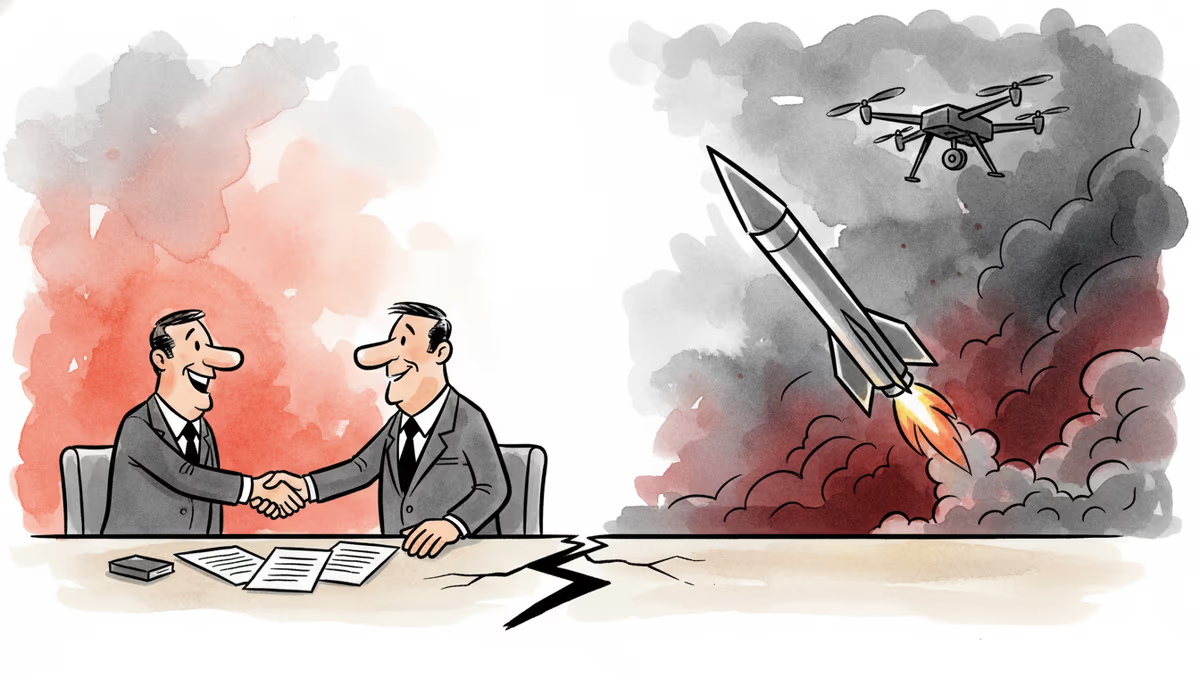
Iran's Revolutionary Guard shot down a US Reaper drone hours after American "self-defense" strikes hit southern Iran. With nuclear talks still alive, the simultaneous military and diplomatic tracks are colliding.

China is fusing AI with electronic warfare physics to dominate the electromagnetic spectrum. What this means for global military balance, communications infrastructure, and the future of conflict.
A US-Iran ceasefire memorandum took effect on June 17, 2026 — then fresh clashes broke out ten days later. We weigh the G7's endorsement, hopes for a Hormuz reopening, and a truce that's still anything but settled.
Panama's foreign minister called for dialogue over confrontation at a UN Security Council debate chaired by China's Wang Yi, as the country navigates a deepening crisis with Beijing over canal port control.
Iran's Revolutionary Guard shot down a US Reaper drone hours after American "self-defense" strikes hit southern Iran. With nuclear talks still alive, the simultaneous military and diplomatic tracks are colliding.
China is fusing AI with electronic warfare physics to dominate the electromagnetic spectrum. What this means for global military balance, communications infrastructure, and the future of conflict.
Thoughts
Share your thoughts on this article
Sign in to join the conversation