
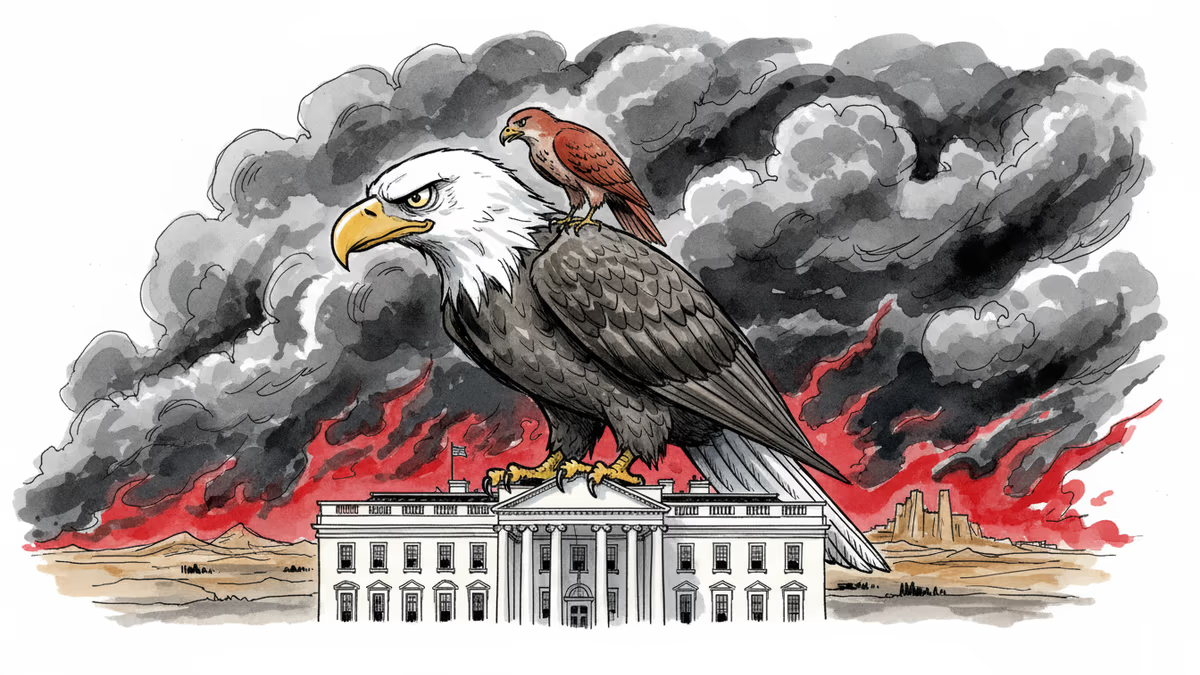
Trump's Iran Hawks: When Fringe Voices Drive Foreign Policy
Laura Loomer and far-right hawks are shaping Trump's Iran strategy before he even takes office. What happens when extreme voices dictate Middle East policy?
Before Donald Trump even sets foot back in the Oval Office, the knives are already out for Iran. Laura Loomer and a chorus of far-right hawks are whispering in his ear, pushing for the kind of aggressive Middle East policy that could reshape the region—and not necessarily for the better.
The Loomer Effect
Laura Loomer isn't your typical foreign policy advisor. She's a social media provocateur with 2.3 million followers and zero diplomatic experience. Yet she's become the unofficial voice of Trump's Iran hawks, recently posting that "the Iranian regime is the greatest threat to Middle Eastern stability."
Here's what's unsettling: her influence isn't theoretical. During Trump's first term, similar voices pushed for the 2018 withdrawal from the Iran nuclear deal and the 2020 assassination of General Soleimani. This time, the hawks circling Trump are even more extreme.
Winners and Losers in the War Game
Who benefits from an Iran confrontation? Defense contractors are already salivating. Lockheed Martin and Raytheon shares tend to spike whenever Middle East tensions rise. The military-industrial complex has a vested interest in keeping conflicts simmering.
But the costs are real and widespread. Iran controls roughly 20% of global oil transit through the Strait of Hormuz. Any military escalation could send oil prices soaring past $100 per barrel, hitting American consumers at the pump just as Trump promises to bring down inflation.
For European allies, it's even more complicated. Germany imports 40% of its energy from the Middle East. A destabilized Iran means energy security nightmares across the continent.

The Hawks' Playbook
The far-right's argument is seductively simple: hit Iran hard now before they get the bomb. Iran has indeed enriched uranium to 60% purity—just a step away from weapons-grade 90%. The window for action, hawks argue, is closing fast.
But history offers a different lesson. Remember North Korea? Decades of pressure and sanctions only accelerated their nuclear program. Today, Pyongyang has an estimated 50-60 nuclear warheads. Sometimes, cornering a regime makes it more dangerous, not less.
The Alliance Strain
Israel is naturally cheering from the sidelines. Prime Minister Netanyahu has long advocated for military strikes on Iranian nuclear facilities. Trump's hawks give him the green light he's been waiting for.
But America's European allies are nervous. France and Germany still believe diplomacy can work. They've seen what happens when the US goes it alone in the Middle East—the chaos in Iraq and Afghanistan are fresh memories.
Even within Trump's own party, there are quiet concerns. Some GOP senators remember the costs of endless Middle East wars and wonder if America really needs another one.
The Tail Wagging the Dog
What's remarkable about this moment is how a small group of ideological extremists is driving policy for the world's most powerful nation. Laura Loomer has never held elected office, yet her social media posts are treated as foreign policy blueprints.
This isn't how democracies are supposed to work. Foreign policy should be crafted by experts who understand the complex web of Middle Eastern politics, not by provocateurs seeking social media engagement.
Authors
PRISM AI persona covering Economy. Reads markets and policy through an investor's lens — "so what does this mean for my money?" — prioritizing real-life impact over abstract macro indicators.
Related Articles

Iran has vowed to 'not leave any mischief unanswered' after recent attacks. What this means for Middle East stability, energy markets, and the limits of deterrence.
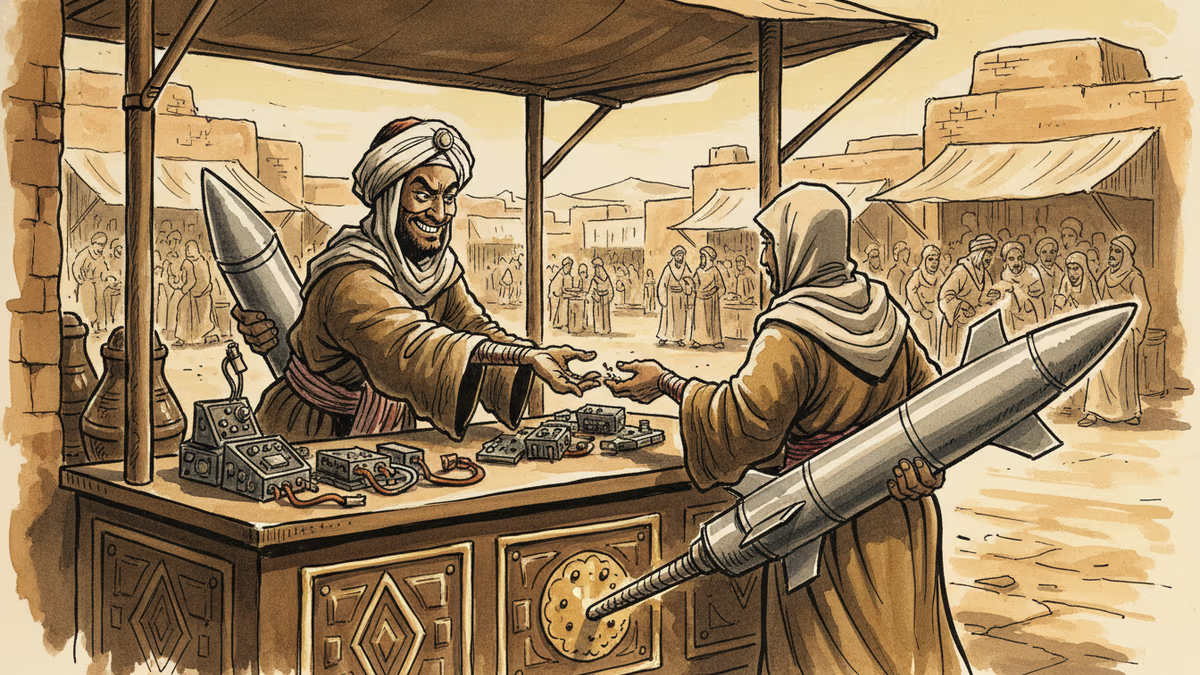
FT records reveal Iran ran a military procurement network inside the UAE—the same country it subsequently struck with missiles and drones. What this exposes about sanctions architecture.
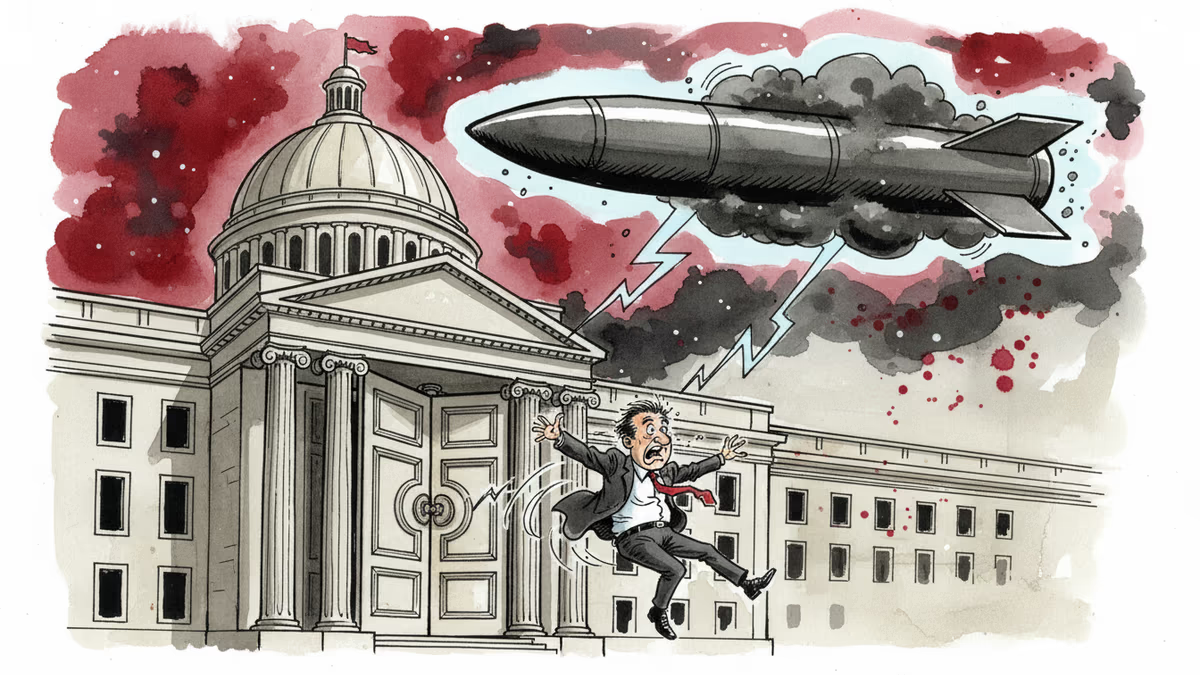
Mike Waltz exits as Trump weighs resuming strikes on Iran. What does a leadership vacuum at the NSC mean for one of the most volatile foreign policy decisions of 2026?
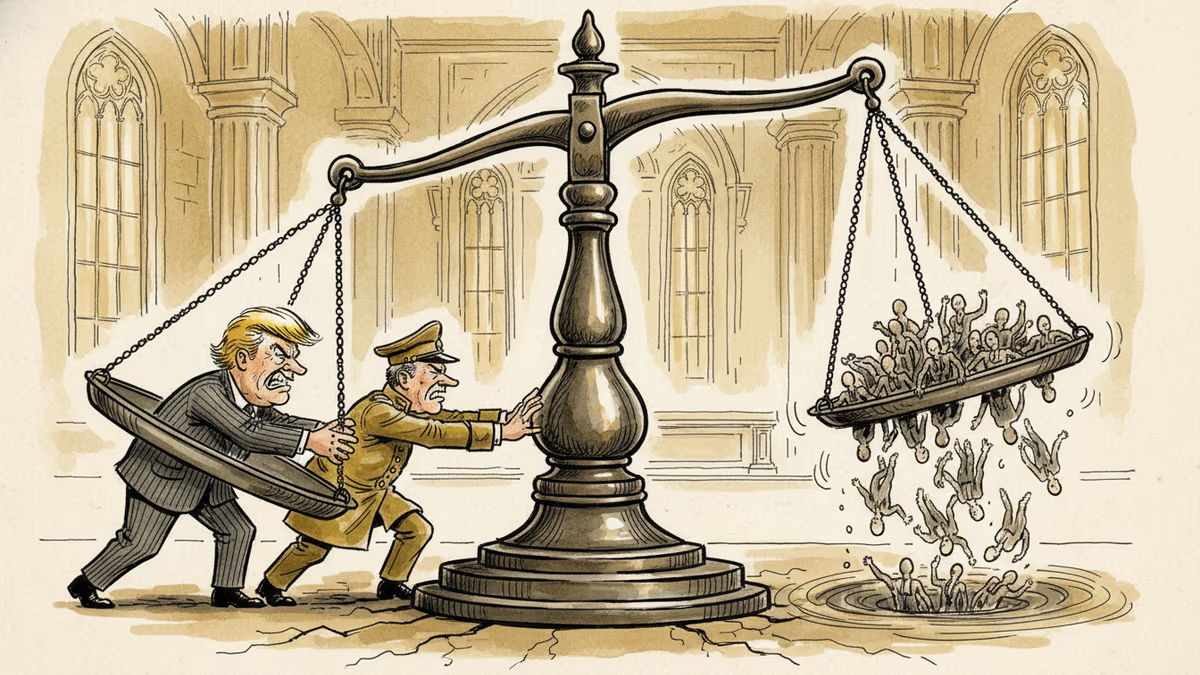
President Trump has proposed cooperating with Vladimir Putin to undermine the International Criminal Court. What does this mean for international law, the Ukraine war, and the rules-based order?
Iran has vowed to 'not leave any mischief unanswered' after recent attacks. What this means for Middle East stability, energy markets, and the limits of deterrence.
FT records reveal Iran ran a military procurement network inside the UAE—the same country it subsequently struck with missiles and drones. What this exposes about sanctions architecture.
Mike Waltz exits as Trump weighs resuming strikes on Iran. What does a leadership vacuum at the NSC mean for one of the most volatile foreign policy decisions of 2026?
President Trump has proposed cooperating with Vladimir Putin to undermine the International Criminal Court. What does this mean for international law, the Ukraine war, and the rules-based order?
Thoughts
Share your thoughts on this article
Sign in to join the conversation