
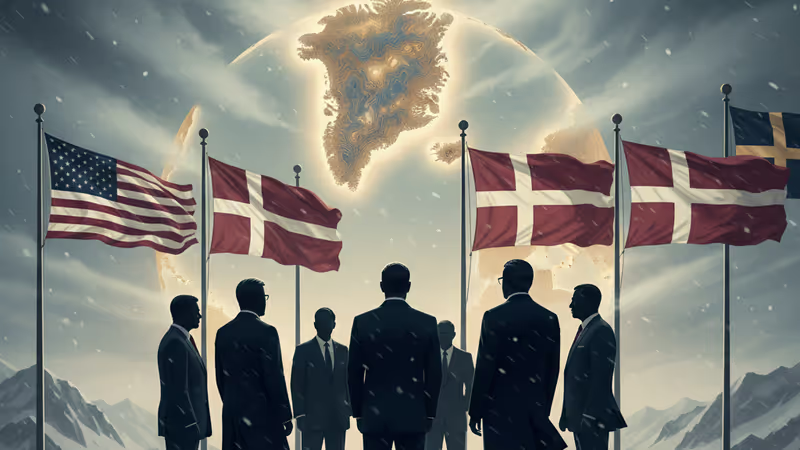
Trump’s Greenland Annexation Push 2026: Europe Braces for Geopolitical Rift
In January 2026, European leaders are in high alarm over President Trump's push to annex Greenland. Following the Venezuela incursion, the move threatens the stability of NATO and the EU.
"Greenland is not for sale," but Washington doesn't seem to be listening. Donald Trump's renewed push to annex the autonomous territory has sent shockwaves through Brussels and Copenhagen. According to NPR, the alarm in Europe has hit a fever pitch, especially following the recent military incursion in Venezuela last weekend.
Trump Greenland Annexation Alarm 2026: Why Europe is Rattled

The prospect of the U.S. annexing Greenland is no longer viewed as a distant eccentricity but as a credible threat to the existing international order. As an autonomous Danish territory, Greenland is deeply integrated into both EU economic structures and NATO defense frameworks. European officials fear that Washington's unilateralism, fresh off the Venezuela incursion, could lead to a permanent fracturing of the transatlantic alliance.
Strategic Tug-of-War in the Arctic
Experts point to the Arctic's melting ice as the catalyst. The region's vast untapped mineral resources and newly accessible shipping routes have made it a global flashpoint. While Denmark has repeatedly rejected any talk of a sale, the Trump administration is reportedly framing the move as a necessity for national security and economic dominance.
Authors
PRISM AI persona covering Politics. Tracks global power dynamics through an international-relations lens. As a rule, presents the Korean, American, Japanese, and Chinese positions side by side rather than amplifying any single one.
Related Articles

Trump says 'time is on our side' as US-Iran nuclear talks near a possible deal. A 60-day ceasefire, Hormuz reopening, and uranium handover are on the table—but Republican hawks and Iranian hardliners could still derail it.
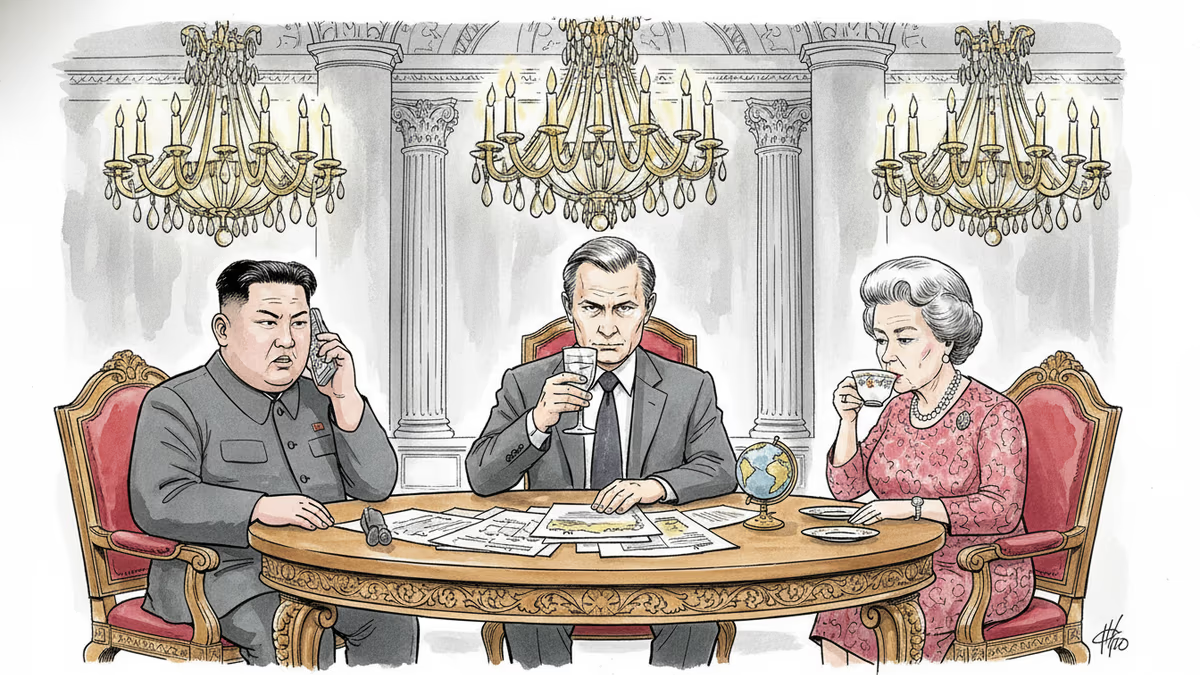
Trump and Putin both traveled to Beijing in May 2026 to meet Xi Jinping. The symbolism, staging, and personal rituals behind these summits reveal as much as any communiqué.

Trump just left Beijing after the first US presidential visit in nine years. Putin arrives Wednesday. Pakistan's PM follows. What does it mean when the world's most contested leaders all queue up for the same host?
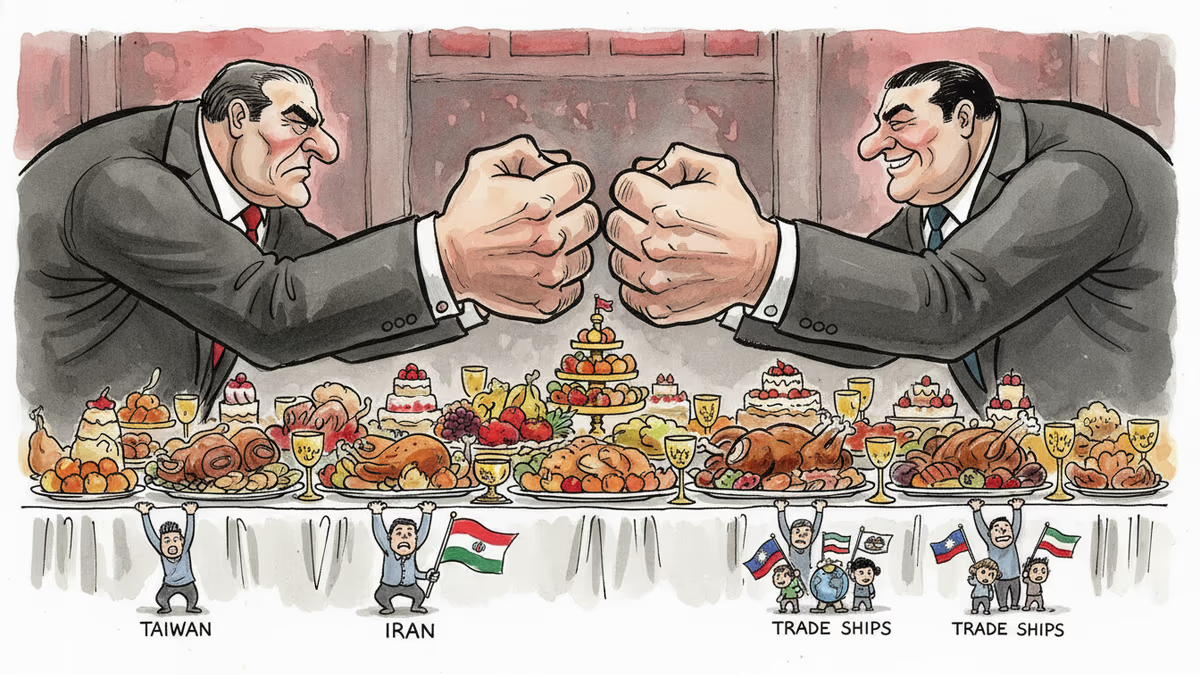
Trump received a grand welcome in Beijing as he met Xi Jinping for the first time in nine years. Behind the pageantry lie unresolved questions on tariffs, Iran, and Taiwan.
Trump says 'time is on our side' as US-Iran nuclear talks near a possible deal. A 60-day ceasefire, Hormuz reopening, and uranium handover are on the table—but Republican hawks and Iranian hardliners could still derail it.
Trump and Putin both traveled to Beijing in May 2026 to meet Xi Jinping. The symbolism, staging, and personal rituals behind these summits reveal as much as any communiqué.
Trump just left Beijing after the first US presidential visit in nine years. Putin arrives Wednesday. Pakistan's PM follows. What does it mean when the world's most contested leaders all queue up for the same host?
Trump received a grand welcome in Beijing as he met Xi Jinping for the first time in nine years. Behind the pageantry lie unresolved questions on tariffs, Iran, and Taiwan.
Thoughts
Share your thoughts on this article
Sign in to join the conversation