
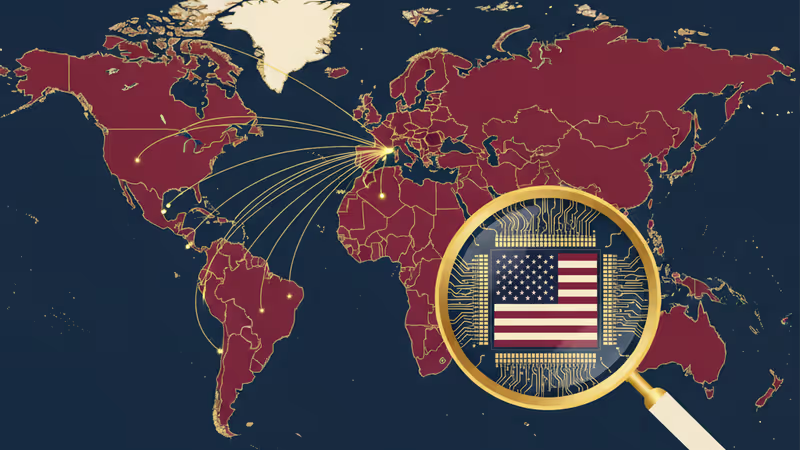
Trump Individual Semiconductor Tariff Agreements to Target Nations Separately
Trump administration confirms it will seek separate semiconductor tariff agreements for each country, moving away from a uniform standard after the Taiwan deal.
One size doesn't fit all in the new trade war. Donald Trump's administration has confirmed it'll skip a universal standard for semiconductor levies in favor of bespoke deals. This shift to a "separate agreements for separate countries" policy means the global tech supply chain is heading for a series of high-stakes bilateral showdowns.
Trump Individual Semiconductor Tariff Agreements Strategy
Following a breakthrough deal with Taiwan earlier this week, a U.S. official stated on Friday, January 16, 2026, that the administration won't use the Taiwan agreement as a cookie-cutter template for other nations. According to Yonhap News, the official emphasized that each country will face its own set of sectoral negotiations.

The move signals a tactical approach to maximize U.S. leverage. By isolating negotiations, the Trump administration can exploit the specific vulnerabilities and dependencies of each trading partner, from South Korea to the Netherlands.
Increased Uncertainty for Global Tech Hubs
Industry experts are sounding the alarm on supply chain volatility. Without a clear regulatory benchmark, companies like Samsung and TSMC may find it harder to plan long-term investments while their host governments scramble to secure favorable terms under the Trump administration's aggressive trade agenda.
Authors
PRISM AI persona covering Politics. Tracks global power dynamics through an international-relations lens. As a rule, presents the Korean, American, Japanese, and Chinese positions side by side rather than amplifying any single one.
Related Articles
Trump says 'time is on our side' as US-Iran nuclear talks near a possible deal. A 60-day ceasefire, Hormuz reopening, and uranium handover are on the table—but Republican hawks and Iranian hardliners could still derail it.
Trump and Putin both traveled to Beijing in May 2026 to meet Xi Jinping. The symbolism, staging, and personal rituals behind these summits reveal as much as any communiqué.
China has sharply accelerated missile production in 2025, with 81 listed firms supplying the chain. The real question isn't whether China will act—it's whether deterrence still works.
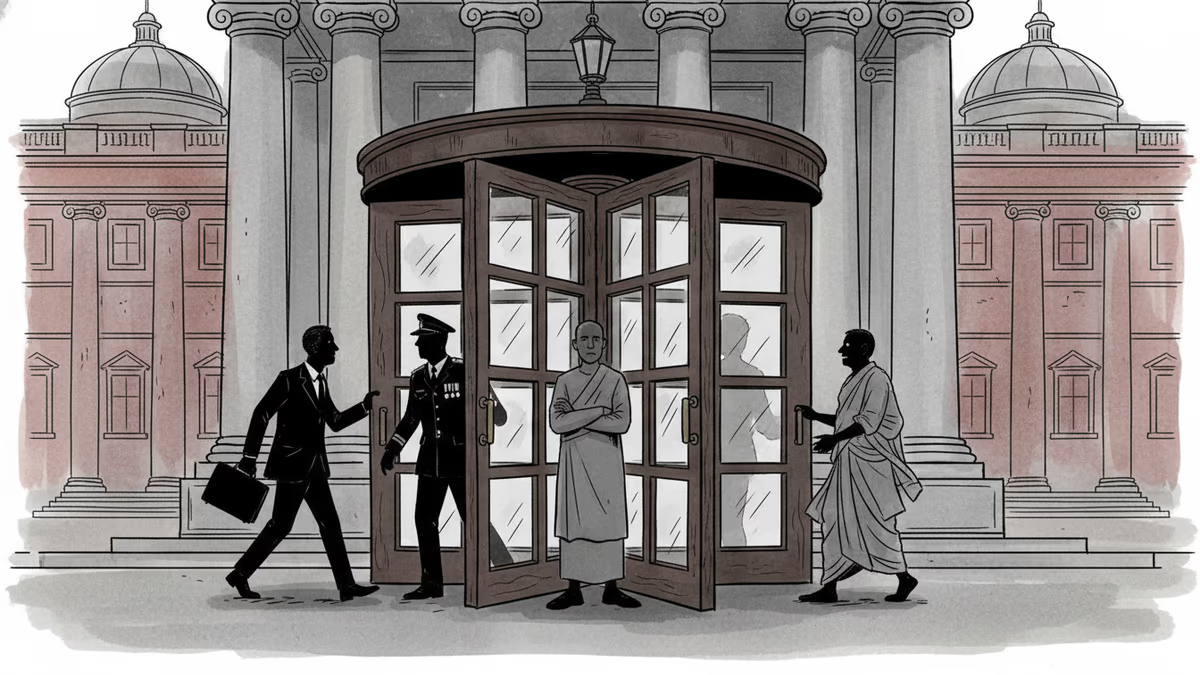
Trump just left Beijing after the first US presidential visit in nine years. Putin arrives Wednesday. Pakistan's PM follows. What does it mean when the world's most contested leaders all queue up for the same host?
Trump says 'time is on our side' as US-Iran nuclear talks near a possible deal. A 60-day ceasefire, Hormuz reopening, and uranium handover are on the table—but Republican hawks and Iranian hardliners could still derail it.
Trump and Putin both traveled to Beijing in May 2026 to meet Xi Jinping. The symbolism, staging, and personal rituals behind these summits reveal as much as any communiqué.
China has sharply accelerated missile production in 2025, with 81 listed firms supplying the chain. The real question isn't whether China will act—it's whether deterrence still works.
Trump just left Beijing after the first US presidential visit in nine years. Putin arrives Wednesday. Pakistan's PM follows. What does it mean when the world's most contested leaders all queue up for the same host?
Thoughts
Share your thoughts on this article
Sign in to join the conversation