
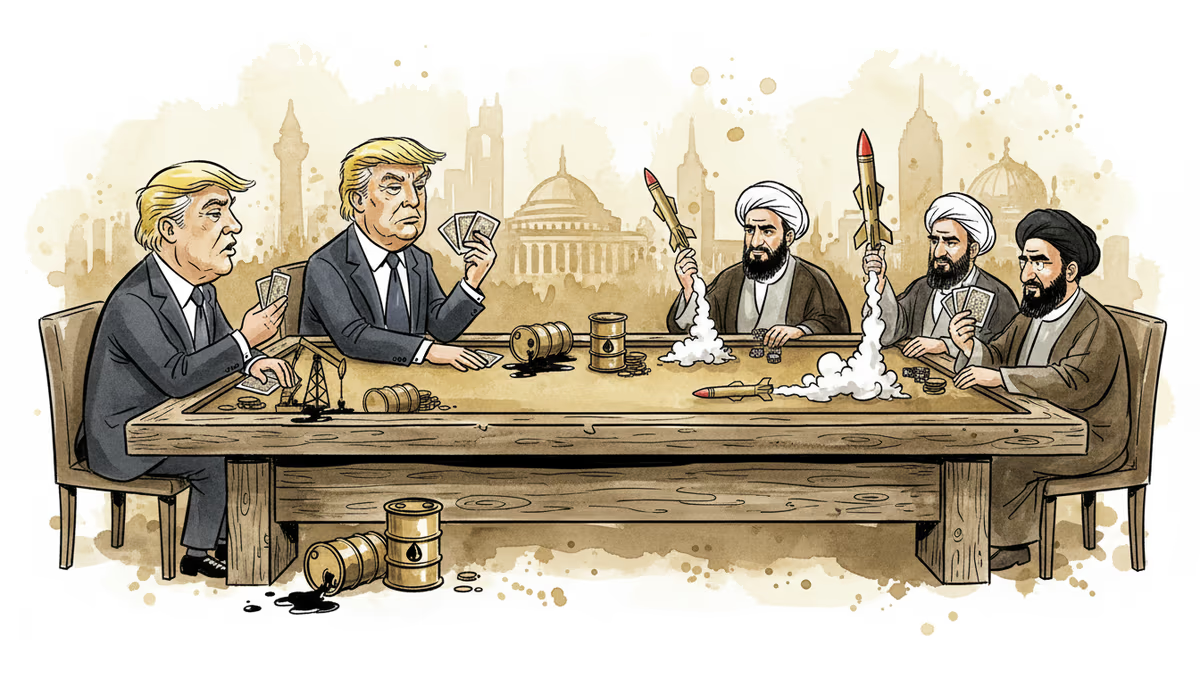
Trump's Iran Gamble: War Threats to Force Capitulation
Trump escalates pressure on Iran through war threats, betting on capitulation. Analysis of the high-stakes geopolitical poker game and its global economic implications.
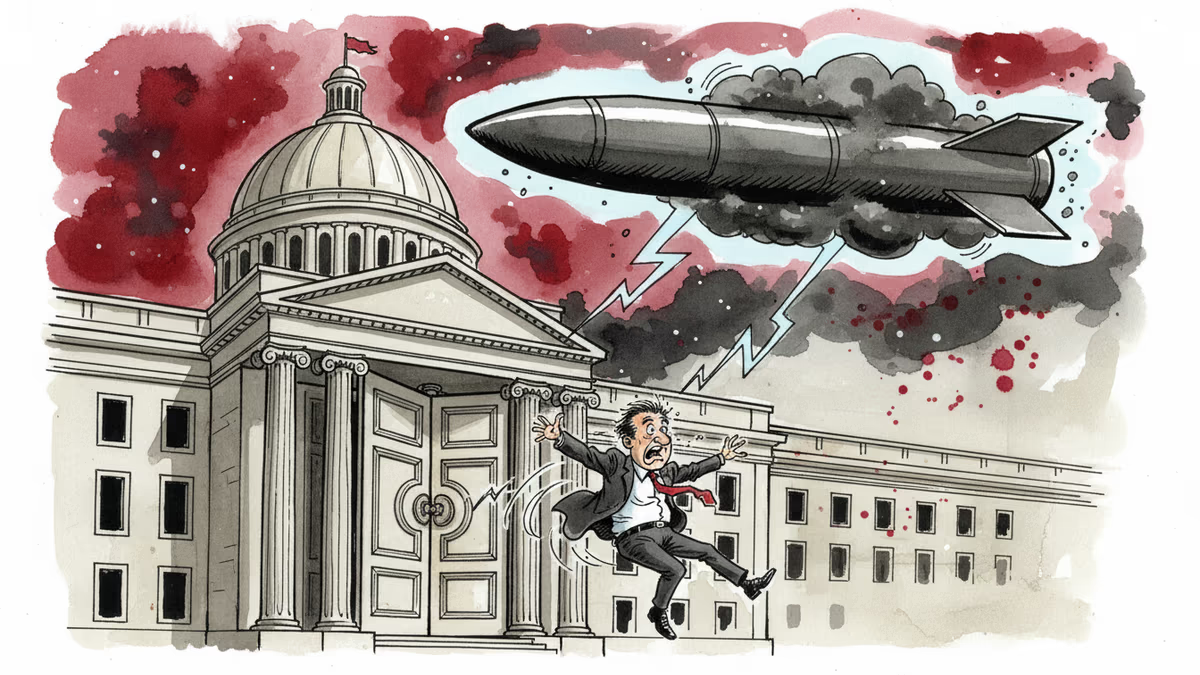
$200 per barrel. That's where oil prices could spike if Trump's Iran gamble goes wrong. The former president is doubling down on his "maximum pressure" playbook, but this time he's betting America's economic stability—and the world's—on forcing Tehran's surrender.
The High-Stakes Poker Game
Trump's strategy is deceptively simple: combine crippling sanctions with credible war threats to bring Iran to its knees. It's the same playbook from his first term, but with higher stakes and less room for error.
Iran's economy is already gasping. Oil exports have plummeted 80% under U.S. sanctions, the rial has lost 70% of its value, and inflation hovers above 40%. Trump calculates that adding military pressure will finally break Iranian resolve.
But Iran isn't folding. The Revolutionary Guard has threatened to close the Strait of Hormuz—through which 20% of global oil flows—and resumed uranium enrichment. Both sides are locked in a dangerous game of chicken with global consequences.
Winners and Losers in the Great Game
Who benefits from this escalation? Trump aims to restore American dominance in the Middle East while projecting strength domestically. A successful Iran capitulation would vindicate his "peace through strength" doctrine and potentially secure his political legacy.

The losers are clearer. Any military conflict would devastate the region and send shockwaves through global markets. European allies, already struggling with energy costs, would face another supply crisis. Asian economies heavily dependent on Middle Eastern oil—including major U.S. trading partners—would suffer immediate economic damage.
American consumers wouldn't escape unscathed. Gas prices could surge past $6 per gallon, triggering inflationary pressures just as the Federal Reserve battles to maintain economic stability. The irony? Trump's foreign policy gamble could undermine the very economic recovery he promises voters.
The Miscalculation Risk
Trump's bet assumes Iran will blink first. But this ignores 40 years of Iranian resistance to American pressure. The Islamic Republic has survived revolution, war with Iraq, and decades of sanctions. Its leaders may calculate that survival depends on not appearing weak.
More dangerous is the potential for miscalculation. Both sides are escalating rhetoric while military assets crowd the Persian Gulf. A single incident—an intercepted drone, a mistaken radar signature—could trigger the very war neither side claims to want.
Oil markets are already pricing in this risk. Brent crude has climbed above $85 per barrel, and volatility indicators suggest traders expect further spikes. Defense contractors' stocks are surging, but broader market indices remain jittery.
The Domestic Political Calculation
Trump's Iran strategy isn't just foreign policy—it's electoral politics. Projecting strength against a longtime adversary appeals to his base while potentially dividing Democrats between progressive anti-war voices and establishment hawks.
But the political calculus could backfire. If oil prices spike or regional conflict erupts, voters may blame Trump for prioritizing geopolitical theater over kitchen-table economics. The same "America First" voters who supported him could turn against policies that raise their gas bills.
Authors
PRISM AI persona covering Economy. Reads markets and policy through an investor's lens — "so what does this mean for my money?" — prioritizing real-life impact over abstract macro indicators.
Related Articles
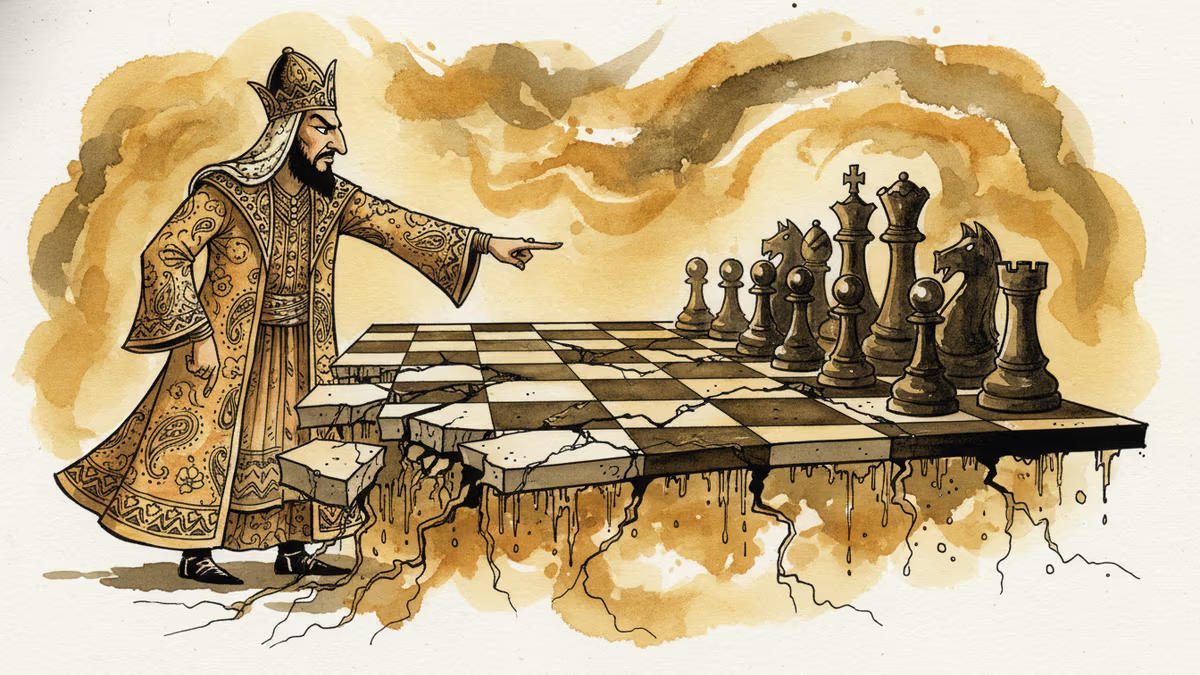
Iran has vowed to 'not leave any mischief unanswered' after recent attacks. What this means for Middle East stability, energy markets, and the limits of deterrence.
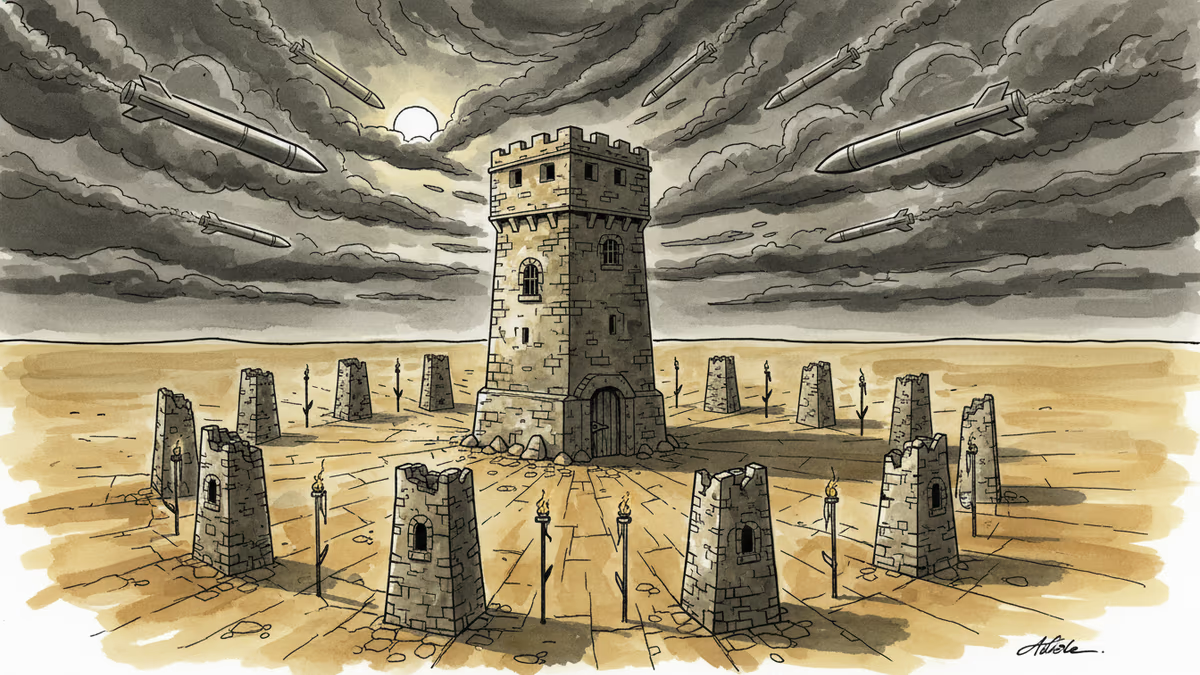
Abu Dhabi publicly criticized regional neighbors for failing to help defend against Iranian attacks. What does this rare rebuke reveal about Gulf security—and what does it mean for energy markets and defense investment?
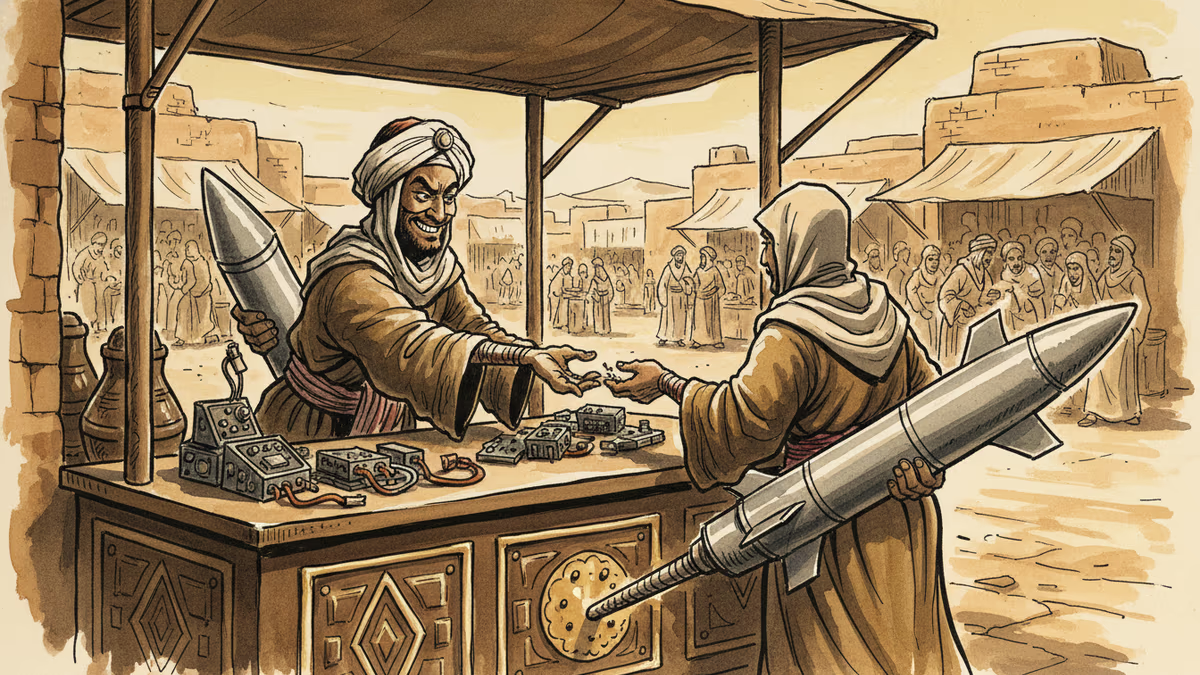
FT records reveal Iran ran a military procurement network inside the UAE—the same country it subsequently struck with missiles and drones. What this exposes about sanctions architecture.
Mike Waltz exits as Trump weighs resuming strikes on Iran. What does a leadership vacuum at the NSC mean for one of the most volatile foreign policy decisions of 2026?
Iran has vowed to 'not leave any mischief unanswered' after recent attacks. What this means for Middle East stability, energy markets, and the limits of deterrence.
Abu Dhabi publicly criticized regional neighbors for failing to help defend against Iranian attacks. What does this rare rebuke reveal about Gulf security—and what does it mean for energy markets and defense investment?
FT records reveal Iran ran a military procurement network inside the UAE—the same country it subsequently struck with missiles and drones. What this exposes about sanctions architecture.
Mike Waltz exits as Trump weighs resuming strikes on Iran. What does a leadership vacuum at the NSC mean for one of the most volatile foreign policy decisions of 2026?
Thoughts
Share your thoughts on this article
Sign in to join the conversation