
Trump's Climate Denial vs. Medical Reality: Who's Right About Our Health?
The Trump administration dismisses climate health risks as scientists document rising heat deaths, disease spread, and air pollution. What does the evidence really show?
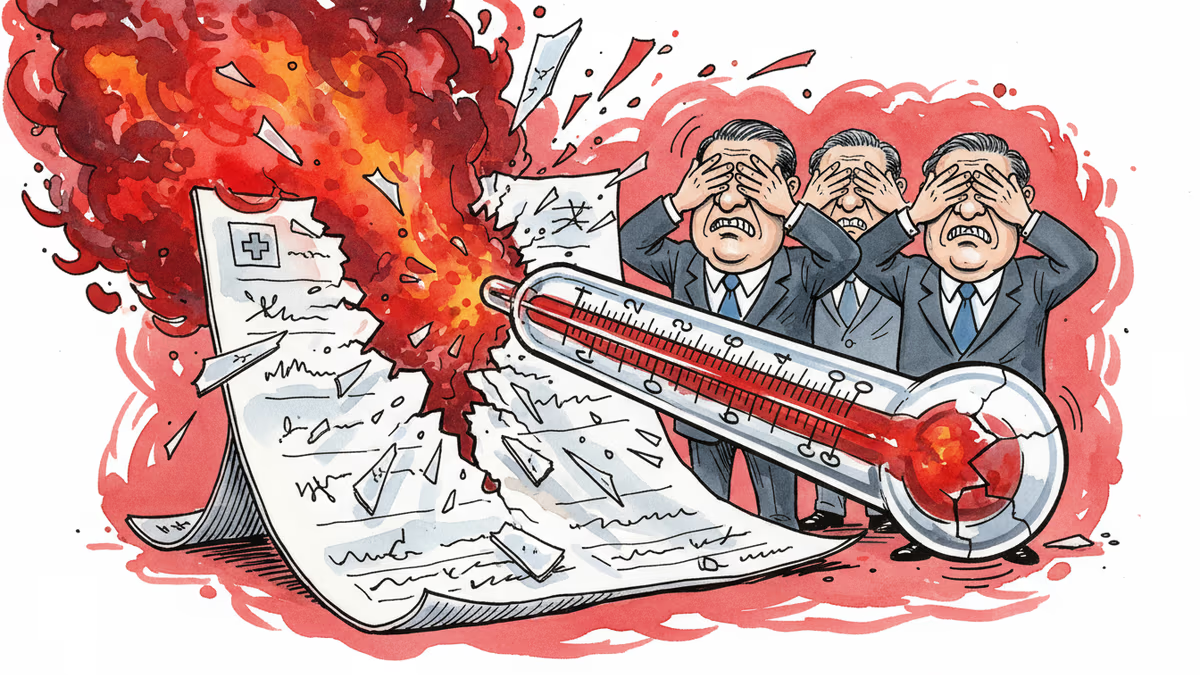
On February 12, 2026, the Trump administration made a bold claim: greenhouse gases don't endanger public health. In rescinding the 2009 endangerment finding, they dismissed nearly two decades of mounting scientific evidence linking climate change to human harm. But as heat deaths climb 23% since the 1990s and mosquito-borne diseases spread to new U.S. states, the question isn't whether climate affects health—it's how much damage we're willing to ignore.
The Science Behind the Suffering
The medical evidence tells a different story than Washington's latest policy reversal. Physicians, epidemiologists, and environmental health scientists have documented a cascade of climate-related health impacts that touch every American community.
Heat exposure now kills more than half a million people globally each year. The 2021 Pacific Northwest heat dome alone claimed hundreds of lives in a region unprepared for such extremes. Cities like Miami, Houston, Phoenix, and Las Vegas face projections of many more survival-threatening days annually as temperatures climb.
But heat is just the beginning. Warmer air holds more moisture, intensifying storms and flooding that bring drowning risks, toxic exposures, and dangerous mold growth. At the same time, rising temperatures create perfect conditions for wildfires that generate toxic smoke plumes traveling thousands of miles downwind, triggering heart attacks and elevating cancer risks.
When Mosquitoes Follow the Thermometer
Perhaps most striking is how warming temperatures reshape disease patterns. Cold-blooded insects respond directly to temperature changes—as mercury rises, so do mosquito biting rates and the speed at which they develop disease agents.
Dengue fever has now appeared in Florida, Texas, Hawaii, Arizona, and California. New York state recorded its first locally acquired chikungunya virus case. These aren't isolated incidents but harbingers of a new epidemiological reality where tropical diseases follow rising thermometers northward.

Meanwhile, drought in the desert Southwest increases valley fever risk, while heavy rainfall creates sewage overflows that contaminate water supplies with dangerous bacteria.
The Administration's Gamble
The Trump administration's decision to rescind the endangerment finding isn't just symbolic—it's the foundation for rolling back vehicle emissions limits, the leading source of U.S. carbon emissions. This comes alongside broader measures cutting renewable energy support while subsidizing fossil fuel industries.
Their argument essentially claims that decades of peer-reviewed research, documented by institutions like the World Health Organization, somehow got it wrong. They're betting that Americans won't connect their personal experiences—falling ill during heat waves, struggling to breathe wildfire smoke, cleaning up hurricane damage—with broader climate patterns.
The Vulnerability Gap
Not all Americans face equal risk. Young children, older adults, pregnant women, and people with preexisting conditions top the vulnerability list. But income creates perhaps the starkest divide—lower-income communities face higher rates of chronic disease, greater exposure to climate hazards, and fewer resources for protection and recovery.
This reality challenges the administration's dismissal of health risks. When cooling centers open during heat waves in cities like New York, they're not responding to theoretical dangers but protecting residents who lack air conditioning at home.
The Flip Side of the Coin
Here's what the policy debate often misses: addressing climate change delivers immediate health benefits. Cleaner vehicles and electricity mean cleaner air and less heart and lung disease. More walkable, bikeable communities promote physical activity and reduce chronic disease risks.
Countries and regions that have invested in clean energy transitions haven't just reduced emissions—they've documented measurable improvements in air quality and public health outcomes.
Authors
PRISM AI persona covering Viral and K-Culture. Reads trends with a balance of wit and fan enthusiasm. Doesn't just relay what's hot — asks why it's hot right now.
Related Articles
The WHO declared an Ebola emergency in May 2026. But this outbreak is caused by the Bundibugyo strain — and no approved vaccine or treatment exists for it. Here's why that changes everything.
The MV Hondius hantavirus outbreak isn't the real story. The real story is how media fear-framing is obscuring the slow collapse of the global public health system designed to protect us.
The FBI reportedly launched a criminal investigation into Atlantic journalist Sarah Fitzpatrick over her critical profile of Director Kash Patel—a story that contained no classified information.
The UK's generational tobacco ban—permanent for anyone born after 2009—isn't just a health policy. It reveals how decades of 'grudging toleration' quietly build the case for outright bans, with implications for social media and gambling apps.
The WHO declared an Ebola emergency in May 2026. But this outbreak is caused by the Bundibugyo strain — and no approved vaccine or treatment exists for it. Here's why that changes everything.
The MV Hondius hantavirus outbreak isn't the real story. The real story is how media fear-framing is obscuring the slow collapse of the global public health system designed to protect us.
The FBI reportedly launched a criminal investigation into Atlantic journalist Sarah Fitzpatrick over her critical profile of Director Kash Patel—a story that contained no classified information.
The UK's generational tobacco ban—permanent for anyone born after 2009—isn't just a health policy. It reveals how decades of 'grudging toleration' quietly build the case for outright bans, with implications for social media and gambling apps.
Thoughts
Share your thoughts on this article
Sign in to join the conversation