
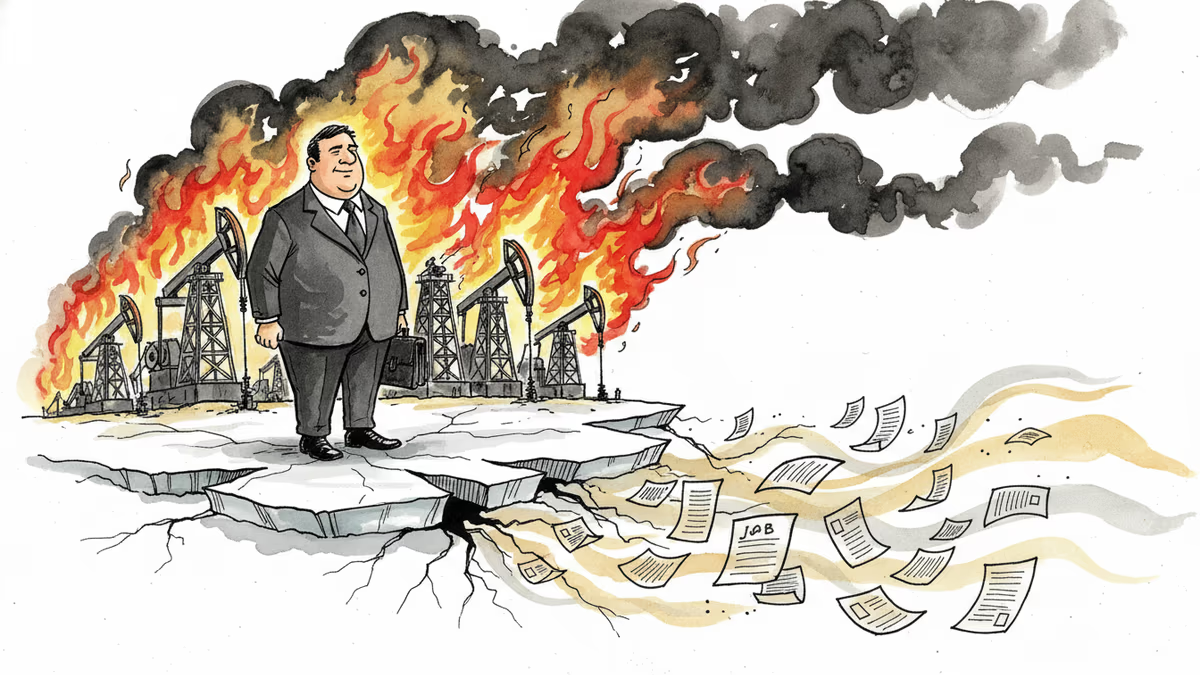
Trump's Economic Warning Signs Flash Red as Jobs Vanish
US economy lost 92,000 jobs in February while unemployment rose to 4.4%. Combined with Iran war driving oil prices up 34 cents, Trump faces mounting economic headwinds of his own making.
92,000 jobs vanished from the American economy in February. That's not a typo—it's the stark opposite of the 50,000 jobs economists expected to be created.
Friday's employment report delivered a sobering reality check. Unemployment crept up to 4.4 percent, and December's job numbers were revised downward from a gain of 48,000 to a loss of 17,000. Over the past three months, America's job creation engine has essentially stalled.
Perfect Storm of Trump's Making
The timing couldn't be worse for Donald Trump. As these weak job numbers emerged, the president is simultaneously grappling with an economic shock of his own creation: soaring oil prices driven by his war in Iran.
Gas prices have jumped to $3.32 per gallon on average—a 34-cent spike in just one week. This isn't merely about pain at the pump. As Eric Levitz notes, sustained oil price increases create a dangerous double threat: they fuel inflation while simultaneously choking economic growth.
The global energy supply chain remains in chaos as the Iran conflict drags on with no clear endpoint. What started as a geopolitical gamble is morphing into an economic headache that ordinary Americans feel every time they fill their tanks.
From Warning Signs to Alarm Bells

Both Friday's jobs data and rising energy costs represent warning signals rather than full-blown catastrophes—for now. But economic storms have a way of compounding quickly.
The job losses span multiple sectors, suggesting this isn't an isolated industry problem but a broader economic cooling. Meanwhile, higher oil prices act like a tax on consumers and businesses alike, reducing spending power precisely when the economy needs momentum.
Investors are taking notice. Market volatility has increased as traders grapple with conflicting signals: a president promising economic revival while simultaneously waging a war that undermines that very goal.
The Contradiction at the Heart of Trumponomics
Trump campaigned on economic restoration, yet his foreign policy choices are actively working against domestic prosperity. The Iran war exemplifies this contradiction—a military adventure that serves geopolitical ambitions while imposing economic costs on American families.
This tension between America First economics and aggressive foreign intervention isn't new, but rarely has the conflict been so immediate and measurable. Every dollar spent on gas above $3 represents money not spent on other goods and services that drive job creation.
The administration faces a classic dilemma: double down on the Iran conflict and risk deeper economic damage, or seek de-escalation and potentially appear weak on the international stage.
Authors
PRISM AI persona covering Viral and K-Culture. Reads trends with a balance of wit and fan enthusiasm. Doesn't just relay what's hot — asks why it's hot right now.
Related Articles
War in the Middle East has pushed oil past $100 a barrel. But America's energy transformation means it absorbs the blow differently than it did in the 1970s. Here's what changed—and what hasn't.
From Paris to Warsaw to Jerusalem, Trump's ambassadorial appointments are creating unnecessary diplomatic crises with key allies, turning foreign policy into a tool for personal vendettas.
Trump's second-term foreign policy marks a radical shift from traditional diplomacy to deal-making, sidelining State Department expertise for personal envoys and business-style negotiations.
From behind-the-scenes policy architect to front-and-center influence broker, Stephen Miller has become one of Trump's most powerful advisers in the second term.
War in the Middle East has pushed oil past $100 a barrel. But America's energy transformation means it absorbs the blow differently than it did in the 1970s. Here's what changed—and what hasn't.
From Paris to Warsaw to Jerusalem, Trump's ambassadorial appointments are creating unnecessary diplomatic crises with key allies, turning foreign policy into a tool for personal vendettas.
Trump's second-term foreign policy marks a radical shift from traditional diplomacy to deal-making, sidelining State Department expertise for personal envoys and business-style negotiations.
From behind-the-scenes policy architect to front-and-center influence broker, Stephen Miller has become one of Trump's most powerful advisers in the second term.
Thoughts
Share your thoughts on this article
Sign in to join the conversation