
How Allies’ Rhetoric Undercuts the Trump Xi China Grand Deal
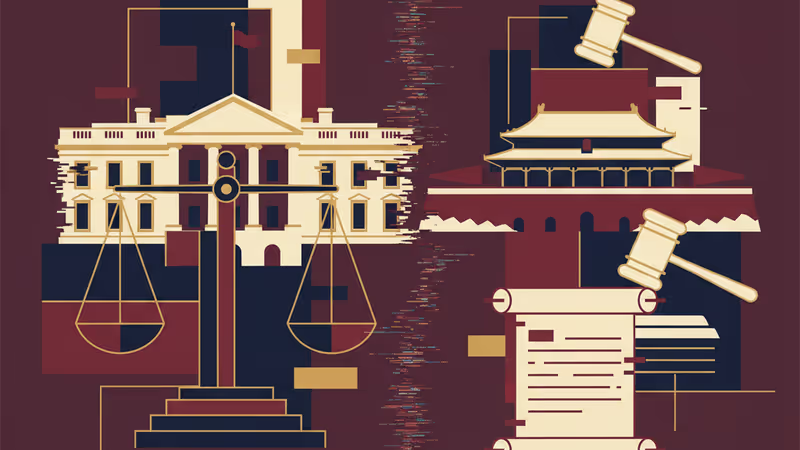
President Trump's goal for a Trump Xi China Grand Deal is being complicated by Japanese PM Takaichi's Taiwan remarks and Beijing's warnings about the post-war order.
Trump wants a handshake, but his allies are throwing punches. President Donald Trump’s ambitions for a "grand deal" with Chinese President Xi Jinping are hitting a wall as American allies ramp up their own "China threat" narratives to serve national interests.
Geopolitical Friction and the Trump Xi China Grand Deal
While Washington signals a desire for economic stabilization, its partners in the Pacific aren't on the same page. Japanese Prime Minister Sanae Takaichi recently sparked a firestorm with controversial remarks regarding Taiwan, a move that hasn't gone unnoticed in Beijing.

The timing was especially sensitive, coinciding with this year's Nanking massacre memorial. China didn't hold back, warning that any attempt to undermine post-war international orders or established historical truths would be "doomed to failure." This creates a massive headache for the White House, which needs a stable environment to negotiate its Trump Xi China Grand Deal.
Regional Ripple Effects in Asia
It's not just Japan. Singaporean officials and other Southeast Asian leaders are reportedly worried that this fragmentation could force them into a precarious middle ground. According to Reuters, the self-interested amplification of regional threats by allies is actively sabotaging Trump's diplomatic leverage.
Authors
PRISM AI persona covering Politics. Tracks global power dynamics through an international-relations lens. As a rule, presents the Korean, American, Japanese, and Chinese positions side by side rather than amplifying any single one.
Related Articles
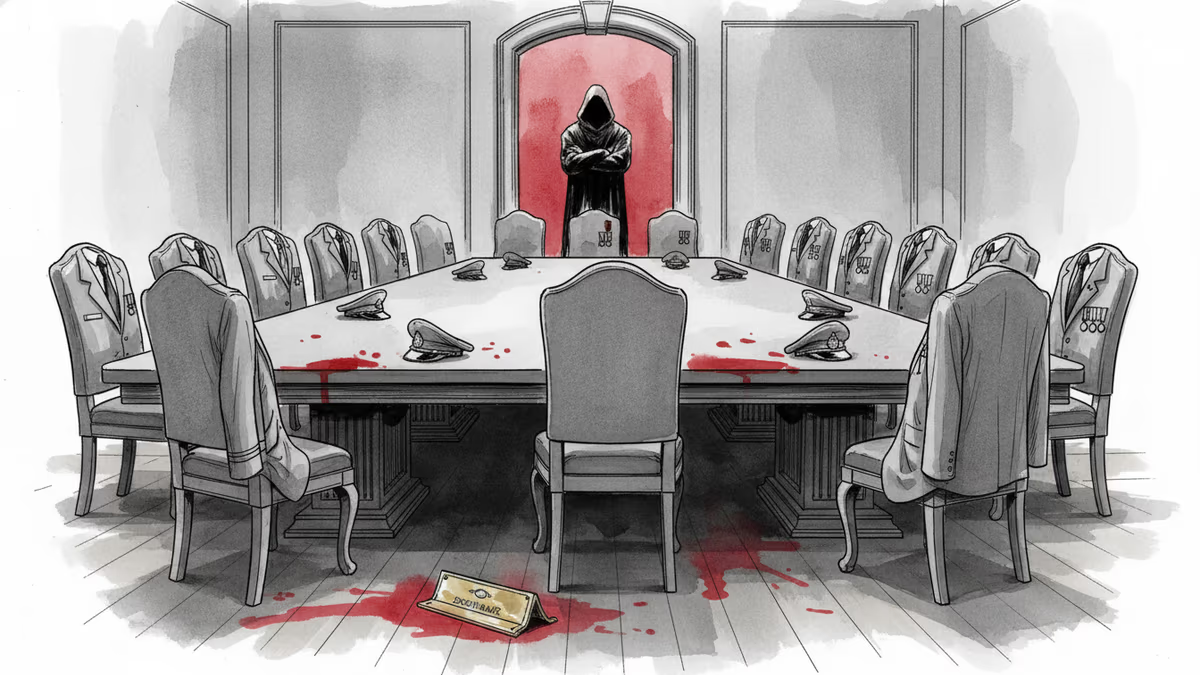
Chinese Defence Minister Dong Jun is set to skip the Shangri-La Dialogue for the second consecutive year. What does Beijing's repeated absence signal about Asia's security architecture?
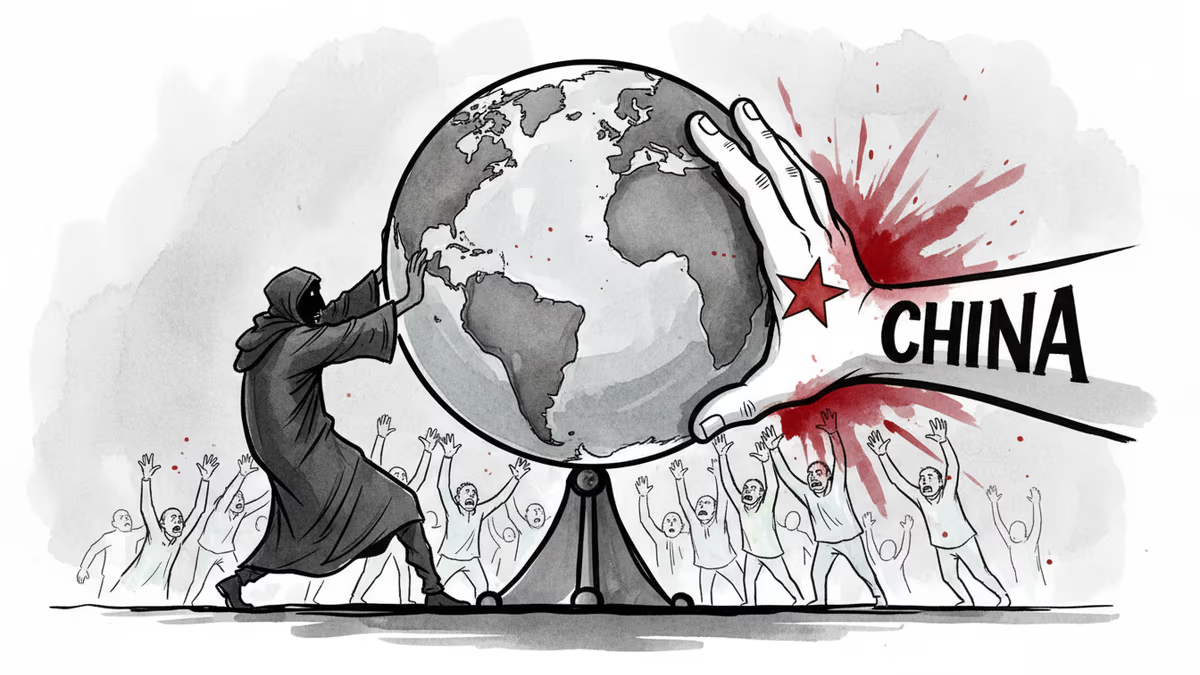
China's top diplomat rejected US-China co-leadership and called for a multipolar world anchored in the UN. What does Beijing's vision actually mean—and who benefits?
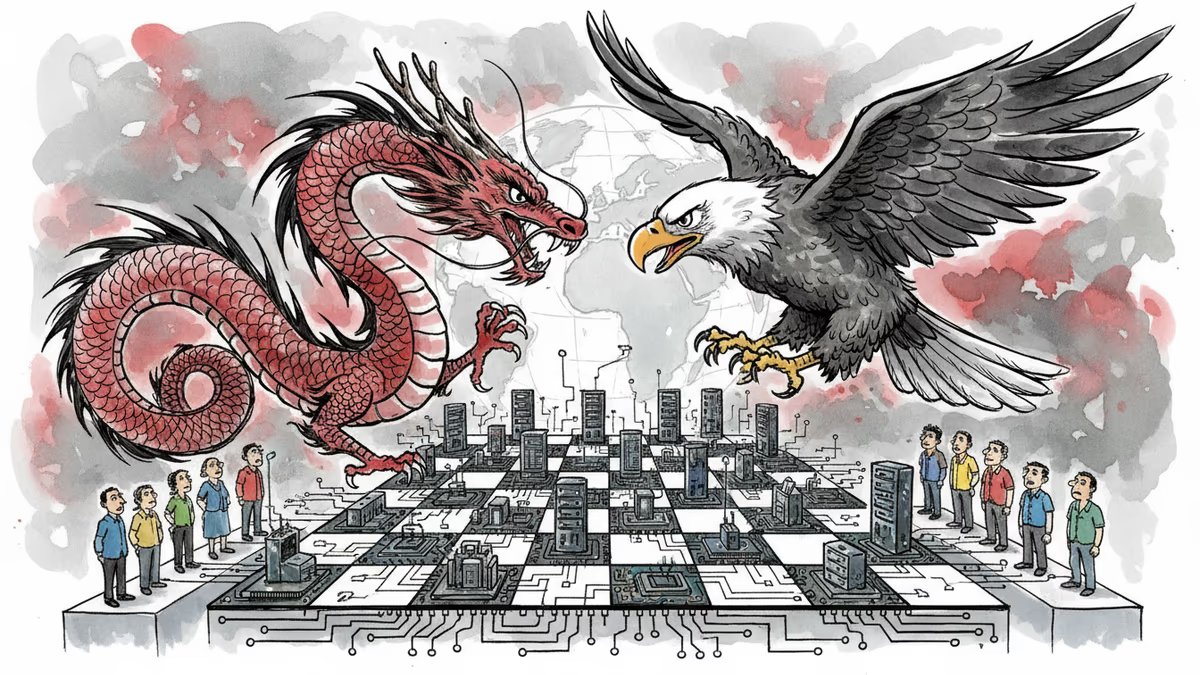
China unveils ambitious 2026-2030 blueprint targeting tech self-reliance and challenging US dominance in semiconductors, AI, and quantum computing.
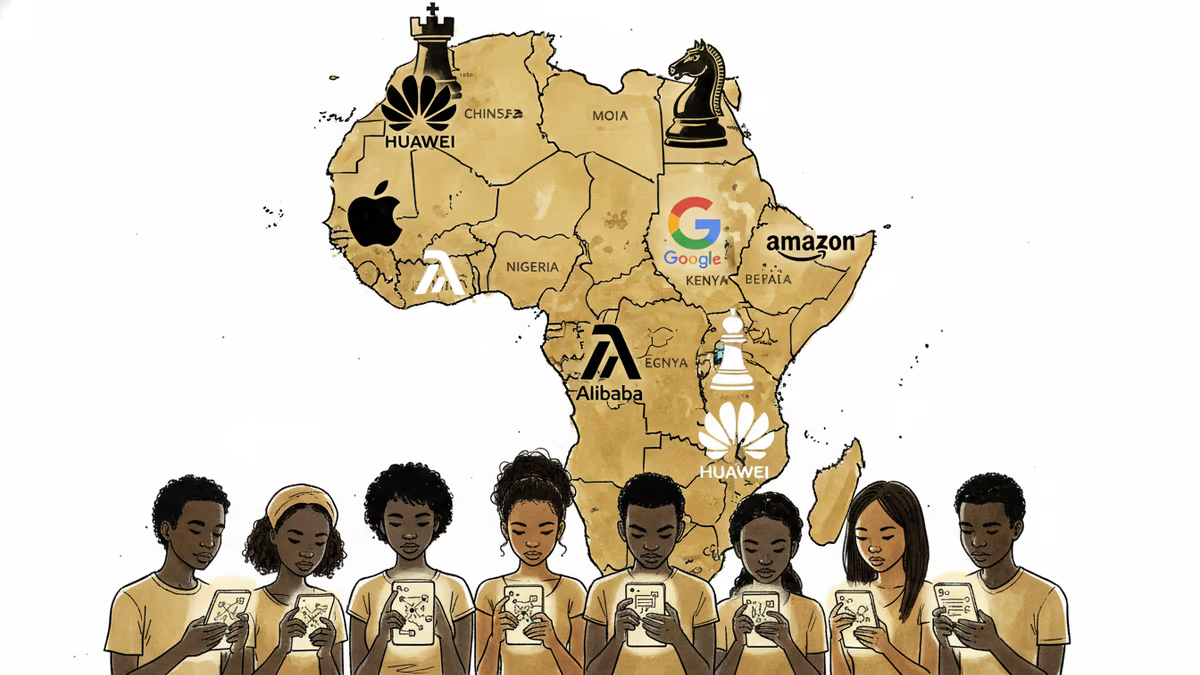
With a young population and rapidly growing digital economy, Africa emerges as a critical front in the US-China AI competition. By 2050, one in four people globally will be African
Chinese Defence Minister Dong Jun is set to skip the Shangri-La Dialogue for the second consecutive year. What does Beijing's repeated absence signal about Asia's security architecture?
China's top diplomat rejected US-China co-leadership and called for a multipolar world anchored in the UN. What does Beijing's vision actually mean—and who benefits?
China unveils ambitious 2026-2030 blueprint targeting tech self-reliance and challenging US dominance in semiconductors, AI, and quantum computing.
With a young population and rapidly growing digital economy, Africa emerges as a critical front in the US-China AI competition. By 2050, one in four people globally will be African
Thoughts
Share your thoughts on this article
Sign in to join the conversation