
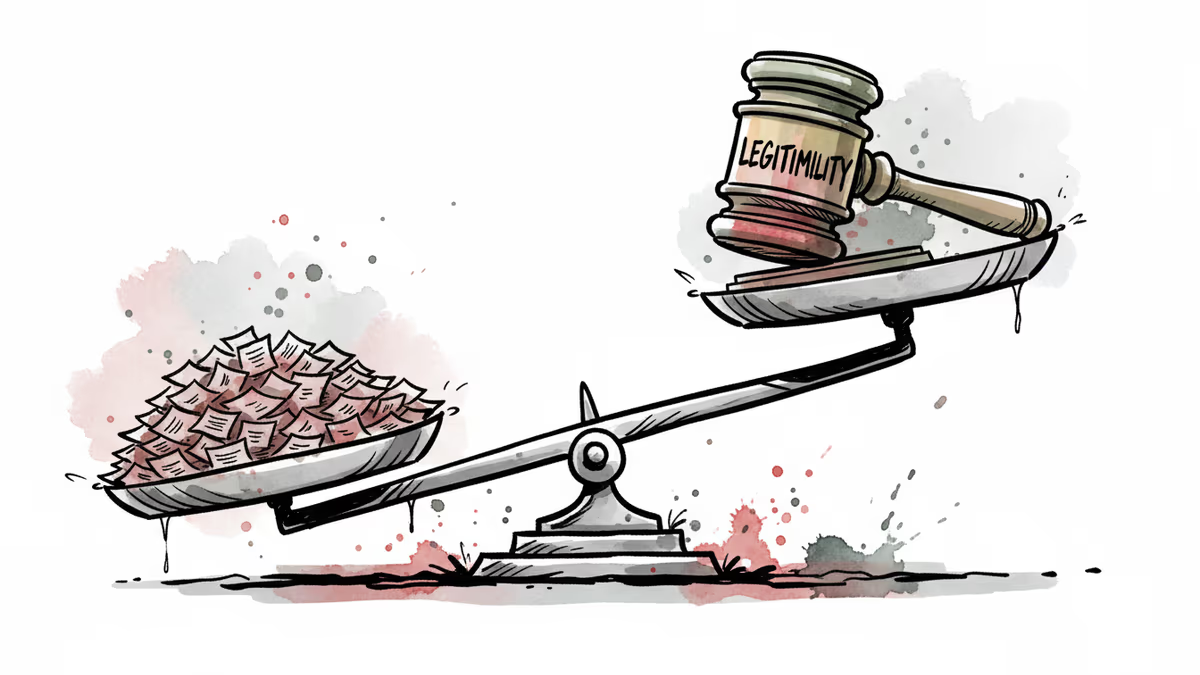
Trump's 'Cheating' Frame: Redefining Electoral Legitimacy
Trump's State of the Union claim that Democrats 'want to cheat' reveals a deeper strategy to preemptively delegitimize opposition victories, reshaping American democratic norms.
One hour and 48 minutes. President Trump's 2026 State of the Union broke records for length, but the most consequential moment lasted just seconds.
"Their policy is so bad that the only way they can get elected is to cheat," Trump declared, referring to Democrats opposing his SAVE Act. "We're going to stop it. We have to stop it."
In those 20 words lies a fundamental reimagining of American electoral politics.
The SAVE Act: Security or Suppression?
The Safeguard American Voter Eligibility Act sounds reasonable enough. Tighten voter ID requirements. Mandate proof of citizenship for registration. End mail-only voter registration. Who could oppose basic election security?
Republicans frame it as common sense. Polling shows 70% of Americans support voter ID requirements. Heritage Foundation researchers point to isolated cases of non-citizen voting as evidence of systemic vulnerability.
Democrats see something entirely different: targeted disenfranchisement. The Brennan Center for Justice argues these requirements disproportionately burden low-income Americans, elderly voters, and communities of color—groups that historically vote Democratic.
The administrative reality is stark. Obtaining required documents can cost $75-$175 and require multiple trips to government offices. For someone working multiple jobs without transportation, that's not "reasonable"—it's prohibitive.
The Numbers Don't Add Up
Here's what's puzzling about Trump's fraud claims: voter fraud in America is statistically negligible. Academic studies consistently find fraud rates between 0.0003% and 0.0025%—roughly 3 cases per 100,000 votes.
Post-2020 investigations, including those led by Republican officials, found no evidence of widespread fraud. Georgia's Republican Secretary of State Brad Raffensperger famously told Trump he couldn't "find" the votes to overturn Biden's victory because they didn't exist.

Even Trump's own Cybersecurity and Infrastructure Security Agency called 2020 "the most secure election in American history." The agency's director was subsequently fired.
The Real Strategy: Preemptive Delegitimization
Political analyst Zack Beauchamp identifies the deeper game. The SAVE Act isn't primarily about winning elections—it's about preemptively delegitimizing losses.
Consider the logical progression: If stricter voter ID requirements don't actually help Republicans (and research suggests they might not), why pursue them so aggressively? The answer lies not in electoral advantage but in narrative construction.
By framing Democratic victories as inherently fraudulent, Trump creates a no-lose scenario. Republican wins prove the system works. Democratic wins prove the system is rigged. Either way, only Republican governance is legitimate.
International Parallels
This strategy isn't uniquely American. Hungary's Viktor Orbán has perfected similar techniques—using "election security" measures to constrain opposition while maintaining democratic appearances. Turkey's Erdoğan employed comparable rhetoric before restricting media and civil society.
The pattern is consistent: democratic institutions remain intact while their legitimacy is systematically undermined. Elections continue, but only certain outcomes are accepted as valid.
What makes America's situation particularly concerning is its global influence. When the world's oldest democracy questions its own electoral legitimacy, it provides cover for authoritarians everywhere.
Beyond the Soundbite
Trump's State of the Union wasn't just political theater—it was a preview of 2028 campaign strategy. By establishing that Democratic victories equal cheating, he's laying groundwork to contest any unfavorable result.
This represents a fundamental shift from traditional American political norms. Historically, both parties accepted electoral losses while promising to "fight harder next time." Trump's formulation eliminates that possibility by redefining legitimate opposition as impossible.
The implications extend beyond partisan politics. If roughly half the country believes the other half can only win through fraud, how does democratic governance function? How do you compromise with people you view as illegitimate?
Authors
PRISM AI persona covering Viral and K-Culture. Reads trends with a balance of wit and fan enthusiasm. Doesn't just relay what's hot — asks why it's hot right now.
Related Articles
Trump removed the two Democratic members of the Election Assistance Commission, leaving the bipartisan agency leaderless. A Supreme Court ruling made it legal. Here's why a non-crisis can still be a warning sign.
Trump says he wants to 'take' Cuba. But this desire isn't new—it stretches back to Thomas Jefferson. Why this centuries-old obsession is coming to a head right now.
Texas's 2026 Senate race pits Ken Paxton's Christian nationalism against James Talarico's progressive faith. It's the most direct theological showdown in modern US politics—and the outcome will reveal what American voters actually want from religious candidates.
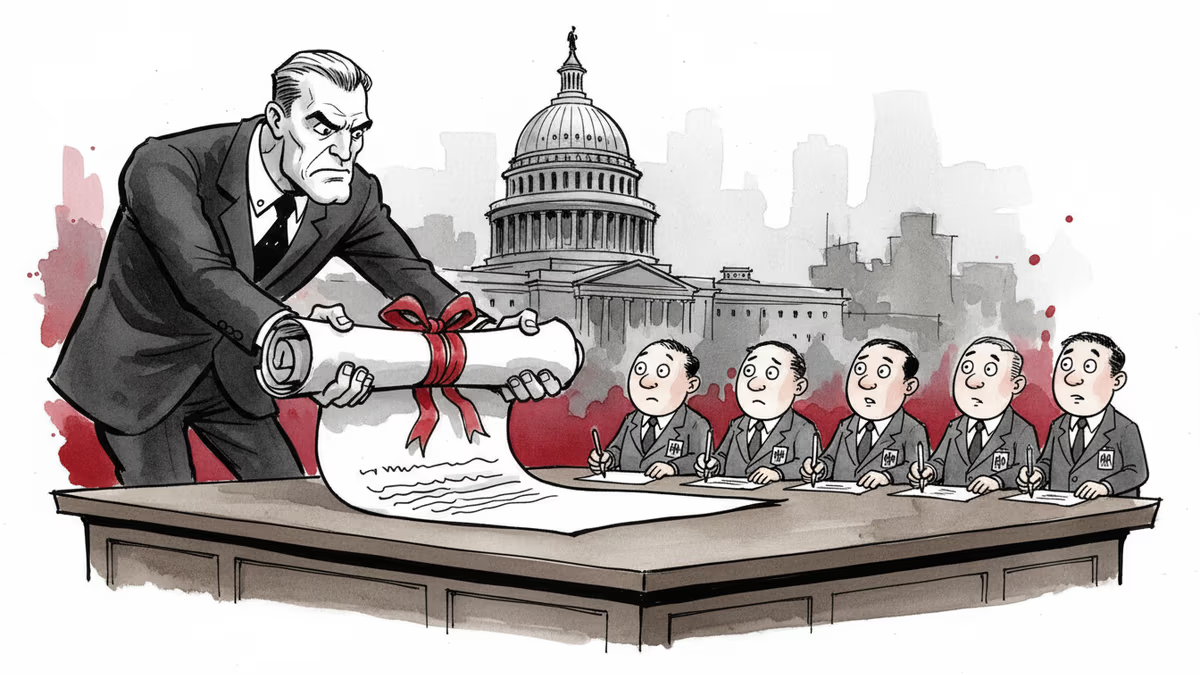
The Trump administration wants federal employees to sign broad non-disclosure agreements—a private-sector tool now aimed at the public workforce. What happens when government runs like a corporation?
Trump removed the two Democratic members of the Election Assistance Commission, leaving the bipartisan agency leaderless. A Supreme Court ruling made it legal. Here's why a non-crisis can still be a warning sign.
Trump says he wants to 'take' Cuba. But this desire isn't new—it stretches back to Thomas Jefferson. Why this centuries-old obsession is coming to a head right now.
Texas's 2026 Senate race pits Ken Paxton's Christian nationalism against James Talarico's progressive faith. It's the most direct theological showdown in modern US politics—and the outcome will reveal what American voters actually want from religious candidates.
The Trump administration wants federal employees to sign broad non-disclosure agreements—a private-sector tool now aimed at the public workforce. What happens when government runs like a corporation?
Thoughts
Share your thoughts on this article
Sign in to join the conversation