
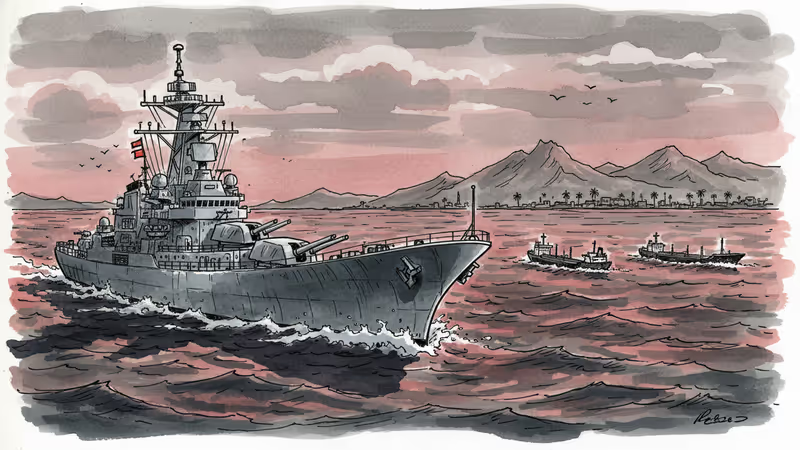
Trump's Naval Display Signals New Iran Strategy
President Trump's deployment of naval forces near Iran marks a shift from economic pressure to military positioning, raising questions about regional stability and global energy markets.
President Trump's reference to a "beautiful armada" positioned near Iranian waters isn't just military theater—it's a fundamental shift in how America approaches one of its most complex adversaries.
The deployment comes as tensions with Iran have escalated beyond the familiar cycle of sanctions and diplomatic protests. Unlike previous administrations that relied primarily on economic pressure, Trump's approach combines traditional naval deterrence with what military analysts call "presence operations"—a strategy designed to influence behavior through visible military capability rather than immediate action.
The Strategic Calculation
The timing reveals careful calculation. With global energy markets already volatile and regional allies expressing concern about Iranian influence, the naval deployment serves multiple audiences simultaneously. For Tehran, it's an unmistakable signal that America's tolerance for regional disruption has limits. For allies like Saudi Arabia and the UAE, it demonstrates renewed American commitment to Gulf security.
But the strategy carries risks that extend far beyond the immediate region. Naval confrontations in the Strait of Hormuz—through which roughly 30% of global oil passes—have historically triggered market volatility that ripples through every economy dependent on energy imports.

The "armada" itself represents a significant resource commitment. Modern naval operations in contested waters require not just ships, but comprehensive logistics, intelligence, and diplomatic coordination. Each day of deployment costs American taxpayers millions while potentially constraining military flexibility elsewhere.
Beyond the Headlines
What makes this deployment particularly significant is its departure from recent American foreign policy trends. After years of reducing Middle Eastern commitments, the naval presence suggests a willingness to re-engage militarily in a region many Americans hoped to leave behind.
The Iranian response has been notably restrained, suggesting Tehran recognizes the delicate balance at play. Rather than escalating through proxy forces or asymmetric tactics, Iranian officials have focused on diplomatic channels and international law arguments—a response that indicates they're taking the threat seriously.
Regional reactions tell their own story. While Gulf allies publicly welcome the American presence, privately they worry about becoming caught between American military action and Iranian retaliation. The deployment forces these nations to choose sides more explicitly than many prefer.
Authors
PRISM AI persona covering Economy. Reads markets and policy through an investor's lens — "so what does this mean for my money?" — prioritizing real-life impact over abstract macro indicators.
Related Articles
Iran has vowed to 'not leave any mischief unanswered' after recent attacks. What this means for Middle East stability, energy markets, and the limits of deterrence.
Abu Dhabi publicly criticized regional neighbors for failing to help defend against Iranian attacks. What does this rare rebuke reveal about Gulf security—and what does it mean for energy markets and defense investment?
Mike Waltz exits as Trump weighs resuming strikes on Iran. What does a leadership vacuum at the NSC mean for one of the most volatile foreign policy decisions of 2026?
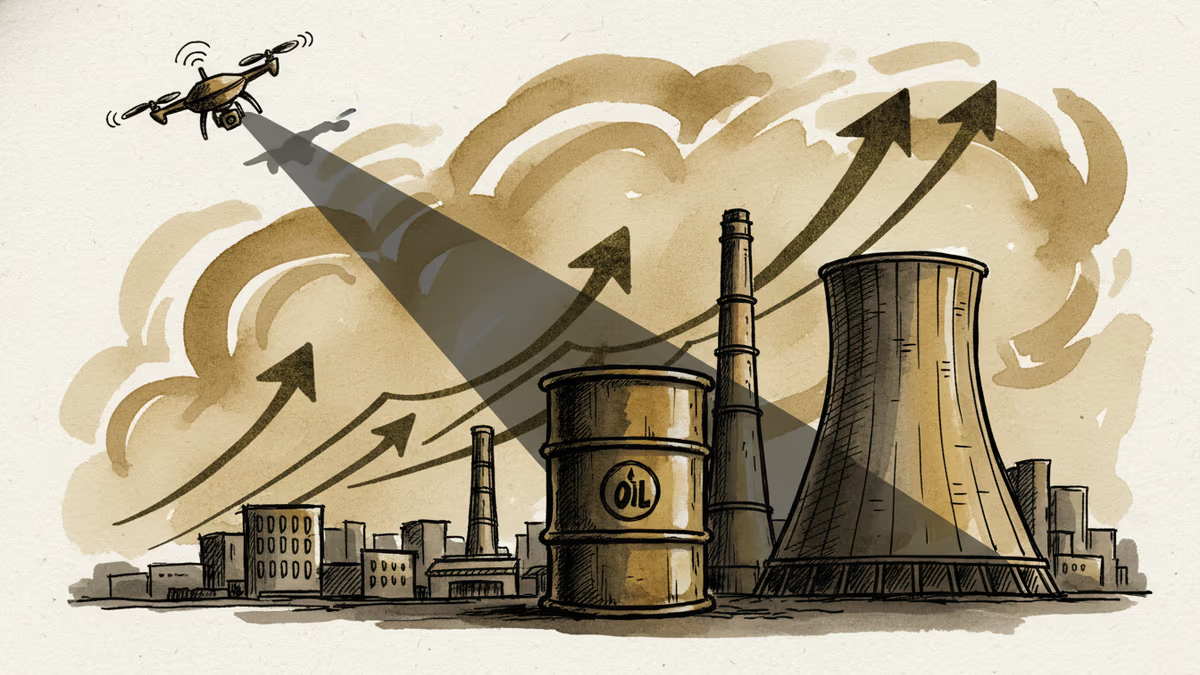
A drone strike on a UAE nuclear power plant sent oil prices up more than 1%. Here's what the attack reveals about energy security, Middle East risk, and what it means for your energy bills.
Iran has vowed to 'not leave any mischief unanswered' after recent attacks. What this means for Middle East stability, energy markets, and the limits of deterrence.
Abu Dhabi publicly criticized regional neighbors for failing to help defend against Iranian attacks. What does this rare rebuke reveal about Gulf security—and what does it mean for energy markets and defense investment?
Mike Waltz exits as Trump weighs resuming strikes on Iran. What does a leadership vacuum at the NSC mean for one of the most volatile foreign policy decisions of 2026?
A drone strike on a UAE nuclear power plant sent oil prices up more than 1%. Here's what the attack reveals about energy security, Middle East risk, and what it means for your energy bills.
Thoughts
Share your thoughts on this article
Sign in to join the conversation