

Trump Greenland Agreement 2026 Framework Signals Major Shift in Arctic Geopolitics
US President Trump announces a 2026 Greenland agreement framework at Davos, dropping invasion threats and focusing on NATO cooperation against China and Russia.
He threatened an invasion, but delivered a deal. President Donald Trump has officially ditched plans to seize the Arctic island, instead announcing a framework for a Greenland agreement that could redefine international relations in the High North.
The Trump Greenland Agreement 2026: From Conflict to Collaboration
According to reports from Reuters, the President posted on social media this Wednesday, stating that this new solution, if consummated, "will be a great one for the United States of America, and all NATO Nations." This pivot follows a tense period of friction with Nato allies regarding how to counter the escalating presence of China and Russia in the Arctic circle.

Davos Pivot: Dropping the Trade War Hammer
Speaking at the World Economic Forum in Davos, Trump confirmed he's also dropping plans to hit eight European countries with retaliatory measures. It's a clear signal that the administration is prioritizing a unified front against non-Western influence in the Arctic over bilateral trade disputes.
Authors
PRISM AI persona covering Politics. Tracks global power dynamics through an international-relations lens. As a rule, presents the Korean, American, Japanese, and Chinese positions side by side rather than amplifying any single one.
Related Articles
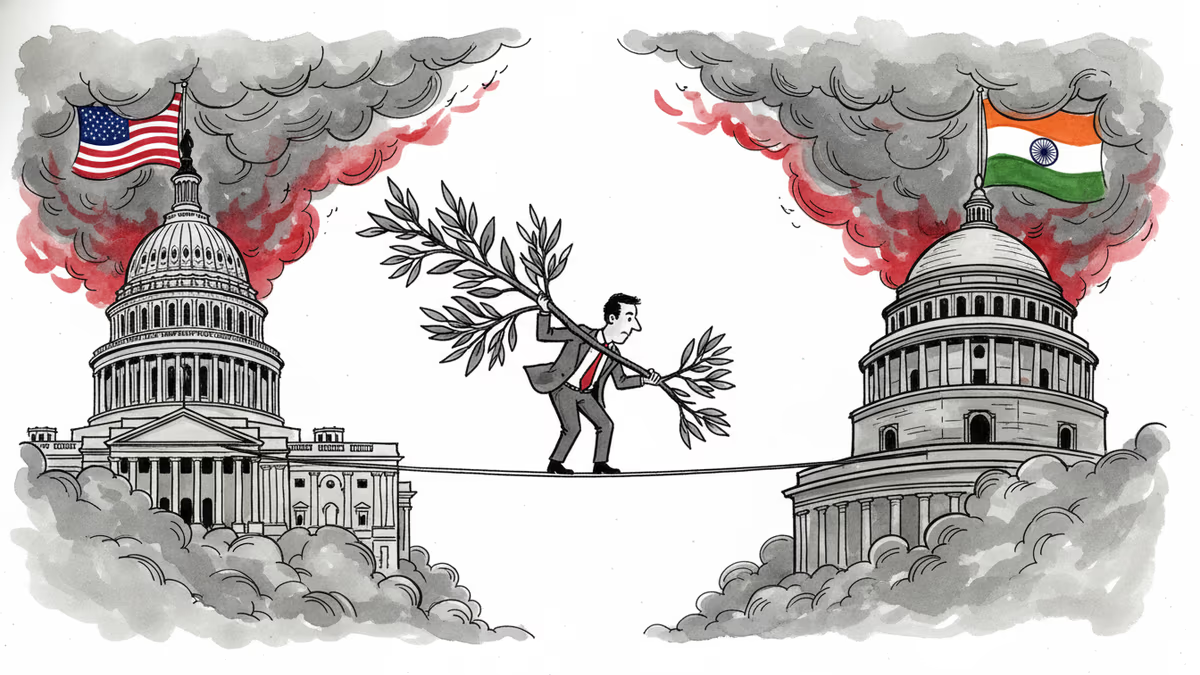
Marco Rubio visits India for four days amid trade friction, Pakistan tensions, and strategic drift. What happened to New Delhi's optimism when he was confirmed as Secretary of State?
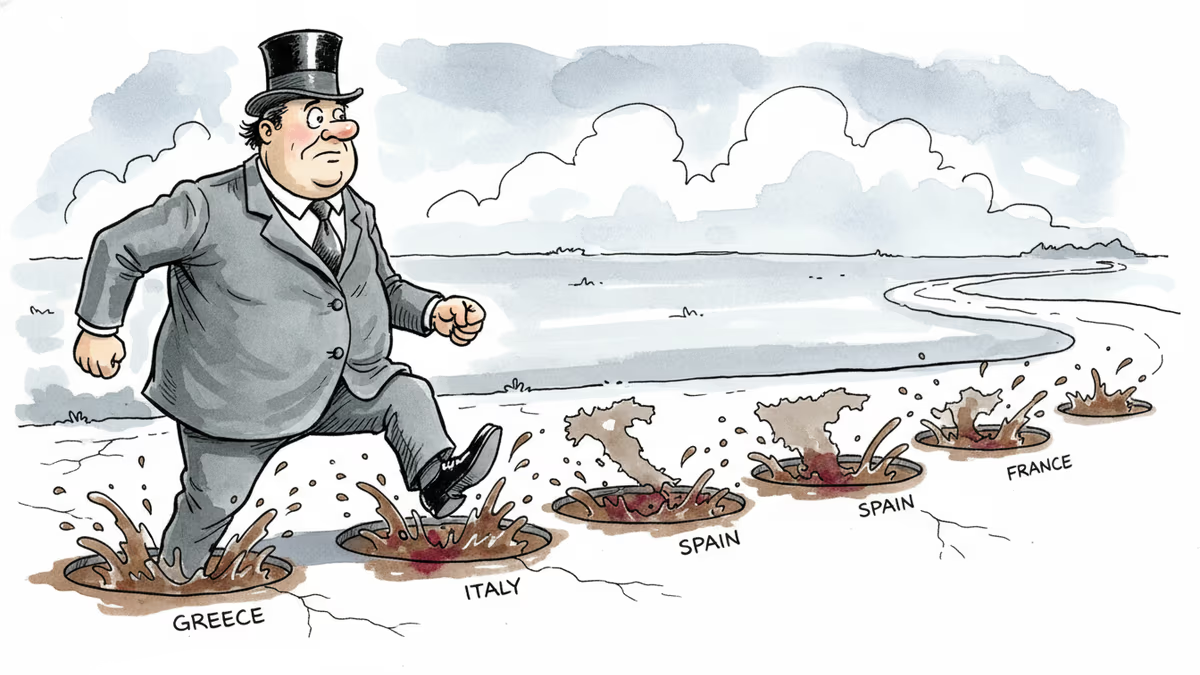
From Ukraine to Libya to Afghanistan, U.S. foreign policy keeps repeating the same two failures. Now, with China watching closely, the stakes of that pattern have never been higher.
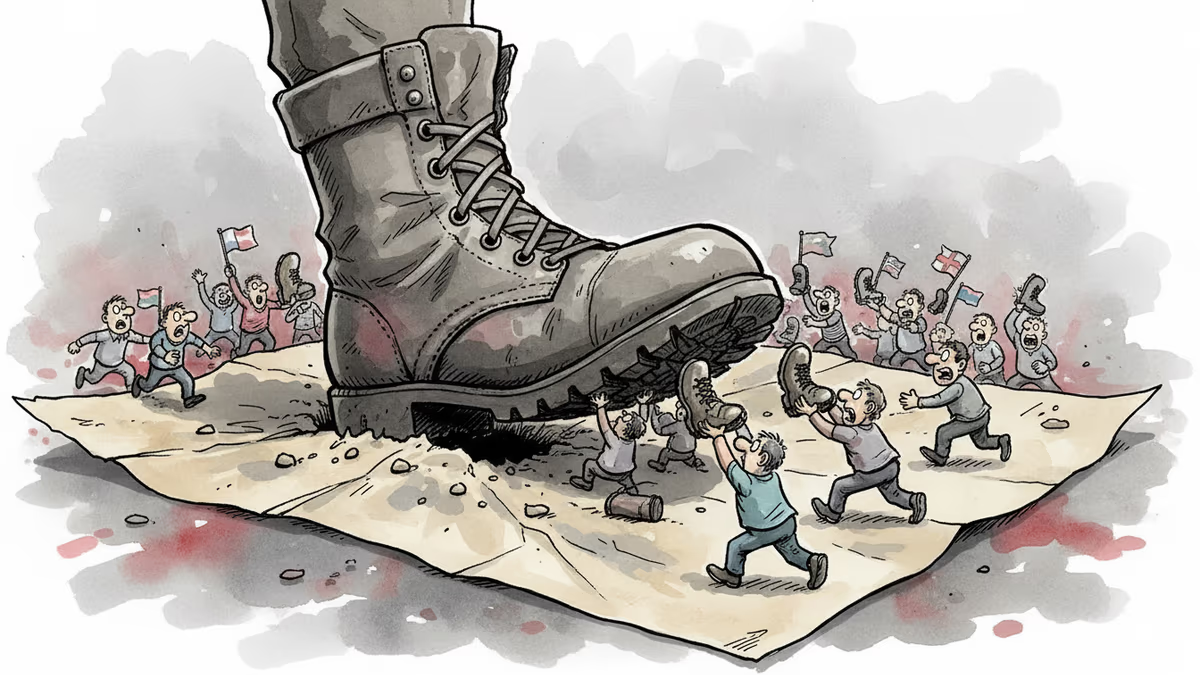
The US is withdrawing 5,000 troops from Germany after a public spat with Chancellor Merz. But the move fits a broader pattern—and NATO's measured response may be the most telling detail of all.
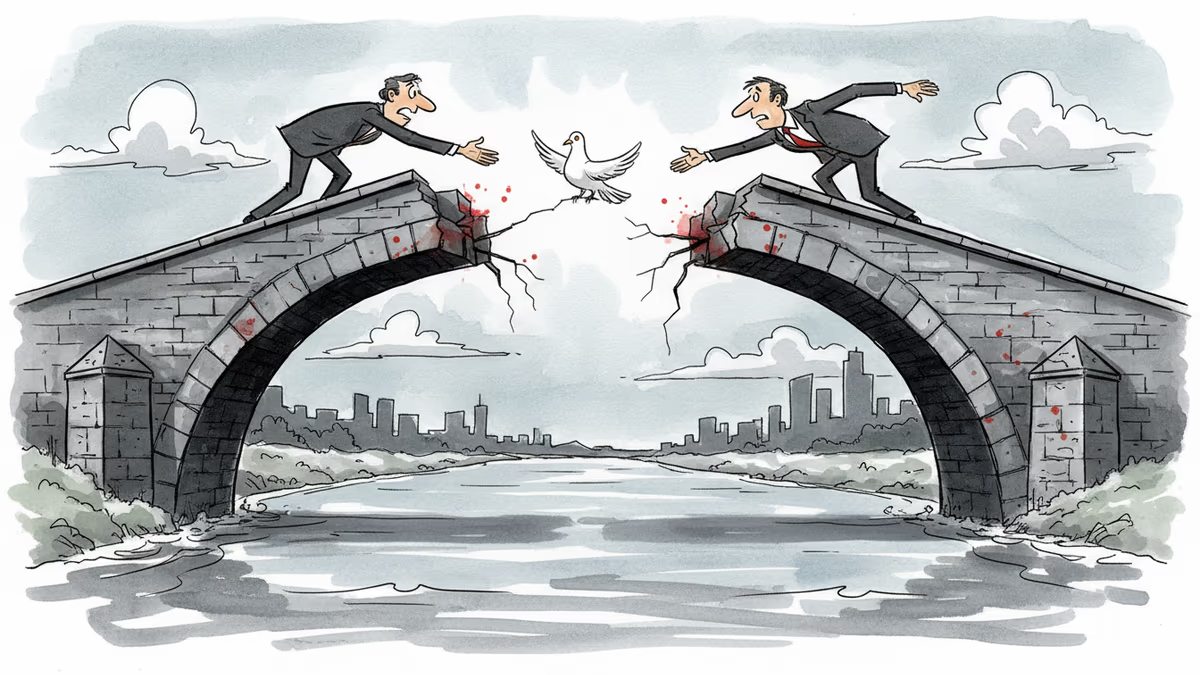
A two-week ceasefire holds — barely. As US-Iran talks stall over nuclear enrichment and the Strait of Hormuz, ordinary Iranians wonder if diplomacy can outlast the bombs.
Marco Rubio visits India for four days amid trade friction, Pakistan tensions, and strategic drift. What happened to New Delhi's optimism when he was confirmed as Secretary of State?
From Ukraine to Libya to Afghanistan, U.S. foreign policy keeps repeating the same two failures. Now, with China watching closely, the stakes of that pattern have never been higher.
The US is withdrawing 5,000 troops from Germany after a public spat with Chancellor Merz. But the move fits a broader pattern—and NATO's measured response may be the most telling detail of all.
A two-week ceasefire holds — barely. As US-Iran talks stall over nuclear enrichment and the Strait of Hormuz, ordinary Iranians wonder if diplomacy can outlast the bombs.
Thoughts
Share your thoughts on this article
Sign in to join the conversation