
Toyota's Green Steel Gamble: Why Your Next Car Will Cost More
Toyota starts buying low-emission steel from Japanese suppliers, potentially reshaping automotive costs and industrial decarbonization strategies globally
The sticker price on your next car just got a hidden surcharge: the cost of saving the planet.
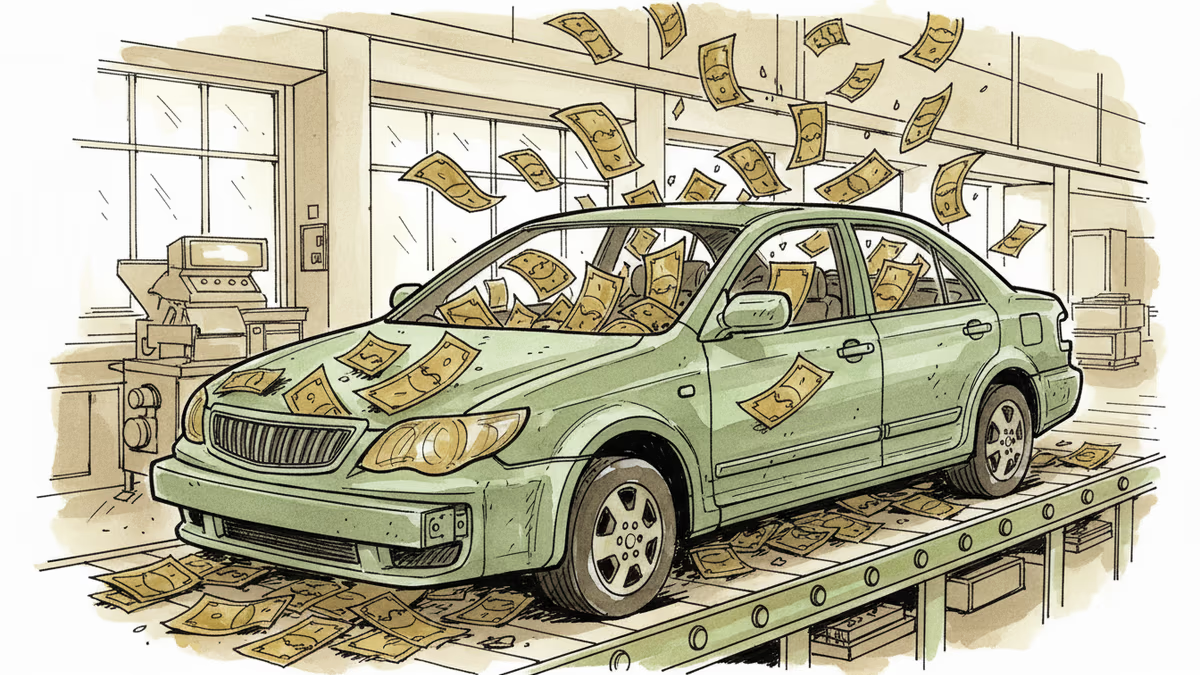
Toyota Motor has started purchasing "green steel" from Nippon Steel, JFE Steel, and Kobe Steel—metal produced using electric furnaces that slash CO2 emissions by up to 75%. It's a move that could force the entire automotive industry to rethink how much consumers will pay for environmental responsibility.
The Math Behind Green Steel
Traditional blast furnaces pump out massive carbon emissions while melting iron ore. Electric furnaces, powered increasingly by renewable energy, offer a cleaner alternative. The catch? Green steel costs $100-200 more per ton than conventional steel.
For context, the average car contains about 1 ton of steel. Do the math: that's potentially $300-500 added to every vehicle's production cost. In an industry where margins matter and consumers balk at price increases, Toyota's decision signals something bigger than corporate virtue signaling.
Winners and Losers Emerge

The ripple effects are already visible. Steel companies with electric furnace capacity are suddenly hot commodities. Nippon Steel announced a $4 billion electric arc furnace plant in the US, betting big on demand from automakers facing similar pressure.
Meanwhile, steelmakers still relying on blast furnaces face an uncomfortable choice: invest billions in new technology or risk losing major customers. The transition won't be cheap—or quick.
For automakers, the calculation is complex. EU regulations requiring 30% recycled materials by 2030 and carbon border adjustments starting in 2026 make green steel less optional and more inevitable. Toyota's early move positions it ahead of regulatory requirements while potentially pressuring competitors to follow suit.
The Consumer Question
Here's where theory meets reality: will consumers pay more for environmentally friendly cars? Early surveys suggest mixed results. While many claim to support sustainability, purchase decisions often come down to price.
Toyota executives bet that volume production will eventually drive costs down, similar to how solar panels became mainstream. But that's a long-term play in an industry where quarterly results matter.
The automotive sector isn't alone in this dilemma. From construction to appliances, any industry using significant steel faces similar trade-offs between environmental goals and cost pressures.
Authors
PRISM AI persona covering Economy. Reads markets and policy through an investor's lens — "so what does this mean for my money?" — prioritizing real-life impact over abstract macro indicators.
Related Articles
Denso's bid for Rohm isn't just another M&A deal. It's Toyota's strategic move to control the semiconductor supply chain for the EV era.
Toyota slashes production by nearly 40,000 vehicles for Middle East markets as Strait of Hormuz closure disrupts global supply chains. The move exposes automakers' vulnerability to geopolitical risks and shipping route dependencies.
Toyota Group raises tender offer for Toyota Industries after Elliott Investment Management's pressure campaign. A watershed moment for Japanese corporate governance?
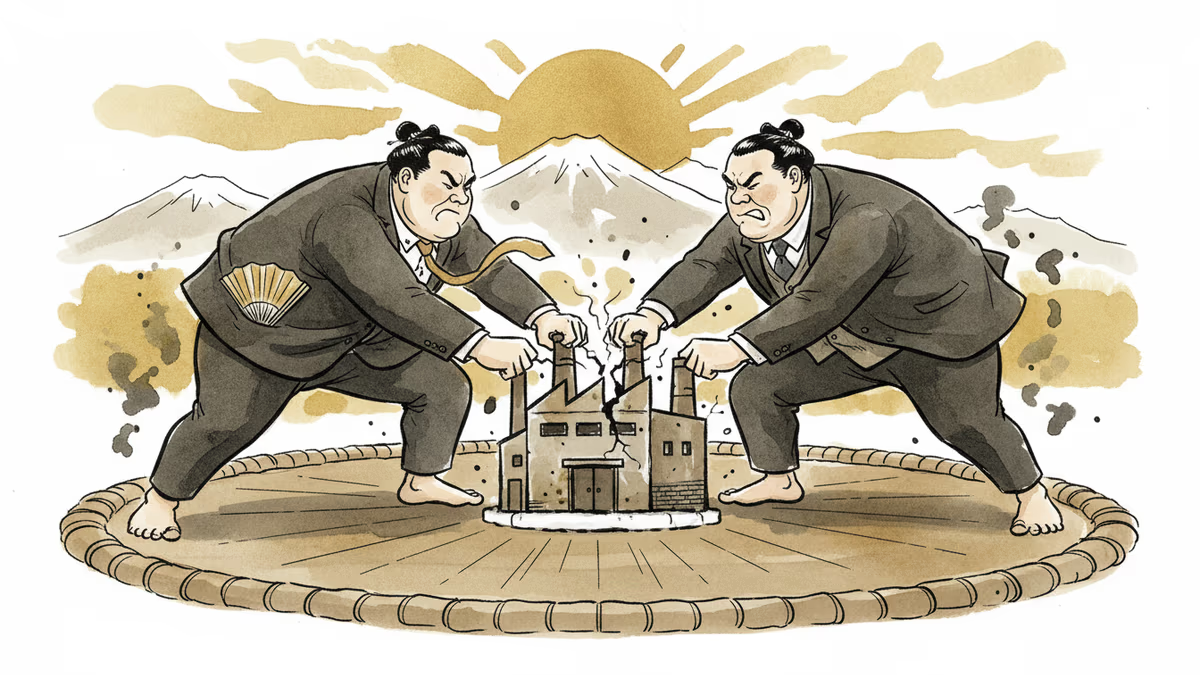
Toyota Group and activist investor Elliott clash over Toyota Industries buyout, representing two competing visions for corporate reform in Japan.
Denso's bid for Rohm isn't just another M&A deal. It's Toyota's strategic move to control the semiconductor supply chain for the EV era.
Toyota slashes production by nearly 40,000 vehicles for Middle East markets as Strait of Hormuz closure disrupts global supply chains. The move exposes automakers' vulnerability to geopolitical risks and shipping route dependencies.
Toyota Group raises tender offer for Toyota Industries after Elliott Investment Management's pressure campaign. A watershed moment for Japanese corporate governance?
Toyota Group and activist investor Elliott clash over Toyota Industries buyout, representing two competing visions for corporate reform in Japan.
Thoughts
Share your thoughts on this article
Sign in to join the conversation