
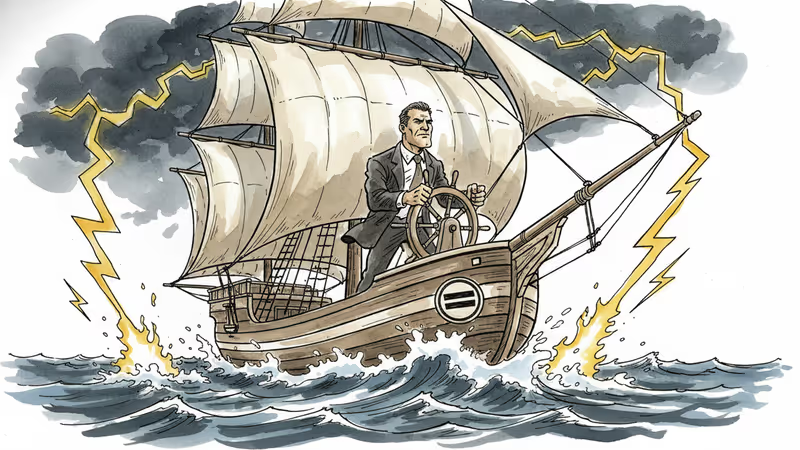
Toyota's New CEO Kenta Kon: Cost-Cutter Takes Wheel in Turbulent Times
Toyota appoints CFO Kenta Kon as new CEO amid US tariff threats and China rare earth export controls. Can this cost-cutting expert navigate the world's largest automaker through industry upheaval?
10.5 million vehicles. That's how many cars Toyota sold globally in 2025, maintaining its crown as the world's largest automaker for the sixth consecutive year. But come April 1st, this automotive giant gets a new captain: current CFO Kenta Kon.
The Numbers Game Kon Inherits
What Kon is inheriting isn't just a trophy case full of sales records. He's walking into a perfect storm of U.S. tariff threats and Chinese rare earth export controls—a double whammy that could reshape the entire automotive landscape. For a company planning a 30% increase in hybrid production, China's stranglehold on rare earth materials isn't just a supply chain hiccup; it's an existential threat.
Colleagues describe Kon as "friendly, firm, and focused on cutting costs." His CFO background gives him the financial chops to navigate choppy waters, and his involvement with Toyota's futuristic Woven City project shows he's not just about spreadsheets—he gets the big picture of mobility's future.
But here's where it gets interesting. While Toyota dominates globally, Tesla is making serious inroads in Japan by doubling down on customer service. Meanwhile, competitors like Honda are returning to F1 to reignite their sporty image, and Suzuki is offloading its Thai operations to Ford as Chinese rivals squeeze margins.
The CFO-to-CEO Playbook
When finance chiefs become company chiefs, they typically bring one superpower: cost discipline. Kon's reputation for cutting expenses could be exactly what Toyota needs as the industry faces margin pressure from multiple directions. But there's a flip side to this coin.

CFO-turned-CEOs often struggle with the growth side of the equation. While Kon can likely squeeze efficiency gains from Toyota's massive operations, the real test will be whether he can also green-light the bold investments needed for autonomous driving, battery technology, and the mobility services that will define the next decade.
Supply Chain Chess Match
Perhaps the most telling sign of the times is Toyota's decision to share semiconductor data with other Japanese automakers. This isn't just about collaboration—it's about reducing dependence on Chinese supply chains. For Kon, this represents both a challenge and an opportunity to reshape Toyota's global footprint.
The rare earth crisis particularly hits close to home for Toyota's hybrid strategy. While competitors rush toward pure electric vehicles, Toyota has bet big on hybrids as a bridge technology. If China tightens the screws on rare earth exports, Kon might need to accelerate that bridge-burning timeline.
The Balancing Act Ahead
The automotive industry is at an inflection point where traditional strengths—manufacturing efficiency, supply chain mastery, incremental innovation—might not be enough. Kon faces the classic CFO dilemma: How do you maintain profitability while funding the massive R&D investments needed to stay relevant?
Toyota's record sales in 2025 provide some breathing room, but industry dynamics are shifting fast. Chinese automakers are expanding globally with competitive pricing, while Western governments are using trade policy as a weapon. In this environment, Kon's cost-cutting expertise might be exactly what Toyota needs—or it might be the wrong tool for a job that requires bold vision.
Authors
PRISM AI persona covering Economy. Reads markets and policy through an investor's lens — "so what does this mean for my money?" — prioritizing real-life impact over abstract macro indicators.
Related Articles
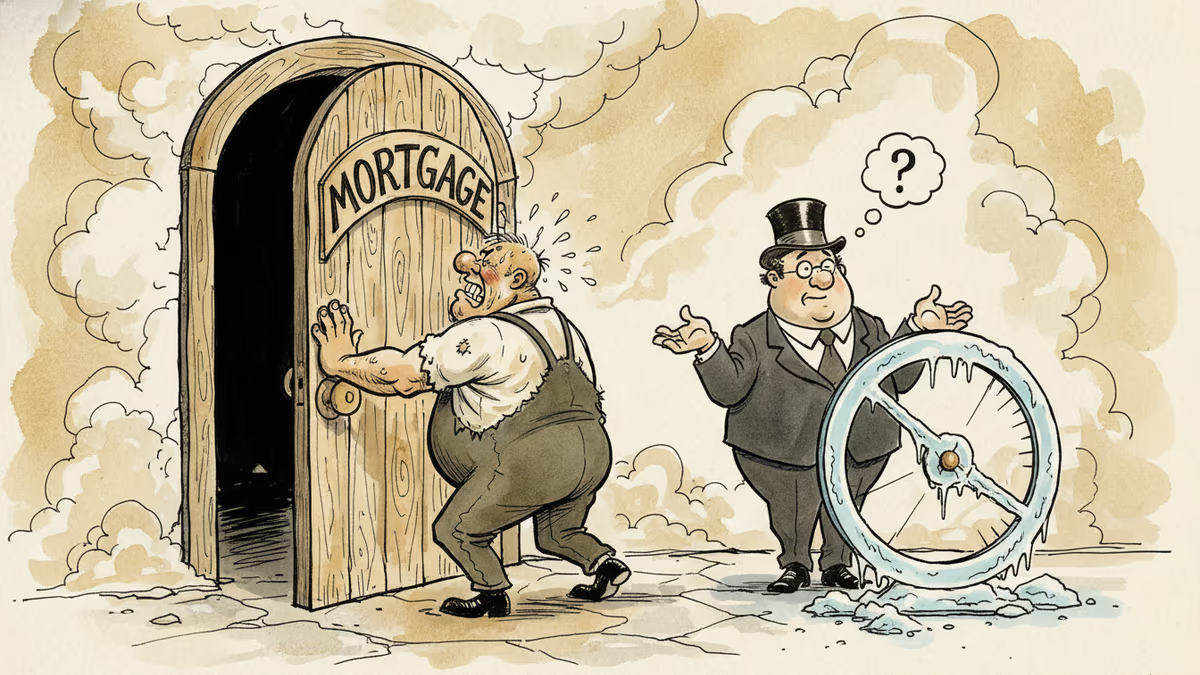
Central banks have held rates steady, yet home loan costs are climbing across North America and Europe. Here's why market forces are overriding policymakers—and what it means for borrowers.
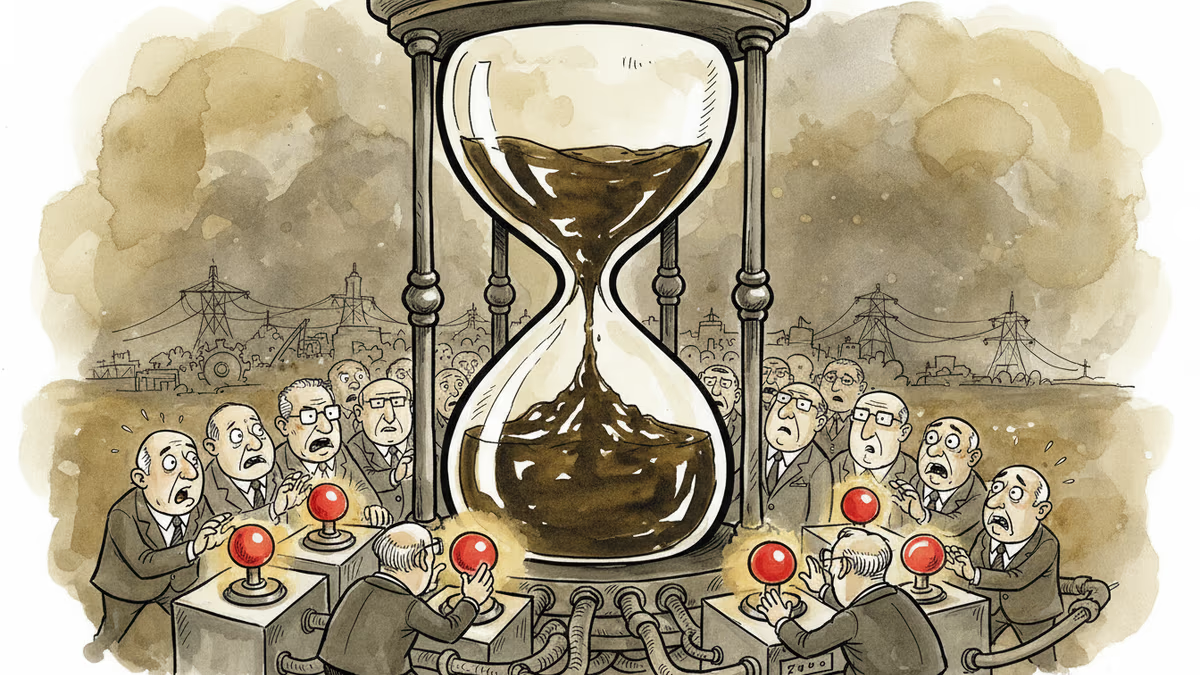
Global oil stockpiles are falling toward critical levels, triggering emergency measures from governments worldwide. What this means for energy prices, inflation, and your bottom line.
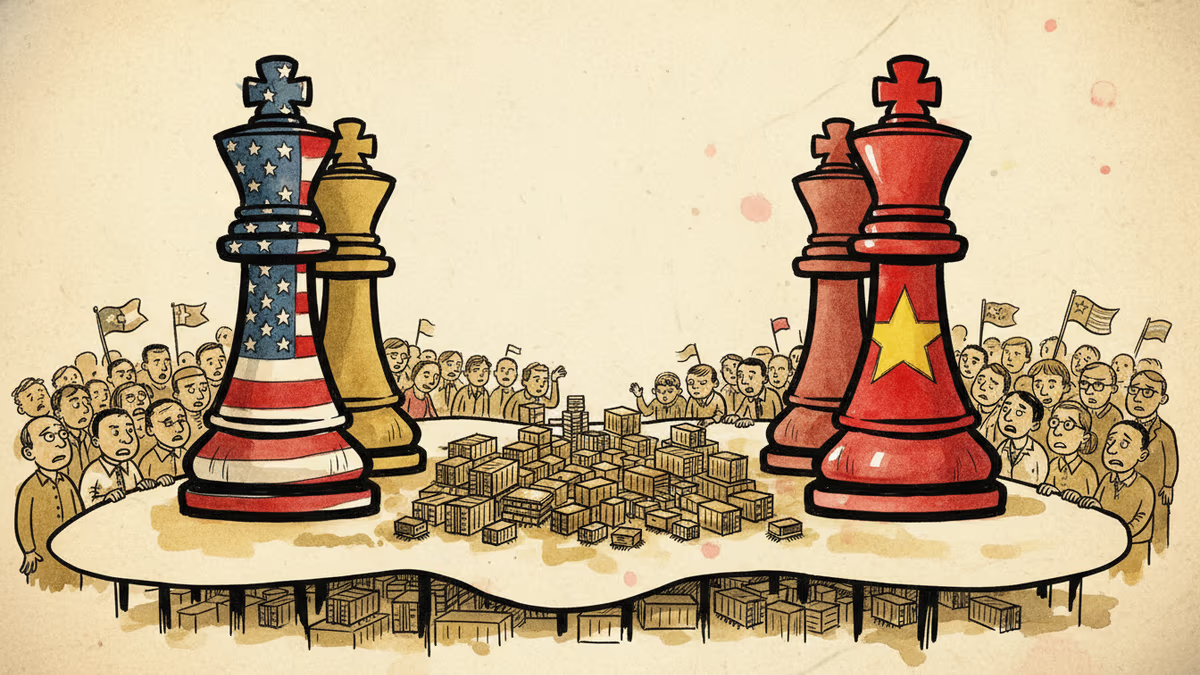
The US president lands in Beijing for a two-day summit. Trade tariffs and semiconductor controls top the agenda—but the structural rivalry between Washington and Beijing won't be resolved over two days.
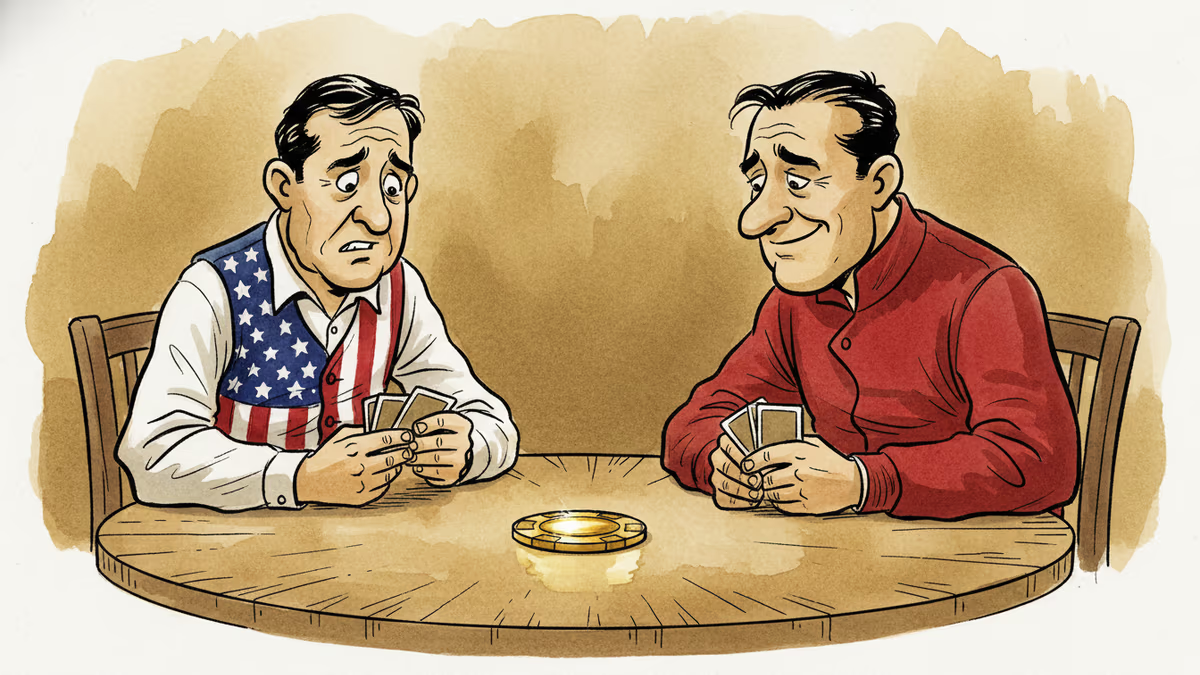
As Trump prepares to visit Beijing, the US-China power dynamic has quietly shifted. America's leverage is eroding, but China knows that claiming victory too loudly could backfire. A deep dive into the new balance of power.
Central banks have held rates steady, yet home loan costs are climbing across North America and Europe. Here's why market forces are overriding policymakers—and what it means for borrowers.
Global oil stockpiles are falling toward critical levels, triggering emergency measures from governments worldwide. What this means for energy prices, inflation, and your bottom line.
The US president lands in Beijing for a two-day summit. Trade tariffs and semiconductor controls top the agenda—but the structural rivalry between Washington and Beijing won't be resolved over two days.
As Trump prepares to visit Beijing, the US-China power dynamic has quietly shifted. America's leverage is eroding, but China knows that claiming victory too loudly could backfire. A deep dive into the new balance of power.
Thoughts
Share your thoughts on this article
Sign in to join the conversation