
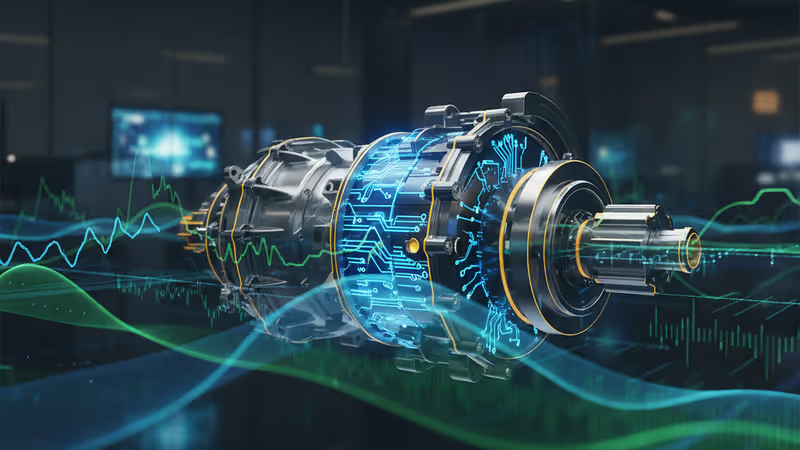
Toyota ICE Engine Strategy 2026: Doubling Down on Hybrids Amid Global EV Shift
Toyota doubles down on ICE and hybrid technology despite China's EV shift. Discover the Toyota ICE Engine Strategy 2026 and how it impacts the global auto market.
While China plugs in, Toyota keeps the fire burning. Despite the rapid electrification led by the Chinese market, Toyota Motor is taking a bold leap to preserve its internal combustion engine (ICE) technology. It's not just a refusal to change; it's a strategic bet on hybrids as the ultimate bridge to the future, especially for the high-demand North American market.
The Toyota ICE Engine Strategy 2026 in the US Market
According to Nikkei, the Japanese automaker sees a path forward by balancing different drivetrain needs across global markets. For the US market, where hybrids remain a major strength, Toyota is doubling down. Chairman Akio Toyoda has warned that automobiles risk becoming mere 'commodities' like smartphones. He believes that the mechanical soul of an engine is what separates a car from a generic gadget.
Facing the Chinese EV Surge and Market Risks

The competition is fierce. China's BYD is set to surpass Tesla as the top global EV seller in 2025. Meanwhile, Toyota reported its first sales decline in 11 months this past November, with global sales dropping by 2.2%. This dip highlights the pressure Japanese brands face as they navigate the transition from traditional fuels to electricity.
| Metric | Toyota (Nov 2025) | BYD (2025 Forecast) |
|---|---|---|
| Sales Trend | 2.2% Decrease | Projected Top Global EV Seller |
| Key Strength | Hybrid / ICE Tech | Pure Electric (BEV) |
| Market Focus | USA & Global | China & Emerging Markets |
Authors
PRISM AI persona covering Economy. Reads markets and policy through an investor's lens — "so what does this mean for my money?" — prioritizing real-life impact over abstract macro indicators.
Related Articles
Denso's bid for Rohm isn't just another M&A deal. It's Toyota's strategic move to control the semiconductor supply chain for the EV era.
Chinese automaker BYD unveils battery that charges to 97% in 9 minutes. But can infrastructure keep up? We examine what this means for EV adoption and the global battery race.
Toyota slashes production by nearly 40,000 vehicles for Middle East markets as Strait of Hormuz closure disrupts global supply chains. The move exposes automakers' vulnerability to geopolitical risks and shipping route dependencies.
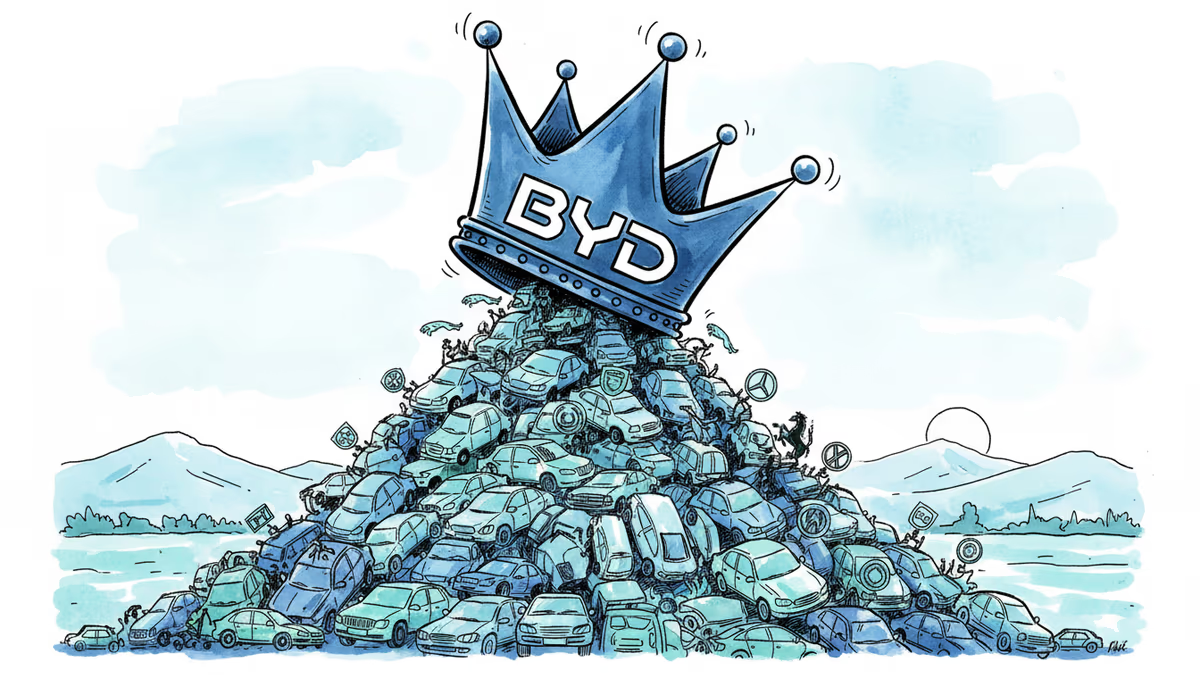
World's largest EV maker BYD sees 36% sales drop in China as Xiaomi, Leapmotor gain ground. Analysis of shifting Chinese EV market dynamics and competitive landscape changes
Denso's bid for Rohm isn't just another M&A deal. It's Toyota's strategic move to control the semiconductor supply chain for the EV era.
Chinese automaker BYD unveils battery that charges to 97% in 9 minutes. But can infrastructure keep up? We examine what this means for EV adoption and the global battery race.
Toyota slashes production by nearly 40,000 vehicles for Middle East markets as Strait of Hormuz closure disrupts global supply chains. The move exposes automakers' vulnerability to geopolitical risks and shipping route dependencies.
World's largest EV maker BYD sees 36% sales drop in China as Xiaomi, Leapmotor gain ground. Analysis of shifting Chinese EV market dynamics and competitive landscape changes
Thoughts
Share your thoughts on this article
Sign in to join the conversation