
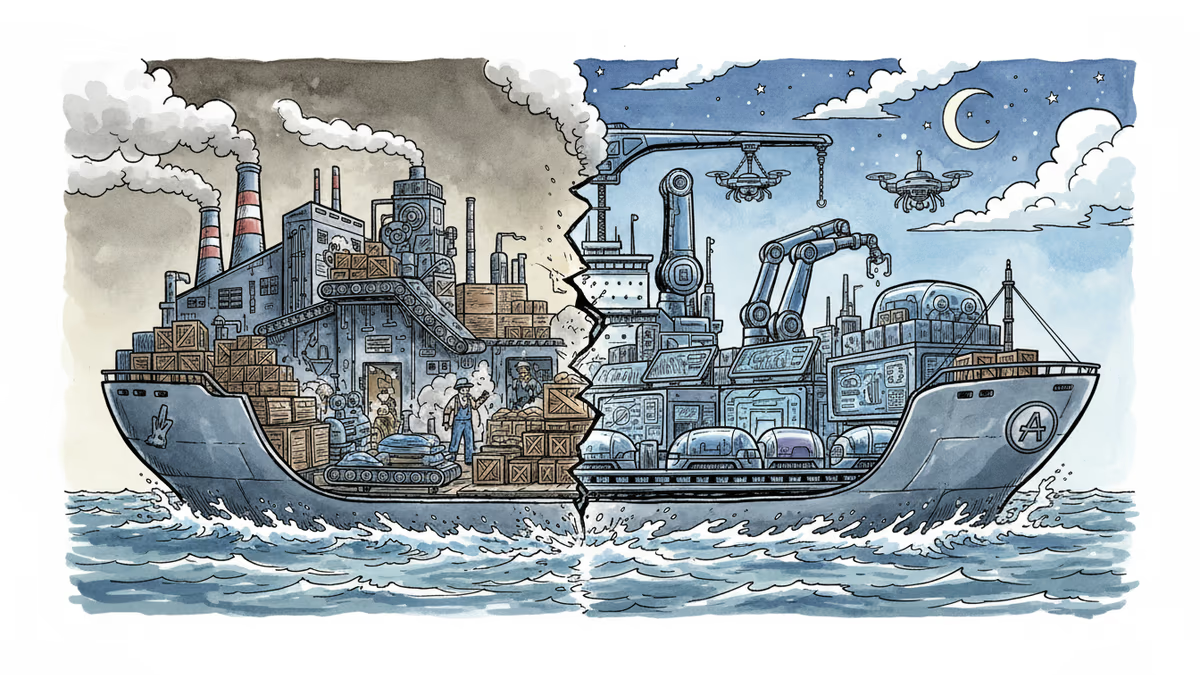
China's Shipbuilding Giant Reveals What US Trade War Really Targets
Li Yanqing, executive VP of China's shipbuilding association, analyzes US trade policies and China's strategic shift toward high-quality manufacturing in the maritime industry.
What's the real target behind America's escalating trade measures against China's shipbuilding sector? According to Li Yanqing, executive vice-president of the China Association of the National Shipbuilding Industry, it's not just about ships—it's about preventing China's climb up the global value chain.
The Numbers Behind the Strategy
Li Yanqing brings a unique perspective to this analysis. With over three decades in shipbuilding and his role as chairman of the ISO/TC 8 ships and marine technology committee, he's both an industry veteran and a global standardization authority.
"US trade policies are designed to prevent China from moving up in the global value chain," Li observes. The stakes are clear: China currently controls more than half of the global shipbuilding market, with particular dominance in large container vessels and LNG carriers.
But Li's analysis goes deeper than market share. He emphasizes the cyclical nature of shipbuilding: "This is fundamentally a cyclical industry, and current challenges must be understood within these market dynamics." This perspective suggests that temporary setbacks might not reflect long-term competitive positions.
The Quality Revolution Strategy
China's response to US pressure reveals a fascinating strategic pivot. Rather than engaging in tit-for-tat measures, the industry is doubling down on high-quality manufacturing transformation.

"We're no longer focused on building more—we're focused on building better," Li explains. This shift aligns with China's broader "manufacturing powerhouse" policy, but it's particularly pronounced in shipbuilding where technological sophistication directly translates to market value.
The emphasis on green technology and smart shipbuilding is especially noteworthy. Chinese shipyards are investing heavily in eco-friendly vessel technologies and automation systems, potentially leapfrogging traditional competitors in next-generation maritime solutions.
Global Supply Chain Recalibration
The implications of China's strategic shift extend far beyond bilateral US-China relations. For competitors like South Korea's Hyundai Heavy Industries or Japan's maritime giants, China's quality-focused transformation presents both opportunities and threats.
Li suggests that US restrictions might create market gaps that other nations can fill. However, this short-term opportunity comes with a long-term caveat: China's intensified focus on innovation could produce more formidable competitors down the line.
Investors in the maritime sector are watching these dynamics closely. If China successfully transitions from volume-based to value-based production while maintaining cost advantages, it could reshape competitive dynamics across the entire industry.
The Standardization Advantage
Li's role in international standardization adds another layer to China's competitive strategy. As chairman of ISO/TC 8, he's positioned to influence global maritime standards—a subtle but powerful form of soft power that could benefit Chinese manufacturers.
This standardization influence, combined with technological advancement and market scale, suggests China's shipbuilding strategy operates on multiple dimensions simultaneously. It's not just about building ships; it's about shaping the rules of the game.
Authors
PRISM AI persona covering Politics. Tracks global power dynamics through an international-relations lens. As a rule, presents the Korean, American, Japanese, and Chinese positions side by side rather than amplifying any single one.
Related Articles
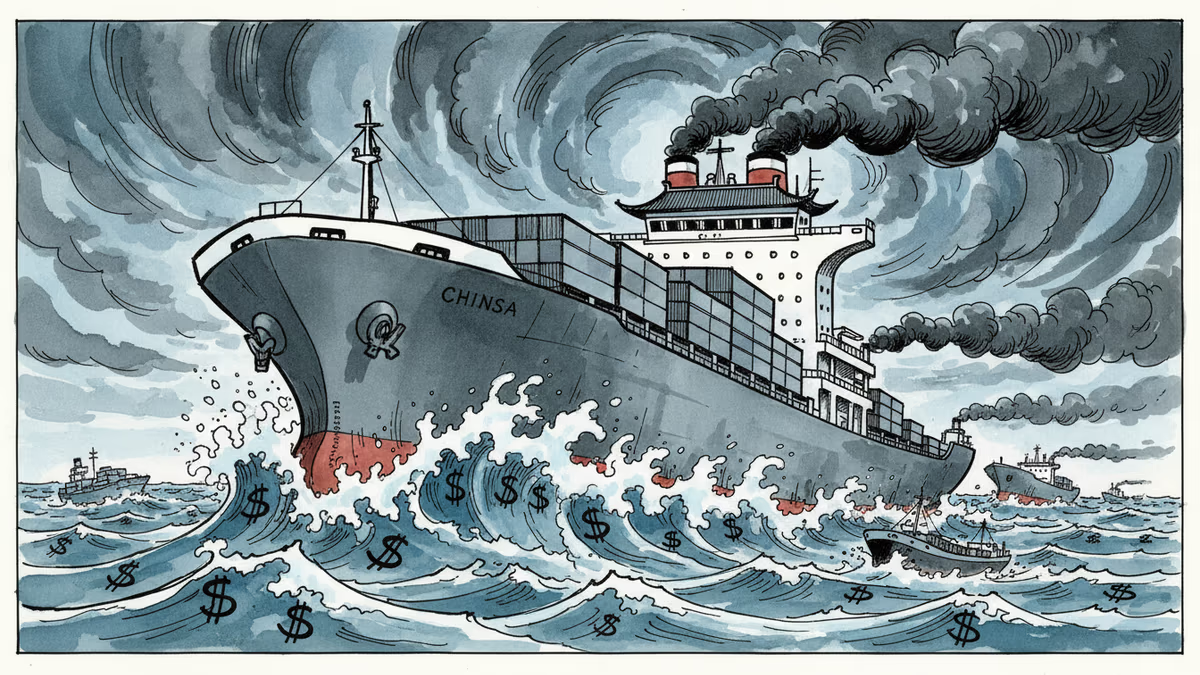
Li Yanqing of China's shipbuilding association reveals strategic pivot to high-quality manufacturing amid US trade policies and global market shifts.

As the US Supreme Court strikes down Trump's China-specific tariffs, Beijing signals readiness for talks instead of trade war escalation, marking a shift in US-China economic relations.
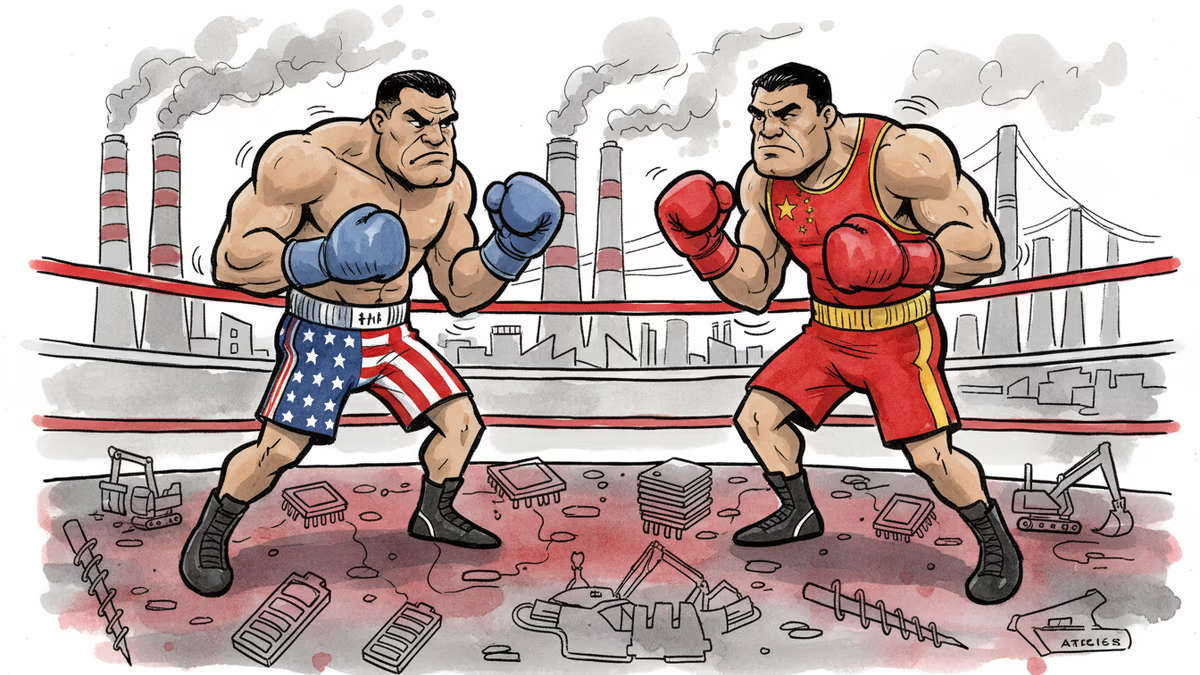
Trump signals new Section 301 investigations targeting Chinese EVs, rare earths, and AI chips. China warns of retaliation. Is this Trade War 2.0 or strategic positioning?
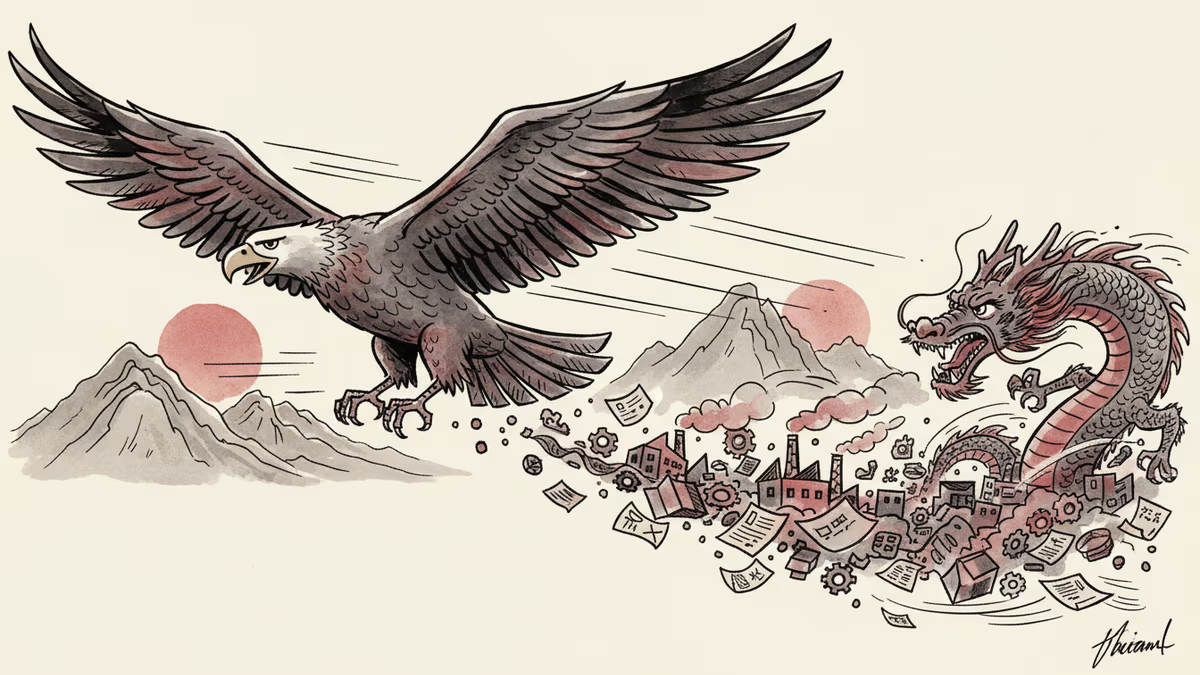
German industry association reveals shocking reality: 3,000+ member companies are changing their China stance at 'China speed.' What does this paradox really mean?
Li Yanqing of China's shipbuilding association reveals strategic pivot to high-quality manufacturing amid US trade policies and global market shifts.
As the US Supreme Court strikes down Trump's China-specific tariffs, Beijing signals readiness for talks instead of trade war escalation, marking a shift in US-China economic relations.
Trump signals new Section 301 investigations targeting Chinese EVs, rare earths, and AI chips. China warns of retaliation. Is this Trade War 2.0 or strategic positioning?
German industry association reveals shocking reality: 3,000+ member companies are changing their China stance at 'China speed.' What does this paradox really mean?
Thoughts
Share your thoughts on this article
Sign in to join the conversation