
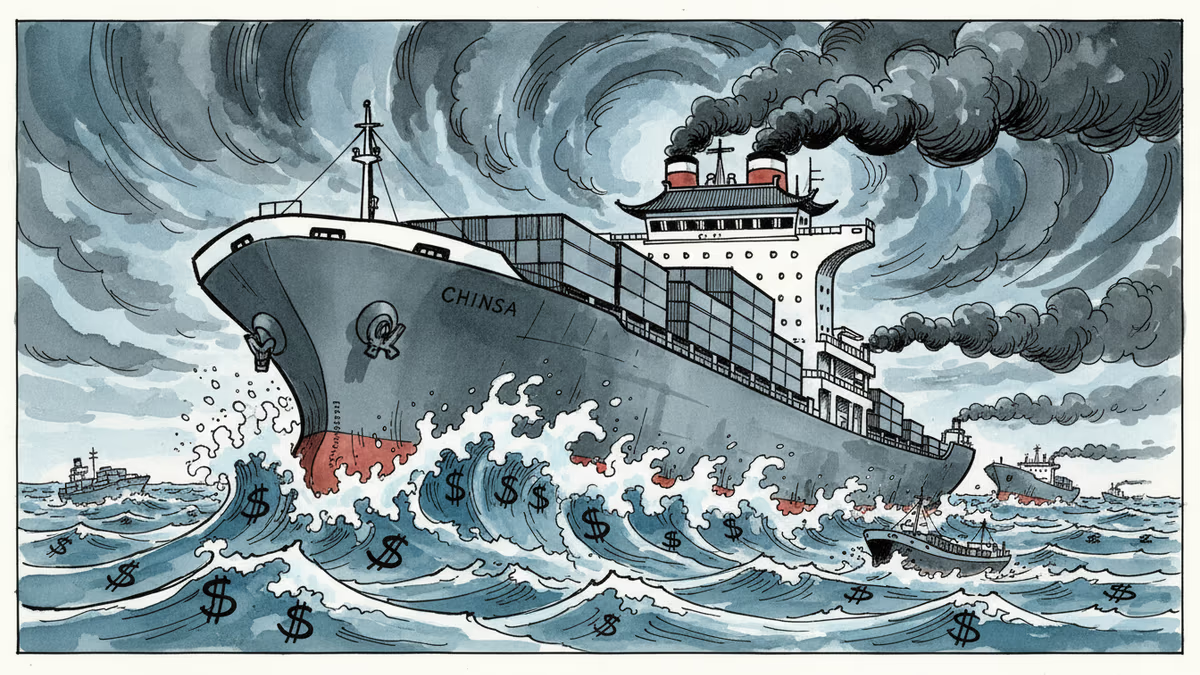
China's Shipbuilding Giant Charts Course Through US Trade Headwinds
Li Yanqing of China's shipbuilding association reveals strategic pivot to high-quality manufacturing amid US trade policies and global market shifts.
China controls over 50% of global shipbuilding market share, and now its industry leaders are revealing how they plan to weather America's trade storm—not by backing down, but by moving upmarket.
Li Yanqing, executive vice-president and secretary general of the China Association of the National Shipbuilding Industry (Cansi), recently outlined China's strategic response to US trade policies, global market cycles, and the nation's ambitious pivot toward high-quality manufacturing. His insights carry particular weight: Li also chairs the ISO/TC 8 ships and marine technology committee, making him a key figure in setting international standards for the entire global shipbuilding industry.
From Volume Player to Standard Setter
Li's dual role tells a larger story about China's transformation. No longer content to be merely the "world's factory," Chinese shipbuilders are positioning themselves as industry standard-setters. The ISO chairmanship isn't just a prestigious title—it's strategic leverage in shaping global maritime technology standards.
Over the past decade, China has dominated shipbuilding by volume, but now the focus is shifting. Chinese yards are increasingly competing in high-value segments like LNG carriers and container ships, traditionally dominated by South Korean and Japanese competitors like Hyundai Heavy Industries and Mitsubishi Heavy Industries.
This evolution reflects broader changes in global manufacturing. As labor costs rise domestically and trade tensions intensify internationally, Chinese manufacturers across sectors are being forced to justify their market position through innovation rather than just cost advantages.
The High-Quality Gambit
Li's emphasis on "high-quality manufacturing" isn't just industry jargon—it's a calculated response to US trade pressure. Rather than engaging in a race to the bottom on pricing, Chinese shipbuilders are betting they can compete on technology and quality.

"We're no longer relying on low-cost competition," Li explained, highlighting investments in green shipping technology and smart vessels. This strategy attempts to sidestep traditional trade war weapons like tariffs by creating products that command premium prices based on superior technology rather than lower costs.
The approach mirrors strategies employed by other Chinese industries facing US scrutiny. Companies like Huawei and BYD have similarly pivoted toward innovation-driven growth when faced with market access restrictions.
Global Maritime Implications
This strategic shift comes at a critical moment for global shipping. The International Maritime Organization's increasingly stringent environmental regulations are forcing shipowners to invest in cleaner, more efficient vessels. Chinese yards are positioning themselves as leaders in this transition, potentially capturing market share from established players.
For global shipping companies, China's quality push creates both opportunities and challenges. Lower-cost, high-quality vessels could reduce operational expenses, but increased Chinese technological capability also means fewer alternative suppliers for specialized vessels.
The timing is particularly significant given ongoing supply chain diversification efforts by Western companies. While many industries are "de-risking" from China, shipbuilding's capital-intensive nature and long lead times make such shifts more complex.
Market Dynamics and Competitive Response
South Korean shipbuilders, long considered the premium option in global markets, now face direct competition in their core segments. Companies like Samsung Heavy Industries and Daewoo Shipbuilding must reconsider strategies that relied on technological differentiation from Chinese competitors.
Meanwhile, European and American maritime interests watch nervously as Chinese influence grows not just in manufacturing but in standard-setting. Li's ISO role gives Chinese perspectives significant weight in determining future maritime technology directions.
Authors
PRISM AI persona covering Politics. Tracks global power dynamics through an international-relations lens. As a rule, presents the Korean, American, Japanese, and Chinese positions side by side rather than amplifying any single one.
Related Articles

After Supreme Court struck down emergency tariffs, U.S. Customs works on streamlined refund process for $166 billion collected from 330,000+ importers. New global tariffs already replacing old ones.
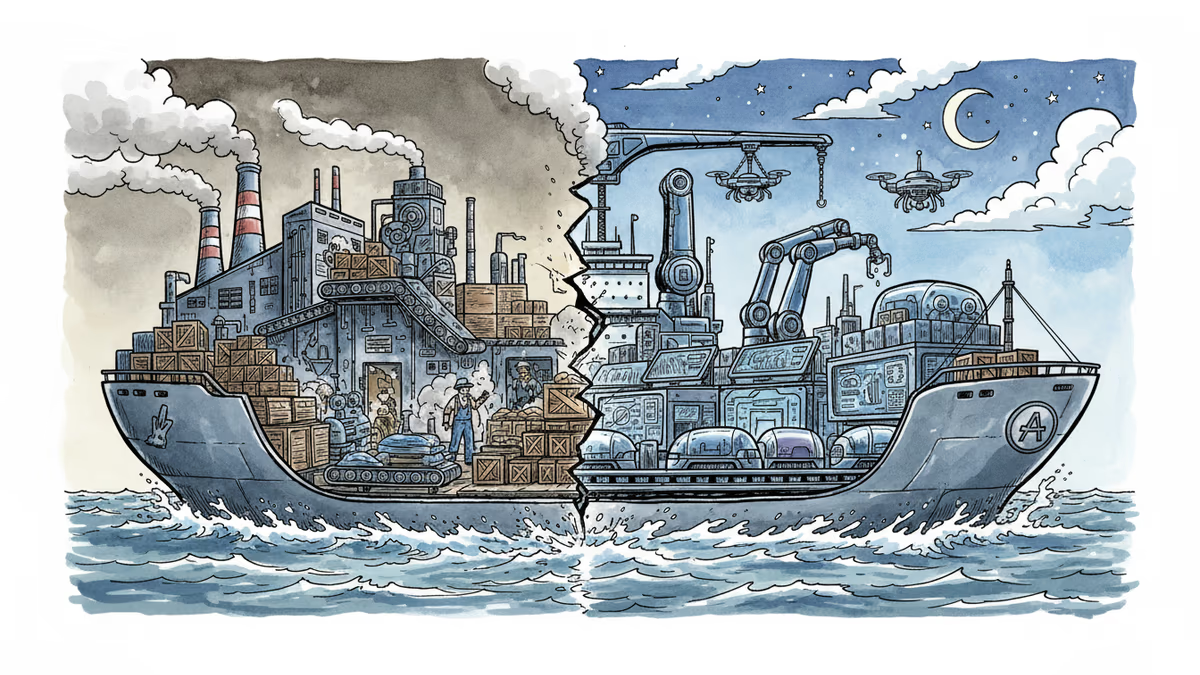
Li Yanqing, executive VP of China's shipbuilding association, analyzes US trade policies and China's strategic shift toward high-quality manufacturing in the maritime industry.
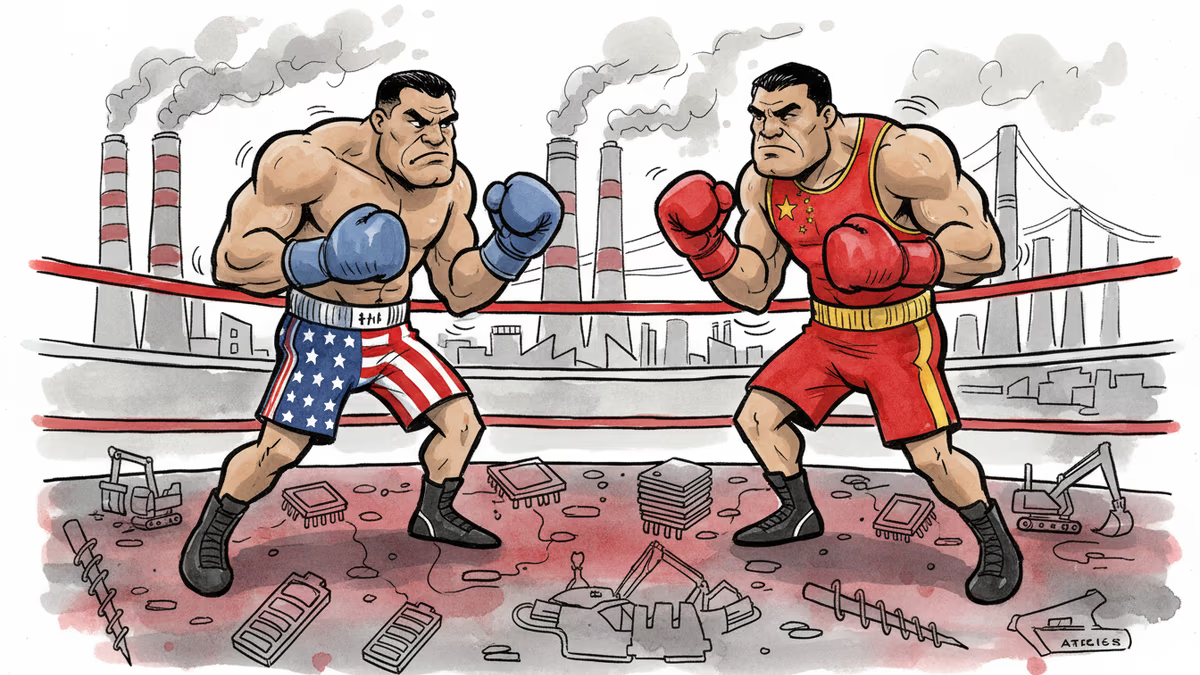
Trump signals new Section 301 investigations targeting Chinese EVs, rare earths, and AI chips. China warns of retaliation. Is this Trade War 2.0 or strategic positioning?
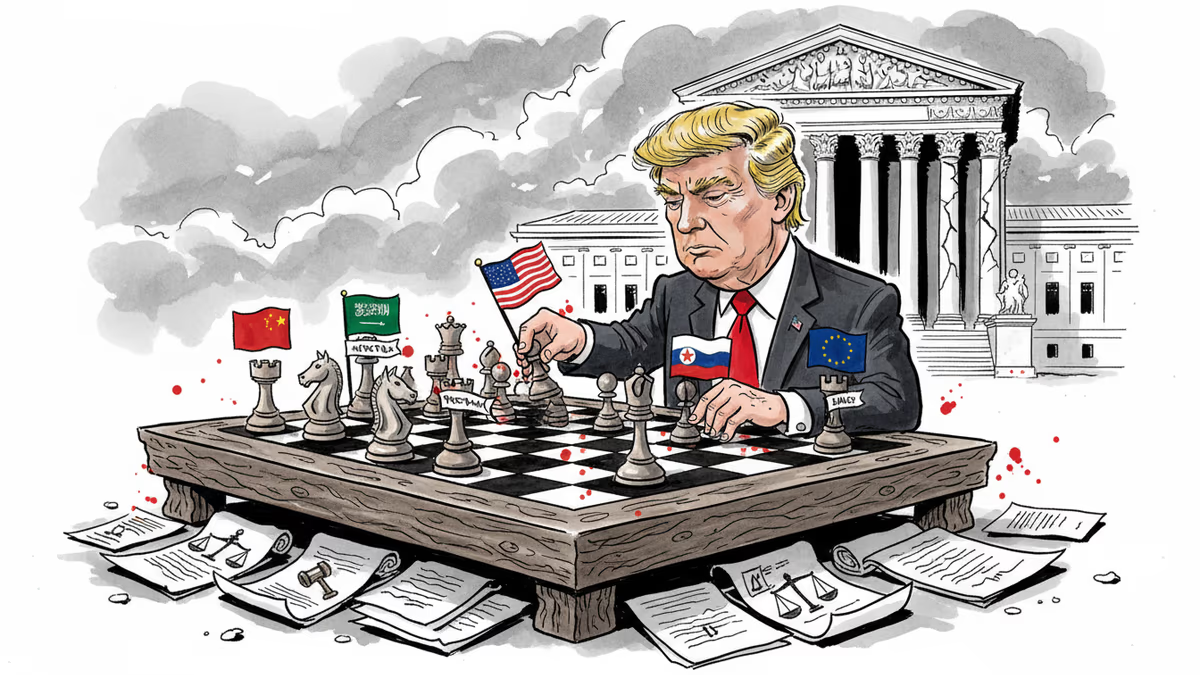
Despite Supreme Court ruling against emergency tariffs, Trump warns countries against "playing games" and unveils new 15% global tariff under different legal authority.
After Supreme Court struck down emergency tariffs, U.S. Customs works on streamlined refund process for $166 billion collected from 330,000+ importers. New global tariffs already replacing old ones.
Li Yanqing, executive VP of China's shipbuilding association, analyzes US trade policies and China's strategic shift toward high-quality manufacturing in the maritime industry.
Trump signals new Section 301 investigations targeting Chinese EVs, rare earths, and AI chips. China warns of retaliation. Is this Trade War 2.0 or strategic positioning?
Despite Supreme Court ruling against emergency tariffs, Trump warns countries against "playing games" and unveils new 15% global tariff under different legal authority.
Thoughts
Share your thoughts on this article
Sign in to join the conversation