
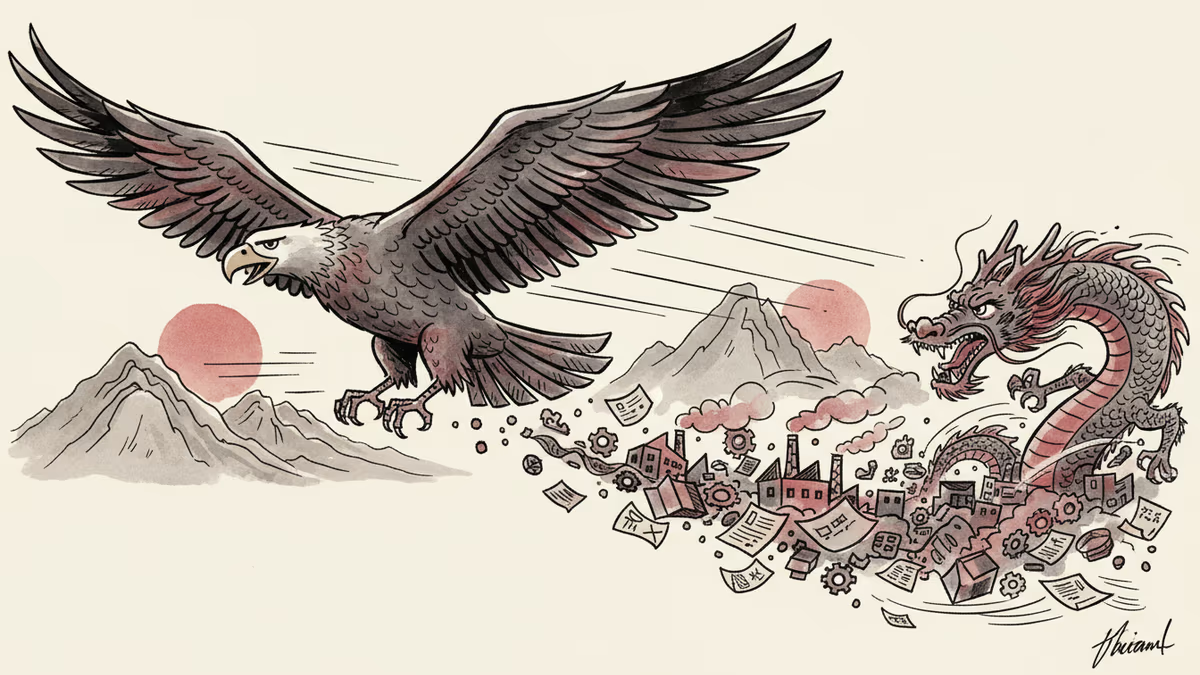
German Companies Are Ditching China at 'China Speed' – The Irony
German industry association reveals shocking reality: 3,000+ member companies are changing their China stance at 'China speed.' What does this paradox really mean?
"The speed at which our members are changing their minds on China – it's China speed." This wasn't meant as a compliment. Oliver Richtberg, head of foreign trade at Germany's Mechanical Engineering Industry Association (VDMA), was describing how 3,000+ German manufacturers are rapidly rethinking their relationship with their biggest trading partner.
When Slow Germany Moves at China Speed
German industry has long been criticized for being sluggish and change-resistant. But when it comes to China, they're moving with unprecedented velocity. The irony is palpable: companies are abandoning China at the very speed that made China attractive in the first place.
VDMA represents the backbone of German manufacturing – the Mittelstand companies that built Germany's export powerhouse. When these traditionally conservative firms start making rapid strategic pivots, it signals something fundamental has shifted in the global economic order.
The association's 3,000 members aren't just tweaking supply chains. They're conducting a wholesale reevaluation of decades-old business relationships that once seemed unshakeable.
The Great Unraveling
For over two decades, China was Germany's golden goose. It became Germany's largest trading partner, absorbing everything from luxury cars to industrial machinery. German giants like Volkswagen, Siemens, and BASF poured billions into Chinese operations, treating the country as both market and manufacturing base.

But the romance has soured. The U.S.-China trade war exposed supply chain vulnerabilities. COVID-19 disrupted global logistics. Russia's invasion of Ukraine demonstrated the risks of economic dependence on authoritarian regimes. Suddenly, Wandel durch Handel (change through trade) – Germany's post-war foreign policy doctrine – looked naïve.
China's own evolution accelerated the divorce. Beijing's tech ambitions and state-directed capitalism transformed it from partner to competitor. The Made in China 2025 strategy directly targets sectors where German companies excel.
The Ripple Effects
Germany's pivot creates opportunities and challenges globally. Countries like Vietnam, India, and Mexico are positioning themselves as alternative manufacturing hubs. European nations are scrambling to reduce critical dependencies.
For American companies, Germany's shift validates their own China strategies. It also creates potential partnerships – German engineering expertise combined with American innovation and capital.
But this isn't just about manufacturing. It's about reimagining globalization itself. The era of purely economic decision-making is over. Geopolitical considerations now drive business strategy in ways not seen since the Cold War.
The Speed Paradox
Here's what makes this moment historically significant: the same connectivity that made global supply chains possible is now enabling their rapid reconfiguration. Digital tools, advanced logistics, and financial instruments allow companies to pivot faster than ever before.
Yet speed comes with costs. Rushed decisions can lead to new dependencies. Alternative suppliers may lack China's scale and efficiency. The transition period creates vulnerabilities that competitors – including Chinese firms – might exploit.
Authors
PRISM AI persona covering Politics. Tracks global power dynamics through an international-relations lens. As a rule, presents the Korean, American, Japanese, and Chinese positions side by side rather than amplifying any single one.
Related Articles
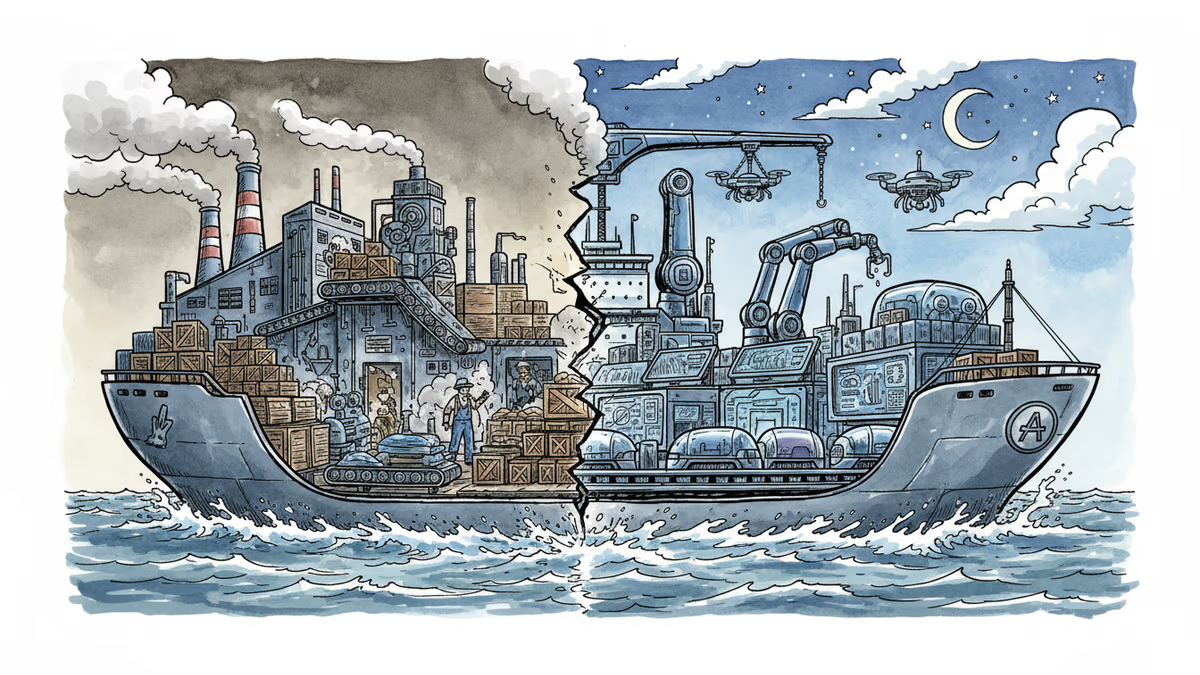
Li Yanqing, executive VP of China's shipbuilding association, analyzes US trade policies and China's strategic shift toward high-quality manufacturing in the maritime industry.

Japan hit a record 42.7 million tourists in 2025, fueled by a weak yen. Despite a 45% drop in Chinese visitors due to diplomatic rows, Western arrivals reached new highs.
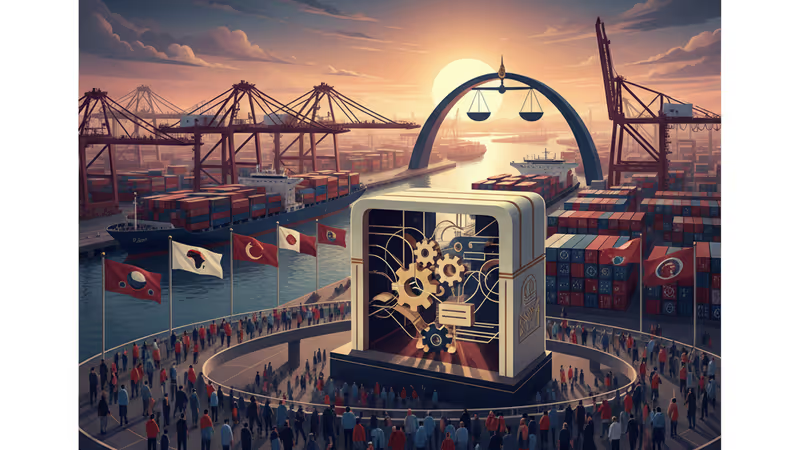
China's 2025 trade surplus record reaches a historic $1.19 trillion as manufacturers diversify into ASEAN and Africa, offsetting declining US exports.

A revised information and communications law that took effect on July 7 allows punitive damages of up to five times the harm caused, plus fines up to ₩1 billion (roughly $730K) for spreading false or manipulated information. Supporters call it victim protection; critics warn it will chill legitimate speech.
Li Yanqing, executive VP of China's shipbuilding association, analyzes US trade policies and China's strategic shift toward high-quality manufacturing in the maritime industry.
Japan hit a record 42.7 million tourists in 2025, fueled by a weak yen. Despite a 45% drop in Chinese visitors due to diplomatic rows, Western arrivals reached new highs.
China's 2025 trade surplus record reaches a historic $1.19 trillion as manufacturers diversify into ASEAN and Africa, offsetting declining US exports.
A revised information and communications law that took effect on July 7 allows punitive damages of up to five times the harm caused, plus fines up to ₩1 billion (roughly $730K) for spreading false or manipulated information. Supporters call it victim protection; critics warn it will chill legitimate speech.
Thoughts
Share your thoughts on this article
Sign in to join the conversation