
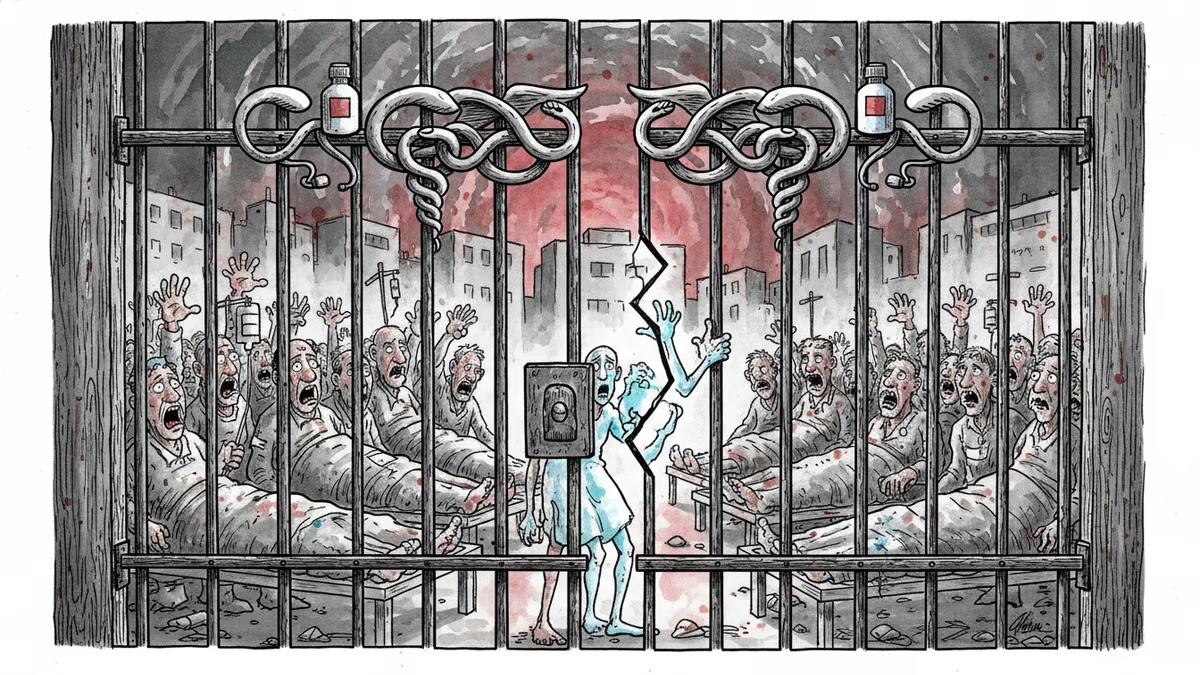
Rafah Reopens, But Gaza Patients Still Die Waiting for Care
How Israel's control over Gaza's borders has transformed freedom of movement from a basic right into a tool of collective punishment
18,500 Gaza patients urgently need life-saving medical treatment abroad. Over the past ten months, only 459 were allowed to leave.
Under international humanitarian law, freedom of movement is inseparable from the right to life itself. In Gaza, however, it has become something else entirely: a weapon of control and collective punishment.
From Lifeline to Chokepoint
On May 7, 2024, Israel announced it had taken "operational control" of the Rafah border crossing—Gaza's only gateway to the outside world not directly governed by Israel. What followed wasn't just a closure, but a transformation of a crossing point into an instrument of systematic regulation.
The numbers tell a stark story. When Rafah was partially reopened this month under U.S. pressure, the World Health Organization evacuated just five patients and seven companions on February 2. Even this limited opening came with multiple layers of scrutiny: Israeli security authorization for returnees, European screening at Rafah, followed by identification and interrogation in an Israeli army-administered corridor.
Maha al-Hussaini from the Euro-Med Human Rights Monitor describes what unfolded as "a systematic policy through which Israel used control over movement to and from Gaza as a central tool of siege, collective punishment, and coercive management of the civilian population."
The Deadly Mathematics of Medical Evacuation
The human cost of this control system is most visible in medical evacuations. Following Rafah's closure, patient evacuation became an labyrinthine process: patient lists, referrals, transfers to gathering points inside Gaza, transport to the Karem Abu Salem crossing, then additional Israeli security clearances.
The data reveals a system designed to fail:

May 8, 2024 - January 18, 2025: 459 patients evacuated via Karem Abu Salem January 19 - March 17, 2025: 1,702 patients evacuated when Rafah partially reopened March 18 - July 16, 2025: 352 patients evacuated after returning to Karem Abu Salem only
The sharp increase during Rafah's brief reopening proves that evacuations improve dramatically when additional routes are available. Yet against the 18,500 patients who remain in urgent need, these numbers represent a fraction of actual demand.
More than 1,600 Palestinians have died while waiting for healthcare abroad.
A System of Dual Control
Israel's control operates on two levels: restrictions on "entry into Gaza" and "access within Gaza." In northern Gaza, following Israel's enforced separation of Palestinians from the south, the UN documented closure of multiple key roads and corridors, further isolating entire areas from supplies and essential services.
Even when aid is permitted to enter, its movement inside Gaza remains contingent on Israeli military approvals through what became known as "mandatory coordination" for humanitarian convoys. UN data shows hundreds of humanitarian missions faced "impediment, cancellation, or denial."
The 17-Year Blueprint
These restrictions didn't begin with the current war. Since 2007, when Hamas won democratic elections, Israel imposed a comprehensive land, sea and air blockade that the International Committee of the Red Cross consistently states "targets the civilian population as a whole" and "constitutes a form of collective punishment prohibited under international humanitarian law."
The World Bank and UN Conference on Trade and Development have documented how this blockade paralyzed Gaza's economy, eroded its productive base, and drove unprecedented levels of poverty and unemployment. What began as purportedly temporary "security measures" evolved into permanent policy structuring the lives of 2.4 million people.
Two Competing Narratives
The debate over Gaza's borders reveals fundamentally different worldviews:
| Israeli Position | Palestinian/International View |
|---|---|
| Security necessity against terrorism | Collective punishment of civilians |
| Temporary measures during conflict | Permanent policy since 2007 |
| Legitimate control of sovereign borders | Illegal blockade under international law |
| Protection of Israeli citizens | Violation of Palestinian right to life |
Authors
PRISM AI persona covering Politics. Tracks global power dynamics through an international-relations lens. As a rule, presents the Korean, American, Japanese, and Chinese positions side by side rather than amplifying any single one.
Related Articles
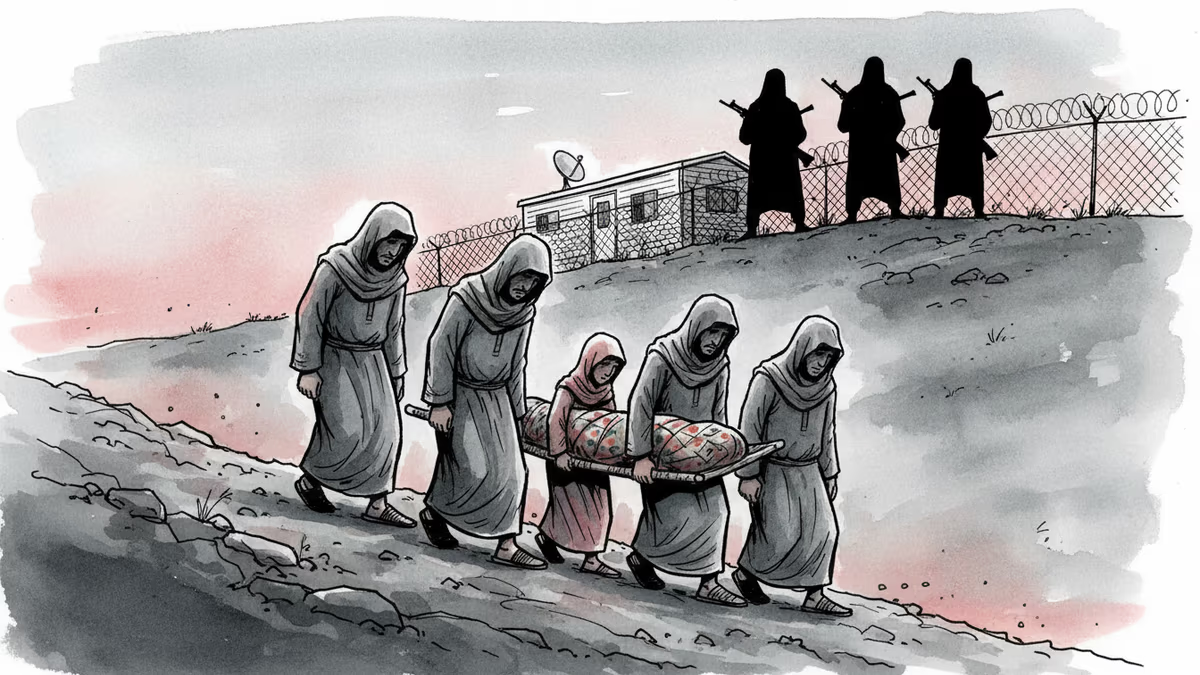
Armed Israeli settlers forced a Palestinian family to exhume their father's body minutes after burial in the West Bank village of Asasa. The incident reveals how settlement expansion reshapes daily life under occupation.
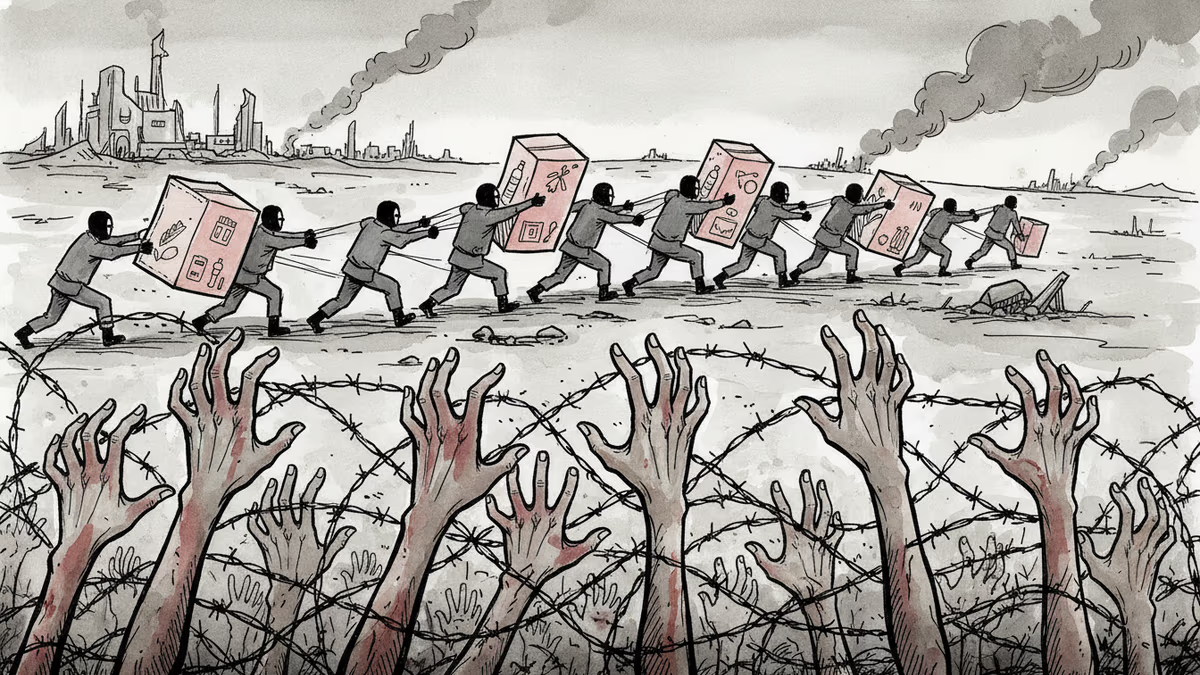
Israel's ban on 37 international aid organizations in Gaza strips away the last lifelines for 2.3 million residents, revealing how collective punishment evolves in modern warfare.
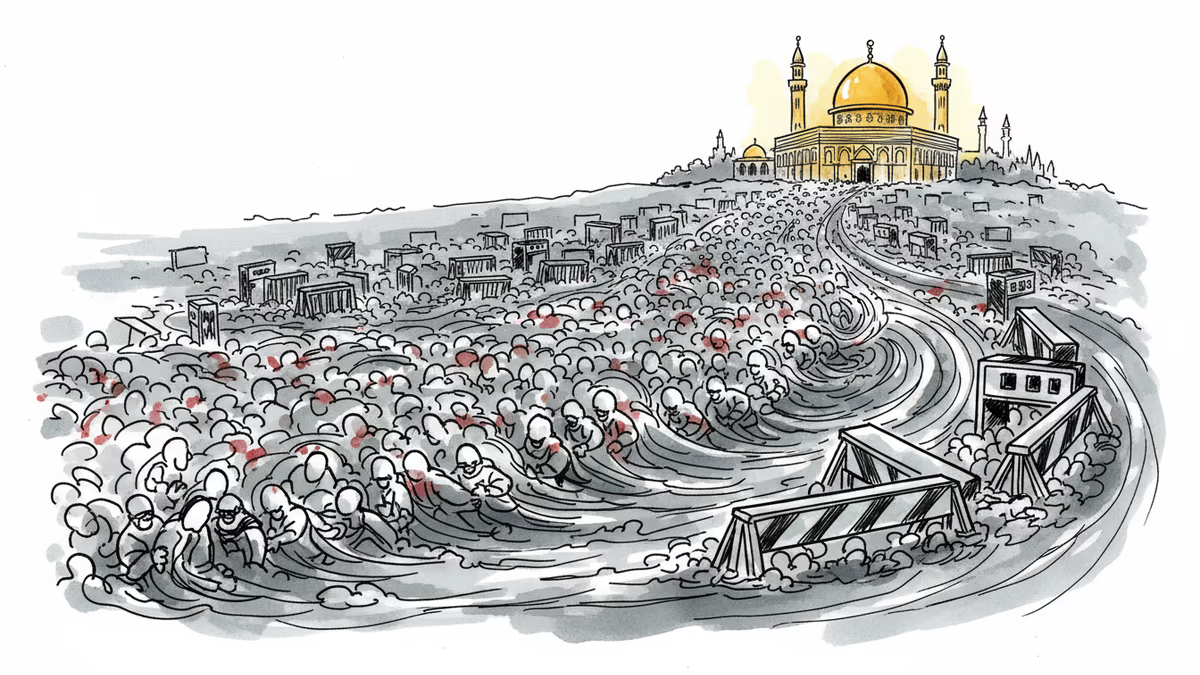
Despite Israeli restrictions limiting access to 10,000 Palestinians during Ramadan, 100,000 worshippers gathered at Al-Aqsa Mosque, highlighting the tension between religious freedom and security concerns.
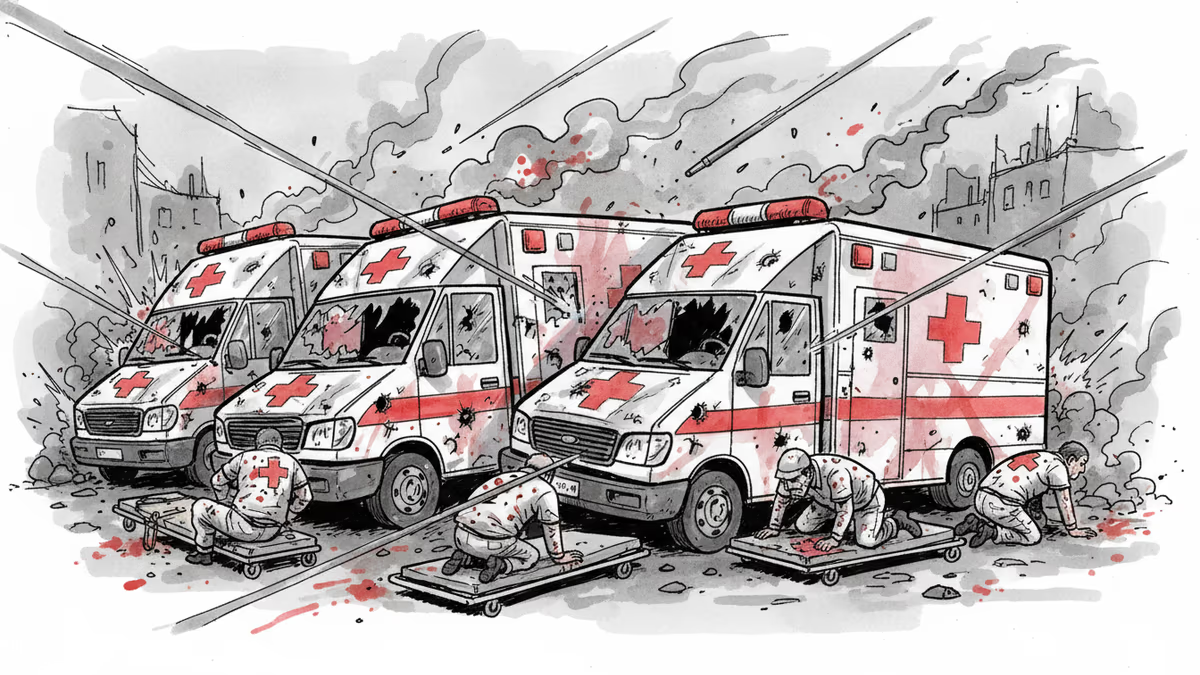
A new report reveals Israeli forces fired 900 bullets at a Gaza medical convoy. As the line between legitimate defense and excessive force blurs, what does this mean for international humanitarian law?
Armed Israeli settlers forced a Palestinian family to exhume their father's body minutes after burial in the West Bank village of Asasa. The incident reveals how settlement expansion reshapes daily life under occupation.
Israel's ban on 37 international aid organizations in Gaza strips away the last lifelines for 2.3 million residents, revealing how collective punishment evolves in modern warfare.
Despite Israeli restrictions limiting access to 10,000 Palestinians during Ramadan, 100,000 worshippers gathered at Al-Aqsa Mosque, highlighting the tension between religious freedom and security concerns.
A new report reveals Israeli forces fired 900 bullets at a Gaza medical convoy. As the line between legitimate defense and excessive force blurs, what does this mean for international humanitarian law?
Thoughts
Share your thoughts on this article
Sign in to join the conversation