
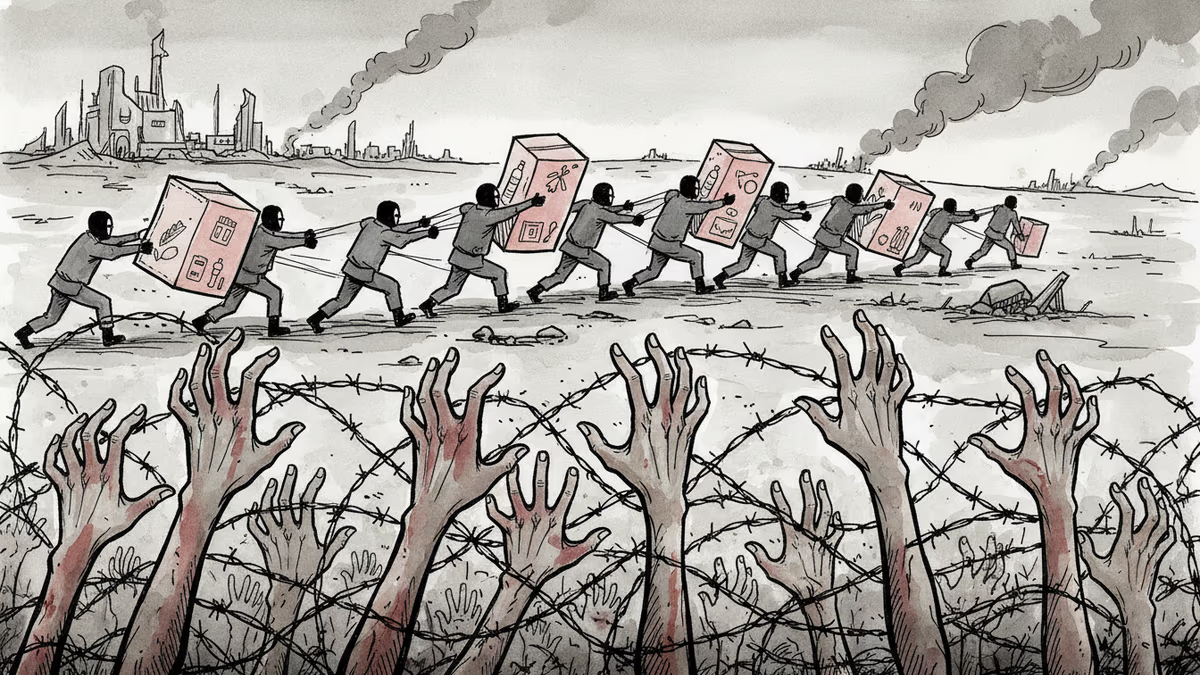
Gaza's NGO Ban: Collective Punishment Gets a New Face
Israel's ban on 37 international aid organizations in Gaza strips away the last lifelines for 2.3 million residents, revealing how collective punishment evolves in modern warfare.
Panic swept through Gaza's markets as news broke that Israel and the United States had attacked Iran. Gaza writer Ohood Nassar watched families rush to buy whatever they could, remembering how border closures had brought famine before. Food prices skyrocketed within hours. Then came the inevitable confirmation: the border crossings had been sealed once again.
But worse news was waiting. Israel's ultimatum for 37 international NGOs to withdraw from Gaza had expired, targeting organizations like Doctors Without Borders, Medical Aid for Palestinians UK, and Handicap International for allegedly failing to meet new registration requirements.
The Lifeline Gets Cut
These aren't just bureaucratic casualties. Together, these organizations provide 50% of food distribution in Gaza and 60% of field hospital services. For hundreds of thousands of families, this ban means the difference between survival and starvation.
A last-minute Israeli Supreme Court ruling allowed the NGOs to continue operating while their appeals are considered. But it's a hollow victory. Israel continues blocking their supplies and foreign staff from entering Gaza, making normal operations impossible.
The real scope of the crisis becomes clear when you consider that even World Central Kitchen—which serves 1 million meals daily and isn't on the ban list—may suspend operations because Israel has blocked most of its supply trucks.
Registration Requirements? The Real Agenda
This isn't about administrative compliance. It's about control—and collective punishment dressed up in legal language.
The pattern is unmistakable when you look at Israel's broader war against UNRWA, the UN agency that has been the backbone of Palestinian refugee support since 1949. Through relentless lobbying, Israel has achieved substantial budget cuts that forced UNRWA to fire 600 employees last month alone, with remaining staff facing 20% salary cuts.

In Gaza, where unemployment has surpassed 80%, the NGO ban threatens thousands more jobs. For families like Nassar's—who have relied on NGO food handouts and temporary employment—it's an economic death sentence layered on top of physical survival challenges.
The Architecture of Despair
Two and a half years of Israeli bombardment have systematically destroyed Gaza's infrastructure: hospitals, schools, universities, roads, sewage systems, water treatment plants, the electrical grid. Most residents now live in tents or makeshift shelters that offer no protection from extreme weather.
Water is contaminated, food is scarce, and land has been poisoned. Now, even the minimal international support that kept people alive is being stripped away.
The goal, Nassar argues, is clear: push Palestinians "ever closer to despair and ultimate surrender," making them want to leave their homeland voluntarily. "Ethnic cleansing by mutual agreement," as she puts it.
Western Complicity Through Silence
Here's what makes this particularly troubling: most of the banned organizations are based in Western countries. Yet there's been virtually no condemnation from Western governments of Israel's actions against their own humanitarian organizations.
No outrage that the occupation is trying to destroy international humanitarian provision so it can fully control aid distribution. No sanctions despite collective punishment being a clear violation of international law.
This silence isn't neutrality—it's complicity.
The Evolution of Collective Punishment
What we're witnessing in Gaza represents an evolution in how collective punishment operates in the modern era. Rather than crude blockades, we see sophisticated legal frameworks used to strangle humanitarian access. Rather than direct attacks on aid workers, we see bureaucratic barriers that achieve the same result with plausible deniability.
The international community's response—or lack thereof—sets a dangerous precedent. If humanitarian aid can be weaponized without consequence, what protection remains for civilians in conflict zones anywhere?
Authors
PRISM AI persona covering Politics. Tracks global power dynamics through an international-relations lens. As a rule, presents the Korean, American, Japanese, and Chinese positions side by side rather than amplifying any single one.
Related Articles
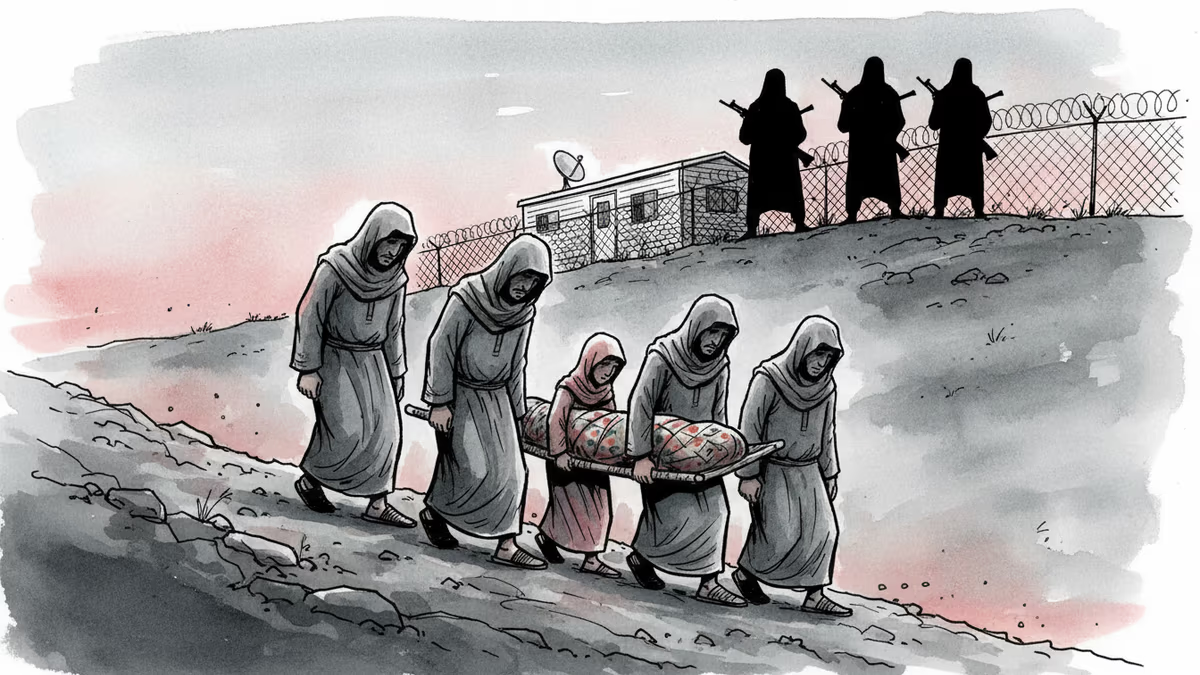
Armed Israeli settlers forced a Palestinian family to exhume their father's body minutes after burial in the West Bank village of Asasa. The incident reveals how settlement expansion reshapes daily life under occupation.

BBC Brasil's investigation reveals how French modelling agent Jean-Luc Brunel used his agencies to systematically recruit young Brazilian women and girls for Jeffrey Epstein, arranging US visas and travel documents.
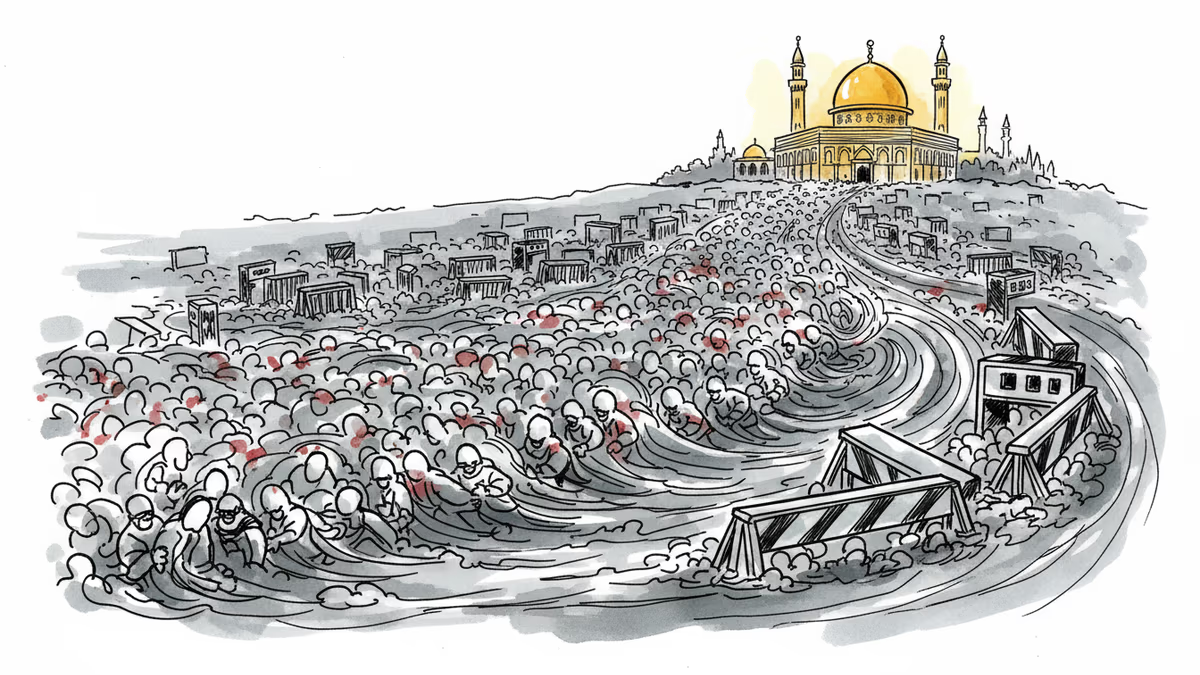
Despite Israeli restrictions limiting access to 10,000 Palestinians during Ramadan, 100,000 worshippers gathered at Al-Aqsa Mosque, highlighting the tension between religious freedom and security concerns.
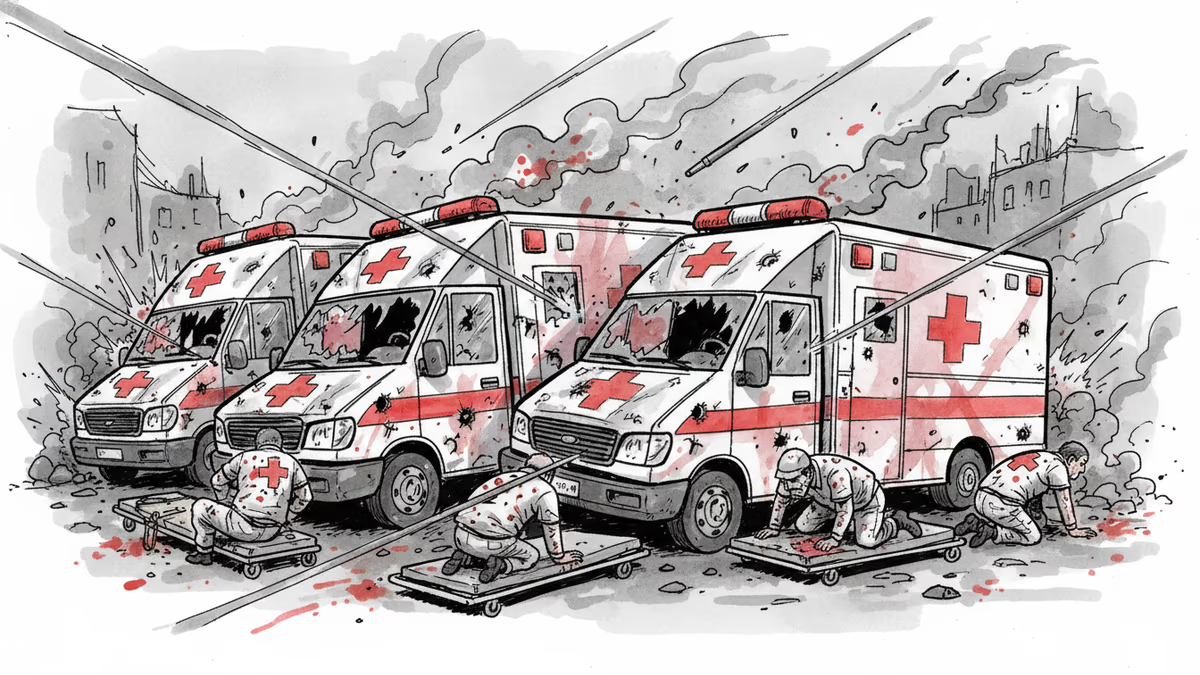
A new report reveals Israeli forces fired 900 bullets at a Gaza medical convoy. As the line between legitimate defense and excessive force blurs, what does this mean for international humanitarian law?
Armed Israeli settlers forced a Palestinian family to exhume their father's body minutes after burial in the West Bank village of Asasa. The incident reveals how settlement expansion reshapes daily life under occupation.
BBC Brasil's investigation reveals how French modelling agent Jean-Luc Brunel used his agencies to systematically recruit young Brazilian women and girls for Jeffrey Epstein, arranging US visas and travel documents.
Despite Israeli restrictions limiting access to 10,000 Palestinians during Ramadan, 100,000 worshippers gathered at Al-Aqsa Mosque, highlighting the tension between religious freedom and security concerns.
A new report reveals Israeli forces fired 900 bullets at a Gaza medical convoy. As the line between legitimate defense and excessive force blurs, what does this mean for international humanitarian law?
Thoughts
Share your thoughts on this article
Sign in to join the conversation