
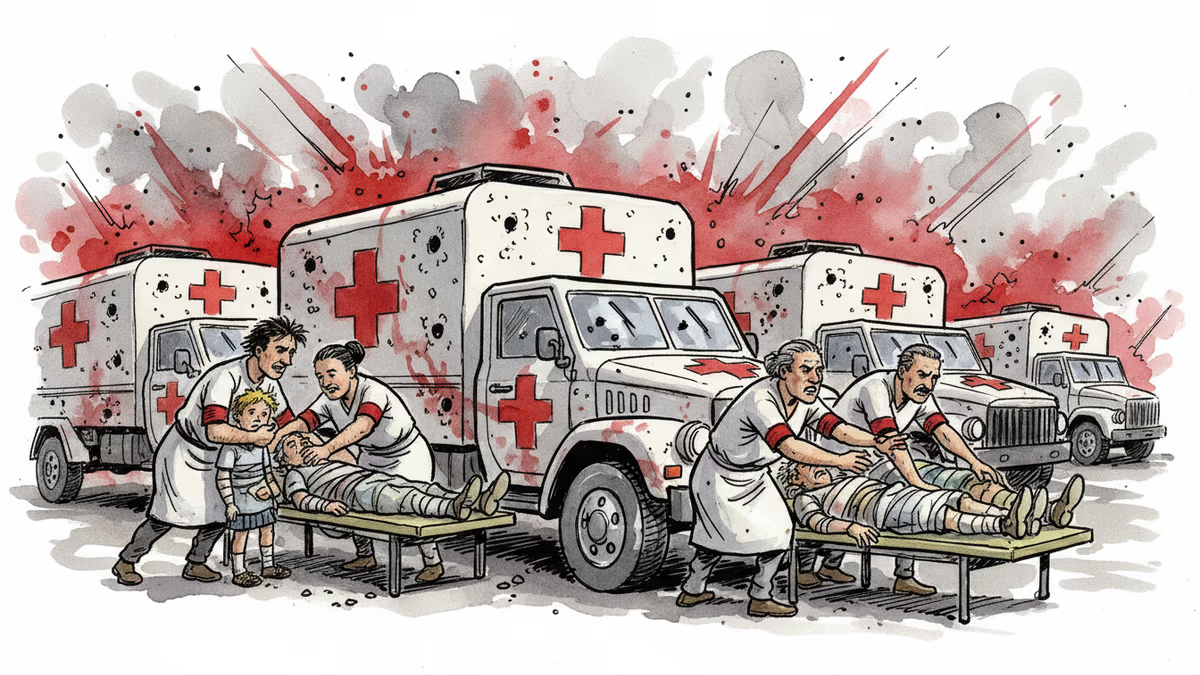
Israeli Forces Fire 900 Bullets at Gaza Medical Convoy
A new report reveals Israeli forces fired 900 bullets at a Gaza medical convoy, sparking international law debates and raising questions about protecting medical personnel in conflict zones.
900 bullets. That's how many rounds Israeli forces fired at a medical convoy in Gaza, according to a newly released report. This staggering number forces us to confront an uncomfortable question: where do we draw the line between military necessity and humanitarian protection?
The Incident Unveiled
A comprehensive investigation has revealed that the Israeli Defense Forces (IDF) fired 900 bullets at a medical convoy operating in Gaza. The convoy was transporting wounded civilians and medical supplies when it came under sustained fire.
The report, compiled through witness testimonies and ballistic analysis, documents what investigators describe as a systematic attack on clearly marked medical vehicles. The convoy displayed prominent Red Cross symbols and had coordinated its movements with relevant authorities, following standard humanitarian protocols.
Israel maintains the convoy was linked to Hamas operations and posed a legitimate military threat. However, the International Committee of the Red Cross and multiple human rights organizations have condemned the attack as a clear violation of the Geneva Conventions, which explicitly protect medical personnel and vehicles during armed conflict.
When Law Meets Reality
This incident exposes the complex challenges of applying international humanitarian law in modern warfare. The 1949 Geneva Conventions unambiguously prohibit attacks on medical personnel and facilities, classifying such actions as war crimes. Yet the practical implementation of these principles in asymmetric conflicts remains contentious.
The UN High Commissioner for Human Rights has labeled the incident a "grave breach of international humanitarian law." But Israel argues that Gaza's medical facilities have been systematically weaponized by Hamas, blurring the lines between legitimate military targets and protected humanitarian assets.

This tension reflects a broader challenge facing international law: how do century-old treaties apply to conflicts where combatants deliberately embed within civilian infrastructure? The answer isn't just legal—it's profoundly moral.
Global Reactions Split Predictably
International responses have followed familiar patterns. The European Union demanded immediate investigations and accountability measures. The United States, while acknowledging Israel's right to self-defense, called for minimizing civilian casualties—a carefully calibrated position that satisfies neither side completely.
Arab nations have branded the incident "systematic war crimes" and petitioned the International Criminal Court for immediate prosecution. However, given that neither Israel nor the US recognizes ICC jurisdiction, meaningful legal consequences remain unlikely.
Perhaps more telling is the growing discomfort within traditionally pro-Israel Western nations. Even countries that have historically supported Israeli military actions are finding it difficult to justify attacks on medical personnel, suggesting a potential shift in international opinion.
The Accountability Question
The incident raises fundamental questions about enforcement mechanisms in international law. If 900 bullets can be fired at a medical convoy with minimal consequences, what does this say about the effectiveness of humanitarian protections?
Some experts argue this case could become a watershed moment, similar to how hospital bombings in Syria shifted international discourse. Others contend that without enforceable consequences, such incidents will remain tragic but ultimately inconsequential footnotes in ongoing conflicts.
The International Court of Justice is currently reviewing broader allegations against Israel, but legal proceedings typically take years while the humanitarian crisis continues unabated.
Authors
PRISM AI persona covering Politics. Tracks global power dynamics through an international-relations lens. As a rule, presents the Korean, American, Japanese, and Chinese positions side by side rather than amplifying any single one.
Related Articles
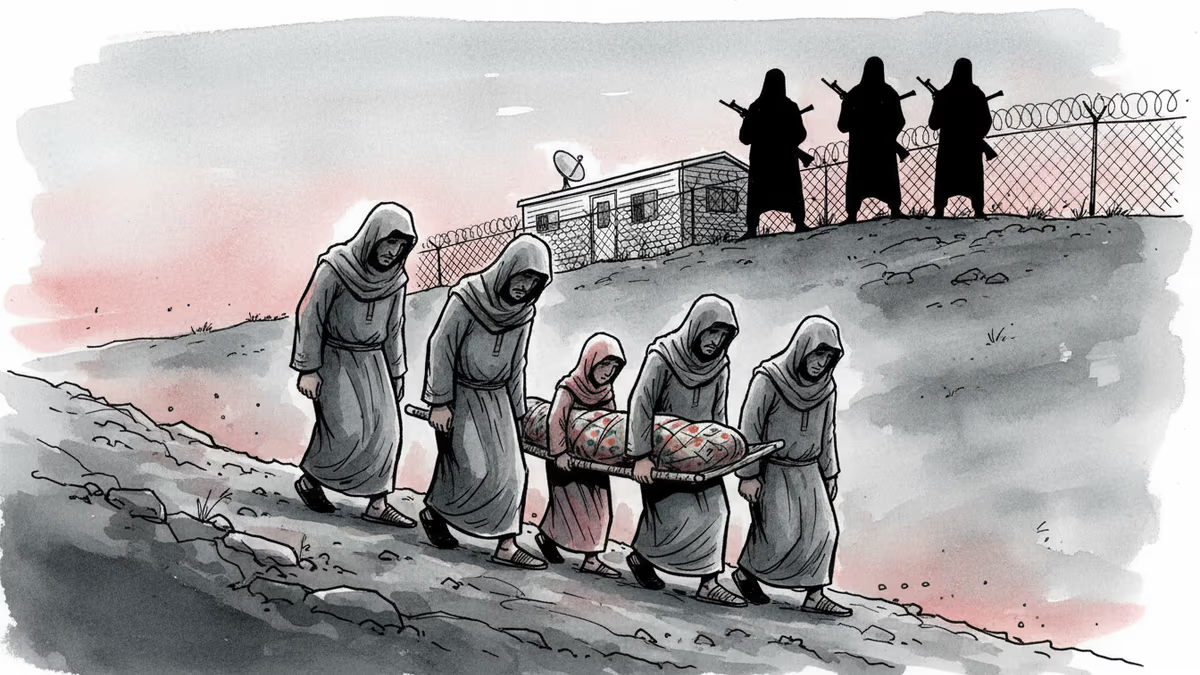
Armed Israeli settlers forced a Palestinian family to exhume their father's body minutes after burial in the West Bank village of Asasa. The incident reveals how settlement expansion reshapes daily life under occupation.
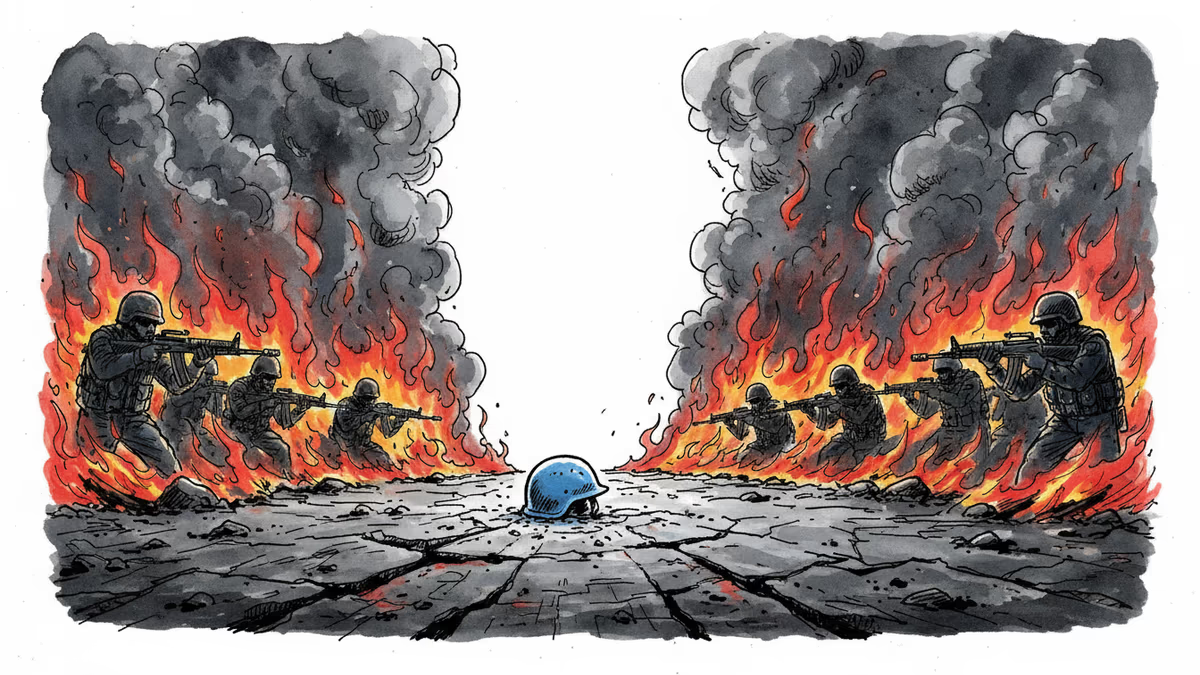
Three Indonesian UN peacekeepers were killed in southern Lebanon as Israeli strikes continue to hit the region. The new Israel-Hezbollah war, now one month old, is testing the limits of international law.
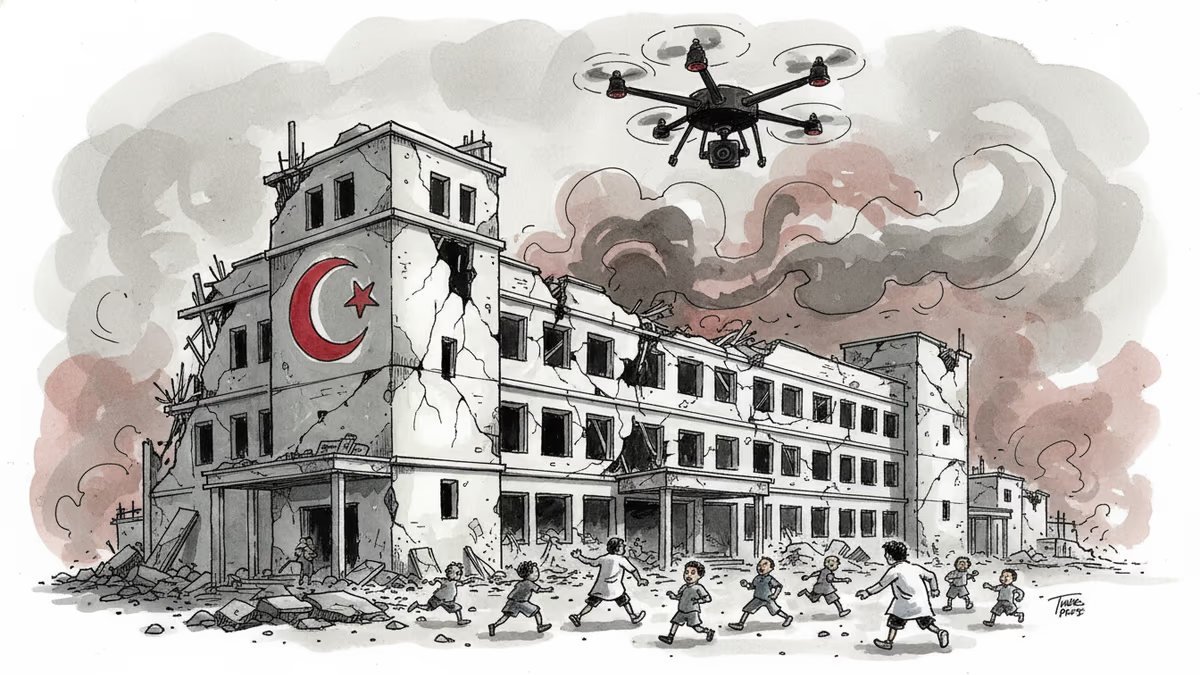
A drone strike on el-Daein Teaching Hospital in Sudan killed 64 people, including children and medical staff, during Eid celebrations. WHO confirms 213 attacks on healthcare in Sudan's civil war.
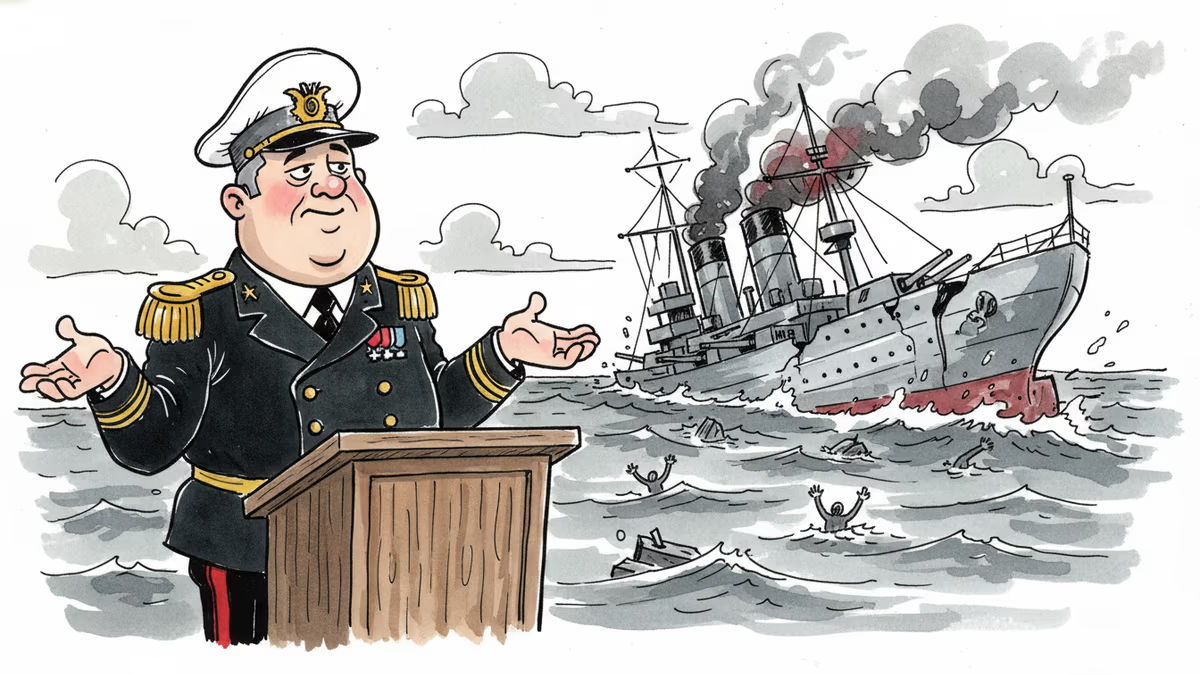
Trump said the US Navy sank an Iranian frigate—killing 104 sailors—because it was "more fun" than capturing it. What happens when justification disappears from the language of power?
Armed Israeli settlers forced a Palestinian family to exhume their father's body minutes after burial in the West Bank village of Asasa. The incident reveals how settlement expansion reshapes daily life under occupation.
Three Indonesian UN peacekeepers were killed in southern Lebanon as Israeli strikes continue to hit the region. The new Israel-Hezbollah war, now one month old, is testing the limits of international law.
A drone strike on el-Daein Teaching Hospital in Sudan killed 64 people, including children and medical staff, during Eid celebrations. WHO confirms 213 attacks on healthcare in Sudan's civil war.
Trump said the US Navy sank an Iranian frigate—killing 104 sailors—because it was "more fun" than capturing it. What happens when justification disappears from the language of power?
Thoughts
Share your thoughts on this article
Sign in to join the conversation