
TikTok Refugees Flood UpScrolled as Oracle Takeover Sparks Exodus
Users flee to alternative platform UpScrolled after Oracle's TikTok takeover raises censorship concerns, overwhelming the app's servers and highlighting platform dependency risks.
When Oracle and its investor group took control of TikTok's US operations last week, they probably didn't expect their first challenge to come from a mass exodus to a relatively unknown app called UpScrolled.
The alternative social platform, currently sitting at 12th place in Apple's App Store, is struggling to handle the sudden influx of users fleeing what they see as a compromised TikTok. "You showed up so fast our servers tapped out," UpScrolled posted on Bluesky, a message that perfectly captures the chaotic moment we're witnessing in social media.
The Great Platform Migration Begins
The migration isn't just about numbers—it's about trust. High-profile users like journalist Taylor Lorenz have publicly announced their switch to UpScrolled, citing concerns about potential censorship under the new ownership structure. When influential voices move, their followers often follow, creating the digital equivalent of a bank run.
UpScrolled's infrastructure crisis reveals something crucial about the modern social media landscape: no platform is truly prepared for overnight success. The app's servers buckling under pressure isn't just a technical hiccup—it's a metaphor for how fragile our digital social spaces really are.
Oracle's Unintended Consequences

The irony is striking. Oracle's takeover was supposed to resolve TikTok's future in the US market, providing stability and addressing national security concerns. Instead, it's triggered exactly the kind of platform fragmentation that regulators and users alike have long feared.
This isn't the first time a corporate takeover has sparked user rebellion. When Elon Musk acquired Twitter, millions fled to alternatives like Mastodon and Bluesky. The pattern is becoming predictable: corporate acquisition equals user anxiety equals platform shopping.
But UpScrolled's moment in the spotlight raises deeper questions about what users actually want from their social platforms. Is it the algorithm? The content? The community? Or simply the promise that their digital home won't be sold to the highest bidder without their consent?
The Infrastructure Reality Check
UpScrolled's server struggles highlight a harsh reality of the digital economy: scaling isn't just about code—it's about trust, timing, and infrastructure investment. The app's developers are learning in real-time what it takes to compete with platforms that have spent billions building global server networks.
For users caught in the transition, the experience is both frustrating and revealing. They're discovering that switching platforms isn't like changing TV channels—it's like moving to a new city where half the roads aren't built yet.
Authors
Related Articles
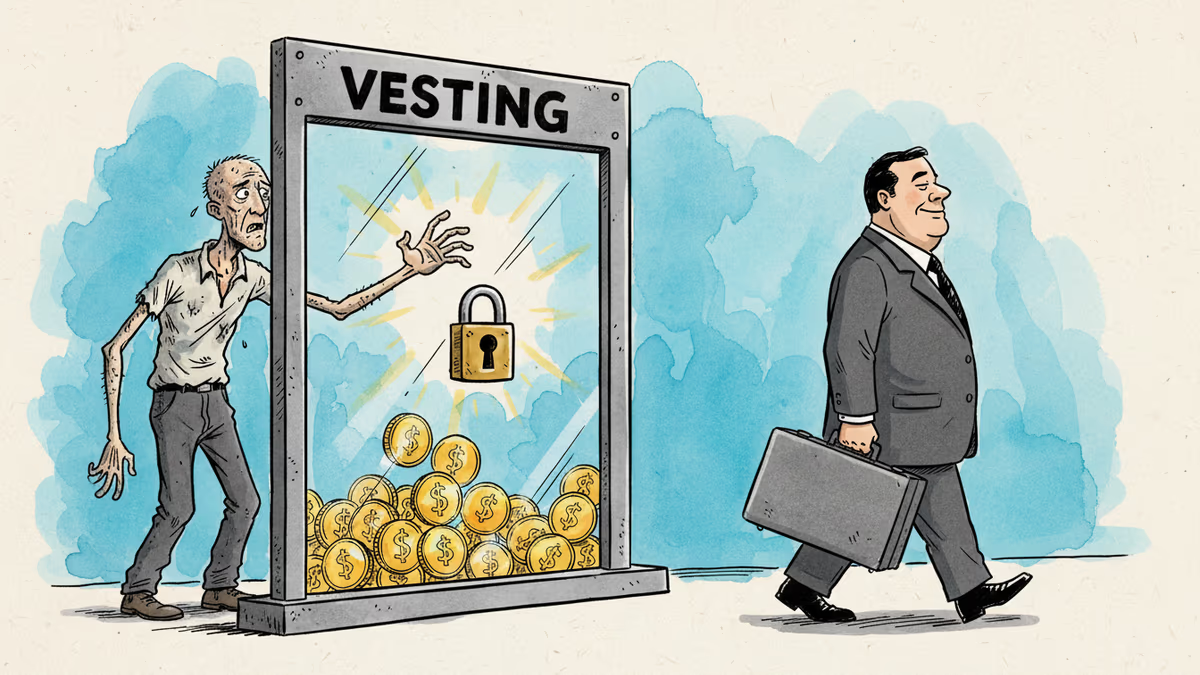
Oracle laid off up to 30,000 workers via email, denied RSU acceleration, and refused to negotiate. What this tells us about tech compensation's hidden power imbalance.
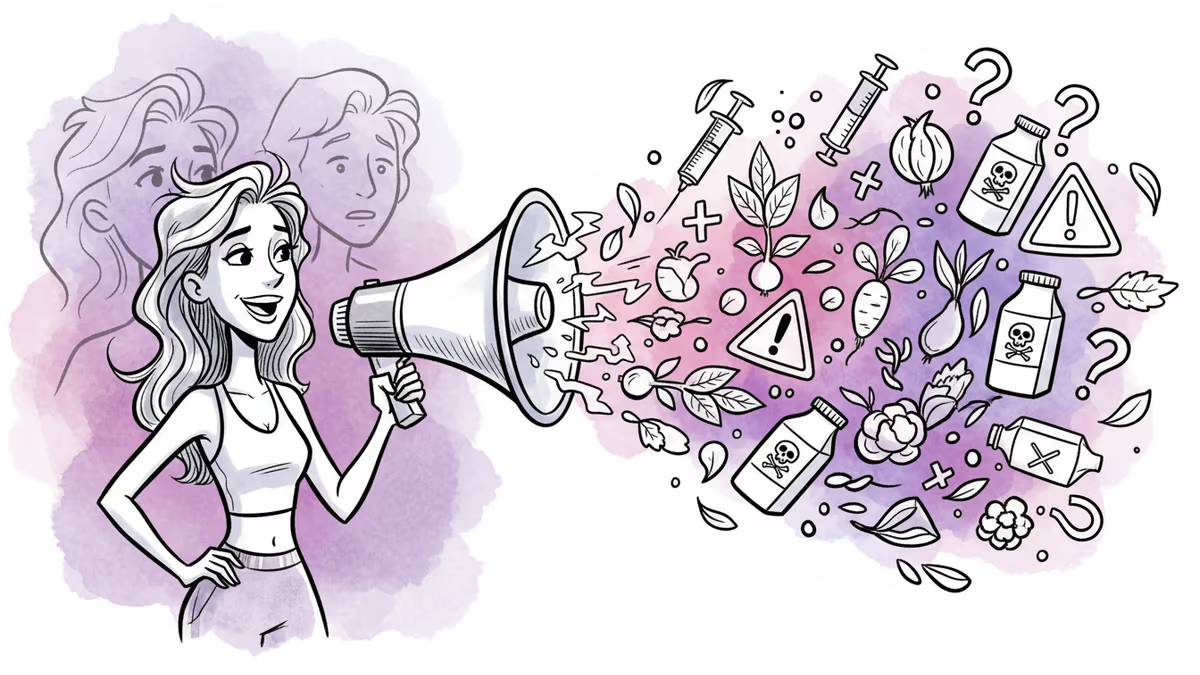
The journey from promoting healthy living to spreading medical misinformation reveals a troubling pattern in how selective science and algorithmic amplification create dangerous echo chambers.
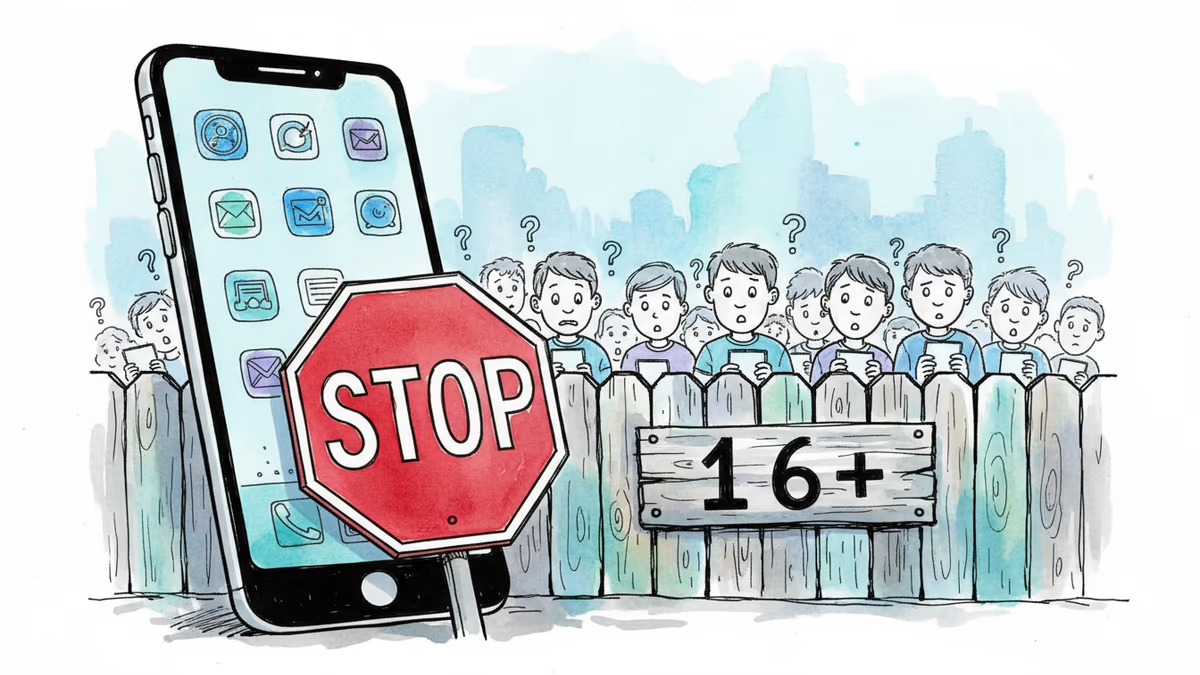
Karnataka state, home to Bengaluru's tech hub, joins a global wave of social media restrictions for minors. But can these bans actually work?
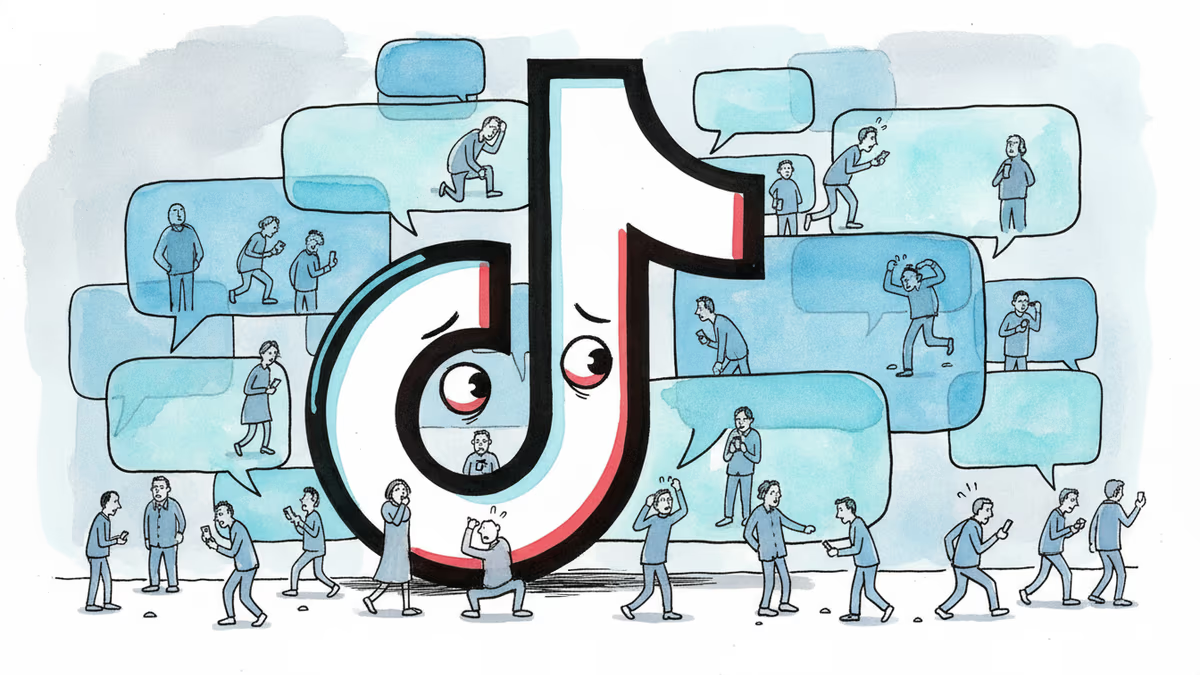
TikTok refuses end-to-end encryption for DMs, citing user safety. But this decision reveals a complex calculation about regulation, competition, and control.
Oracle laid off up to 30,000 workers via email, denied RSU acceleration, and refused to negotiate. What this tells us about tech compensation's hidden power imbalance.
The journey from promoting healthy living to spreading medical misinformation reveals a troubling pattern in how selective science and algorithmic amplification create dangerous echo chambers.
Karnataka state, home to Bengaluru's tech hub, joins a global wave of social media restrictions for minors. But can these bans actually work?
TikTok refuses end-to-end encryption for DMs, citing user safety. But this decision reveals a complex calculation about regulation, competition, and control.
Thoughts
1 thoughts
Share your thoughts on this article
Sign in to join the conversation