
TikTok Outage Traced to US Data Center Power Failure
TikTok's weekend service disruptions for US users stemmed from a power outage at a US data center, highlighting infrastructure vulnerabilities in global platforms.
A simple power outage brought one of the world's most popular social media platforms to its knees. TikTok's weekend service disruptions, which left millions of US users frustrated and disconnected, stemmed from something as basic as a data center losing electricity.
"Since yesterday we've been working to restore our services following a power outage at a US data center impacting TikTok and other apps we operate," TikTok USDS Joint Venture posted on X Monday morning. The company apologized for the disruption and promised to work with their data center partner to stabilize services.
The Scope of Digital Dependency
DownDetector tracked the problems starting early Sunday morning, with most issues seemingly resolved by Monday. However, some US users continued experiencing login problems, video upload delays, generic content flooding their For You pages, and comment access issues well into the week.
What makes this incident particularly striking isn't just its duration, but what it reveals about our digital infrastructure's fragility. A platform serving hundreds of millions of users globally can be crippled by a single point of failure – one data center losing power.
The Data Localization Paradox

This outage highlights a growing tension in the tech world: the conflict between operational resilience and regulatory compliance. TikTok's US operations have been increasingly localized to address national security concerns, with American user data processed within US borders.
While this localization satisfies regulatory requirements, it creates exactly the kind of single point of failure we witnessed this weekend. A globally distributed system might have rerouted traffic seamlessly, but data sovereignty rules limit such flexibility.
The irony is stark: policies designed to make platforms more secure and controllable can make them more vulnerable to basic infrastructure failures.
Beyond TikTok: A Broader Warning
This incident extends far beyond social media inconvenience. As businesses, governments, and individuals become increasingly dependent on cloud-based services, single points of failure become critical vulnerabilities. The shift toward edge computing and data localization – driven by privacy laws, national security concerns, and performance optimization – may be inadvertently creating more fragile systems.
Consider how many critical services now depend on a handful of cloud providers and data centers. A power grid failure, natural disaster, or cyberattack could cascade across multiple platforms simultaneously.
Authors
Related Articles
TikTok refuses end-to-end encryption for DMs, citing user safety. But this decision reveals a complex calculation about regulation, competition, and control.
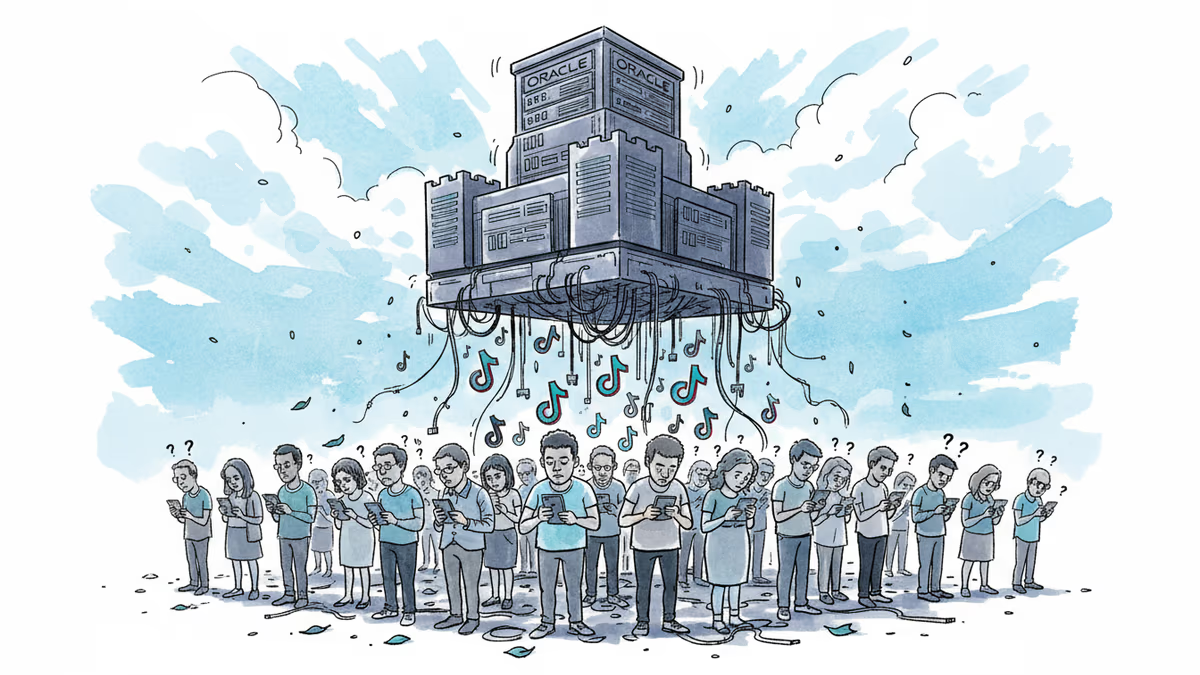
Second major TikTok outage in two months due to Oracle data center issues raises questions about cloud dependency and digital sovereignty in the post-divestiture era.
Just a month after the last outage, TikTok US faces another service disruption due to Oracle's data center issues. The incident highlights the risks of regulatory compliance creating single points of failure.
Major League Baseball partners with TikTok to capture younger fans through short-form content and influencers. Can America's pastime survive the 15-second attention span?
TikTok refuses end-to-end encryption for DMs, citing user safety. But this decision reveals a complex calculation about regulation, competition, and control.
Second major TikTok outage in two months due to Oracle data center issues raises questions about cloud dependency and digital sovereignty in the post-divestiture era.
Just a month after the last outage, TikTok US faces another service disruption due to Oracle's data center issues. The incident highlights the risks of regulatory compliance creating single points of failure.
Major League Baseball partners with TikTok to capture younger fans through short-form content and influencers. Can America's pastime survive the 15-second attention span?
Thoughts
Share your thoughts on this article
Sign in to join the conversation