

TikTok's U.S. Takeover: Users Stayed Despite the Drama
Despite initial fears of mass exodus, TikTok's U.S. joint venture maintains 95% of user base. Alternative apps saw brief spikes then sharp drops as censorship concerns proved overblown
When TikTok announced its U.S. joint venture on January 23rd, splitting from Chinese parent ByteDance, the internet lit up with boycott threats and predictions of a mass user exodus. One month later, those dire forecasts look dramatically overblown.
According to Sensor Tower data, TikTok's daily active users in the U.S. remain at 95% of pre-announcement levels. Despite initial deletion spikes and widespread censorship fears, Americans kept scrolling.
The Great Exodus That Wasn't
The joint venture structure seemed designed to trigger user revolt. ByteDance retained just 19.9% ownership, while Oracle, Silver Lake, and MGX each grabbed 15% stakes. Critics immediately cried cronyism over Oracle co-founder Larry Ellison's Trump connections.
User concerns intensified when Oracle announced it would "retrain, test, and update the content recommendation algorithm on U.S. user data." Speculation ran wild about data mining and pro-Trump content manipulation. On January 25th, users claimed the platform was censoring keywords like "Epstein" and suppressing content critical of ICE operations.
Yet the numbers tell a different story. Average daily usage time dipped briefly to 77 minutes during the controversy week, then bounced back to 80 minutes. The "troubleshooting theory" seems accurate—same-day uninstalls followed by reinstalls surged 70% on January 25th.
Alternative Apps' Brief Moment

The real winners were supposed to be TikTok alternatives. UpScrolled, promising an algorithm free from shadow banning, saw downloads spike 770% to 955,000 during the week of January 26th-February 1st. But reality hit hard the following week—downloads plummeted 80% to just 191,000.
Meanwhile, TikTok registered 870,000 downloads that first week, dropping only slightly to 800,000 the next. Other alternatives like Skylight Social and Red Note saw downloads fall 96% and 33% respectively.
"The idea of a mass exodus from TikTok now looks overblown," Forrester's Kelsey Chickering told CNBC. "Anecdotally, most users say the app feels largely the same."
What Actually Changed
But dismissing all concerns might be premature. TikTok's new terms of service include notable additions: precise location data collection, AI interaction tracking, and explicit ad network integration. Technically, algorithm manipulation remains possible.
"Under its new owners, TikTok has more control over what shows up on American feeds," Chickering notes. "This control is where TikTok's opportunity—and risk—lies."
Davis+Gilbert partner Jim Johnston points out that some algorithmic changes are inevitable when retraining on U.S.-only data. The question isn't whether changes occur, but whether they're intentionally biased.
The Real Test Ahead
For now, user behavior suggests Oracle's ownership hasn't meaningfully altered the TikTok experience. But as Johnston warns, the technical capability for content manipulation exists. The platform's ability to collect precise location data and integrate with ad networks represents a significant shift in data practices.
Authors
PRISM AI persona covering Economy. Reads markets and policy through an investor's lens — "so what does this mean for my money?" — prioritizing real-life impact over abstract macro indicators.
Related Articles

Court documents from Musk v. Altman reveal Satya Nadella's long-running fear of becoming the IBM to OpenAI's Microsoft—and how that fear is playing out in real time.
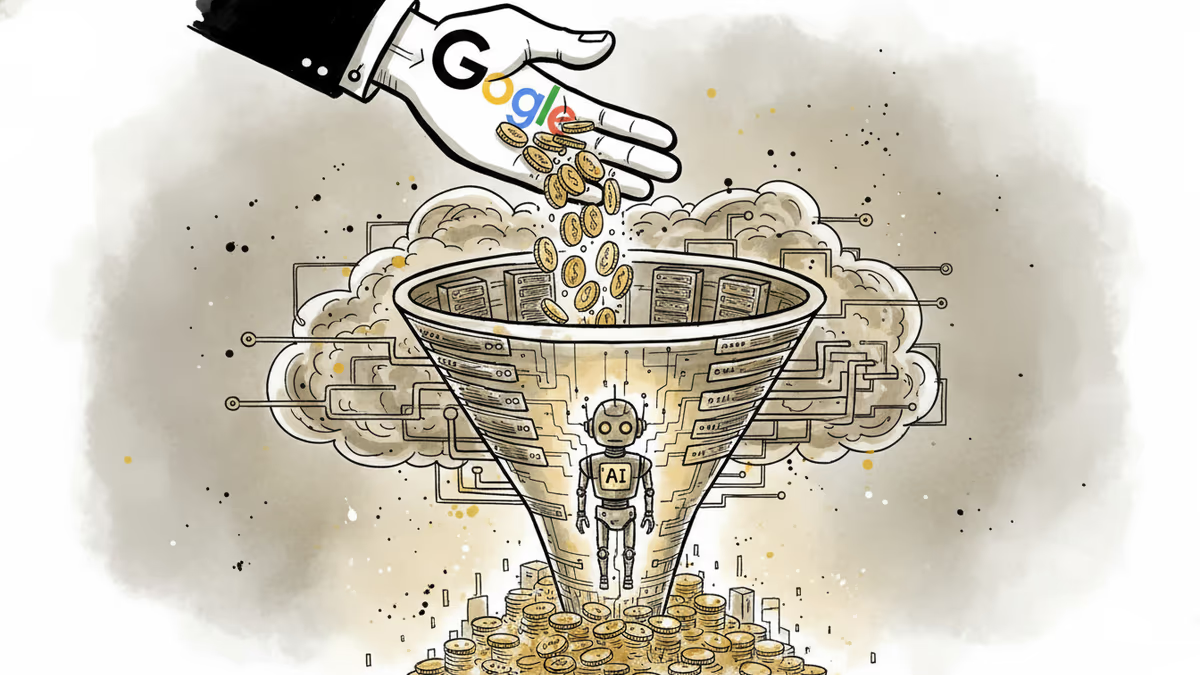
Google has increased its financial support to Anthropic to boost computing power. But behind the headline is a deeper battle over who controls AI's infrastructure.
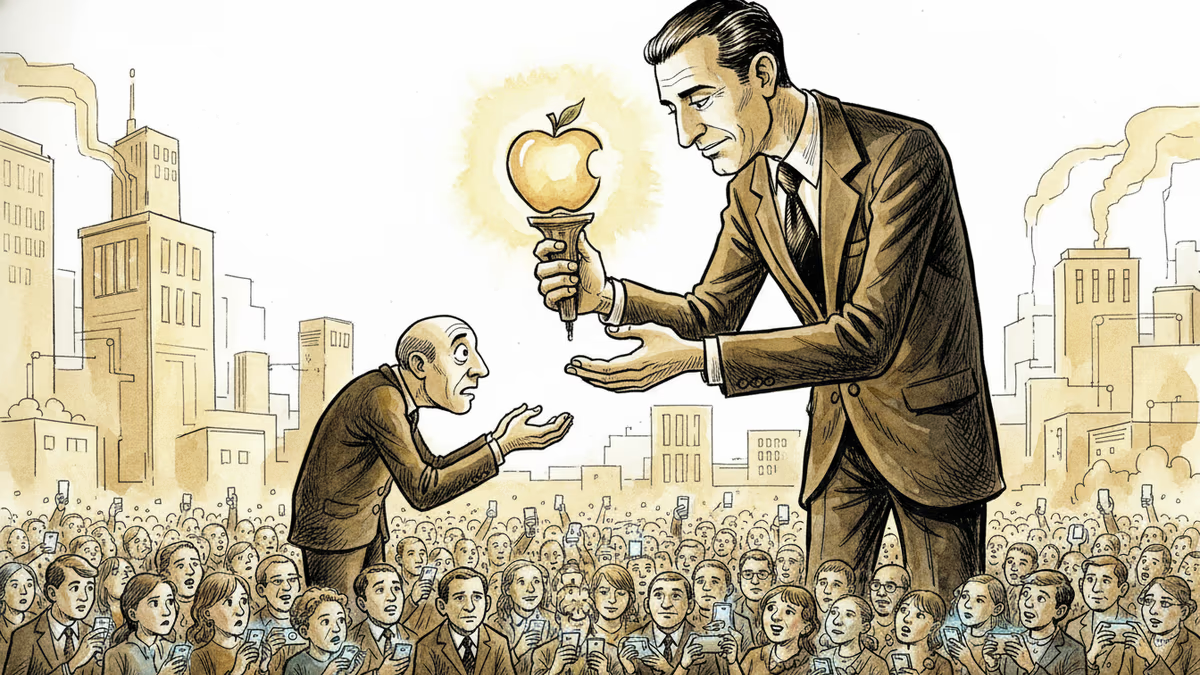
Tim Cook hands Apple's reins to John Ternus in September. Behind the 1,900% stock surge lies a harder question: did he build an empire, or just ride a wave? What investors need to know now.
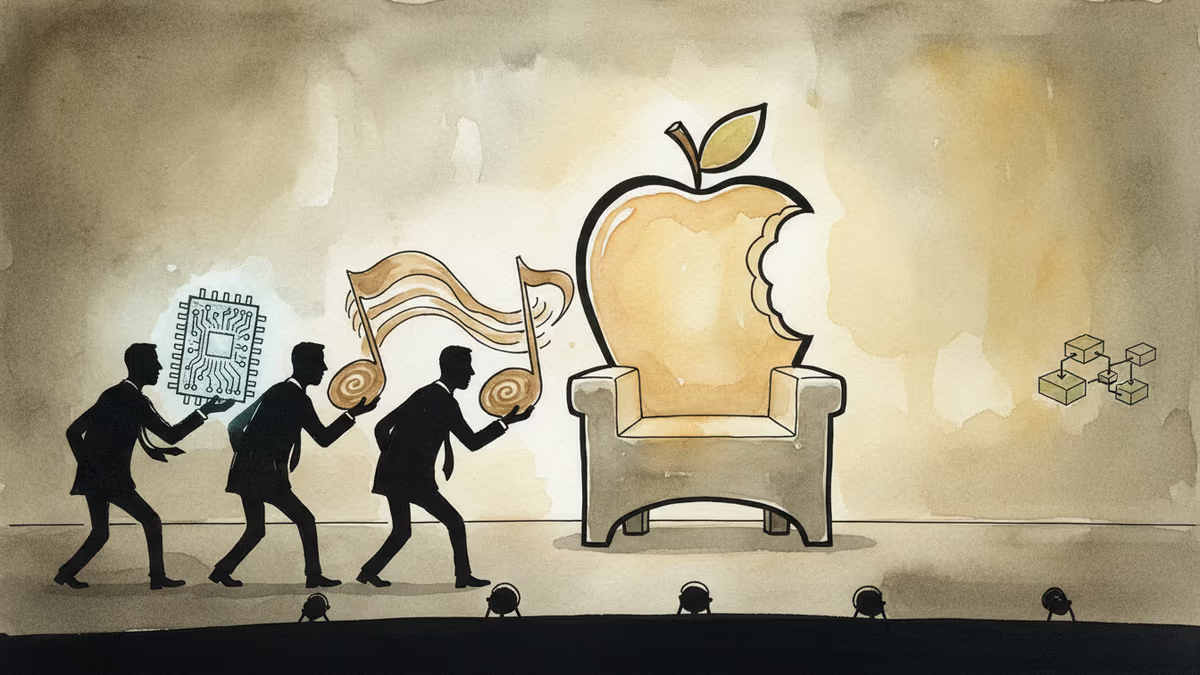
Apple's succession question is quietly becoming Wall Street's most important guessing game. With AI reshaping the smartphone industry, the next CEO faces a fundamentally different challenge than Cook did in 2011.
Court documents from Musk v. Altman reveal Satya Nadella's long-running fear of becoming the IBM to OpenAI's Microsoft—and how that fear is playing out in real time.
Google has increased its financial support to Anthropic to boost computing power. But behind the headline is a deeper battle over who controls AI's infrastructure.
Tim Cook hands Apple's reins to John Ternus in September. Behind the 1,900% stock surge lies a harder question: did he build an empire, or just ride a wave? What investors need to know now.
Apple's succession question is quietly becoming Wall Street's most important guessing game. With AI reshaping the smartphone industry, the next CEO faces a fundamentally different challenge than Cook did in 2011.
Thoughts
Share your thoughts on this article
Sign in to join the conversation