

TikTok USDS Privacy Policy 2026: The Hidden Cost of the 'Agree' Button
Explore the major changes in the TikTok USDS Privacy Policy 2026 following its ownership shift. Learn how precise location tracking and AI logging impact your digital privacy.
Your location and AI thoughts are now TikTok's assets. On January 23, 2026, US users opening TikTok were greeted by a mandatory pop-up. This isn't just a routine update; it marks the transition to TikTok USDS Joint Venture LLC, an American-majority entity involving Oracle, triggered by government mandates to sever Chinese control.
TikTok USDS Privacy Policy 2026: Precise GPS and AI Logging
The most significant shift is the move to precise location tracking. Previously, TikTok only tracked approximate locations via IP addresses or SIM cards. Under the new policy, if you grant permission, the app collects granular GPS data. While apps like Instagram and X already do this, it represents a major expansion of TikTok's surveillance capabilities in the US.

| Feature | Old Policy | New Policy (2026) |
|---|---|---|
| Location Tracking | Approximate (IP/SIM) | Precise GPS Data |
| AI Interactions | Not explicitly mentioned | Prompts, files, and responses stored |
| Ad Network | In-app targeting | Expanded to external publishers |
TikTok's foray into AI also brings new data collection rules. Every prompt you type and every response the AI generates is now explicitly logged. This includes metadata—the who, when, and where of your AI interactions—which helps the TikTok Ad Network follow you across the web, not just within the app.
Authors
Related Articles
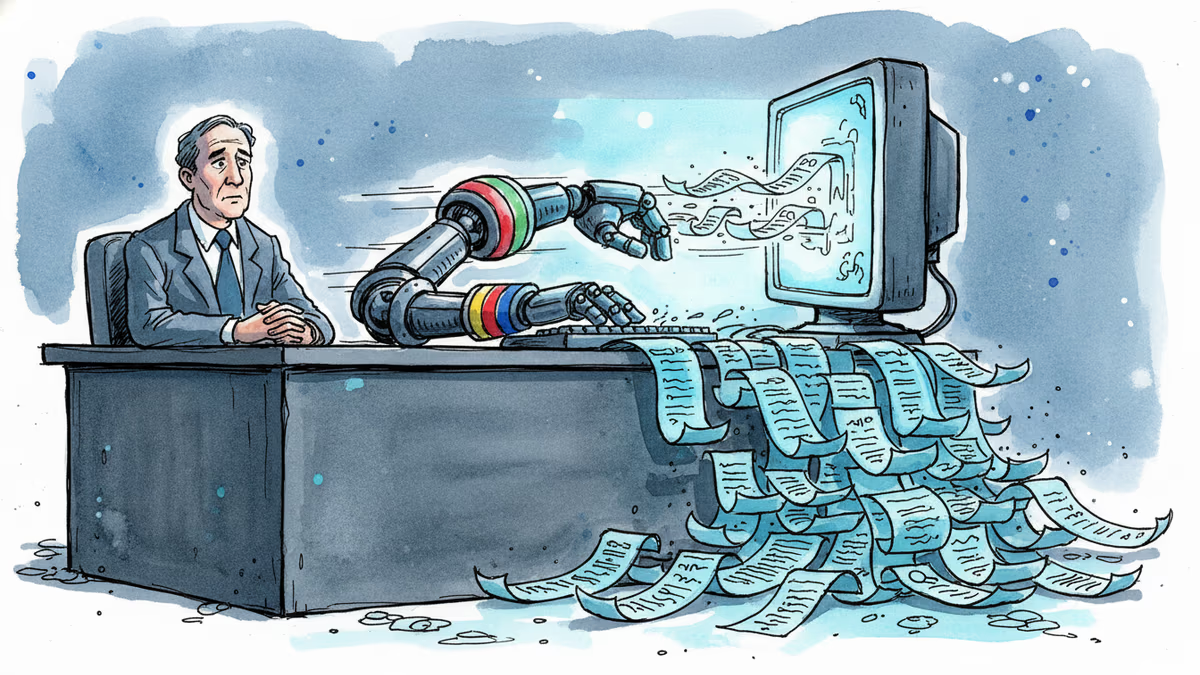
Google is building AI agents that search the web proactively, without user prompting. That's not just a product update — it's a fundamental shift in who controls the information you receive.
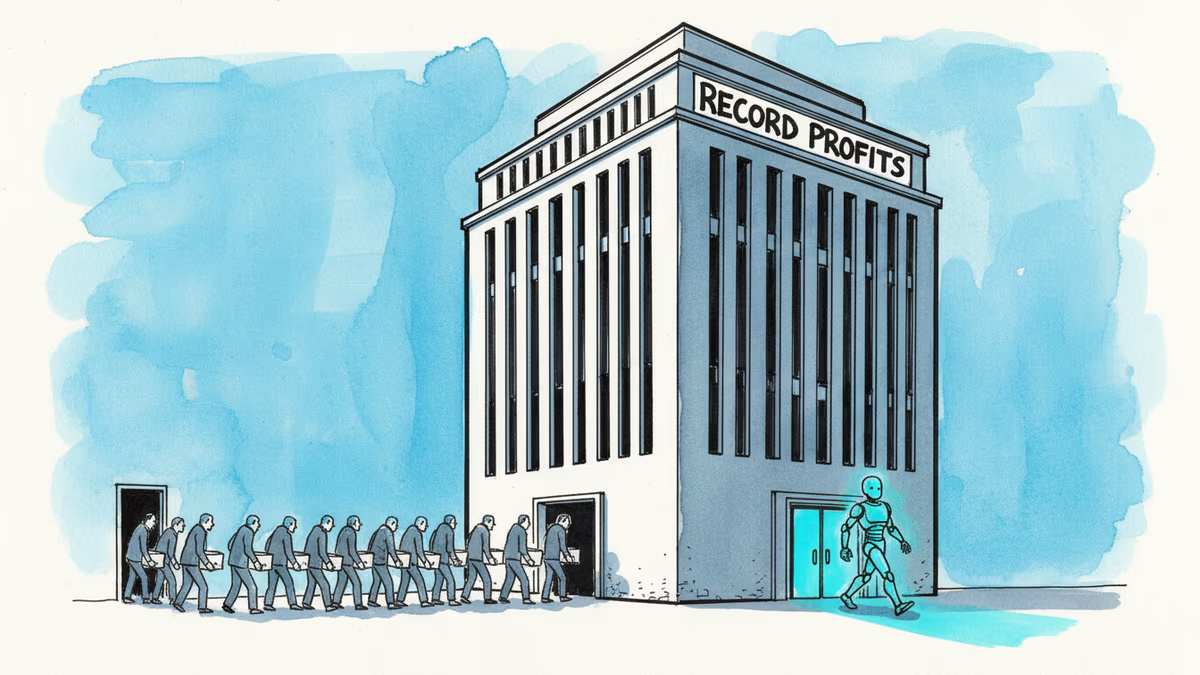
Cisco just posted record quarterly revenue and cut 4,000 jobs on the same day. It's not a contradiction — it's a template spreading across Big Tech.
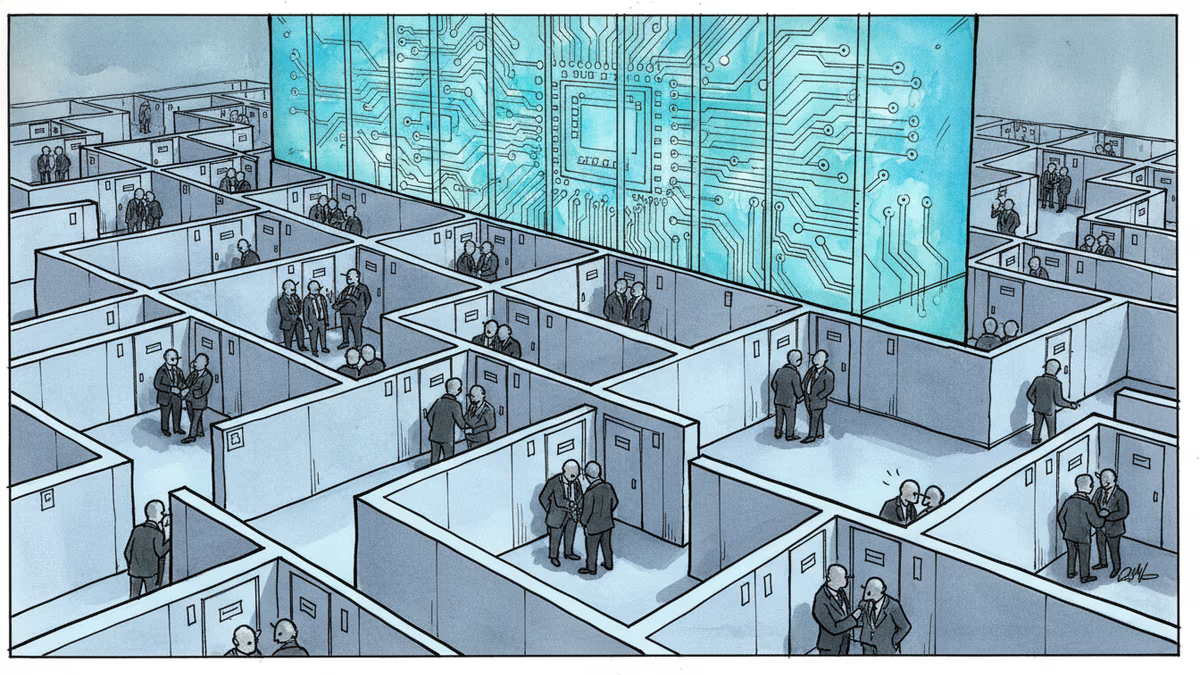
Behind every congressional hearing on Big Tech, there's a quieter room where the real rules get negotiated. As AI regulation, antitrust battles, and privacy law converge on Capitol Hill in 2026, the stakes have never been higher.
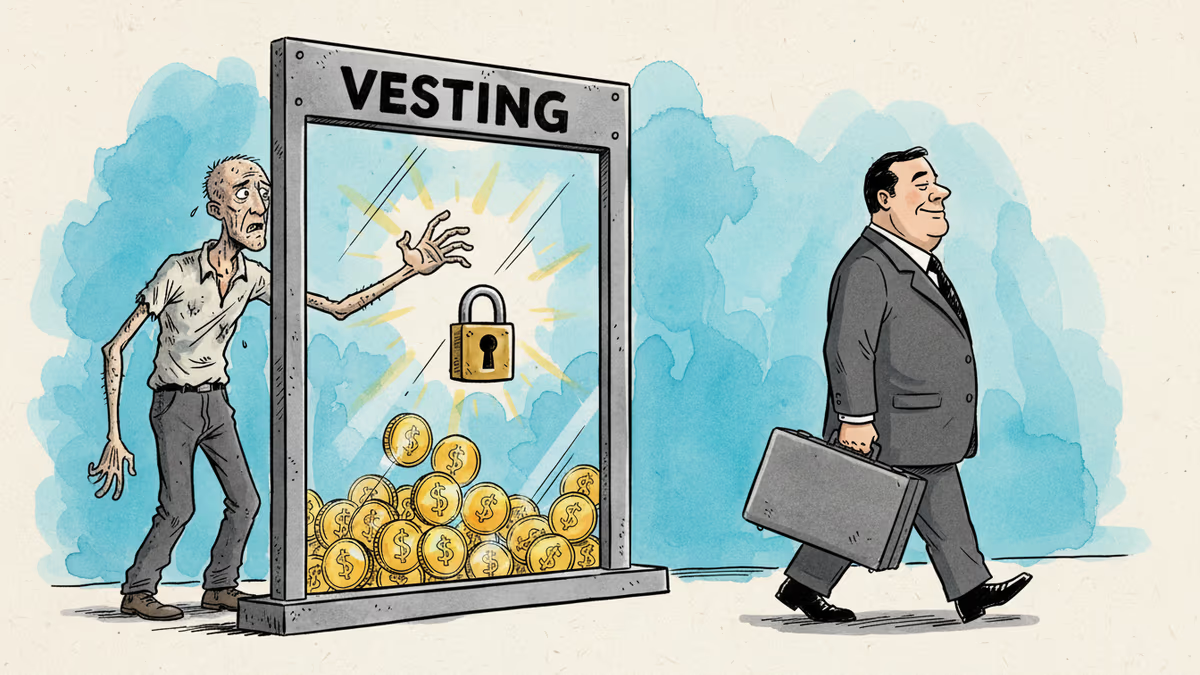
Oracle laid off up to 30,000 workers via email, denied RSU acceleration, and refused to negotiate. What this tells us about tech compensation's hidden power imbalance.
Google is building AI agents that search the web proactively, without user prompting. That's not just a product update — it's a fundamental shift in who controls the information you receive.
Cisco just posted record quarterly revenue and cut 4,000 jobs on the same day. It's not a contradiction — it's a template spreading across Big Tech.
Behind every congressional hearing on Big Tech, there's a quieter room where the real rules get negotiated. As AI regulation, antitrust battles, and privacy law converge on Capitol Hill in 2026, the stakes have never been higher.
Oracle laid off up to 30,000 workers via email, denied RSU acceleration, and refused to negotiate. What this tells us about tech compensation's hidden power imbalance.
Thoughts
Share your thoughts on this article
Sign in to join the conversation