

Why This TikTok Alternative Just Hit 380K Users
Open-source video app Skylight surges amid TikTok ownership concerns. Is this the beginning of decentralized social media's moment?
Over the weekend, a startup nobody had heard of suddenly found itself with 380,000 users. Skylight, a TikTok alternative built on open-source technology, experienced a surge that would make any social media executive take notice. While that number pales next to TikTok's 200 million monthly U.S. users, the story behind this growth reveals something significant about where social media might be heading.
TikTok's Ownership Drama Creates an Opening
Skylight's moment arrived courtesy of TikTok's messy ownership transition. On January 22, TikTok announced the formation of TikTok USDS Joint Venture LLC, designed to comply with Trump's executive order requiring the sale of U.S. operations to American investors. Chinese parent ByteDance now owns less than 20% of the new entity.
But the real catalyst came from TikTok's updated privacy policy, which included permission to track users' GPS coordinates and language about tracking immigration status. Though that immigration language wasn't new and relates to state privacy law compliance, it spooked users already wary of the platform's new American ownership and its ties to Trump.
The backlash was swift. Some users began encouraging app deletion, and alternatives like Skylight suddenly found themselves in the spotlight. Over the weekend alone, Skylight added around 20,000 new users. Signups increased more than 150%, video plays hit 1.4 million in a single day (up 3x), and returning users jumped over 50%.
The Open-Source Advantage
Skylight's secret weapon isn't just timing—it's technology. Built on the AT Protocol that also powers Bluesky (which now boasts 42 million users), the app offers something fundamentally different from traditional social platforms: user control.

Co-founded by CEO Tori White and CTO Reed Harmeyer with backing from Mark Cuban and other investors, Skylight lets community curators create custom feeds for others to follow. Users aren't trapped by a single algorithm deciding what they see. The platform now hosts over 150,000 directly uploaded videos and can stream content from Bluesky thanks to its AT Protocol integration.
"We've seen what happens when one person dictates what's pushed into people's feeds," White told TechCrunch. "Not only does it harm a creator's connection with their followers, but the entire health of the platform."
The Bigger Picture: Decentralization's Moment?
Skylight's growth reflects broader tensions in social media. Users increasingly question who controls their digital experiences. The app's open-source foundation means its features and policies can't be unilaterally changed by corporate executives or government pressure—a stark contrast to what TikTok users just experienced.
This isn't just about one app. Bluesky's42 million users demonstrate appetite for alternatives to traditional platforms. Mastodon, another decentralized platform, has seen similar growth spurts during Twitter/X controversies. The pattern is clear: when mainstream platforms stumble, users explore options that promise more control.
Yet challenges remain enormous. Skylight's95,000 monthly active users in January represent a rounding error compared to TikTok's reach. Building the creator economy, content moderation at scale, and user acquisition all favor established platforms with deep pockets.
The Investment and Policy Implications
For investors, Skylight's surge raises questions about where social media value will concentrate. Will network effects continue favoring massive centralized platforms, or will users increasingly fragment across specialized, community-controlled alternatives?
Policymakers face similar questions. If concerns about algorithmic influence and data control drive users toward decentralized platforms, how should regulations adapt? Current frameworks assume centralized control—but what happens when no single entity controls the algorithm?
Authors
Related Articles
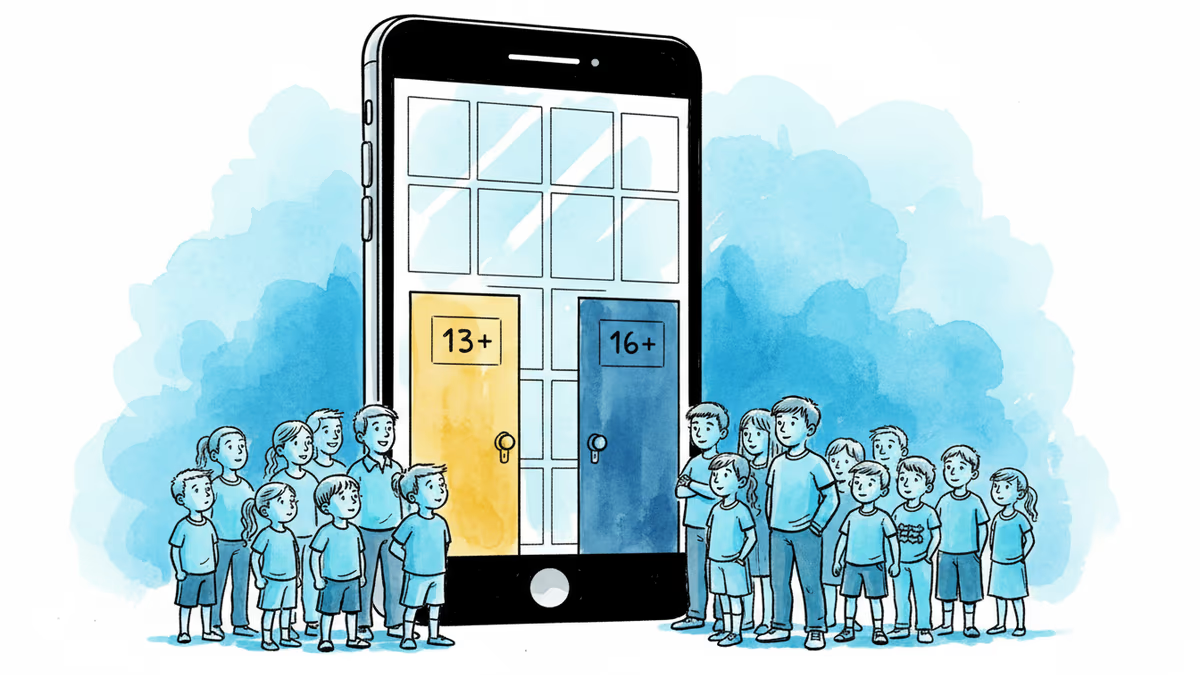
Indonesia introduces age-tiered social media restrictions, allowing 13+ for low-risk platforms and 16+ for high-risk ones. How does this compare to Australia's blanket ban?
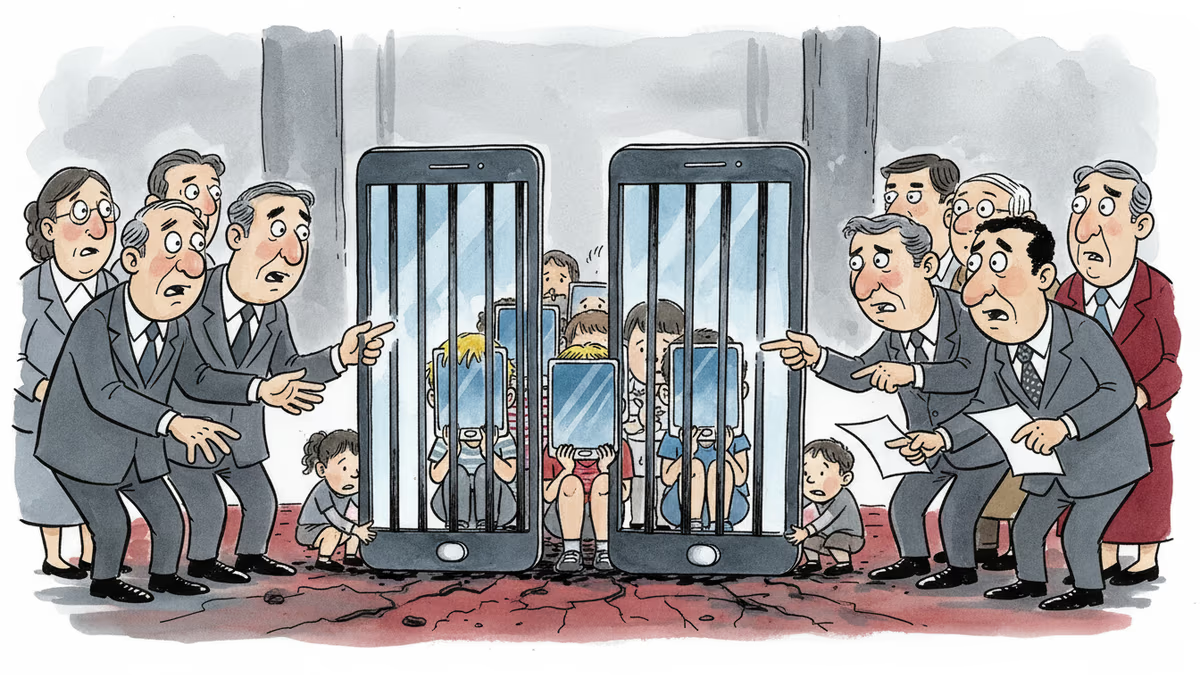
From Australia's $34M fines to France's parliamentary vote, 10 countries are restricting teen social media access. A global experiment in digital parenting begins.
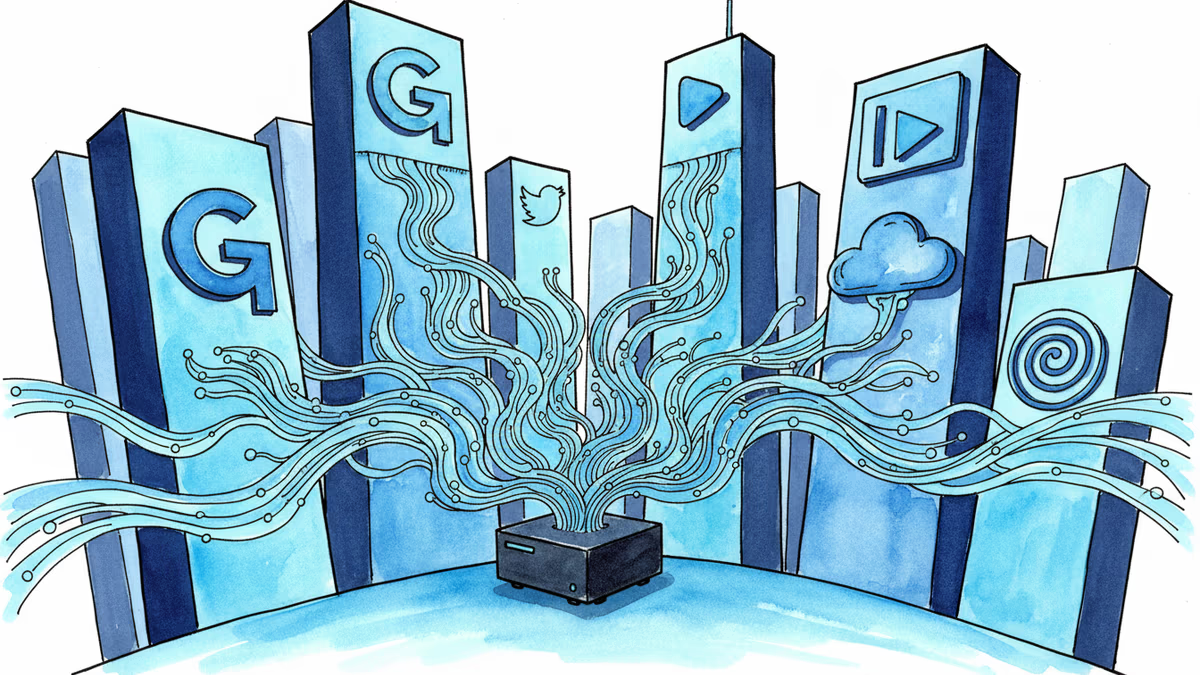
Current AI's open-source device challenges Big Tech's AI monopoly with offline capabilities and 22 Indian languages. Could this spark a new era of decentralized AI?
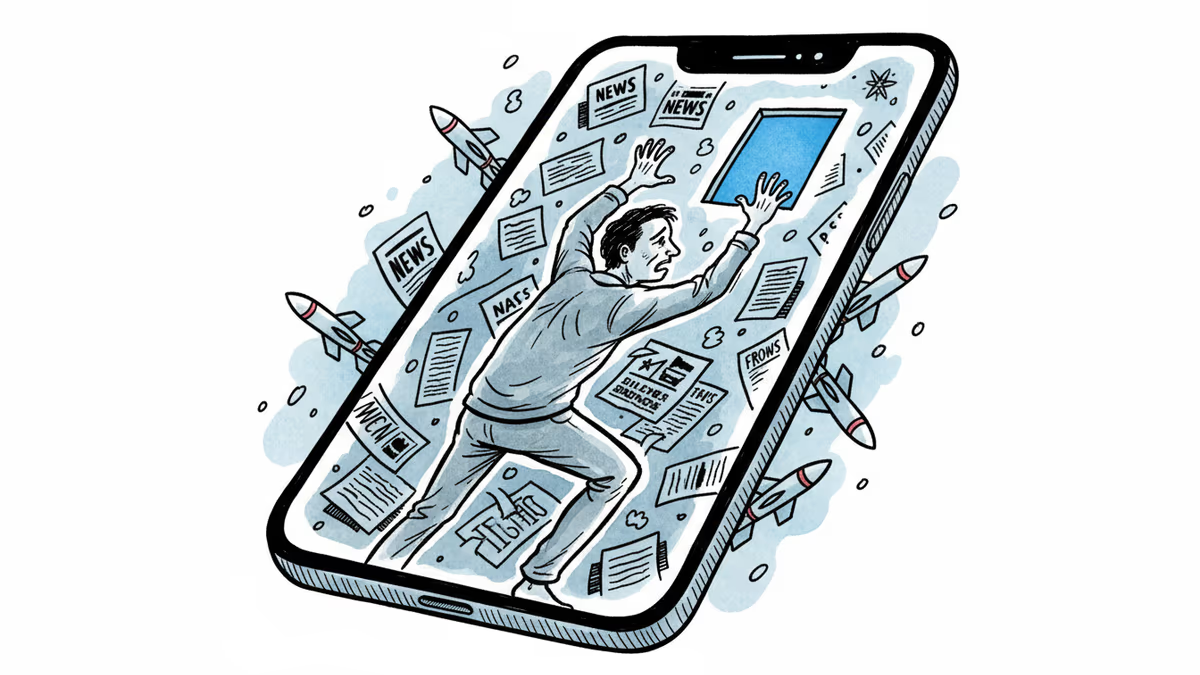
Middle East missile strikes trigger global doomscrolling epidemic. Neuroscience reveals why we can't stop scrolling through bad news and how to break free.
Indonesia introduces age-tiered social media restrictions, allowing 13+ for low-risk platforms and 16+ for high-risk ones. How does this compare to Australia's blanket ban?
From Australia's $34M fines to France's parliamentary vote, 10 countries are restricting teen social media access. A global experiment in digital parenting begins.
Current AI's open-source device challenges Big Tech's AI monopoly with offline capabilities and 22 Indian languages. Could this spark a new era of decentralized AI?
Middle East missile strikes trigger global doomscrolling epidemic. Neuroscience reveals why we can't stop scrolling through bad news and how to break free.
Thoughts
Share your thoughts on this article
Sign in to join the conversation