

The Steam Sale's Hidden Signal: Why a $70 Game Is Worth $35 in 3 Months
PRISM's analysis of the Steam Winter Sale reveals what steep discounts on new AAA games signal about the future of PC gaming economics and platform control.
The Lede: More Than Just a Discount
While consumers celebrate deep discounts during Steam's annual Winter Sale, executives and investors should see it for what it truly is: a powerful economic lever and a revealing barometer for the health of the PC gaming market. The aggressive price cuts on blockbuster titles released just this year aren't a simple holiday promotion; they are a critical signal about the rapidly accelerating depreciation of digital entertainment and the immense pressure facing game publishers.
Why It Matters: The Shrinking Premium Window
The most telling data from this year's sale isn't the 90% off deals on five-year-old classics. It's the 40-50% price slashes on major 2025 releases. Titles like Assassin’s Creed Shadows ($34.99, 50% off) and Silent Hill F ($41.99, 40% off) are being heavily discounted mere months after their launch. This isn't a fire sale; it's the new lifecycle.
- Accelerated Value Decay: The window where a publisher can command a full $70 price is shrinking from years to months. The digital shelf is infinite, but consumer attention is not, leading to brutal price competition much earlier in a product's life.
- Recouping Soaring Costs: With AAA game development budgets now routinely exceeding $200 million, publishers cannot afford a slow burn. A high-velocity sales event like this is a necessary mechanism to drive volume, hit quarterly targets, and begin recouping massive upfront investment.
- Setting Consumer Expectations: This trend trains consumers to wait. Why buy at launch when a 50% discount is a near-certainty within the next fiscal quarter? This puts even more pressure on pre-order bonuses and launch-day performance.

The Analysis: Valve's Masterclass in Market Control
Steam's seasonal sales are a foundational pillar of its platform dominance, serving a purpose far beyond clearing digital inventory. Unlike the Epic Games Store's strategy of free-game giveaways to acquire users, Valve's approach is more sophisticated. It transforms the entire catalog into a dynamic marketplace, using discounts as a powerful discovery and retention engine.
Historically, these sales focused on the 'long tail'—older titles getting a second life. Today, the focus has shifted to the 'fat middle'. The presence of recent, high-profile remakes like Metal Gear Solid Delta and Dragon Quest III HD-2D at significant discounts demonstrates that even nostalgic, premium-priced IP is subject to the same market forces. Valve facilitates this churn, taking its 30% cut of every transaction, whether the game is a new release or a discounted classic. It has created a system where it profits from both the initial hype and the inevitable price erosion.
- Post-Launch Monetization is Key: The initial sale price is increasingly becoming a loss leader to acquire a user. The real profit is often in post-sale DLC, season passes, and in-game cosmetics. Games built without a robust post-launch content plan are at a significant disadvantage.
- The Counter-Play: Subscription services like Microsoft's PC Game Pass represent the primary alternative to this model. Publishers must choose between the guaranteed, albeit smaller, revenue from a subscription deal or playing the high-stakes discount game on Steam's massive open market.
PRISM's Take: The Tollbooth Always Wins
The Steam Winter Sale is not a sign of a struggling industry, but of an industry maturing under the intense pressures of digital economics. The rapid discounting of new AAA games is a rational, if brutal, response to a crowded market and sky-high costs. It's a market correction mechanism, and Valve, as the owner of the market, is the ultimate beneficiary. While publishers navigate these volatile waters, Valve's platform remains the indispensable tollbooth on the main highway of PC gaming, collecting revenue from every vehicle, whether it's speeding or slowing down.
Authors
Related Articles
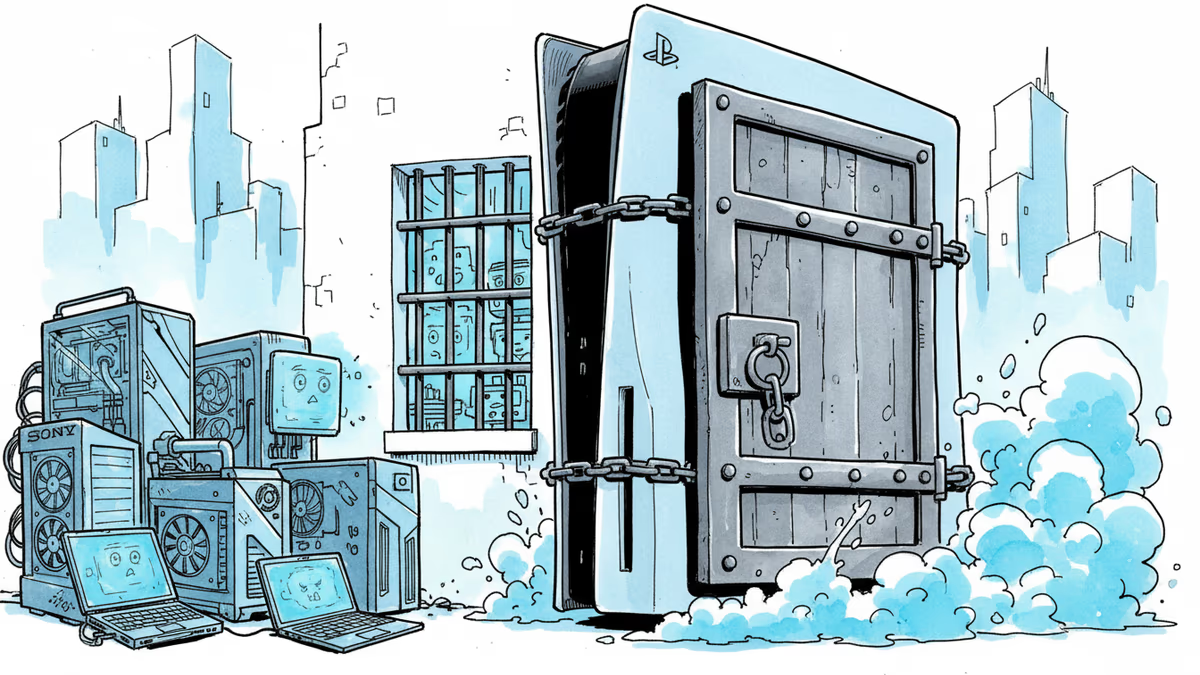
Sony is pulling its major single-player PlayStation games from PC. After six years of multiplatform expansion, the reversal raises hard questions about exclusivity, hardware sales, and who really controls gaming's future.
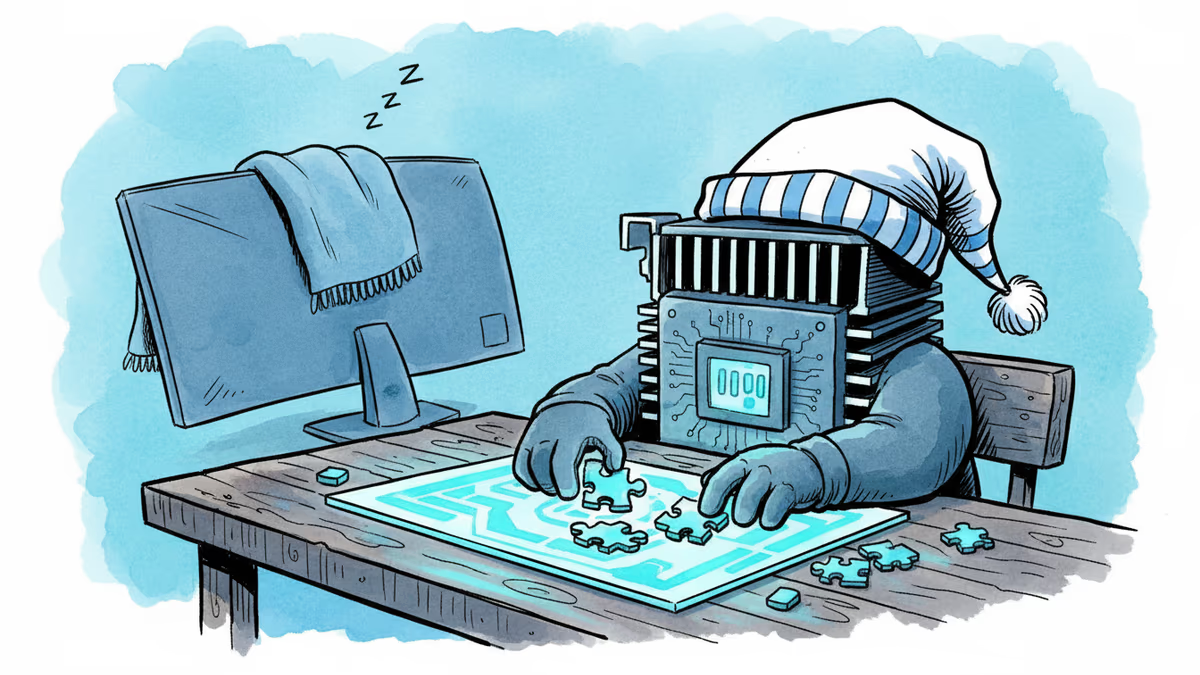
Nvidia's new Auto Shader Compilation feature pre-builds DirectX shaders during idle time, aiming to cut those frustrating load-screen waits after driver updates. Here's what it actually means.
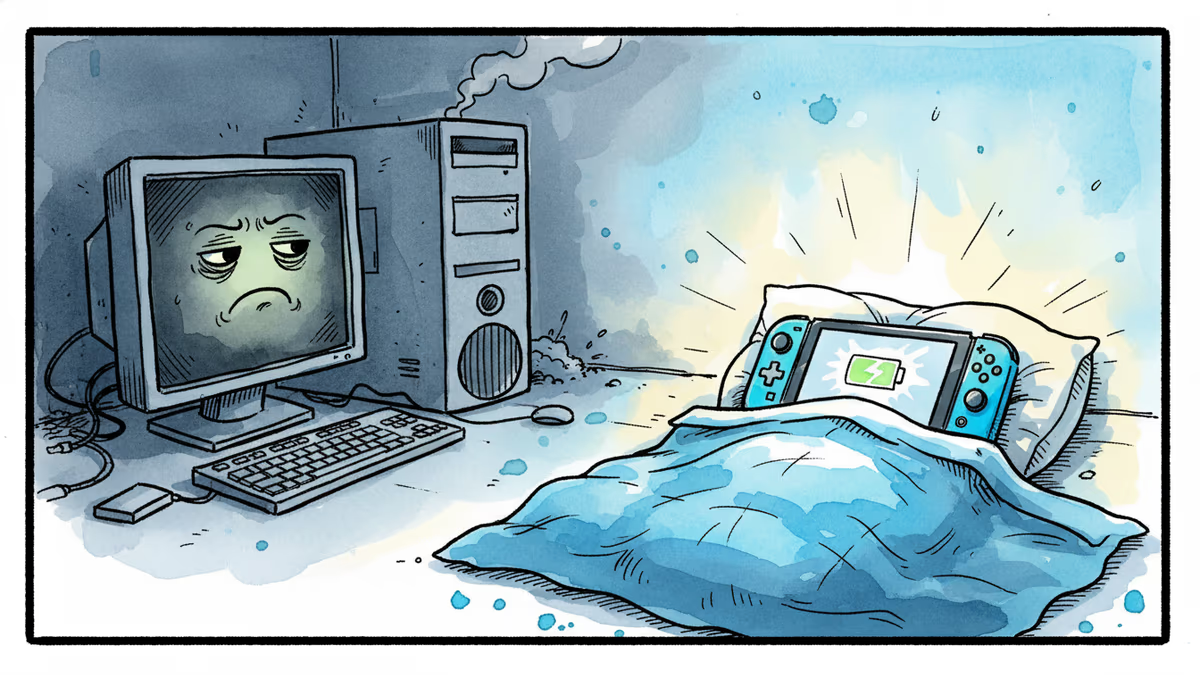
Valve's SteamOS 3.8.0 preview brings true hibernation to the Steam Deck LCD, plus expanded support for Xbox Ally, Legion Go 2, and more third-party handhelds. Here's what it means.

At GDC 2026, Google announced major updates to bring Google Play to Windows—new tabs, wishlists, premium titles, and game trials. But can it compete with Steam and Game Pass?
Sony is pulling its major single-player PlayStation games from PC. After six years of multiplatform expansion, the reversal raises hard questions about exclusivity, hardware sales, and who really controls gaming's future.
Nvidia's new Auto Shader Compilation feature pre-builds DirectX shaders during idle time, aiming to cut those frustrating load-screen waits after driver updates. Here's what it actually means.
Valve's SteamOS 3.8.0 preview brings true hibernation to the Steam Deck LCD, plus expanded support for Xbox Ally, Legion Go 2, and more third-party handhelds. Here's what it means.
At GDC 2026, Google announced major updates to bring Google Play to Windows—new tabs, wishlists, premium titles, and game trials. But can it compete with Steam and Game Pass?
Thoughts
Share your thoughts on this article
Sign in to join the conversation