
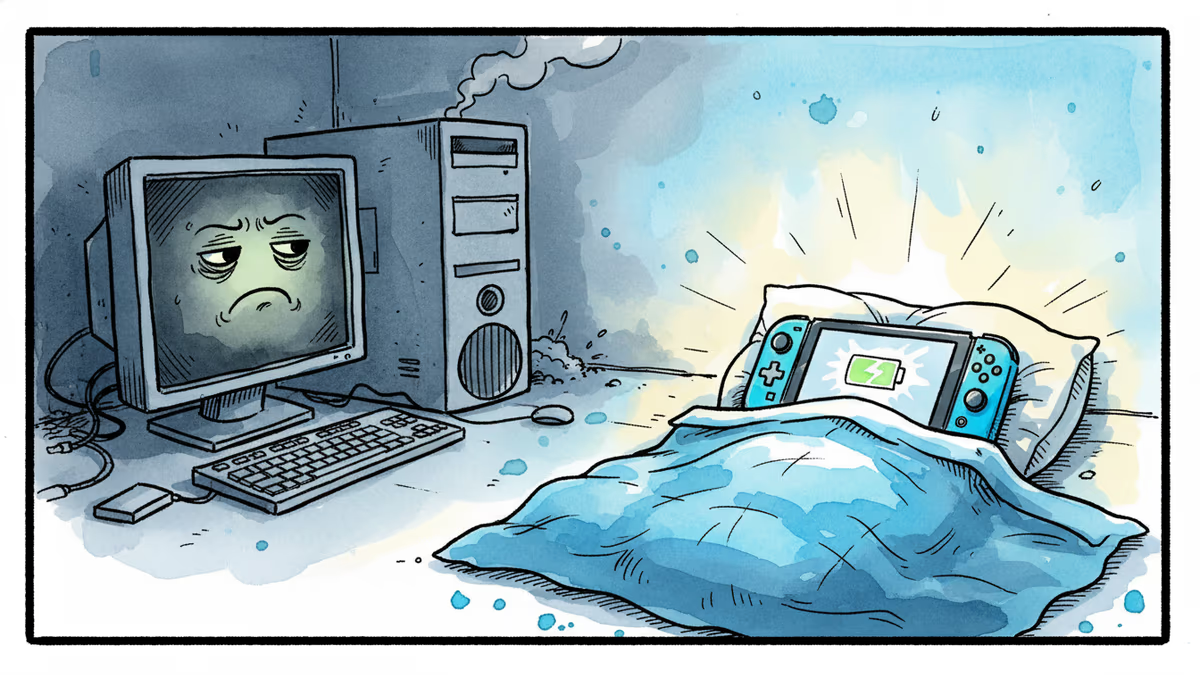
SteamOS Just Got a Feature PCs Have Had for Decades
Valve's SteamOS 3.8.0 preview brings true hibernation to the Steam Deck LCD, plus expanded support for Xbox Ally, Legion Go 2, and more third-party handhelds. Here's what it means.
Your laptop has had it since 2003. Your phone does it automatically. And as of this week, the Steam Deck is finally getting it too: real hibernation.
What Valve Just Shipped
Valve dropped SteamOS 3.8.0 in preview on March 20, 2026, and it's one of the more substantial updates the platform has seen. The headline feature is genuine hibernation and memory power down modes for the Steam Deck LCD — not the OLED model, not yet — which saves the full system state to storage and cuts power almost entirely. The difference from the existing sleep mode isn't subtle: instead of slowly draining your battery while the device sits in a bag, it stops draining almost entirely.
But the update is bigger than one feature. SteamOS 3.8.0 also marks the first release to support the upcoming Steam Machine living room gaming PC, and it dramatically widens the net of supported third-party hardware. New on the list: Microsoft and Asus's Xbox Ally series, the Lenovo Legion Go 2, and the OneXPlayer X1. Additional compatibility improvements landed for devices from MSI, GPD, Anbernic, OrangePi, and Zotac.
Why Hibernation Took This Long
It's a fair question. Hibernation on a laptop is trivial. On a gaming handheld, it's genuinely hard. The device has to snapshot not just the OS but active GPU memory, game state, and running processes — then restore all of it perfectly on wake. One mismatched driver or miscommunication between hardware and software and you're looking at a corrupted save or a crashed session. Valve starting with the LCD model is deliberate: it's the most mature, most tested hardware in the lineup. OLED and future devices will follow, but Valve is clearly not rushing it.
The practical upside for LCD owners is real. Commuters who toss their Deck in a bag mid-session without thinking twice about battery, travelers on long flights, anyone who's ever come back to a dead device after a short break — this change is for them.

The Bigger Move: SteamOS as a Platform, Not Just a Product
The third-party expansion is where things get strategically interesting. SteamOS running on an Xbox Ally — hardware co-developed by Microsoft and Asus — is a genuinely strange sentence to write in 2026. It means Valve's software stack is now officially supported on a device that carries Xbox branding. The hardware/software alignment that defined console gaming for decades is quietly dissolving.
For Valve, the logic is clear: the more devices that run SteamOS, the more valuable the Steam ecosystem becomes, regardless of who made the chip inside. For Asus and Lenovo, supporting SteamOS alongside Windows gives their devices a selling point for the Linux-leaning, privacy-conscious, or simply Steam-native crowd. Everyone gets something.
The losers, if there are any, might be Windows itself. Microsoft's OS has dominated the handheld PC gaming space by default — not because it's ideal for the form factor, but because there was no credible alternative. SteamOS is becoming that alternative, one supported device at a time.
What Users and Skeptics Are Saying
Enthusiasts on r/SteamDeck and Mastodon's gaming communities have greeted the hibernation news with a mix of relief and mild exasperation — relief that it's finally here, exasperation that it took this long and still excludes the OLED model. The third-party support expansion has drawn more unambiguous praise, particularly from GPD and OneXPlayer owners who have long operated in a gray zone of partial compatibility and community-maintained workarounds.
Skeptics point out that SteamOS still lacks the software breadth of Windows — no native Game Pass support, limited non-gaming app ecosystem, and a steeper learning curve for casual users. For the mainstream buyer, Windows handhelds remain the path of least resistance.
Authors
Related Articles
Steam Machine, Steam Frame, and Steam Controller face delays as Valve navigates global memory shortage while maintaining 2026 shipping commitment.

New York sues Valve over loot boxes in Counter-Strike 2 and other games, claiming they constitute illegal gambling due to real-money trading capabilities

With RTX 50-series launch, gaming laptops are expanding beyond gamers into mainstream users, reshaping the laptop market with performance-first approach over specialized designs.

Find the best Nintendo Switch 2 controller alternatives in 2026. Compare top picks like EasySMX S10 and Mobapad N1 HD for better drift resistance and value.
Steam Machine, Steam Frame, and Steam Controller face delays as Valve navigates global memory shortage while maintaining 2026 shipping commitment.
New York sues Valve over loot boxes in Counter-Strike 2 and other games, claiming they constitute illegal gambling due to real-money trading capabilities
With RTX 50-series launch, gaming laptops are expanding beyond gamers into mainstream users, reshaping the laptop market with performance-first approach over specialized designs.
Find the best Nintendo Switch 2 controller alternatives in 2026. Compare top picks like EasySMX S10 and Mobapad N1 HD for better drift resistance and value.
Thoughts
Share your thoughts on this article
Sign in to join the conversation