
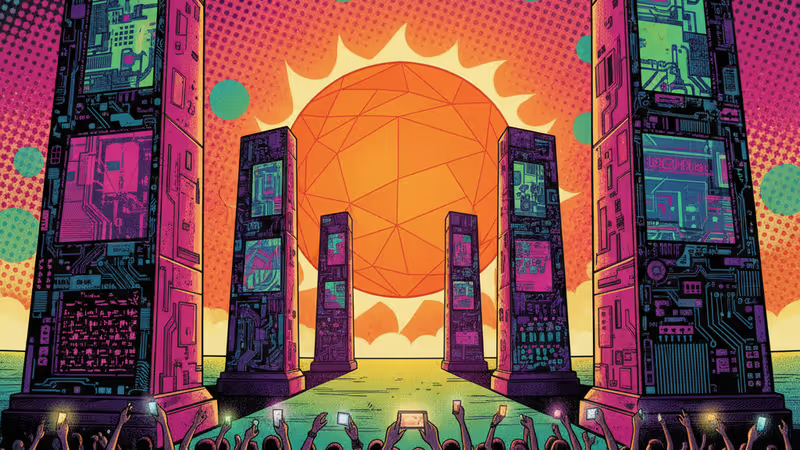
The Solstice Algorithm: How Ancient Rituals Are Rebooting the Experience Economy
Ancient winter solstice rituals are being rebooted for the digital age, fueling a multi-billion dollar experience economy. Here's why it matters for your business.
The Lede: Beyond the Q4 Rush
As executives, we operate on quarterly cycles and data-driven sprints. But for millennia, humanity’s operating system was dictated by a far more powerful signal: the sun. The winter solstice—the longest night of the year—wasn't just a calendar date; it was a critical inflection point triggering deep-seated psychological and social protocols for survival and renewal. Dismissing the resurgent interest in these ancient traditions as mere nostalgia is a strategic error. Understanding this primal 'solstice algorithm' reveals a powerful, emerging driver of consumer behavior in the multi-trillion-dollar experience and wellness economies.
Why It Matters: The Primal Code of Consumerism
The core functions of ancient rituals like the Roman Saturnalia or Norse Yule were to combat uncertainty, foster community cohesion, and signal a future return to prosperity (light and warmth). These are not archaic needs; they are timeless human drivers that have been repackaged for a modern context. The 'darkness' is no longer just a lack of sunlight, but the burnout, isolation, and anxiety of our 'always-on' digital world.
- Second-Order Effects: The thirst for these tangible, cyclical experiences is fueling the 'digital detox' movement, boosting wellness tourism, and creating new markets for everything from artisanal Yule logs to curated solstice retreats.
- Industry Impact: Brands that tap into this deep-seated need for meaning and seasonal rhythm are building more resilient customer loyalty than those just focused on transactional holiday sales. This is about belonging, not just buying.
The Analysis: Society's Original Social Platforms
The historical celebrations detailed in the source material were not simply parties; they were sophisticated social technologies designed to solve critical problems.
From Social Inversion to Corporate Offsites
The Roman Saturnalia, with its temporary reversal of social roles, acted as a societal pressure-release valve. It allowed for controlled chaos to reinforce the normal order. Today, we see a sanitized echo in corporate holiday parties or team-building offsites, designed to temporarily flatten hierarchy and foster connection. However, the original's raw, cathartic power highlights a deficit in modern corporate culture—a lack of genuine psychological release valves.
From Yule Fires to Digital Campfires
Norse Yule traditions—the fire, the feasting, the shared stories—were a direct response to resource scarcity and seasonal depression. The fire was a beacon of hope and a physical gathering point. Today, the most successful online communities and media platforms act as 'digital campfires,' providing a sense of shared experience and light in a fragmented digital landscape. They fulfill the same fundamental need for communal focus during times of perceived darkness.
PRISM Insight: The Rise of 'Ritual-as-a-Service'
The commodification of these ancient needs is creating a new tech vertical: 'Ritual-as-a-Service' (RaaS). This goes beyond simple wellness apps. We're seeing the emergence of platforms designed to digitally facilitate real-world, cyclical experiences.
- Investment Signal: Look for growth in startups that blend technology with tangible, local experiences. This includes curated travel companies focusing on astronomical events (like solstices and eclipses), platforms that connect users for local seasonal ceremonies, and even AR/VR applications aiming to recreate historical rituals like visiting a virtual Stonehenge.
- Tech Trend: The next frontier for AI in wellness will be personalization based on natural cycles. Imagine platforms that adjust content, recommendations, and even work schedules based on circadian rhythms and seasonal changes, moving beyond the brute-force, 24/7 productivity model.
PRISM's Take: Counter-Programming the Infinite Scroll
The renewed fascination with the solstice is not a regression; it's a market correction. The digital age has flattened our experience of time into an endless, homogenous feed. We have lost the rhythm of seasons, the punctuation of beginnings and endings that gives life meaning. The solstice represents a powerful, analog anchor in a disorienting digital sea.
The smartest leaders will recognize this trend not as a fringe interest but as a fundamental human backlash against the tyranny of the eternal 'now.' They will build products, services, and company cultures that honor these natural cycles. The future doesn't belong to the brands that can scream the loudest 24/7, but to those who understand the profound power of the longest night, and the promise of the returning light.
Related Articles
Uncover how the historical influence of the Arabic language offers a strategic roadmap for AI, tech investment, and unlocking the 400M-strong MENA market.
The rise of affordable luxury honeymoons isn't about saving money. It's a strategic shift in consumer values, redefining the future of travel and hospitality.
Wordle is more than a game. It's a masterclass in user acquisition and the NYT's secret weapon in the attention economy. PRISM breaks down the strategy.
The NYT's new game, Strands, isn't just a puzzle. It's a strategic move to deepen user engagement and build an unbreakable subscription moat.